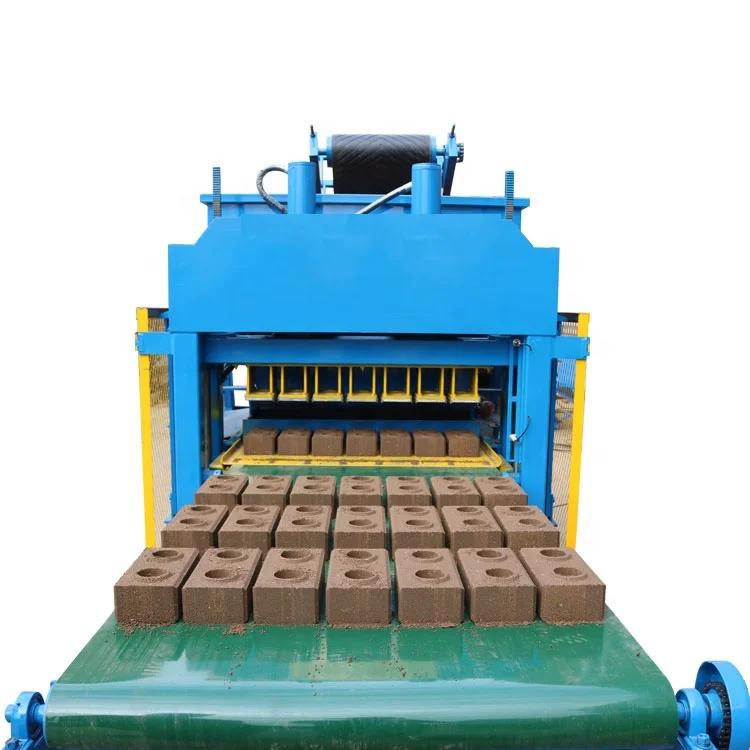
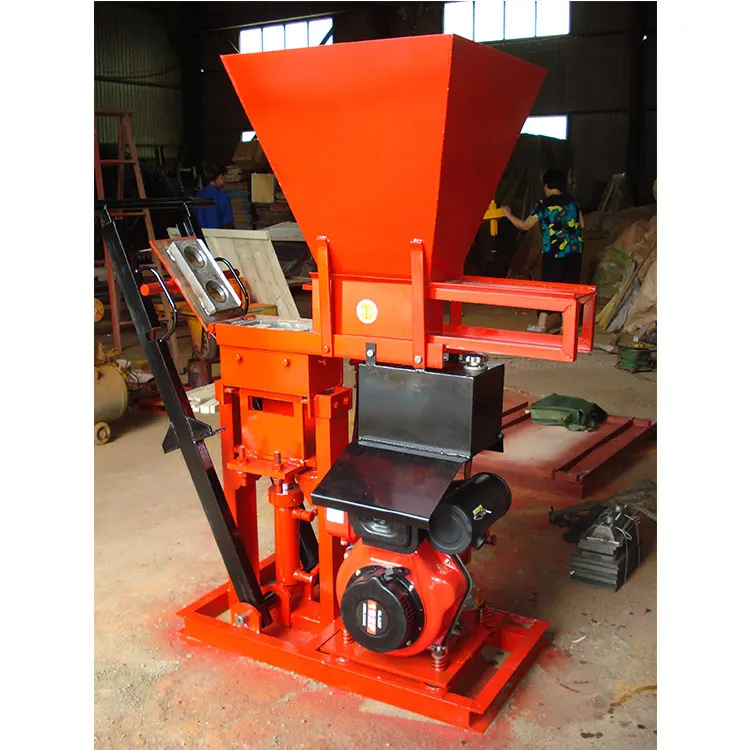
Matched System Focus — every LY2-10 shipment leaves our Linyi workshop with moulds, pallets and hydraulic settings already tuned to the buyer’s verified soil sample, not a catalogue default.
Technical Specifications
| Parameter |
Value |
| Model |
LY2-10 |
| Product Type |
Compressed Earth Block Making Machine |
| Machine Power |
7.5 kW |
| Hydraulic Pressure |
16 MPa |
| Molding Cycle |
10 s |
| Output Capacity |
3000 pcs/8h (basis not stated in source — confirm block format and material) |
| Alternative Capacity |
6000 pcs/8h based on 300×150×100 mm or 250×125×75 mm interlocking brick, 2 pcs/mould |
| Raw Materials |
Clay, soil, earth, mud, concrete, cement, fly ash |
| Automation Level |
Semi-automatic (automatic feeding, pressing, mould lifting) |
| Workers Required |
1–3 people |
| Machine Weight |
1200 kg |
| Overall Dimensions |
1300×1200×1900 mm |
| Warranty |
1 year |
Application Suitability
| Application |
Material or Output |
| On-site housing projects |
Interlocking clay bricks from local red or sandy soil |
| Small-scale block plant start-ups |
Cement-stabilised earth blocks for load-bearing walls |
| Rural infrastructure contracting |
Paving and kerb formats using fly-ash blends |
| Building material distributors |
Adding interlocking brick SKUs without a full automatic line |
What "3000 Pieces per Day" Actually Means on Site
Capacity figures only matter when the block format and soil type are written next to them.
I have watched contractors arrive at a project site expecting six thousand interlocking bricks every shift, only to find the quoted number assumed a smaller format and a soil moisture level their region never sees. The LY2-10 compressed earth block making machine for sale lists two capacity tiers — 3000 pcs/8h with the format unspecified, and 6000 pcs/8h specifically on 300×150×100 mm or 250×125×75 mm interlocking bricks at two pieces per mould. Without that second line, a buyer in the Levant ordering the machine for 250×125×75 mm bricks might plan a housing schedule around a number the machine was never tested against [NEED_CITE: capacity calculation methodology for compressed earth block machinery]. Always ask for the format-by-format breakdown before signing a proforma.

Where the LY2-10 Sits in the Semi-Automatic Line-up
Buyers surveying options for a first plant often jump between mobile egg-layers and high-output hydraulic presses without a clear midpoint. The LY2-10 fills that gap: a stationary semi-automatic unit with automatic feeding and mould lifting, yet compact enough — 1300×1200×1900 mm — to fit inside a 40-foot container alongside its moulds and pallets. It gives entrepreneurs a controlled investment entry into interlocking clay brick production while leaving a clear upgrade path to fully automatic stacking and cubing lines later.
Matching the Machine Tier to Your Project Footprint
A housing contractor pouring foundations across a sprawling site rarely has the curing yard that a stationary line demands, and a small urban workshop cannot justify the power draw of a 30 kW press. The LY2-10 interlocking clay brick machine manufacturer offering sits between those extremes, running on 7.5 kW and needing only one to three operators. When daily output requirements stay within a few thousand interlocking bricks, this tier avoids the idle-capacity penalty that larger machines carry on short-run contracts [NEED_CITE: typical block plant power and labour benchmarks in emerging markets].
Hydraulic Pressure, Soil Moisture and Brick Density
The 16 MPa hydraulic pressure on the LY2-10 is rated for cohesive soils and light cement-stabilised mixes. Clay with high sand content absorbs pressure differently — the same 16 MPa that locks a pure clay interlocking brick at target density may leave a sandy mix under-compacted. That is why a pre-shipment soil sample matters: adjusting the mould dwell time by even one or two seconds inside the 10-second cycle can shift brick density noticeably. Pallet size, while not listed in the draft specification, must also align with the curing racks and forklifts the buyer already has on site, otherwise half the shift goes into manual re-stacking.
The Cost of Skipping the Soil Sample Step
When a machine arrives configured for standard red clay and the local pit yields high-sand material, the hydraulic pressure and cycle settings must be re-mapped entirely. I have seen this delay commissioning by several days while trial bricks are crushed, measured and re-pressed until the target density is met. Every wasted shift is labour, fuel and curing space consumed without saleable output [NEED_CITE: commissioning delays caused by raw material mismatch in block plants]. A verified soil test before production locks the right mould clearance and pressure curve into the factory test record.
Why Source This Range Through Shiyue
Block machinery is our single focus, which means the LY2-10 is never shipped as a bare press with pallets and moulds sourced separately. Machine, mould and handling equipment are specified as one matched set against the buyer’s actual block format and local aggregate. Automation level is selectable — start semi-automatic now and add automatic stacking later without replacing the press. Mould design covers the interlocking profiles your market actually sells, with custom drawings accepted. Installation support and operator training are included so the first week on site produces consistent bricks, not scrap.
Documentation & Verification
- Machine specification sheet listing every LY2-10 parameter and the block format each capacity figure assumes.
- Mould drawing and format list confirming interlocking brick dimensions and cavity count before production.
- Hydraulic and electrical schematic matching the voltage and frequency confirmed for your site.
- Factory test record showing brick density and dimensional tolerance on your supplied soil sample.
- Operation and maintenance manual written in the PLC display language you selected.
- Wear parts and mould list identifying every replaceable component with part numbers.
Installation, Commissioning & Support
- Level concrete pad sized to the LY2-10 footprint of 1300×1200 mm with anchor bolt provision.
- Dedicated 7.5 kW circuit at the confirmed voltage and frequency, with isolator switch within reach.
- Machine shipped partially assembled; hydraulic hoses and electrical loom reconnected on site.
- First-run commissioning includes pressure and cycle adjustment against your local soil sample.
- Operator training covers mould change sequence, daily greasing points and safety interlocks.
- Wear parts list provided at handover so the first replacement order is placed before stock runs out.
What We Need to Size Your Line Correctly
Send us the target interlocking brick dimensions, the soil or cement mix you plan to use, and the daily output you need to sustain across the project. Include your site voltage, frequency and preferred control language, along with the curing area and forklift specifications you already have. If a site visit is feasible, a bag of raw material lets us run a factory press trial and attach the results to your quotation.
Frequently Asked Questions
Q: How is the daily output of the LY2-10 verified for my specific brick format?
A: We provide a capacity calculation sheet that lists output per eight-hour shift for each mould we quote. The 6000-piece figure applies only to 300×150×100 mm or 250×125×75 mm interlocking bricks at two pieces per mould. If your format differs, a revised cycle time and daily total are confirmed before production begins.
Q: Where does the LY2-10 sit compared to fully automatic block lines?
A: It occupies the semi-automatic entry tier — automatic feeding, pressing and mould lifting, but manual pallet handling and stacking. Buyers who outgrow this output level can add automatic pallet feeders and stackers later while keeping the same press, avoiding a full capital replacement.
Q: Can the electrical system and PLC display match my local grid?
A: Voltage, frequency and control language are confirmed during the quotation stage and built into the machine before factory testing. The electrical schematic shipped with the LY2-10 reflects those exact settings, so the on-site electrician can connect and commission without cross-referencing a generic manual.
Q: What installation space and labour does the LY2-10 require?
A: The machine footprint is 1300×1200 mm with a height of 1900 mm, plus working clearance on three sides for material feed and brick removal. One to three operators run the press, depending on whether pallets are handled manually or with an auxiliary conveyor.

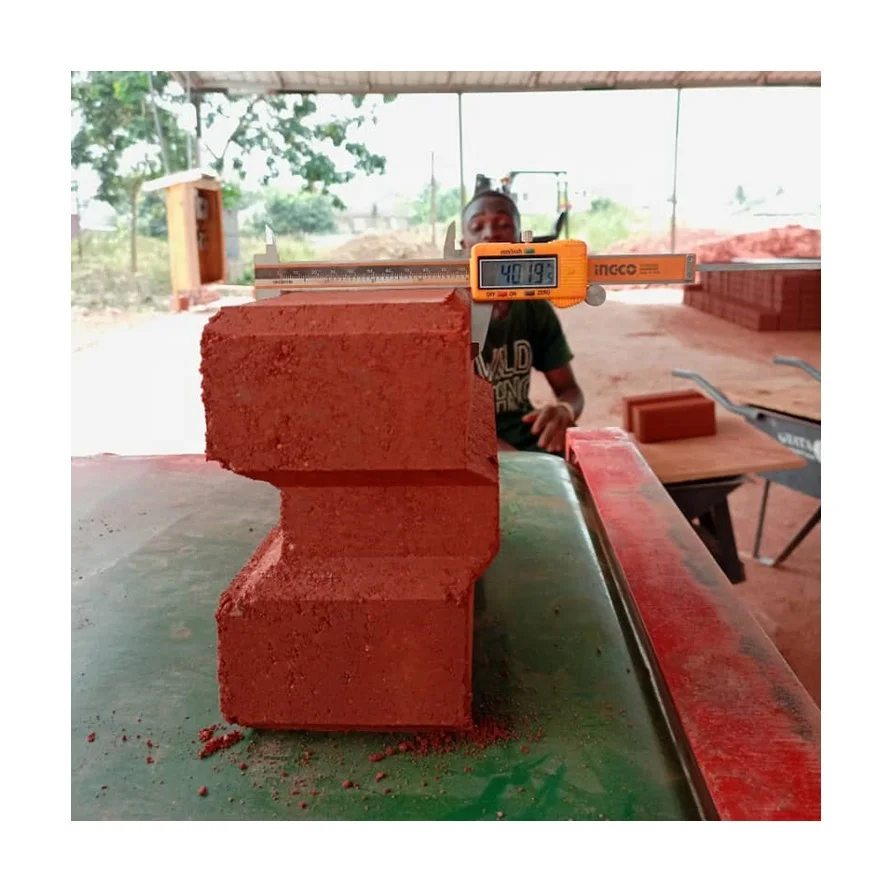
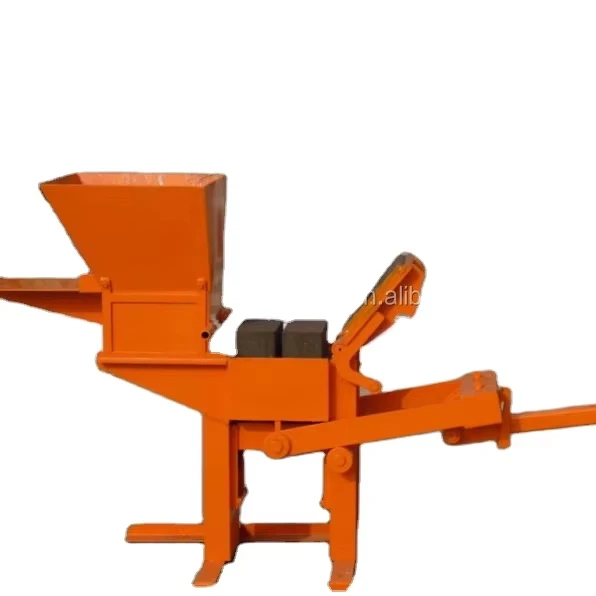 Clay interlocking brick