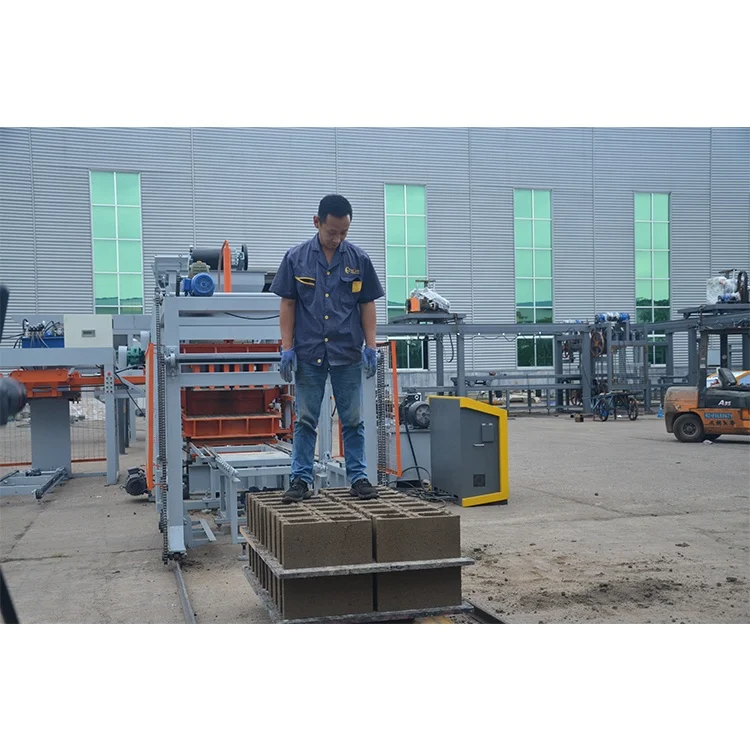
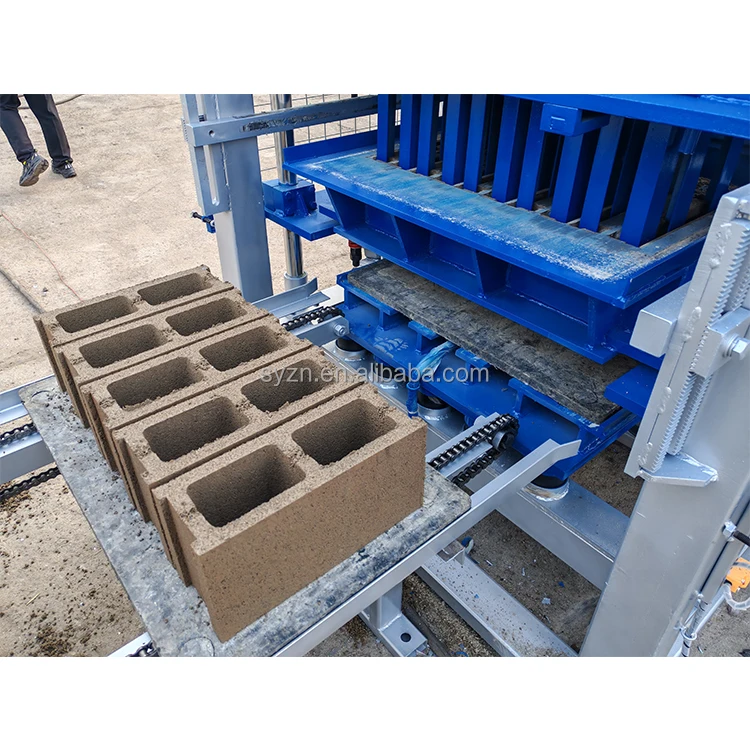
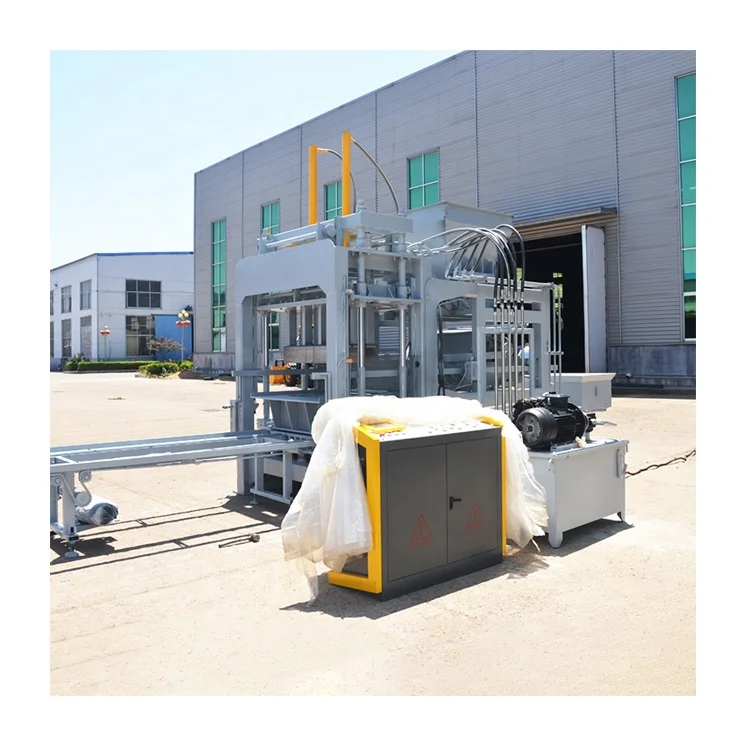
Mid-Tier Automatic Positioning — The QT6-15 sits between semi-automatic workshop units and high-capacity production lines, letting buyers step up without overcommitting on plant footprint or capital.
Technical Specifications
| Parameter |
Value |
| Model |
QT6-15 |
| Product Type |
Fully Automatic Hydraulic Vibration Block Making Machine |
| Overall Dimensions (L×W×H) |
7400×1900×2660 mm |
| Molding Cycle |
15–25 s |
| Vibration Frequency |
4600 r/min |
| Vibration Force |
40–50 kN |
| Total Power |
31.25 kW |
| Mixer Model |
JQ350 |
| Pallet Size |
850×550×25 mm |
| Total Weight |
7 T |
| Control System |
PLC control system |
| Hydraulic Station |
Included |
| Included Equipment |
Block making machine, hydraulic station, PLC control system, pallet feeder, brick conveyor, block sweeper |
| Free Accessories |
Manual hydraulic trolley, spare parts and tools |
| Output Capacity (Hollow block 400×200×200 mm) |
1200–1680 pcs/hr (basis: 15–20 s cycle, 6 pcs/mould) |
| Output Capacity (Hollow block 400×150×200 mm) |
1800–2400 pcs/hr (basis: 15–20 s cycle) |
| Output Capacity (Solid brick 240×115×53 mm) |
3240 pcs/hr (basis: 15–20 s cycle) |
| 8-hour Output (Hollow block 400×200×200 mm) |
9600–13440 pcs/8 hr |
| 8-hour Output (Hollow block 400×150×200 mm) |
14400–19200 pcs/8 hr |
| 8-hour Output (Solid brick 240×115×53 mm) |
16200–19440 pcs/8 hr |
| Applied Products |
Paver, solid block, hollow block, curbstone |
| Raw Materials |
Crushed stone, sand, cement, dust, fly ash |
| Automation Level |
Fully automatic |
Application Suitability
| Application |
Material or Output |
| Hollow block production for building walls |
Crushed stone, sand, cement, fly ash at 400×200×200 mm or 400×150×200 mm formats |
| Solid brick manufacturing for masonry |
Cement and sand mix at 240×115×53 mm standard brick format |
| Paver and curbstone production for infrastructure |
Crushed stone and cement blends in various surface and kerb profiles |
| On-site block production for housing projects |
Local aggregate and cement adapted to project-specific mix designs |
Why "Pieces per Hour" Means Nothing Without the Block Format Attached
Every output figure on this page names the exact block size and cycle assumption behind it — so you know what the machine actually delivers on your shift.
A lot of block machine quotations quote a single hourly number and leave the buyer to discover after installation that the figure assumed a small solid brick, not the hollow block the local market actually buys. I have seen this mismatch cancel out an entire first production run before the buyer realised the error. The QT6-15 block making machine manufacturer data here ties each capacity number to a specific format: 1200–1680 pieces per hour assumes a 400×200×200 mm hollow block on a 15–20 second cycle, while 3240 pieces per hour assumes a 240×115×53 mm solid brick on the same cycle window. [NEED_CITE: common block format standards by regional market] When the format changes, the cycle time changes, and the daily output shifts accordingly — no hidden assumptions.

Where the QT6-15 Sits in the Full Machine Range
Buyers evaluating their first automatic line or replacing a semi-automatic unit need to know which tier they are looking at. The QT6-15 occupies the mid-tier automatic position in the SHIYUE range, above the mobile egg-laying machines and small semi-automatic presses, and below the high-capacity automatic lines designed for continuous three-shift operation. This tier suits production plants targeting a moderate daily volume across several block formats without the larger footprint and higher capital commitment of a top-tier line. The included pallet feeder, brick conveyor, and block sweeper mean the machine arrives as a complete automatic cycle rather than a bare press waiting for auxiliary equipment to be sourced separately.
Matching the Machine to Your Actual Product Mix
A mid-tier automatic press only earns its place if it can run the formats your market demands. The QT6-15 block making machine manufacturer specification covers hollow block, solid brick, paver, and curbstone on a single platform, with mould changes between formats. The vibration force of 40–50 kN at 4600 r/min, combined with the hydraulic station, provides enough compaction energy for structural hollow blocks while still producing a clean surface finish on pavers. [NEED_CITE: vibration force requirements for different concrete block densities] Buyers who plan to start with one or two formats and add others as the market develops should confirm the mould drawing and format list before order, so any additional mould investment is clear upfront.
What the Numbers Actually Mean on the Shop Floor
The 7400 mm overall length tells you the minimum bay length needed, but the full line layout including mixer, pallet rack, and curing area will require considerably more space — request a line layout drawing that states the format assumed before signing off. The 850×550×25 mm pallet size must be checked against your existing curing racks and forklift tines; ordering a machine whose pallets do not match your curing infrastructure creates a bottleneck no amount of press speed can fix. The JQ350 mixer paired with this press handles the batch volumes required for a 15–25 second cycle, but the actual mix design — particularly the aggregate grading and cement content — determines whether the vibration force produces consistent density or leaves weak spots. [NEED_CITE: relationship between aggregate grading and vibration compaction in block making] Total power of 31.25 kW means the electrical supply must support continuous draw at this level plus starting surge.
The Cost of Skipping Configuration Details
When voltage, frequency, and PLC display language are left unconfirmed at order stage, the machine may arrive on site and sit idle while transformers are sourced or the operator struggles with an unfamiliar language on the control screen. A pallet size chosen without regard to the curing area dimensions forces the buyer to rebuild curing racks or handle blocks manually — exactly the labour cost the automatic line was supposed to eliminate. Moulds specified for a mix the buyer cannot source locally mean either a costly material change or blocks that fail strength testing. [NEED_CITE: common commissioning delays caused by unconfirmed electrical specifications] These are not theoretical risks; they show up repeatedly in post-delivery service calls that could have been prevented with a ten-minute configuration check before production started.
Why Buyers Source This Tier from SHIYUE
Block machinery is the single focus here, so the QT6-15 press, mould, pallet, and handling equipment are specified as one matched system rather than assembled from separate suppliers. Configuration is set against the buyer’s actual mix design, local aggregate, and target block format instead of a catalogue default — this matters because a machine tuned for river sand behaves differently on crushed dust. Automation level is selectable, meaning a buyer can start with the QT6-15 fully automatic cycle and later integrate additional handling stations as volume grows. Mould design and supply cover the formats the buyer’s market actually sells, including custom drawings when a standard mould does not match the required profile. Installation and commissioning support includes operator training on the specific PLC interface and hydraulic controls fitted to the machine.
Documentation & Verification
- Line layout and capacity calculation stating the exact block format assumed for each output figure
- Machine specification sheet covering hydraulic pressure ratings, pallet specification, and electrical schematic
- Mould drawing and format list confirming which block profiles are included and which require additional investment
- Factory test record demonstrating cycle time and block density on your specified mix before dispatch
- Voltage, frequency, and PLC display language confirmation document signed off before production begins
Installation, Commissioning & Support
- Foundation pad must support the 7 T operating weight plus dynamic vibration loads across the 7400 mm footprint
- Electrical supply must deliver 31.25 kW continuous with dedicated circuit protection and confirmed voltage and frequency
- Machine arrives with hydraulic station, PLC panel, pallet feeder, brick conveyor, and block sweeper for on-site assembly
- Commissioning includes parameter tuning for your local aggregate and cement type to achieve target block density
- Operator training covers PLC interface navigation, mould change procedure, and daily maintenance checkpoints
- Wear parts and mould list provided at handover so first replacement order can be planned before stock runs out
What to Include in Your Inquiry
Send the specific block formats your market requires, the daily output you need for each format, and details of your local raw materials including aggregate type and cement grade. Include your site voltage, frequency, and preferred PLC display language so the QT6-15 block making machine manufacturer configuration can be confirmed before production starts. If you have existing curing racks, pallets, or forklifts on site, share their dimensions so the pallet size and handling equipment can be matched accordingly.
Frequently Asked Questions
Q: How is the QT6-15 positioned within the full SHIYUE block machine range?
A: It sits in the mid-tier automatic category, above semi-automatic and mobile machines and below high-capacity continuous lines. This positions it for buyers who need full PLC-controlled automation with supporting handling equipment included, but do not yet require the output volume or plant footprint of a top-tier installation. The range allows stepping up later as market demand grows.
Q: What plant footprint and investment level does the QT6-15 require?
A: The machine itself measures 7400×1900 mm, but the full line including mixer, pallet storage, and curing area requires a larger bay. Investment sits between entry-level semi-automatic setups and high-capacity automatic plants. Requesting a line layout drawing with your specific block format gives an accurate footprint and helps plan the curing area and raw material storage around the press.
Q: How do I verify real daily output for my specific block format?
A: Ask for a capacity calculation that states the block size, mould cavity count, and cycle time assumed for each output figure. Generic cycles-per-hour numbers without a format attached are unreliable. The QT6-15 documentation includes per-format output tables so you can compare the machine’s real shift output against your production target before committing to the order.
Q: When must voltage, frequency, and PLC language be confirmed?
A: These must be confirmed and documented before the machine enters production, not after arrival on site. An unconfirmed voltage can delay commissioning while a transformer is sourced, and an unfamiliar PLC language slows operator training. SHIYUE provides a confirmation document covering all three items as part of the pre-production process.
Q: Can I add block formats or upgrade automation later?
A: The QT6-15 platform supports additional moulds for different block profiles, and custom mould design is available to buyer drawings. Automation upgrades within the SHIYUE system can be integrated as production volume grows. Confirming the upgrade path at the inquiry stage ensures the initial configuration leaves room for future additions without requiring a full machine replacement.

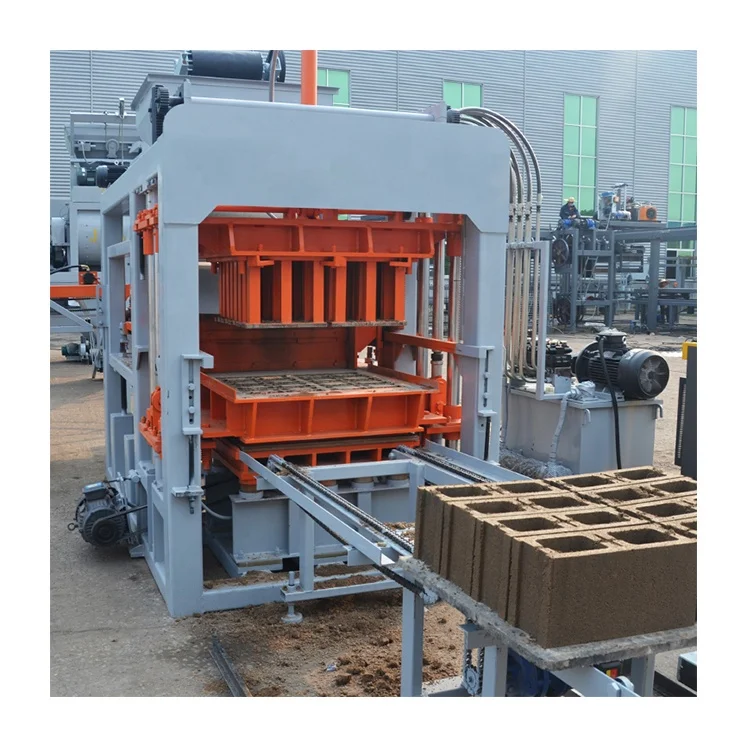
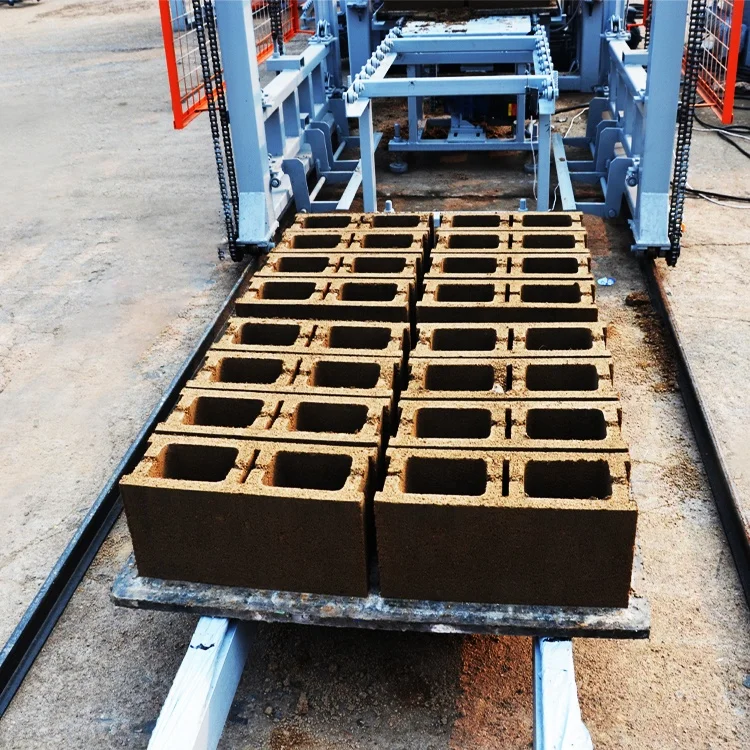 High quality block machine