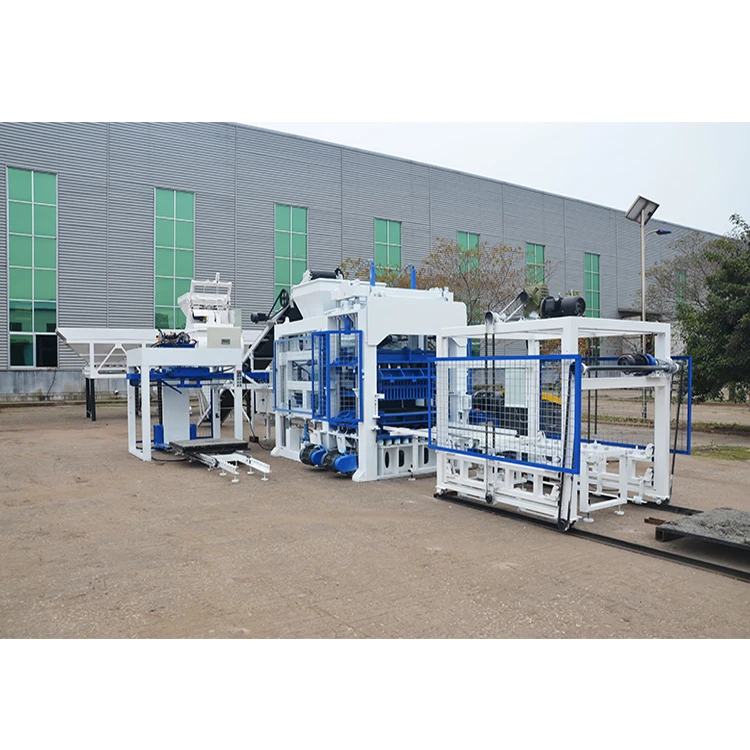
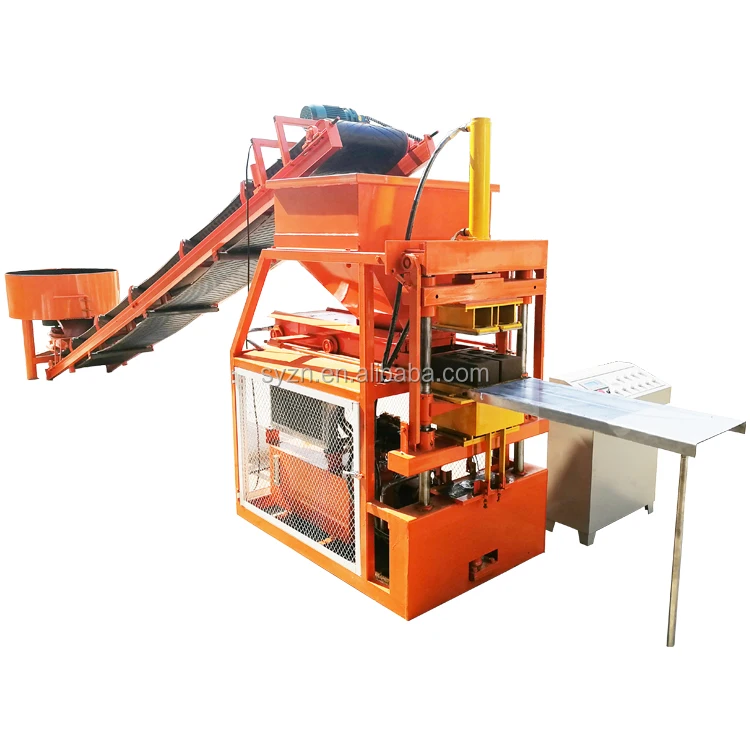
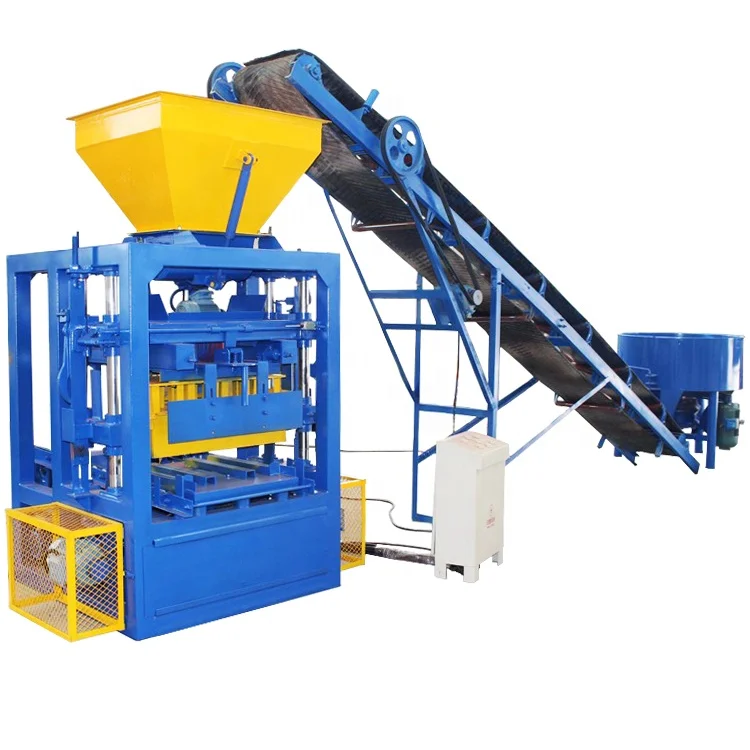
Single-focus machinery engineering — the QT6-15 is specified as one matched system covering press, mould, pallet and handling, rather than assembled from separate suppliers with mismatched cycle times.
Technical Specifications
| Parameter |
Value |
| Product Type |
Fully Automatic Hydraulic Vibration Block Making Machine |
| Model |
QT6-15 |
| Overall Dimensions (L×W×H) |
7400×1900×2660 mm |
| Molding Cycle |
15-25 s |
| Vibration Frequency |
4600 r/min |
| Exciting Power (Vibration Force) |
40-50 kN |
| Total Power |
31.25 kW |
| Mixer Model |
JQ350 |
| Pallet Size |
850×550×25 mm |
| Total Weight |
7 T |
| Applied Products |
paver, solid block, hollow block, curbstone |
| Raw Materials |
crushed stones, sand, cement, dust, fly ash |
| Control System |
PLC control system |
| Automation Level |
Fully automatic (hydraulic station, pallet feeder, brick conveyor, block sweeper) |
| Output Capacity (Hollow Block 400×200×200 mm) |
9600-13440 pcs/8hr (basis: 400×200×200mm format) |
| Output Capacity (Solid Brick 240×115×53 mm) |
16200-19440 pcs/8hr (basis: 240×115×53mm format) |
Application Suitability
| Application |
Material or Output |
| Hollow block production for structural walls |
Crushed stone, sand, cement, and fly ash mixes |
| Solid brick manufacturing for load-bearing masonry |
Dense aggregate and cement blends |
| Paver production for walkways and driveways |
Fine aggregate and cement with color pigment |
| Curbstone forming for road infrastructure |
High-strength concrete mixes with coarse aggregate |
What "9600 Pieces per Shift" Leaves Out About the QT6-15 Block Making Machine
Output figures only matter when the block format and mix design are named alongside them.
Many buyers compare quotations based on a single headline number, only to find the actual daily production falls short once their specific mould and local aggregate are on the line. A QT6-15 block making machine manufacturer quoting capacity without stating the assumed block size leaves the buyer carrying the risk. Real output depends on vibration force matched to the mix, hydraulic pressure tuned to the target density, and a pallet size that fits the curing area the buyer already operates. [NEED_CITE: factors affecting concrete block output capacity]

Where the QT6-15 Sits in the SHIYUE Machine Range
The QT6-15 occupies the mid-tier fully automatic position, bridging the gap between semi-automatic workshop machines and high-capacity continuous lines. Buyers stepping up from manual pallet handling find the integrated pallet feeder and brick conveyor remove the most labour-intensive stations without requiring the footprint of a large-scale plant. The PLC-controlled hydraulic station and vibration system are matched to the pallet size and cycle time, so the press does not sit idle waiting for upstream or downstream equipment. This fully automatic hydraulic block machine for sale targets producers who need consistent batch-to-batch density but are not yet ready to invest in full stacking and cubing automation.
Choosing the Right Tier Before the First Container Ships
Selecting the correct tier prevents two common mistakes: over-investing in capacity the site cannot feed, and under-investing in automation the local labour market cannot sustain. A first-time block plant entrepreneur often benefits from starting at this mid-tier level, where the machine, mixer, and pallet handling arrive as one coordinated package. [NEED_CITE: block plant investment and automation tier selection] Existing semi-automatic operators upgrading to the QT6-15 gain PLC-controlled consistency without retraining crews on an entirely different control philosophy. The footprint and utility requirements stay within reach of a standard industrial shed, keeping the civil works budget predictable.
Matching Vibration Force, Hydraulic Pressure, and Mix Design
The 4600 r/min vibration frequency and 40-50 kN exciting power work together with the hydraulic station to compact the concrete mix into the mould cavity. If the local aggregate contains high clay or dust content, the vibration force must be adjusted to prevent weak spots in the finished block. The 850×550×25 mm pallet size determines how many cavities each mould can hold, which in turn sets the realistic output for formats like 400×200×200 mm hollow blocks or 240×115×53 mm solid bricks. Total power of 31.25 kW covers the hydraulic pump, vibration motors, and conveyor drives, so the electrical supply must account for starting current across all three loads simultaneously.
The Hidden Cost of Skipping the Voltage Conversation
Arriving at the site to find the local supply is 60 Hz while the machine was built for 50 Hz means the hydraulic pump runs faster, the vibration motors exceed their rated speed, and the PLC may not boot at all. Commissioning delays of several weeks are typical while replacement transformers or variable-frequency drives are sourced locally. [NEED_CITE: voltage and frequency standards by export market] Confirming the target market’s electrical standard before production begins avoids this cost entirely and keeps the QT6-15 block making machine manufacturer aligned with the buyer’s site conditions from the first drawing review.
Why Source This Fully Automatic Hydraulic Block Machine for Sale Here
The QT6-15 is configured against the buyer’s actual mix design and target block format, not pulled from a catalogue default. Mould design covers the formats the buyer’s market sells, including custom drawings when standard sizes do not match local building codes. The automation level is selectable, allowing a buyer to start with manual stacking and add automatic cubing later without replacing the press. Installation support includes operator training on the PLC interface and hydraulic station maintenance. Wear parts and mould inventory are held to ensure replacements are available when the first change-out is due, rather than waiting for a production run to be scheduled.
Documentation & Verification
- Line layout and capacity calculation stating the block format assumed for each output figure
- Machine specification sheet confirming hydraulic pressure, vibration force, pallet size, and total power
- Mould drawing and format list showing cycle time per block size
- Voltage, frequency, and PLC display language confirmation before production
- Factory test record on the buyer’s target block format before dispatch
- Packing photographs and customs documentation support
Installation, Commissioning & Support
- Foundation plan matched to the 7400×1900 mm footprint and 7 T operating weight
- Dedicated electrical circuit sized for 31.25 kW total load and motor starting current
- Machine shipped in dismantled state with reassembly supervised on site
- First-run parameter setting for hydraulic pressure and vibration frequency against local mix
- Operator training on PLC interface, mould change procedure, and daily maintenance
- Wear parts and mould list provided with initial spare recommendations
What to Prepare Before Requesting a Quotation
Share the target block formats, daily output requirement, and a sample of the local aggregate including moisture and clay content. Confirm the site voltage, frequency, and preferred PLC display language so the QT6-15 block making machine manufacturer can lock these details before the build slot. If an existing curing area and forklift are already on site, provide the pallet dimensions and rack spacing so the handling equipment can be matched without re-purchasing downstream gear.
Frequently Asked Questions
Q: Where does the QT6-15 sit compared to semi-automatic models and higher-tier automatic lines?
A: The QT6-15 is the mid-tier fully automatic option, adding PLC control, automatic pallet feeding, and brick conveying to the press. It requires more floor space than a semi-automatic workshop machine but less than a high-capacity continuous line, making it suitable for producers who need batch consistency without the investment of a full stacking and cubing system.
Q: What plant footprint and utility connections does the QT6-15 require?
A: The machine footprint is 7400×1900 mm with additional space needed for the mixer, pallet return, and curing rack access. A dedicated electrical circuit must support 31.25 kW total power including motor starting current. Water supply for the mixer and curing area, plus a level concrete foundation, are the other primary utility requirements.
Q: Can I start semi-automatic and upgrade to full automatic stacking later?
A: Yes, the automation level is selectable at order and can be expanded afterward. The press, PLC, and hydraulic station remain the same; only the stacking and cubing stations are added. This lets buyers begin production with manual pallet handling and invest in automation as volume grows.
Q: Which block formats share the same pallet size?
A: The 850×550×25 mm pallet supports hollow blocks, solid bricks, pavers, and curbstones. Multiple mould formats fit the same pallet, so buyers can expand their product range without changing the pallet inventory or curing rack spacing.
Q: What voltage and PLC language options are available?
A: Voltage and frequency are confirmed to match the target market before production begins, and the PLC display language is set to the operator’s preference. Confirming these details early avoids commissioning delays once the machine arrives on site.

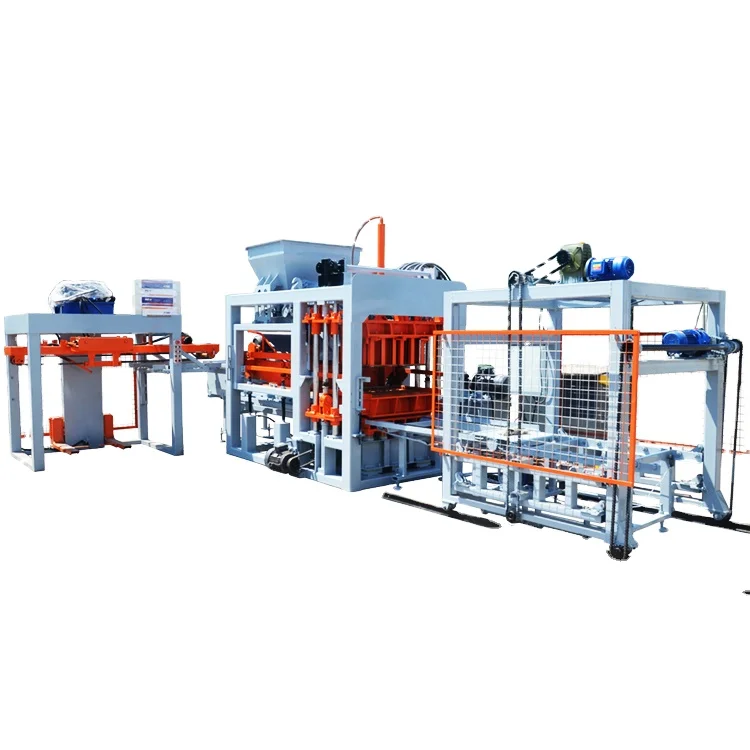
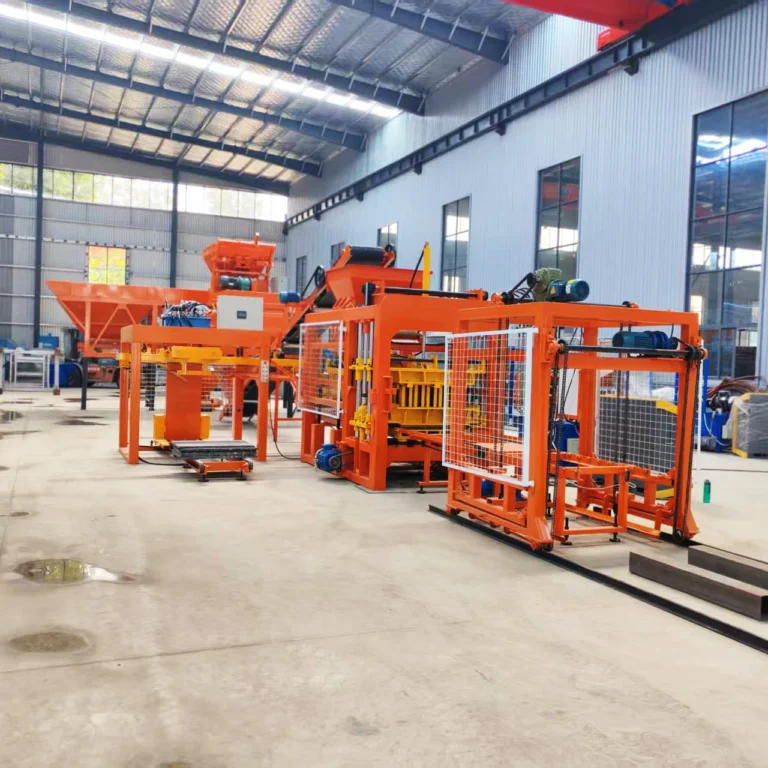 High quality block machine