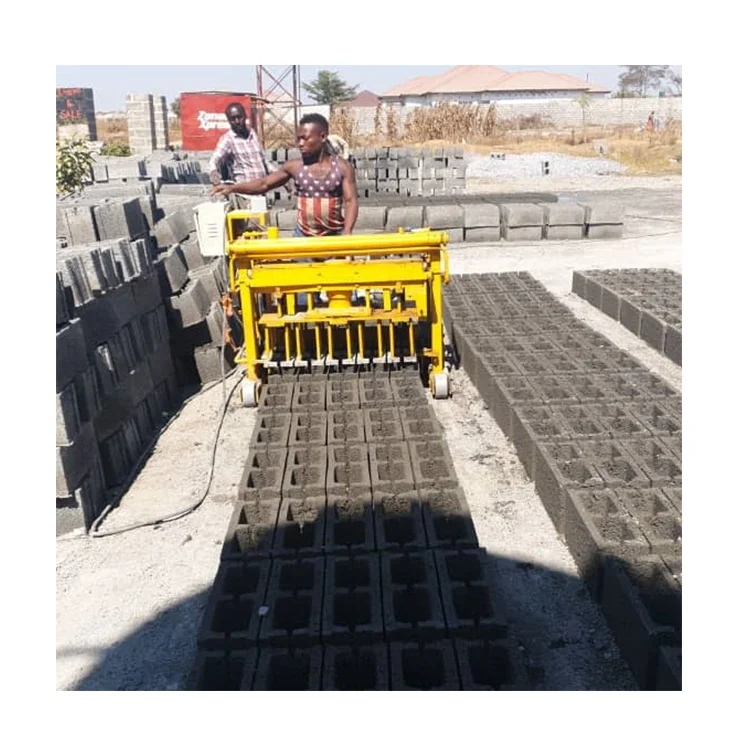
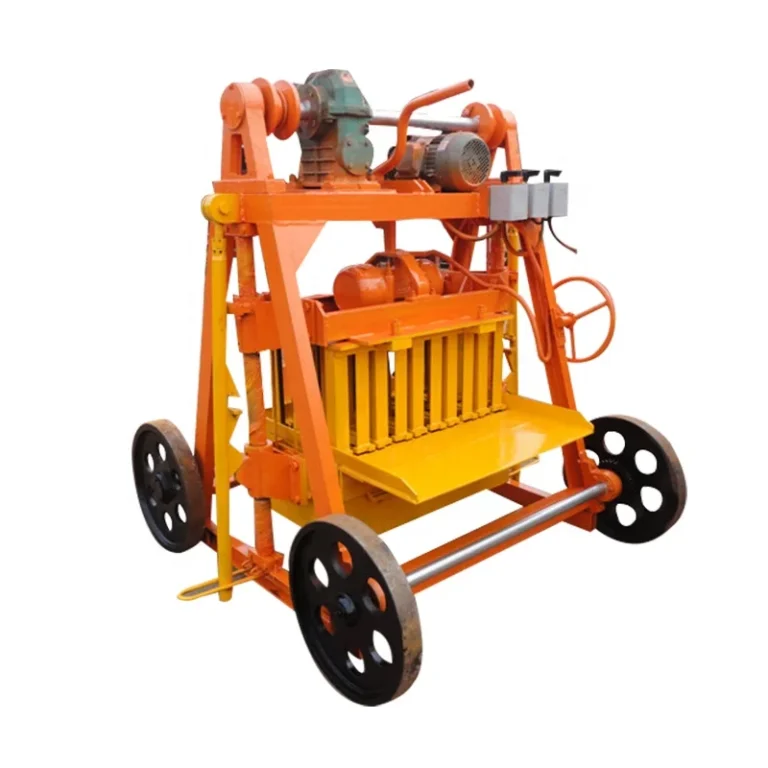
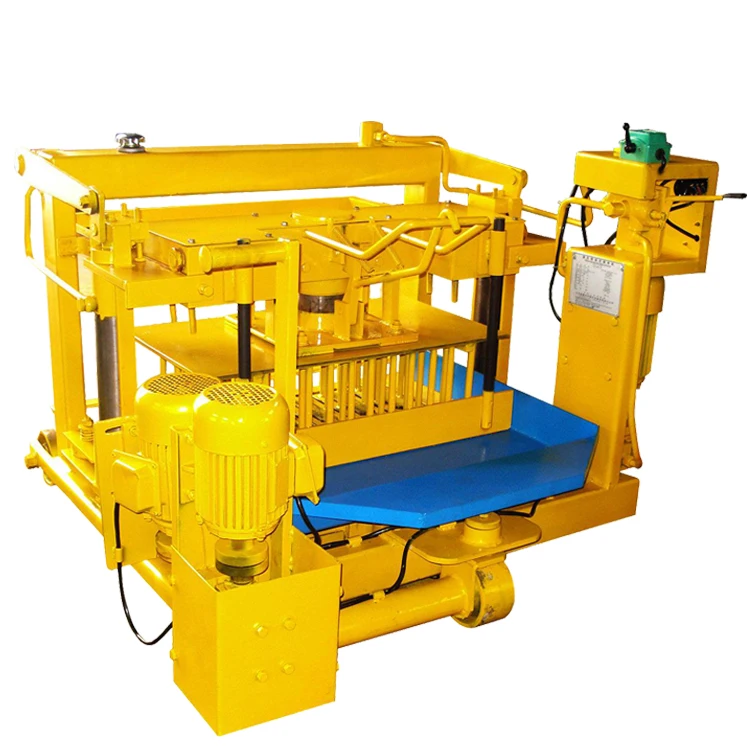
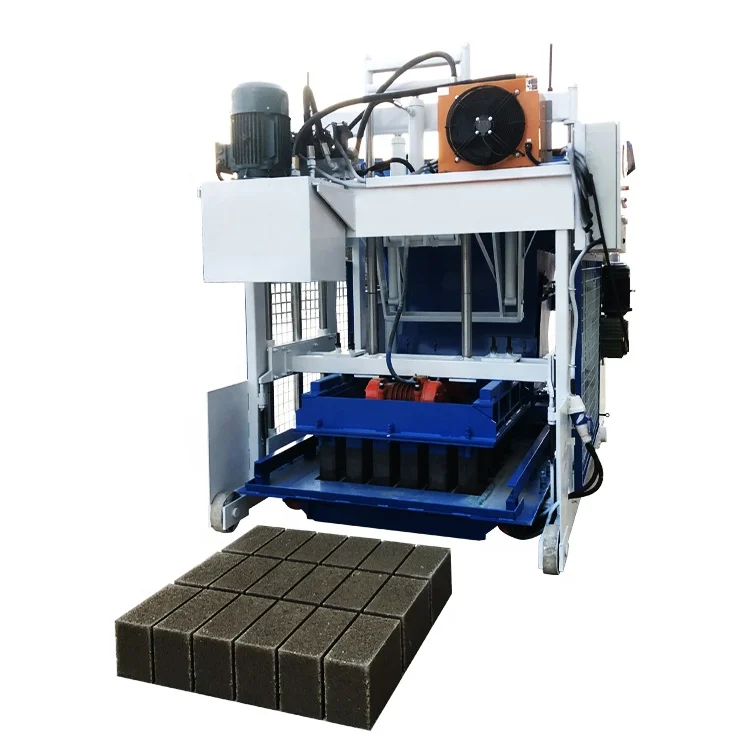
Single-Focus Block Machinery — Machine, mould, pallet and handling specified as one matched system, not assembled from separate suppliers, ensuring the QMJ4-45 mobile block making machine is configured against your actual site conditions and target block format.
Technical Specifications
| Parameter |
Value |
| Model |
QMJ4-45 |
| Product Type |
Manual Mobile Egg-Laying Block Making Machine |
| Vibration Method |
Mold vibration (double-vibration system) |
| Vibration Frequency |
2400 r/m |
| Molding Cycle |
40-45 seconds |
| Productivity (400×200×200mm) |
3000 pcs/day (basis: 8-hour shift, hollow block) |
| Productivity (400×150×200mm) |
3500 pcs/day (basis: 8-hour shift, hollow block) |
| Productivity (400×120×200mm) |
4500 pcs/day (basis: 8-hour shift, hollow block) |
| Power Source |
Diesel/Petrol engine |
| Total Power |
6KW |
| Automation Level |
Manual (egg-laying / mobile) |
| Demold Method |
Manual |
| Pallet Requirement |
Not required (egg-laying design) |
| Control System |
Manual operation |
| Standards |
CE (certificate validity to be verified) |
Application Suitability
| Application |
Material or Output |
| On-site hollow block production |
Concrete mix with local aggregate, laid directly on compacted ground |
| Remote project sites |
Off-grid locations without stable electrical supply, powered by diesel/petrol engine |
| Low-investment block production |
Entrepreneurs starting first block plant without pallet inventory or fixed infrastructure |
| Housing development projects |
Contractors producing blocks at project sites, avoiding transport from distant plants |
Why "Daily Output" Figures Can Mislead Buyers Without Context
Capacity quoted in cycles per hour without stating which block format that figure assumes often leaves buyers with real daily output falling far short of expectation. The QMJ4-45 mobile block making machine manufacturer specifications break down output per specific hollow block size with an 8-hour shift assumption, not a single blanket figure. When a buyer sees "4000 pieces per day," the immediate question should be: based on what format? A 400×120×200mm hollow block allows more pieces per mould than a 400×200×200mm block, which completely changes the daily tally. Without this clarity, procurement decisions rest on incomplete data, and site planning suffers when actual production cannot meet project schedules. I have watched contractors base their entire curing area layout on an optimistic number that was never tied to their actual product mix [NEED_CITE: capacity calculation transparency standards for block machinery].

Positioning Within the Mobile Block Machine Range
The QMJ4-45 sits at the entry point of the mobile block machine range, designed for buyers who need production directly on the construction site without investing in a fixed plant or electrical infrastructure. This mobile block making machine manufacturer offers the QMJ4-45 as the foundation tier, where manual operation and engine power meet basic hollow block demand. Buyers surveying options for a first or replacement machine can use this model to understand what mobile production delivers before considering semi-automatic or fully automatic tiers that require pallet systems and grid power.
Engine Power and the No-Pallet Advantage
The diesel/petrol engine eliminates dependence on grid electricity, making the machine deployable at remote project sites where generators are unreliable or absent. The egg-laying design means blocks are laid directly on the ground as the machine moves forward, removing pallet investment and pallet handling logistics from the buyer’s setup cost entirely. This configuration suits contractors who cannot justify pallet inventory for a single project, or entrepreneurs testing block production before committing to a full plant with curing racks and forklift systems [NEED_CITE: mobile block machine operational requirements for developing infrastructure markets].
Vibration Frequency, Molding Cycle, and Block Density
The 2400 r/m vibration frequency works with the double-vibration molding core to compact the concrete mix into the mould cavity, achieving higher block density than single-vibration predecessors. The 40-45 second molding cycle applies across three hollow block sizes, but the pieces-per-mould count shifts from 4 pieces (400×200×200mm) to 5 pieces (400×150×200mm) to 6 pieces (400×120×200mm). This vibration method ensures consistent compaction even with locally sourced aggregate that may vary in particle size. The 6KW total power rating reflects the manual demold and turning methods, keeping energy demand within what a portable generator or small diesel engine can sustain throughout an 8-hour shift.
The Cost of Skipping Site Condition Verification
When a mobile block making machine arrives at a site with uneven ground or inadequate curing space, production stalls regardless of the machine’s rated cycle time. Buyers who skip ground flatness assessment find that egg-laying machines produce tilted or cracked blocks that fail strength requirements. Similarly, when local aggregate sourcing is not confirmed before ordering, the mix design may not suit the vibration frequency, resulting in blocks that crumble during demolding. I have seen machines sit idle for weeks because the buyer assumed any flat surface would work, only to discover that compacted gravel was necessary for consistent block quality [NEED_CITE: ground preparation standards for mobile egg-laying block machines].
Why Procurement Through This Channel Matters
Block machinery as a single focus means the QMJ4-45 machine, mould, and supporting documentation are specified as one matched system rather than assembled from separate suppliers. Configuration is set against the buyer’s actual mix design and target block format, not a catalogue default. Mould design and supply cover the formats the buyer’s market sells, including custom drawings for non-standard hollow block dimensions. Installation and commissioning support includes operator training specific to manual egg-laying operation, so the crew understands demold timing and machine movement patterns. Documentation includes a line layout and capacity calculation stating the block format assumed, preventing the output mismatch that plagues generic quotations.
Documentation & Verification
- Capacity calculation document stating daily output per hollow block format with 8-hour shift assumption
- Mould drawing and format list confirming machine compatibility with your local market’s block dimensions
- Factory test record verifying vibration frequency, molding cycle, and demold performance before shipment
- Wear parts and mould list with lead times for replacement components at first purchase
- Operation and maintenance manual covering manual demold procedures and engine maintenance schedules
Installation, Commissioning & Support
- Ground flatness assessment required for egg-laying operation, with compacted gravel base recommended for consistent block quality
- Diesel/petrol engine maintenance schedule provided, including oil change intervals and fuel filter replacement procedures
- Manual demold training covers 40-45 second cycle timing and proper machine movement to avoid block damage
- Mould change procedures documented for switching between 400×200×200mm, 400×150×200mm, and 400×120×200mm formats
- Vibration system inspection checklist for maintaining 2400 r/m frequency and identifying wear on vibration components
- Spare mould availability confirmed at purchase, with lead times for custom formats based on buyer drawings
What Information Shapes Your Machine Configuration
To match the QMJ4-45 to your actual production needs, provide your target hollow block dimensions and the daily output you require per format. Confirm whether your site has access to diesel fuel or petrol, and describe the ground conditions where blocks will be laid. Share your local aggregate source and any existing mix design you use, so the vibration frequency can be evaluated against your material. If you plan to produce multiple block formats, specify which sizes your market demands so the mould package covers your range from day one.
Frequently Asked Questions
Q: How is daily output verified, and what block format does each figure assume?
A: The 3,000 / 3,500 / 4,500 pieces per day figures are broken down by hollow block dimension (400×200×200mm, 400×150×200mm, 400×120×200mm respectively), with each assuming an 8-hour shift and 40-45 second molding cycle. The pieces-per-mould count shifts from 4 to 5 to 6 across these formats, which is why a single blanket output figure is misleading.
Q: Where does the QMJ4-45 sit within the full block machine range?
A: The QMJ4-45 is the entry-level mobile tier, positioned for buyers who need on-site production without fixed plant infrastructure. Buyers requiring higher output, pallet-based curing systems, or automatic stacking should consider semi-automatic or fully automatic tiers that offer different automation and handling configurations.
Q: What site conditions are required to operate a mobile egg-laying machine?
A: The ground must be flat and compacted to prevent tilted blocks during egg-laying operation. Adequate curing area is needed adjacent to the production path, and local aggregate must be compatible with the 2400 r/m vibration frequency to achieve proper block density and strength.
Q: Can the machine be upgraded to semi-automatic or automatic later?
A: The QMJ4-45 is a standalone mobile unit without an upgrade path to pallet-based systems. Buyers anticipating growth typically purchase this model for immediate site needs, then invest in a separate semi-automatic or automatic line as production volume and format requirements expand.
Q: What mould formats are available, and can custom moulds be supplied?
A: Standard hollow block moulds in three sizes are available, with custom mould design offered based on buyer drawings for non-standard formats. The mould package is specified during inquiry to match the block dimensions your local market actually sells.

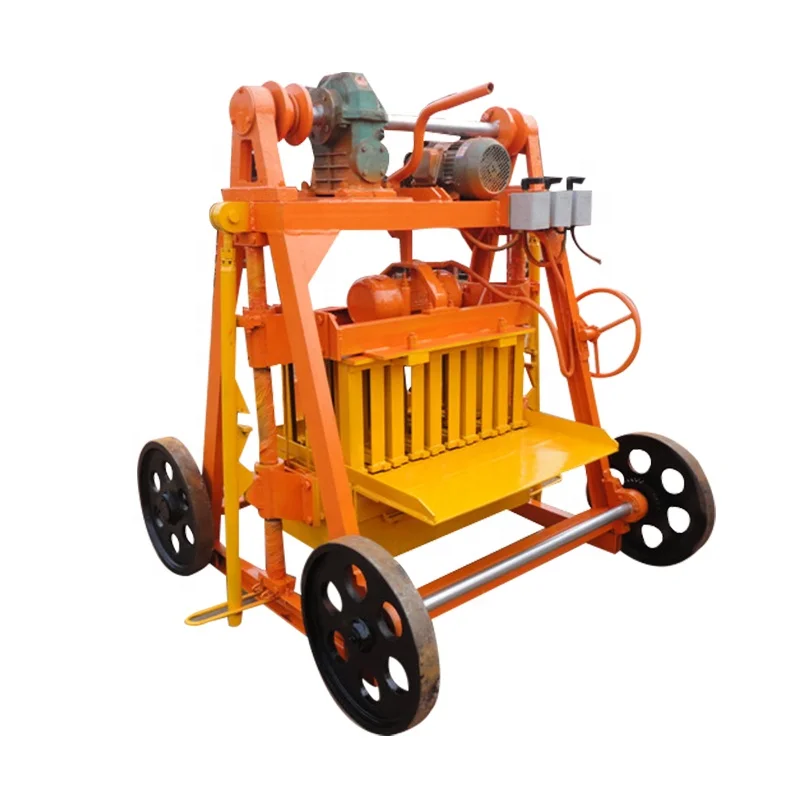
 Mobile block machine