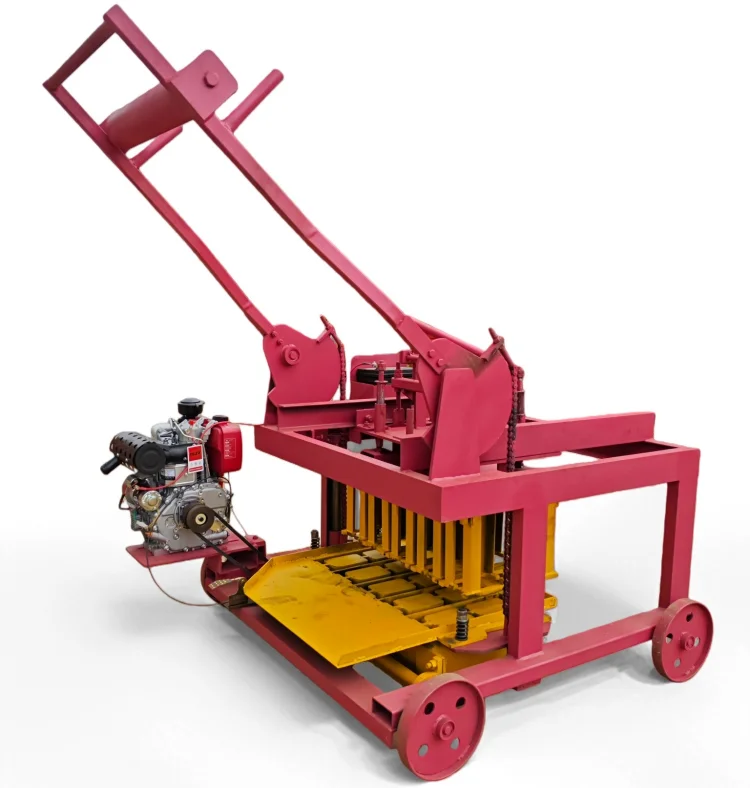
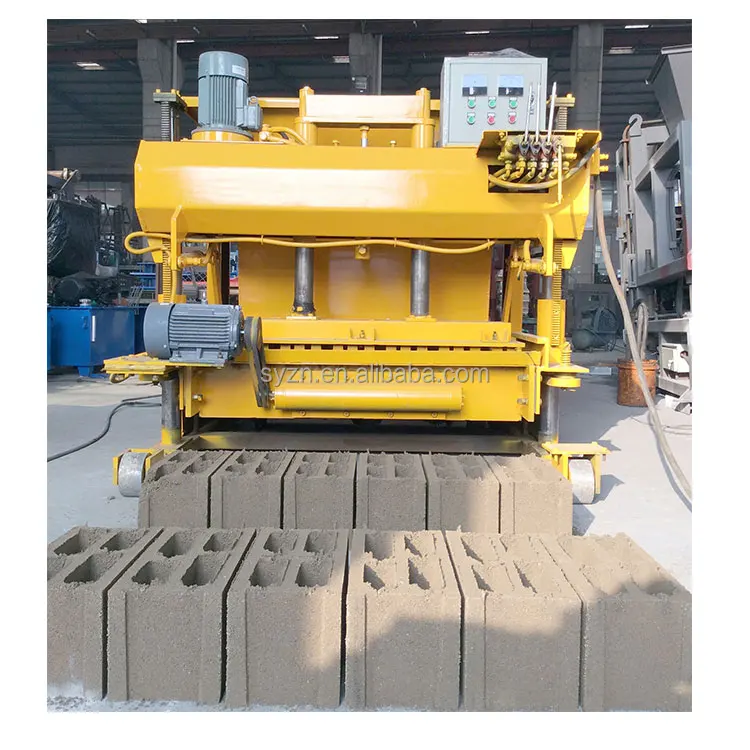
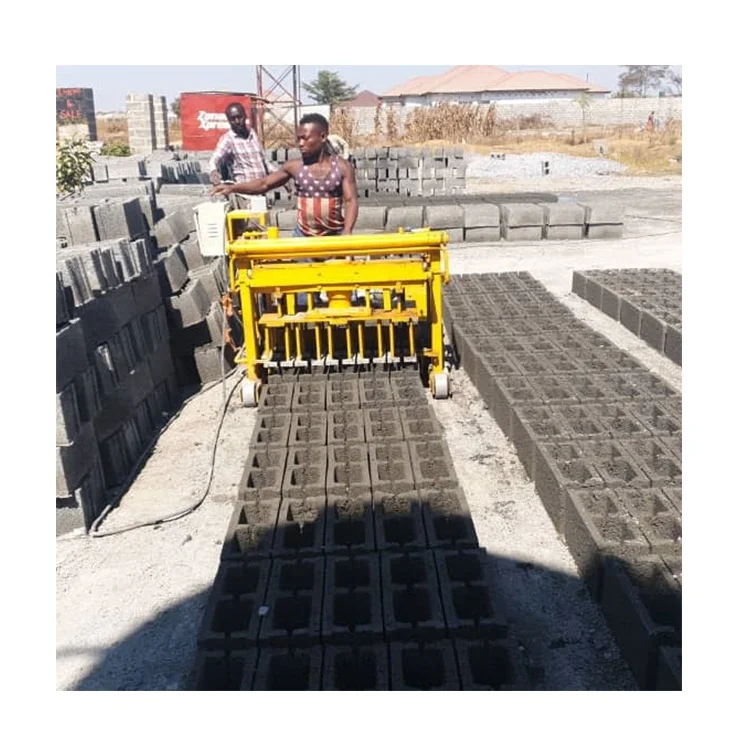
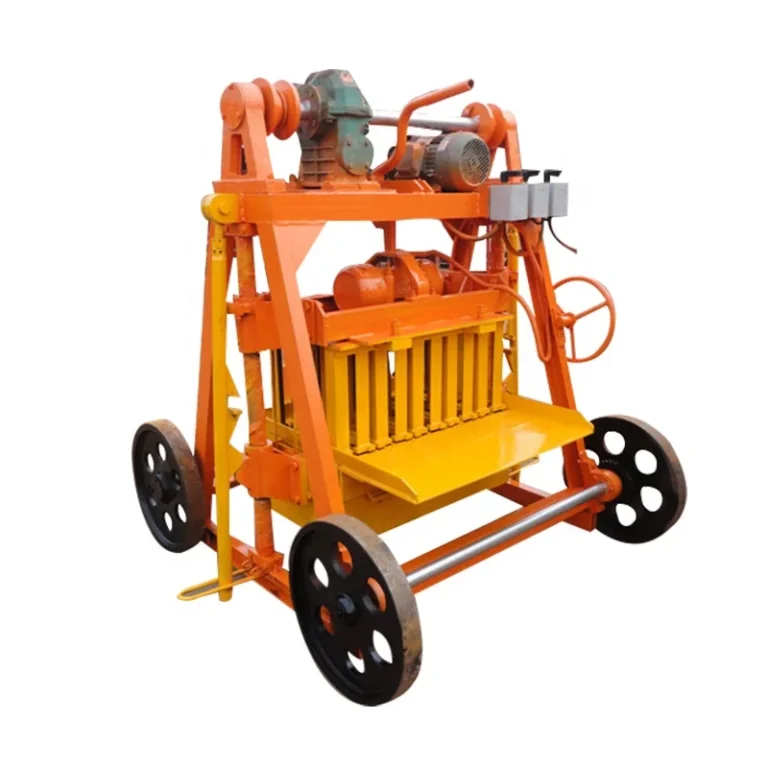
Egg-Laying Design Eliminates Pallet Costs — The QMJ2-45 mobile block making machine for sale deposits hollow blocks directly onto the ground, removing the need for pallet investment, curing racks, and forklift infrastructure entirely from your initial setup.
Technical Specifications
| Parameter |
Value |
| Model |
QMJ2-45 |
| Product Type |
Mobile Block Making Machine |
| Mould Format |
Hollow brick, multiple size options |
| Block Size Options |
400×200×200 mm / 400×150×200 mm / 400×100×200 mm |
| Qty per Mould |
2 pcs (400×200×200) / 3 pcs (400×150×200) / 4 pcs (400×100×200) |
| Molding Cycle |
25–30 seconds |
| Output Capacity |
160 pcs/h based on 400×200×200 mm hollow block, 2 pcs/mould |
| Output Capacity |
240 pcs/h based on 400×150×200 mm hollow block, 3 pcs/mould (basis to be confirmed) |
| Output Capacity |
320 pcs/h based on 400×100×200 mm hollow block, 4 pcs/mould |
| Daily Output (8 hr) |
1280 pcs (400×200×200) / 2560 pcs (400×100×200) |
| Pallet Requirement |
None (egg-laying type) |
| Labor Requirement |
1 to 3 workers |
| Automation Level |
Manual operation |
| Mobility |
Free-moving, suitable for small spaces |
| Control System |
Manual |
| Mould Change |
Interchangeable moulds for different hollow brick formats |
| Stacking Method |
Blocks cured in place on the ground |
| Hydraulic Pressure |
Not applicable (manual egg-laying type) |
| Standards |
ISO 9001:2000, CE |
Application Suitability
| Application |
Material or Output |
| Small-scale on-site hollow block production |
Cement, sand, crushed stone, and local aggregate blends |
| Entrepreneur first block plant with low investment |
Hollow blocks in 400×200×200 mm and 400×100×200 mm formats |
| Construction contractor on-site block making |
Hollow bricks produced directly at the building site without fixed plant |
| Rural or remote area block supply |
Lightweight hollow blocks from locally sourced red soil or sand-cement mix |
| Limited-space block production |
Egg-laying output in constrained yards or small plots |
Why "160 Pieces per Hour" Needs a Format Attached
Capacity figures only mean something when you know which block size they assume.
I once traveled to a job site where a contractor had ordered a small mobile block making machine for sale based on a headline hourly output number. When the machine arrived and they started running 400×200×200 mm hollow blocks, the actual throughput was less than half what they had budgeted for. The issue was not the machine — it was that the quoted capacity assumed a smaller format. With the QMJ2-45, every output figure here is tied to a specific block size and mould cavity count, so you can compare tiers on equal ground before committing [NEED_CITE: capacity calculation standards for concrete block machinery]. The difference between 160 and 320 pieces per hour is not a performance gap — it is simply the difference between a two-cavity and a four-cavity mould.

Where the QMJ2-45 Sits in the Full Machine Range
The QMJ2-45 occupies the entry tier of a complete block machine lineup that stretches from manual mobile units through semi-automatic stationary lines up to high-capacity automatic plants. For a buyer evaluating options, this mobile block making machine for sale represents the lowest investment point — no pallets, no curing racks, no batching plant required. It is the starting position on a spectrum, not a standalone solution for every project.
How the Range Scales Beyond Mobile
Moving up from this manual mobile tier, semi-automatic lines introduce pallet-based production with mixer and conveyor integration, while automatic plants add PLC-controlled batching, stacking, and cubing. The decision between tiers depends on your target daily volume, available site area, and whether you plan to grow output over time. A mobile egg-laying machine keeps your initial footprint small, but understanding what the next tier offers helps you plan ahead [NEED_CITE: block plant expansion planning considerations].
Reading the Specs That Actually Matter for Mobile Production
The 25–30 second molding cycle applies across all listed hollow brick formats, meaning the machine completes one press-and-release sequence in roughly half a minute regardless of whether you are running the 2-cavity or 4-cavity mould. Vibration force, while not published as a kN rating for this manual tier, works alongside the manual tamping action to compact the cement-aggregate mix into the mould cavity. The interchangeable mould system lets you switch between 400×200×200 mm, 400×150×200 mm, and 400×100×200 mm formats — but mould change time should be confirmed before assuming same-day format swaps are practical. Power requirements including voltage and motor kilowatt rating must be matched to your local supply before the machine ships, as this configuration is not stated as a fixed value.
The Hidden Cost of Overlooking Site Conditions
I have seen buyers place mobile egg-laying machines on uneven, unprepared ground and then wonder why block corners chip during the laying cycle. Without a level concrete floor or compacted earth base, the machine frame tilts mid-cycle, producing blocks with inconsistent wall thickness. Local aggregate properties also matter — a mix designed for river sand will not perform the same way with crushed volcanic rock, and the vibration characteristics of a manual mobile unit leave little room for compensation. Confirming your raw material source and ground preparation before ordering prevents most on-site disappointments [NEED_CITE: effect of aggregate type on hollow block density].
Why Buyers Source This Tier Through a Range-Focused Supplier
Block machinery is the single focus here, which means the QMJ2-45 is specified as part of a matched system — mould, pallet compatibility for future upgrades, and handling equipment are all considered together rather than sourced from separate vendors. Configuration is set against your actual mix design and local aggregate, not pulled from a catalogue default. Mould design covers the hollow brick formats your market actually sells, with custom drawings available. The automation level is selectable, so starting with a manual mobile unit does not lock you out of semi-automatic or automatic tiers later. Installation guidance includes operator training specific to egg-laying operation in your site conditions.
Documentation & Verification
- Line layout and capacity calculation stating which hollow block format each output figure assumes
- Machine specification sheet confirming motor power and voltage for your local grid
- Mould drawing and format list matching the hollow brick sizes your market sells
- Factory test record documenting molding cycle and block dimensions before dispatch
- CE declaration and compliance documentation where applicable to your import market
Installation, Commissioning & Support
- Ground preparation guide specifying the level concrete or compacted base needed for egg-laying operation
- Voltage and frequency confirmation before shipment to match your local power supply
- Assembly instructions for manual mould change and interchange between the three hollow brick formats
- On-site commissioning support with operator training for 1 to 3 worker crews
- Wear parts list covering mould liners and vibration components for first replacement planning
- Maintenance schedule aligned with the 25–30 second cycle frequency and daily output targets
What to Include in Your Inquiry
To size the QMJ2-45 correctly within the range, share the hollow block formats your local market sells, your target daily output, and the type of aggregate available at your site. Confirm your local voltage and frequency so the motor can be matched before production begins. If you anticipate growing beyond manual mobile output, mention your expansion timeline so the proposal can map a clear path to semi-automatic or automatic tiers.
Frequently Asked Questions
Q: How do I verify the real daily output and what block format is each capacity figure based on?
A: Every output figure listed for the QMJ2-45 is tied to a specific block size and mould cavity count — 160 pcs/h assumes 400×200×200 mm blocks at 2 per mould, while 320 pcs/h assumes 400×100×200 mm at 4 per mould. Daily output is calculated on an 8-hour shift. We provide a capacity calculation document with your quotation stating the format assumed.
Q: Where does the QMJ2-45 mobile tier sit compared to semi-automatic and automatic machines?
A: The QMJ2-45 is the entry tier — manual operation, egg-laying design, no pallets required, and the smallest site footprint. Semi-automatic lines add pallet-based production with mixer integration, and automatic plants introduce PLC batching, stacking, and cubing. The right tier depends on your volume target and whether you plan to scale.
Q: What voltage, frequency, and power supply does this machine require for my market?
A: Motor power and voltage specifications for the QMJ2-45 are configured to match your local grid. Share your country’s standard voltage and frequency during inquiry so the correct motor is fitted before shipment. This avoids commissioning delays and protects the motor from supply mismatch.
Q: What site conditions does a mobile egg-laying machine need versus a stationary line?
A: The QMJ2-45 requires a level, compacted ground surface or concrete floor for consistent block quality. Unlike stationary lines, it needs no fixed foundation, curing racks, or pallet storage area. The trade-off is that output cures in place, so you need sufficient open space around the machine for blocks to set undisturbed.

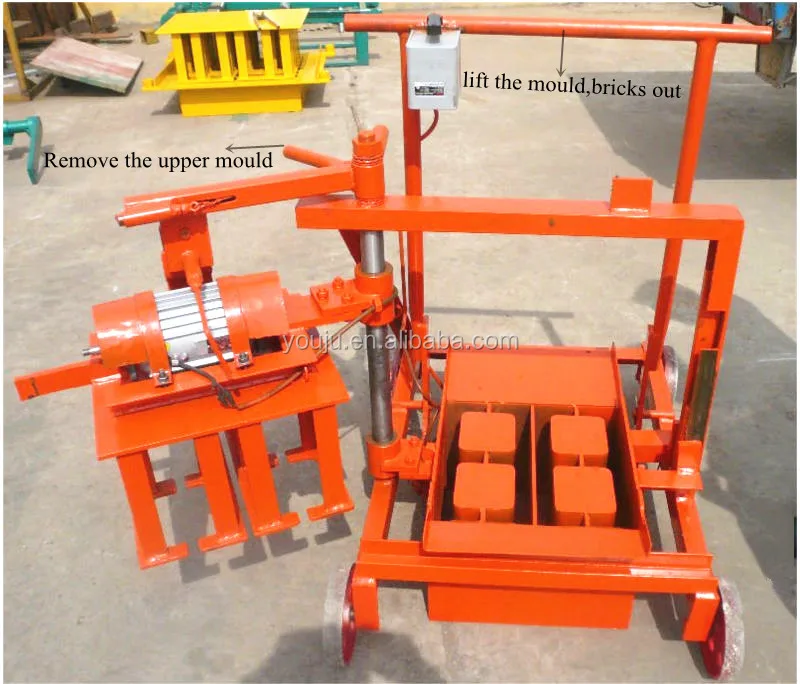
 Mobile block machine