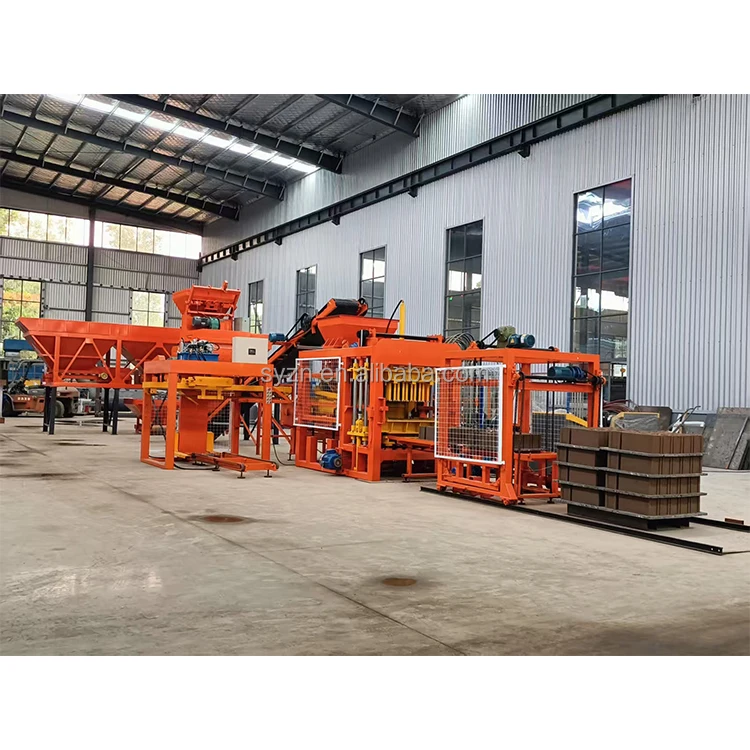
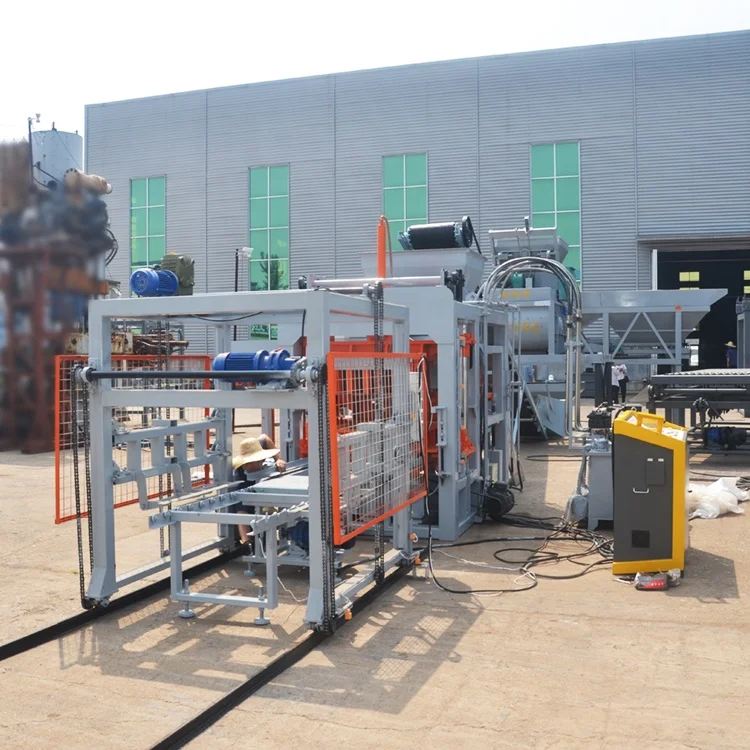
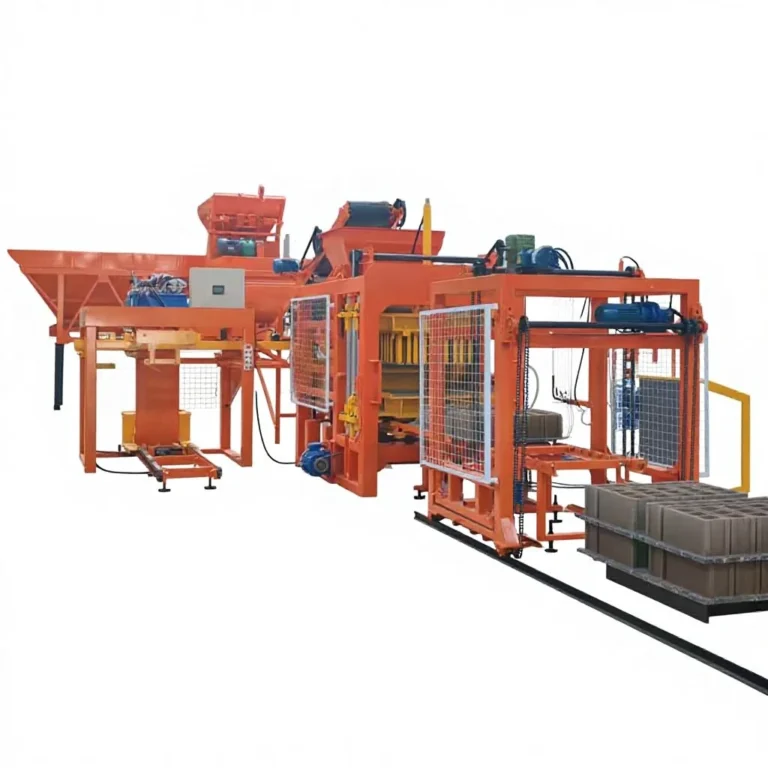
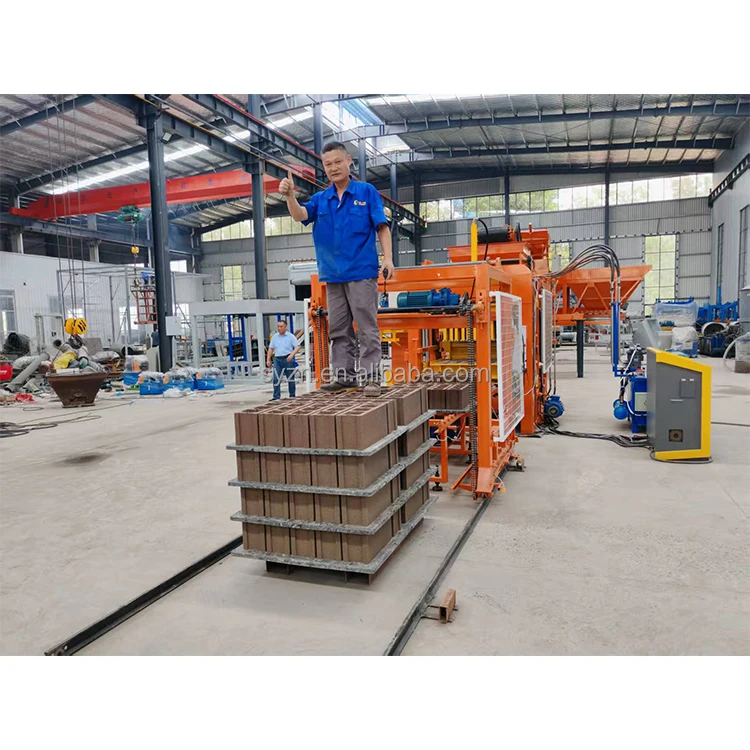
Matched system engineering — the QT8-15 block machine, pallets, moulds and handling are specified together so cycle times align across every station, not assembled from disconnected suppliers.
Technical Specifications
| Parameter |
Value |
| Model |
QT8-15 |
| Product Type |
Automatic Hydraulic Concrete Block Making Machine |
| Overall Dimensions (L×W×H) |
8300 × 1860 × 3000 mm |
| Molding Cycle |
15–20 s (basis to be confirmed per block format) |
| Vibration Force (Exciting Power) |
55 kN |
| Rated Power |
37.2 kW |
| Mixer Model |
JS750 |
| Pallet Size |
1020 × 900 mm |
| Total Weight |
8 T |
| Control System |
PLC |
| Hydraulic Station |
Included |
| Included Equipment |
Pallet feeder, material feeder, block conveyor, block sweeper, hydraulic unit, PLC control unit, block mould |
| Voltage & Frequency |
Configurable to buyer site (basis to be confirmed) |
| PLC Display Language |
Selectable at order (basis to be confirmed) |
Application Suitability
| Application |
Material or Output |
| Hollow block production for residential and commercial walls |
Crushed stone, sand, cement, fly ash |
| Solid block manufacturing for load-bearing structures |
Crushed stone, sand, cement, dust |
| Concrete paver runs for driveways, walkways and public spaces |
Crushed stone, sand, cement with fine aggregate |
| Curbstone forming for road and kerb infrastructure |
Coarse aggregate blended with cement and sand |
Why "Cycles per Hour" Tells Only Half the Story
Capacity only matters when it is tied to the block format you actually sell.
Many automatic hydraulic block making machine manufacturer catalogues quote a single cycles-per-hour number without naming the mould that figure assumes. On a hollow block the cycle is short and the pallet fills most of its area; switch to a dense paver and the vibration time lengthens, the feed volume changes, and daily output drops. A buyer who planned a plant around an optimistic number ends up short on delivery commitments before the first month closes. I saw this happen on a project in Mozambique where the quoted capacity assumed a lightweight hollow block, but the customer’s market demanded a high-density solid block made with local river sand — the real daily output was noticeably lower than expected [NEED_CITE: block format effect on cycle time and daily output].

Where the QT8-15 Sits in the Complete Machine Range
The QT8-15 belongs to the automatic tier of our range, positioned between entry-level semi-automatic machines and high-capacity fully automatic lines. For an entrepreneur setting up a first block plant, it removes the manual pallet handling and stacking labour that define the lower tier. For an established producer replacing older equipment, it offers a step up in consistency through PLC-controlled cycles without the footprint and investment of a high-output line.
Automation Scope and What It Actually Covers
Automation on this automatic hydraulic block making machine manufacturer configuration covers the press cycle, material feeding, pallet feeding, block conveying, and sweeping. The included pallet feeder and block conveyor link the press to downstream curing, but the scope of automatic stacking and cubing is configurable. Before the order is finalized, we confirm which stations operate without manual intervention and which still require an operator. This prevents the situation where a buyer assumes full-line automation but must still hand-stack output at the curing racks [NEED_CITE: automation level definitions in block production lines].
Reading the Core Specifications
The 55 kN vibration force works in combination with hydraulic pressure to compact the concrete mix inside the mould cavity. Vibration alone cannot achieve target density — the hydraulic station applies downward pressure during the cycle so aggregate particles lock into position rather than settling loosely. The 1020 × 900 mm pallet size is a deliberate choice: it determines how many blocks fit per cycle, how much curing floor space one pallet occupies, and which forklift class can handle loaded pallets. If the buyer’s existing curing area is sized for smaller pallets, the layout must be rethought before the machine arrives. The JS750 mixer is matched to the press feed rate so the hopper never starves the mould during continuous cycling. At 37.2 kW rated power, the electrical supply must account for the motor starting surge, which is considerably higher than the running load — this affects cable sizing and breaker selection at the plant.
The Cost of Skipping Configuration Confirmation
When voltage, frequency, and PLC display language are left unconfirmed until after shipment, commissioning stalls. The electrician cannot wire the panel, the operator cannot read the screen, and the machine sits idle while replacement components are sourced. A mismatch between the machine’s configured mix design and the buyer’s locally available aggregate produces blocks that fail compressive strength tests. The buyer then spends weeks reformulating the mix or importing materials at a premium — a problem that could have been caught by sending an aggregate sample and target strength before the build began [NEED_CITE: aggregate variability and block compressive strength].
Why Buyers Place the Order Here
Block machinery is our single focus, so the QT8-15 is never quoted as a standalone press — mould, pallet, feeder, conveyor, and sweeper arrive as one matched set. Configuration is built around the buyer’s actual mix design, local aggregate, and target block format rather than a catalogue default. Mould design covers the formats the buyer’s market demands, including custom drawings when standard sizes do not apply. The automation level is selectable, so a buyer can begin with the included pallet feeder and conveyor, then add automatic stacking later. Installation support includes operator training on the specific PLC interface and hydraulic system the buyer receives.
Documentation & Verification
- Line layout drawing stating output per block format, not just cycles per hour
- Machine specification sheet confirming voltage, frequency, and PLC language before build
- Mould drawing and format list showing included and optional block sizes
- Factory test record with photographs taken on your specified mould
- Packing photographs documenting crate condition before container loading
Installation, Commissioning & Support
- Foundation plan accounts for the 8300 × 1860 mm footprint and vibration isolation
- Dedicated circuit sized for the 37.2 kW rated load plus motor starting surge
- Machine ships dismantled for container loading; reassembly supervised on site
- First-run commissioning includes cycle tuning on your block format and mix
- Operator training covers PLC navigation, mould change procedure, and daily checks
- Wear parts list identifies hydraulic seals and mould liners by part number
Before You Send the Inquiry
To size the QT8-15 to your operation, share the block formats your market buys most, your target daily output per format, and the raw materials available locally with aggregate samples if possible. Confirm your site voltage, frequency, and preferred PLC display language. If you already operate a curing yard or forklift fleet, send the pallet dimensions those systems accept so the 1020 × 900 mm pallet can be confirmed or adjusted.
Frequently Asked Questions
Q: How is the QT8-15 output capacity calculated, and for which block format?
A: Capacity is stated per block format because cycle time, mould cavity count, and feed volume all change between hollow blocks, solid blocks, pavers, and curbstones. Our proposal lists output for each format you plan to produce rather than quoting a single number that assumes one specific mould.
Q: Where does the QT8-15 sit compared to semi-automatic and higher-tier machines?
A: It occupies the automatic tier — above semi-automatic machines that require manual pallet handling, and below high-capacity lines designed for large-scale plants. It suits buyers who want PLC-controlled consistency without the investment and footprint of the top tier.
Q: What voltage, frequency, and PLC language options are available?
A: The electrical system is configured to your site supply before production begins. The PLC display language is selectable at order. We confirm both during the proposal stage so commissioning is not delayed after arrival.
Q: What equipment is included, and what do I need to source separately?
A: The set includes the press, JS750 mixer, pallet feeder, material feeder, block conveyor, sweeper, hydraulic unit, PLC panel, and at least one mould. Downstream stacking, curing racks, and cubing are configurable — we confirm scope during the proposal.
Q: Can I order custom moulds for block sizes specific to my local market?
A: Yes. Mould design covers standard formats and custom sizes built to your drawings. We provide a mould drawing and format list before production so every included and optional block size is documented.

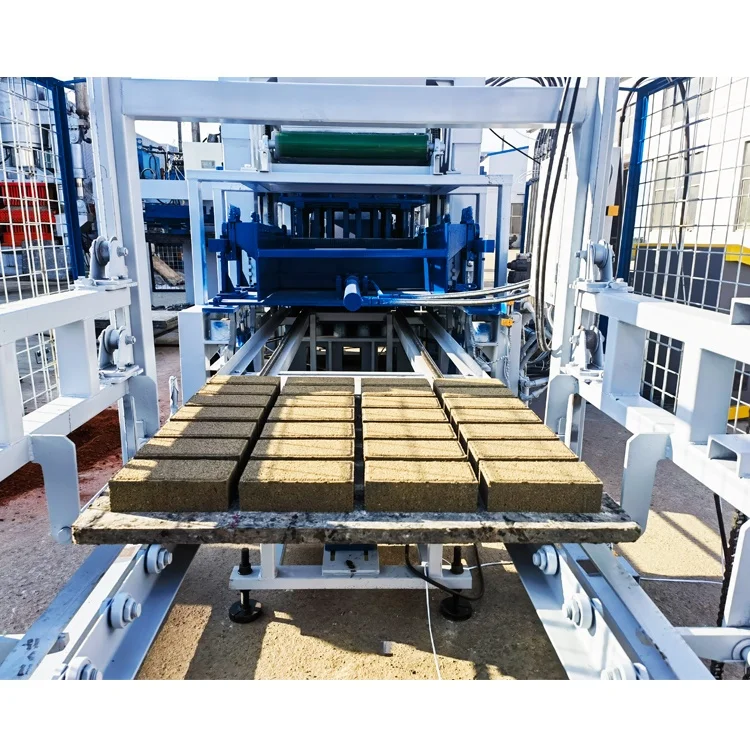
 High quality block machine