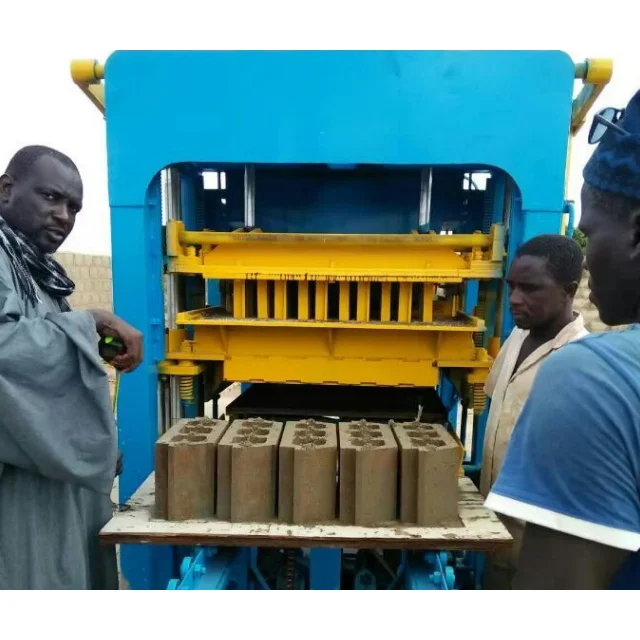
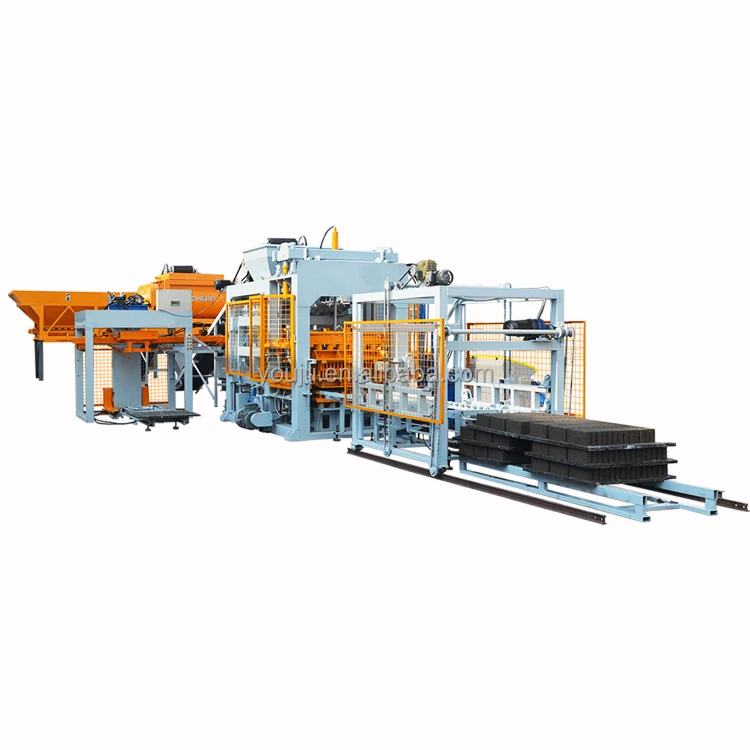
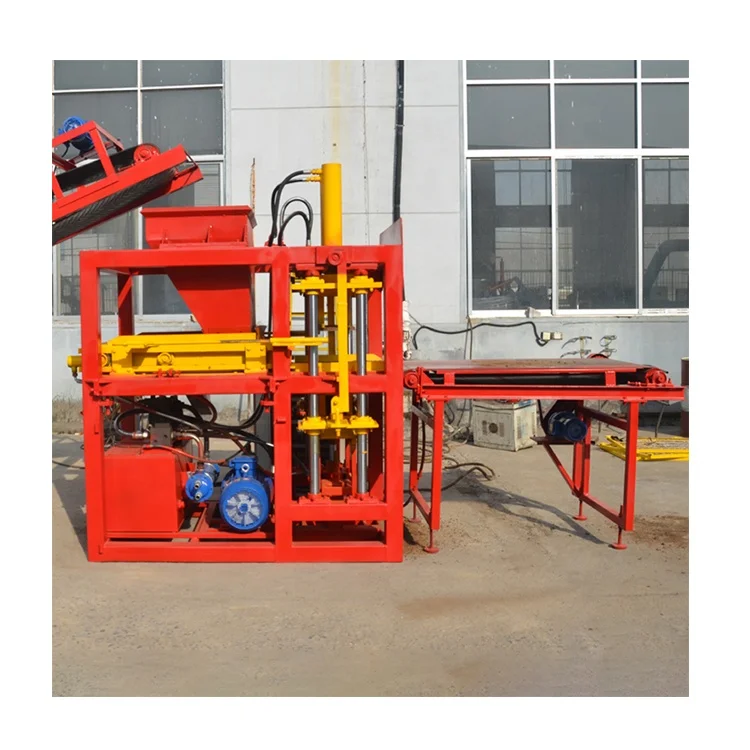
Mid-Tier Output Clarity — QT6-15 capacity figures here are always tied to a named block format and molding cycle, so buyers can size a plant without guessing daily throughput.
Technical Specifications
| Parameter |
Value |
| Model |
QT6-15 |
| Product Type |
Automatic Concrete Block Making Machine |
| Molding Way |
Vibration and hydraulic pressing |
| Rated Pressure |
21 MPa |
| Molding Cycle |
15 s – 20 s |
| Pallet Size |
900 × 700 mm |
| Main Machine Weight |
6 000 kg |
| Hollow Block Output (400×200×200 mm) |
1 440 pcs/h · 11 520 pcs/8 h |
| Paving Brick Output (200×100×60 mm) |
5 040 pcs/h · 40 320 pcs/8 h |
| Solid Brick Output (240×115×53 mm) |
7 680 pcs/h · 61 440 pcs/8 h |
| Raw Materials |
Cement, sand, fly ash, stone powder, slag |
| Mixer Option |
JS500 |
| Conveyor |
8 m belt |
| Motor Voltage |
Customizable to local voltage (basis not stated in source — confirm specific voltage/frequency) |
| Assembly State for Shipment |
Top cylinder removed for container loading |
| Warranty |
1 year (excluding wearing parts) |
Application Suitability
| Application |
Material or Output |
| Hollow block production for load-bearing walls |
Crushed stone, sand, cement, fly ash |
| Color paving brick for sidewalks and plazas |
Pigment-fed face mix over base aggregate |
| Solid brick for infill and partition walls |
Stone powder, slag, cement blend |
| Interlocking brick for retaining structures |
Coarse aggregate with cement binder |
| Kerbstone and curb units for road edges |
Dense aggregate mix at extended cycle |
What "11 520 Blocks per Shift" Actually Means
Every QT6-15 output number on this page is anchored to a specific block dimension and a 15–20 second molding cycle.
Capacity claims that omit the block format leave buyers comparing a hollow block line against a paving brick line as if they were the same machine. A 400×200×200 mm hollow block occupies the full pallet and yields 1 440 pieces per hour, while the same pallet holds multiple 200×100×60 mm paving bricks, pushing the figure to 5 040. The press, vibration table, and hydraulic circuit are identical; only the mould and cycle change. When a supplier quotes a single "daily output" without naming the format, the real production floor often discovers the gap after commissioning [NEED_CITE: common misalignment between quoted and actual block plant output].

Where the QT6-15 Sits in the Full Block Machine Range
The QT6-15 occupies the mid-tier of the automatic concrete block making machine lineup. Below it, smaller semi-automatic models serve workshops that run a single format at modest volume. Above it, higher-tier presses use larger pallets and faster cycles to feed fully automatic stacking and cubing systems. For a buyer surveying options, the QT6-15 is the model that bridges a first fixed-plant investment and an established producer adding capacity without jumping to the largest press available.
Choosing Between Semi-Automatic and Full Automatic Configurations
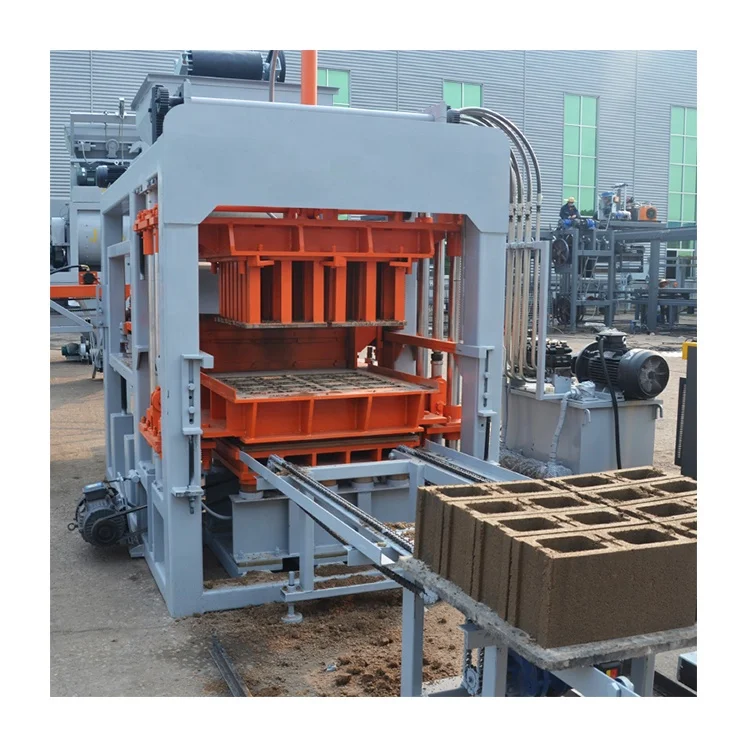
The same QT6-15 press can be paired with a basic JS500 mixer and an 8 m conveyor belt for a semi-automatic layout, or expanded with an automatic stacker, batching machine, cement silo, and pallet loader for a full automatic line. The decision rests on labour availability and the curing area design. A semi-automatic configuration keeps capital outlay lower and still delivers the same press output per cycle, while pallet handling and stacking remain manual. A full automatic line removes operators from the pallet circuit entirely, which matters when the curing yard is large enough that hand-stacking becomes the bottleneck [NEED_CITE: labour and curing logistics in medium-output block plants].
Pressure, Vibration, and Pallet Size Explained
The 21 MPa rated hydraulic pressure works together with the vibration table to compact the mix into the mould cavity. Higher pressure alone would leave air pockets in a stiff, low-slump mix; vibration alone would not consolidate the core of a tall hollow block. The combination gives consistent density across the block cross-section. The 15–20 second molding cycle reflects this dual action: vibration fills the cavity, then hydraulic pressure locks the compaction. The 900×700 mm pallet is sized to match standard curing rack bays and the fork pocket spacing on common 3-ton forklifts, so blocks move from press to curing without a pallet change. Motor voltage remains configurable to the buyer’s local grid, and confirmation must happen before the electrical cabinet is wired, not after arrival.
The Cost of Skipping the Configuration Conversation
When a buyer selects a pallet size without checking the curing rack dimensions already in the yard, the first production run arrives on pallets the racks cannot accept. When voltage and PLC display language are left to "standard," the machine may ship wired for a frequency the local grid does not supply, delaying commissioning by weeks while transformers or drive replacements are sourced [NEED_CITE: electrical mismatch delays in exported block machinery]. When the mould list is not matched to the formats the local market actually buys, the operator spends a full shift changing moulds that should have been swapped in minutes, negating the format flexibility the press was designed to offer.
Why Source the QT6-15 Through This Range
Block machinery is the single focus here, so the QT6-15 press, its moulds, pallets, and handling equipment are specified as one matched system rather than assembled from separate suppliers. The configuration is set against the buyer’s actual mix design and local aggregate, not a catalogue default. Mould design covers the formats the buyer’s market sells, with custom drawings available. Automation level is selectable — a buyer can start with the JS500 mixer basic line and add automatic stacking later. Installation and commissioning include operator training so the crew can run the press from day one.
Documentation & Verification
- Line layout showing QT6-15 footprint with capacity stated per block format
- Machine specification sheet with confirmed voltage, frequency, and PLC language
- Mould drawing and format list matching quoted cycle times to each block type
- Pallet specification cross-referenced to buyer’s curing rack and forklift
- Factory test record on the buyer’s selected block format before dispatch
- CE declaration and packing photographs for customs clearance
Installation, Commissioning & Support
- Foundation pad sized for 6 000 kg main machine weight plus dynamic vibration load
- Dedicated electrical circuit matching confirmed voltage and frequency before cabinet wiring
- Top cylinder reinstalled on site after container unloading and press alignment
- First-run parameter setting for 15–20 s cycle across selected mould and mix design
- Operator training covering mould change procedure and daily vibration table inspection
- Wear parts list with hydraulic seal and vibration spring replacement intervals
What to Include in Your Inquiry
Specify the block formats you plan to produce and the daily volume target for each, so the capacity calculation can be stated per format rather than as a single blended figure. Confirm your local voltage, frequency, and preferred PLC display language. Describe the curing area dimensions and the forklift capacity already on site, so pallet size and handling equipment are matched before the line is built.
Frequently Asked Questions
Q: How do I verify the QT6-15 capacity figures before ordering?
A: Each output number on this page is tied to a named block dimension — 400×200×200 mm hollow block at 1 440 pcs/h, 200×100×60 mm paving brick at 5 040 pcs/h, and 240×115×53 mm solid brick at 7 680 pcs/h — all based on a 15–20 s molding cycle. Ask for a written capacity calculation that states the exact format and cycle assumption behind every figure.
Q: Where does the QT6-15 fit — starter plant or established line?
A: The QT6-15 sits in the mid-tier of the automatic block machine range. It serves buyers moving from a mobile or small semi-automatic press to a fixed plant with higher daily output, as well as established producers replacing an older mid-size press with a modern vibration-and-hydraulic unit.
Q: Can I begin semi-automatic and upgrade to full automatic later?
A: Yes. The QT6-15 press accepts the same pallet and mould set whether it is fed by a JS500 mixer with manual pallet handling or connected to an automatic stacker, batching machine, and pallet loader. The upgrade path adds handling stations around the press without replacing the press itself.
Q: How do I prevent voltage and language issues at commissioning?
A: Confirm your site voltage, frequency, and preferred PLC display language before the electrical cabinet is assembled. The motor voltage is configurable, but the wiring must match your local grid. A written voltage and control language confirmation avoids transformer swaps or drive replacements after the machine arrives.
Q: What space and foundation does the QT6-15 require?
A: The main machine weighs 6 000 kg and needs a level concrete pad rated for static plus dynamic vibration loads. The overall line footprint depends on the chosen configuration — a basic JS500 mixer layout occupies less floor area than a full automatic line with batching silo, conveyor, and stacker. Provide your available hall dimensions so the layout can be drawn before production begins.

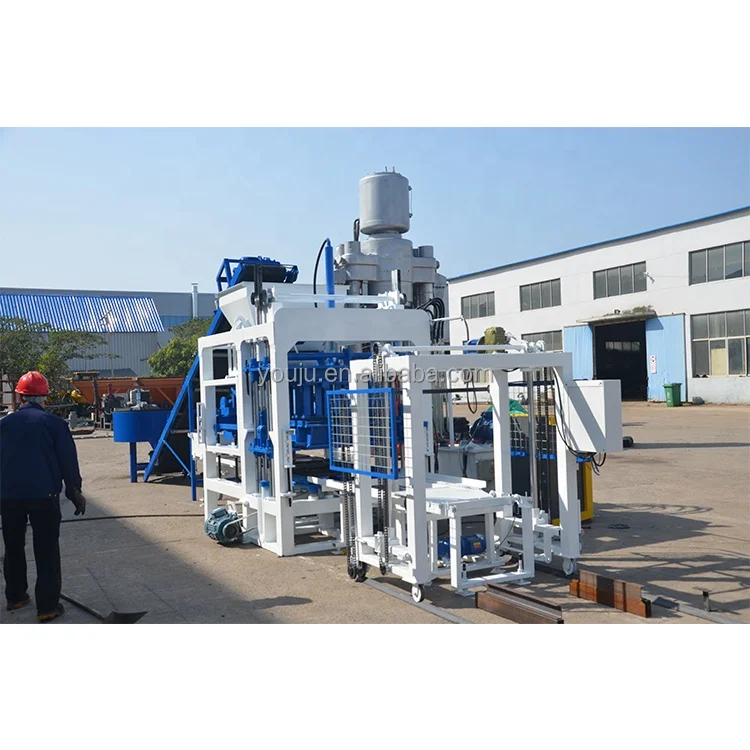 Semi automatic block