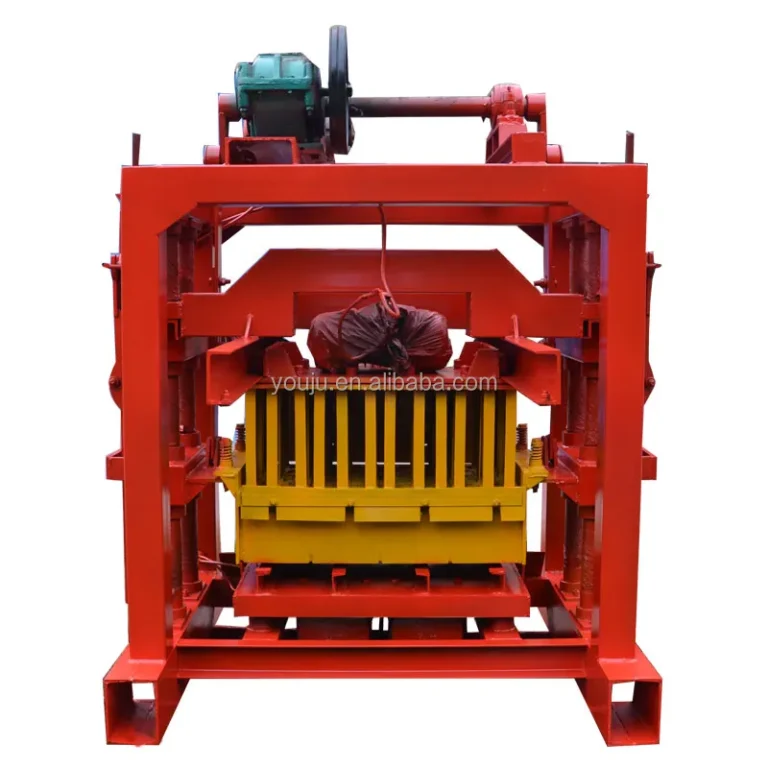
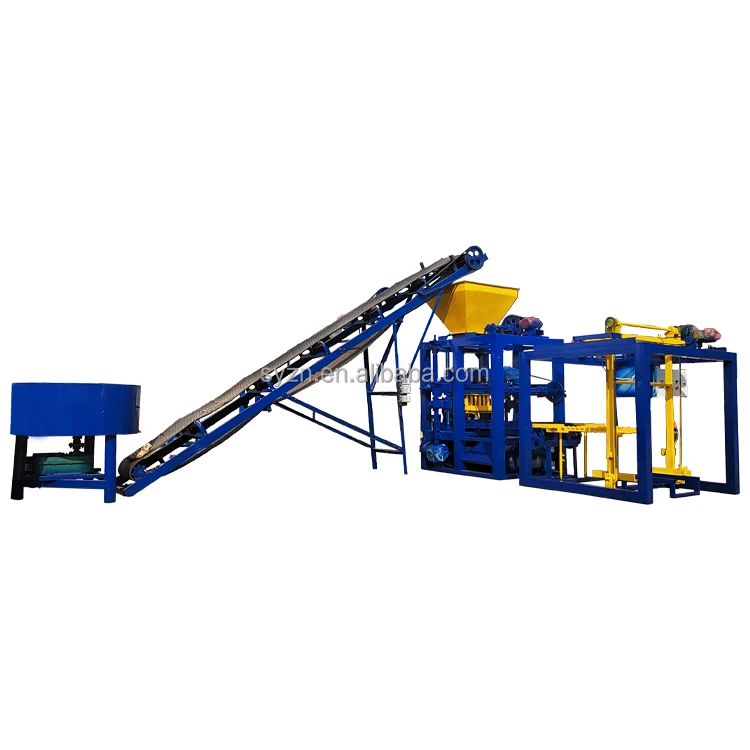
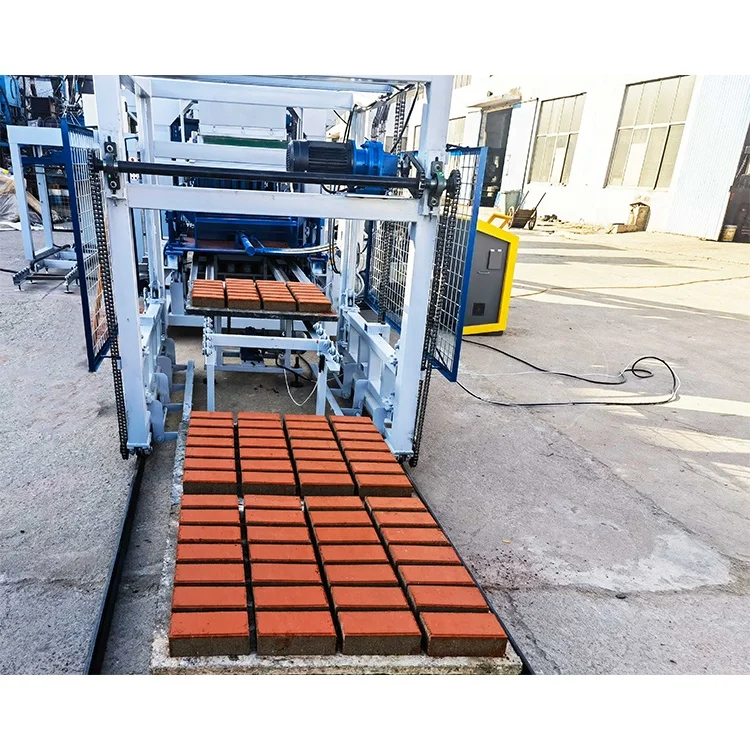
Matched System Sizing — the QT5-15 is configured as a complete press, mould, pallet and handling package rather than a standalone unit, so mid-tier buyers see their exact block format before committing.
Technical Specifications
| Parameter |
Value |
| Model |
QT5-15 |
| Product Type |
Fully Automatic Hydraulic Block Making Machine |
| Overall Dimensions (L×W×H) |
7400×1950×2800 mm |
| Rated Pressure |
21 MPa |
| Main Vibration Form |
Platform Vibration |
| Vibration Frequency |
2800–4500 r/min |
| Pallet Size |
1100×550 mm |
| Molding Cycle |
15–25 s |
| Overall Power |
26.5 kW |
| Demolding Method |
Hydraulic |
| Output (400×200×200 mm hollow brick) |
1800 pcs/h (5 pcs/mold, 16–20 s cycle) |
| Output (400×150×200 mm hollow block) |
1300 pcs/h (6 pcs/mold, 15–20 s cycle) |
| Output (225×112.5×60 mm S paver) |
3700 pcs/h (16 pcs/mold, 15–17 s cycle) |
| Raw Materials |
Crushed stone, sand, cement, fly ash, gravel, slag |
| Applied Products |
Hollow/solid blocks, pavers, interlocking blocks, curbstone |
| Control System |
PLC (brand and language to be confirmed) |
| Voltage & Frequency |
To be confirmed per destination market |
| CE Declaration |
Available where applicable |
Application Suitability
| Application |
Material or Output |
| Hollow block production for building contractors |
Crushed stone, sand and cement at 400×200×200 mm format |
| Solid block manufacturing for housing projects |
Fly ash, gravel and cement blends at standard masonry sizes |
| Paver and interlocking brick production |
Colored concrete mixes for S-type and interlocking formats |
| Kerbstone and curb production |
Heavy-aggregate concrete for roadside and drainage profiles |
| On-site block production for development projects |
Locally sourced aggregate and cement on construction sites |
What "1800 Pieces per Hour" Actually Means for Your Plant
Every capacity figure here is tied to a specific block size, mould cavity count and cycle time — no generic cycle-rate claims.
Capacity is often the first number a buyer looks at and the first number that disappoints after commissioning. I have watched a fully automatic block machine manufacturer quote a cycle rate that assumed a small solid brick, only for the buyer to run 400×200×200 mm hollow blocks and lose half the advertised output. The QT5-15 is rated at 1800 pieces per hour only when producing 400×200×200 mm hollow bricks with five cavities per mold and a 16–20 second cycle. Switch to the 400×150×200 mm hollow block and the realistic rate becomes 1300 pieces per hour with six cavities and a 15–20 second cycle. These differences compound across a ten-hour shift into thousands of blocks. [NEED_CITE: block format impact on daily production output]

Where the QT5-15 Sits in the Full Shiyue Range
The Shiyue lineup spans semi-automatic machines for small workshops, mid-tier stationary presses like the QT5-15, and high-capacity automatic lines for large block plants. This model occupies the middle ground: a fully automatic block machine manufacturer offering enough output for a growing regional supplier without the capital outlay and plant footprint of a top-tier line. Buyers stepping up from a semi-automatic press will find the automation level familiar, while those planning future expansion can add pallet handling and stacking modules later.
Matching the Press to the Rest of the Line
A stationary block press does not run in isolation. Raw material feeding, mixing, pallet circulation, stacking and curing rack handling must all keep pace with the QT5-15’s 15–25 second molding cycle. If the mixer cannot deliver a fresh batch every cycle, the press idles. If the pallet return loop is slower than the demolding rate, the bottleneck simply shifts downstream. Configuring the line as a matched system — press, pallets, handling equipment — ensures each station is rated for the same throughput tier. [NEED_CITE: block production line synchronization requirements]
Reading the Specs That Matter on the Shop Floor
The 21 MPa rated pressure and the platform vibration at 2800–4500 r/min work together: hydraulic pressure compresses the mix while vibration settles fine aggregate into voids, jointly determining block density and compressive strength. If the frequency is set too low for a coarse local aggregate, the block surface stays rough and edges chip during demolding. The 1100×550 mm pallet size is chosen to match standard curing rack spacing and common forklift tine widths in mid-scale plants, avoiding the need for custom racking. A 26.5 kW overall power draw means most mid-tier plants can run the QT5-15 on an existing supply without a dedicated transformer upgrade, though voltage and frequency must be confirmed before production begins.
The Hidden Cost of Skipping Configuration Checks
When voltage and frequency are left unspecified until the machine arrives, commissioning stalls while a local electrician sources a compatible motor or drive. I have seen a buyer lose weeks because the PLC display shipped in a language the operators could not read, forcing a firmware swap on site. A pallet size chosen without checking the curing area means blocks are stacked by hand until new racks are fabricated. These are not machine defects — they are configuration gaps that a fully automatic block machine manufacturer should close before the crate leaves the factory. [NEED_CITE: commissioning delays from unconfirmed electrical specifications]
Why Buyers Source This Range from Shiyue
Block machinery is the single focus here, so the QT5-15 is never quoted as a bare press; mould, pallet and handling equipment are specified as one matched set. The configuration is set against the buyer’s actual mix design and local aggregate rather than a default catalogue setting, reducing the risk of inconsistent block strength. Mould design covers the formats the buyer’s market sells, and custom moulds can be built from buyer-supplied drawings. Automation level is selectable, so a plant can start with semi-automatic pallet handling and move to full stacking later without replacing the press. Installation support includes operator training and a wear parts list so the first replacement cycle does not catch the maintenance team off guard.
Documentation & Verification
- Line layout and capacity calculation stating the block format assumed for each output figure
- Machine specification sheet with voltage, frequency and PLC language confirmed before production
- Mould drawing and format list showing included and custom-available block profiles
- Pallet specification covering size, material and load rating matched to your curing setup
- Factory test record on your target block format before dispatch
- Operation and maintenance manual with wear parts and mould replacement intervals
Installation, Commissioning & Support
- Foundation must accommodate the 7400×1950 mm footprint and dynamic vibration loads
- Dedicated circuit rated for the 26.5 kW total draw at confirmed voltage and frequency
- Press shipped in modular sections for standard container loading and on-site reassembly
- PLC display language and control parameters set and verified before crating
- Operator training covers mould change procedure, cycle adjustment and safety interlocks
- Wear parts list with hydraulic seals and vibration components identified for first reorder
Before You Request a Quote
To size the QT5-15 accurately, share your target block formats and the daily volume your market absorbs. Confirm the local aggregate type and cement grade so the mix can be matched to vibration and pressure settings. Provide your site voltage, frequency and preferred PLC display language to avoid delays after arrival. If you already have curing racks or forklifts on site, send the dimensions so the pallet specification aligns with your existing equipment.
Frequently Asked Questions
Q: How do I verify the QT5-15’s real daily output for my specific block format?
A: Request a capacity calculation document that states the exact block size, mould cavity count and cycle time behind each output figure. Compare that document against your target format rather than relying on a single catalogue number. Daily production forecasts should also account for shift length, pallet circulation rate and curing space availability.
Q: Where does the QT5-15 sit compared to semi-automatic and higher-tier automatic models?
A: It occupies the mid-tier of the Shiyue stationary range, offering fully automatic pressing with selectable handling and stacking modules. Buyers currently running semi-automatic equipment can step up without the plant footprint of a top-tier line, and automation modules can be added later as production volume grows.
Q: What voltage, frequency and PLC language options are available?
A: Voltage and frequency are configured to match the destination market’s electrical standard, and the PLC display language is set before production. Confirm these parameters during the quotation stage so they are locked into the build specification and verified during the factory test prior to shipment.
Q: Which block formats fit on the 1100×550 mm pallet, and can I order custom moulds?
A: The pallet supports hollow blocks, solid blocks, S-type pavers, interlocking bricks and kerbstones within the press envelope. Standard moulds are available for common formats, and custom moulds can be designed and manufactured from buyer-supplied drawings to cover region-specific block profiles.
Q: What supporting equipment does the QT5-15 need for a complete production line?
A: A typical line includes a mixer, raw material feeder, pallet feeder, stacking unit and curing rack handling system. Each station must be rated to match the press cycle time so the QT5-15 is not left waiting between strokes. The line layout document provided with the quotation maps these stations and their throughput ratings.

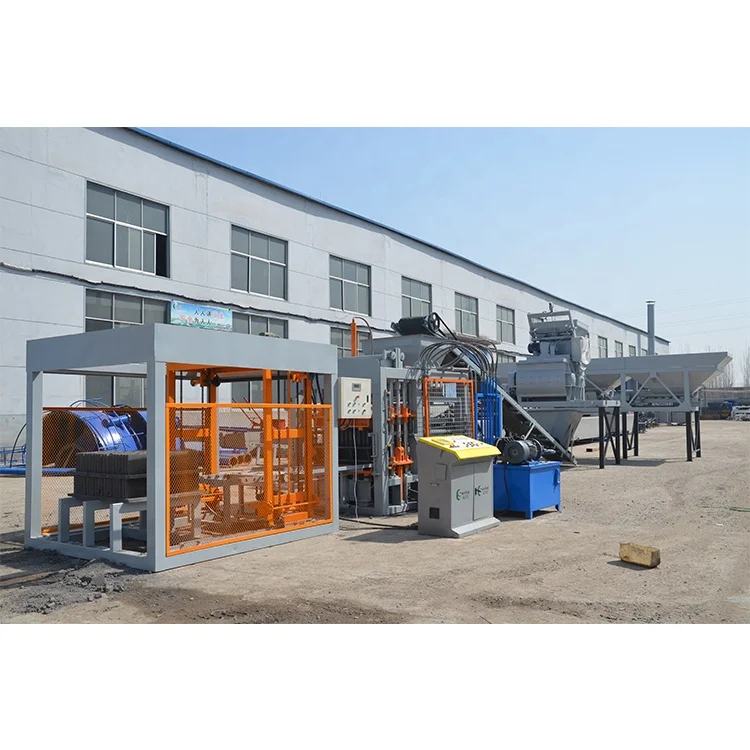
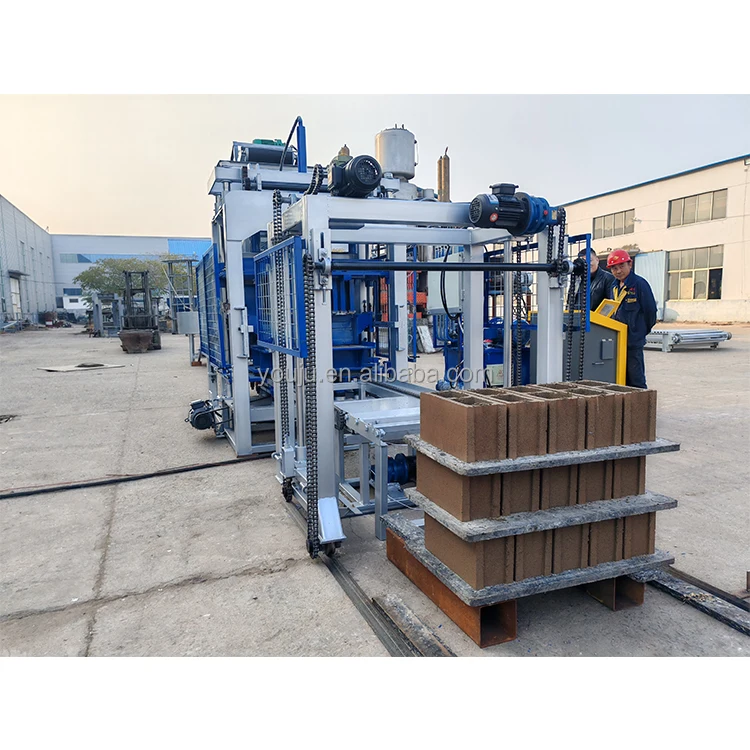 Stationary block machine