

Semi-Auto Block Machine Buyer Checklist: QT4-15 Wholesale Supplier Guide
Higher vibration frequency does not guarantee better block density.
For housing developers, the primary risk is not the initial machine price but production continuity. A field-tested semi-automatic block machine buyer checklist ensures the equipment matches local raw materials, labor skills, and grid stability to prevent costly site delays.
I once stood on a construction site in Riyadh, watching a newly delivered QT4-15 line sit idle while a team of technicians argued over wiring diagrams. The supplier’s configuration sheet had looked perfect on paper, boasting high output rates and robust hydraulic pressure. However, nobody had asked about the local transformer capacity or the specific dimensions of the wooden pallets used by the regional bricklayers. The vibration table power was mismatched with the unstable site voltage, causing repeated PLC resets, and the standard pallets did not fit the local mold specifications. We lost three weeks of production time while waiting for custom adapters and voltage stabilizers. That delay cost more than the entire savings from choosing the lowest bidder. This experience shaped how I approach every procurement task today. [NEED_CITE: impact of voltage fluctuation on PLC-controlled industrial machinery]
Before you sign any purchase order, use this guide to verify that your chosen semi-automatic block machine buyer checklist covers the technical realities of your specific location.
Why Does Your Local Grid Matter More Than Horsepower?
Voltage stability is the silent killer of automated production lines.
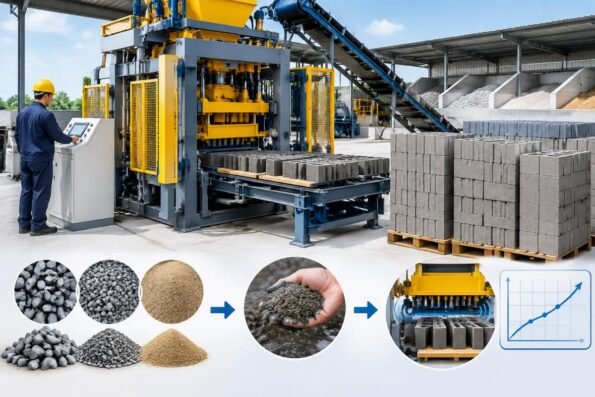
Many buyers focus intensely on the motor horsepower and hydraulic pump capacity, assuming that higher power equals faster production. In reality, the sensitivity of the programmable logic controller (PLC) to voltage spikes is the true bottleneck. Semi-automatic lines rely on precise timing sequences for mold filling, vibration, and pressing. If the local grid fluctuates beyond a narrow margin, the PLC may reset or throw error codes, halting the cycle entirely.
In emerging markets where infrastructure is still developing, grid instability is common. A machine designed for a stable industrial park in Europe may fail repeatedly in a remote housing project site. The solution is not just buying a voltage regulator but specifying a transformer capacity margin that exceeds the machine’s peak demand. [NEED_CITE: electrical engineering standards for industrial equipment in unstable grid regions]
| Grid Condition | Risk Level | Recommended Precaution |
|---|---|---|
| Stable Industrial Zone | Low | Standard voltage protection |
| Rural/Remote Site | High | Dedicated transformer with >20% capacity margin |
| Frequent Fluctuations | Critical | External voltage stabilizer and UPS for PLC |
A contractor in East Africa once reported that their block machine would stop randomly during peak afternoon hours. After investigation, we found that the site shared a transformer with several other heavy machines. The voltage drop during simultaneous operation caused the hydraulic valves to misfire. By installing a dedicated line and verifying the transformer load, the downtime vanished. This is why a thorough semi-automatic block machine buyer checklist must include an electrical audit of the installation site.
How to Match Pallet Sizes with Local Construction Norms?
Standard international pallet sizes often conflict with local bricklaying traditions.
The pallet is the foundation of the block making process. It carries the fresh blocks from the machine to the curing area and then to the storage yard. If the pallet size does not align with the local construction norms, you face a logistical nightmare. Workers may refuse to use the new blocks because they do not fit their existing laying patterns, or the curing racks may not accommodate the pallet dimensions.
In the Middle East, for example, certain brick dimensions are preferred for thermal insulation and structural habits. A generic QT4-15 configuration might come with standard European-sized pallets, which produce blocks that are slightly too large or small for the local masons’ comfort. Confirming the pallet size against local construction norms before ordering prevents the need for expensive custom molds later. [NEED_CITE: regional construction material standards and brick dimension preferences]
Consider the case of a housing project in Southeast Asia. The developer ordered a line with standard pallets, only to find that the local contractors used a smaller, modular brick size for faster wall assembly. The mismatch meant that the blocks produced were incompatible with the prevailing building methods. They had to commission new molds and adjust the pallet handling system, delaying the project launch. A smart semi-automatic block machine buyer checklist includes a review of local brick dimensions and pallet turnover habits.
What Is the Real ROI of Semi-Auto vs. Manual Lines?
Labor savings are offset by training costs and maintenance complexity.
The decision to upgrade from manual to semi-automatic equipment is often driven by the promise of reduced labor costs. While it is true that semi-automatic lines require fewer workers per shift, the return on investment (ROI) calculation must include the cost of training and the learning curve. Untrained operators can significantly slow down the cycle time, negating the theoretical output advantages.
Factor in a mandatory training period for your staff. During these initial weeks, productivity will be lower as operators learn to manage the hydraulic controls, mold changes, and routine maintenance. Ignoring this phase leads to unrealistic ROI projections. [NEED_CITE: industrial training impact on operational efficiency in manufacturing]
| Factor | Manual Line | Semi-Automatic Line |
|---|---|---|
| Initial Investment | Low | Moderate |
| Labor Requirement | High | Medium |
| Training Period | Minimal | Several weeks |
| Maintenance Skill | Basic | Technical |
| Output Consistency | Variable | High |
A private investor in Latin America expected immediate high output from his new semi-automatic line. However, his team had never worked with hydraulic systems before. For the first month, the machine ran at half speed due to operator hesitation and minor errors. Once the two-week structured training program was completed, efficiency soared. This highlights that the real bottleneck is often human readiness, not machine capability. Your semi-automatic block machine buyer checklist should account for this transition period.
Which Certifications Guarantee Tender Compliance?
Formal documentation is as critical as mechanical performance for government projects.
For government contractors and public housing developers, the ability to pass tender compliance checks is non-negotiable. Machines without proper certification, such as CE or SGS marks, may be disqualified from bids regardless of their performance. These certifications are not just badges; they represent adherence to international safety and quality standards.
Ensure that your supplier provides formal tender documentation. This includes test reports, material certificates, and compliance statements. In many emerging markets, government infrastructure specs strictly require these documents to verify that the equipment meets safety and durability standards. [NEED_CITE: international certification requirements for construction machinery in public tenders]
A developer in North Africa faced a tender rejection because their supplier could not provide valid CE certification documents. The machine itself was functional, but the lack of paperwork made it ineligible for the government-funded housing project. By prioritizing suppliers who offer turnkey support and formal documentation, you avoid this administrative deadlock. This is a key component of any reliable semi-automatic block machine buyer checklist.
Conclusion
Procurement success lies in matching technical specs to local realities.
Avoid the trap of focusing solely on price or maximum output. Instead, prioritize grid stability, pallet compatibility, labor training, and certification compliance. A well-executed semi-automatic block machine buyer checklist transforms a potential logistical headache into a smooth, profitable operation. By addressing these foundational elements, you ensure that your production line supports your housing project goals without unnecessary delays.

Industry expert sharing insights about concrete machinery, block making technology and turnkey production solutions.
View all posts →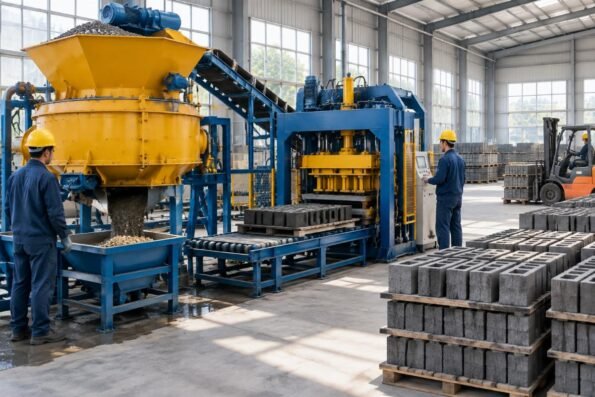
Leave a Reply