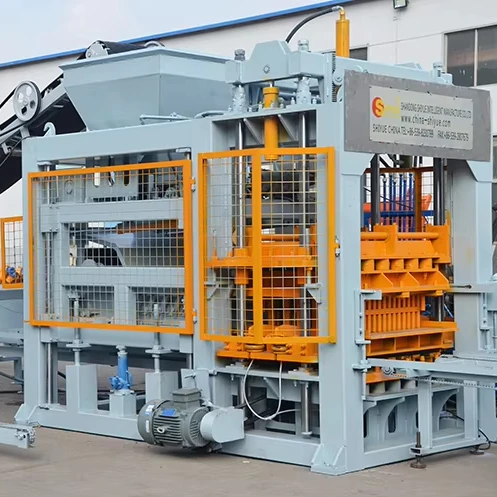
Four-lead channel steel frame stability — the QTJ4-35 is built on a rigid four-lead channel steel stander that maintains alignment across continuous vibration cycles, keeping block density consistent shift after shift.
Technical Specifications
| Parameter |
Value |
| Model |
QTJ4-35 |
| Product Type |
Semi-Automatic Concrete Block Making Machine |
| Overall Dimensions (L×W×H) |
1350×1460×1800 mm |
| Molding Cycle |
35 s |
| Vibration Frequency |
2800 r/min |
| Vibration Force (Exciting Power) |
30 kN |
| Rated Power |
11.15 kW |
| Mixer Model |
JQ350 |
| Pallet Size |
850×450×20 mm |
| Net Weight |
1500 kg |
| Frame Construction |
Four-lead channel steel stander |
| Automation Level |
Semi-automatic |
| Applied Products |
Concrete hollow blocks (8 inch, 6 inch), solid brick |
| Raw Materials |
Crushed stones, sand, cement, dust, fly ash |
| Output Capacity (400×200×200 mm hollow block) |
4 pcs/mould, 408 pcs/h, 3264 pcs/8 hr |
| Output Capacity (400×150×200 mm hollow block) |
5 pcs/mould, 510 pcs/h, 4080 pcs/8 hr |
| Output Capacity (240×115×53 mm solid brick) |
18 pcs/mould, 2100 pcs/h, 17000 pcs/8 hr |
| Voltage & Frequency |
(basis not stated in source — confirm before order) |
| Control System |
(basis not stated in source — confirm before order) |
| Hydraulic Pressure |
(basis not stated in source — confirm before order) |
| Mould Change Time |
(basis not stated in source — confirm before order) |
Application Suitability
| Application |
Material or Output |
| Small to medium concrete block plant |
8-inch and 6-inch hollow blocks from crushed stone and cement |
| On-site construction block manufacturing |
Solid brick and hollow block using locally available sand and fly ash |
| First block plant startup |
Lower initial investment tier with room for future automation upgrade |
| Building material distributor expanding range |
Solid brick (240×115×53 mm) alongside standard hollow block formats |
What "408 Pieces per Hour" Actually Assumes on a Semi Automatic Block Making Machine
Every output figure on this page is tied to a specific block format, mould cavity count, and an 8-hour shift — not a generic cycles-per-hour claim.
Sellers often quote a single throughput number without telling you which block size that number assumes. A Semi Automatic Block Making Machine manufacturer quoting "408 pieces per hour" may be referencing a 400×200×200 mm hollow block at 4 cavities per mould. Switch to a smaller solid brick format and the same machine pushes 2100 pieces per hour. Switch to a different hollow block dimension and you get 510. Without the format stated upfront, daily output on the shop floor falls far short of what the buyer planned for. I have seen contractors commit to a machine based on a headline number, then realize on site that their target block format runs at less than half that rate [NEED_CITE: block output verification by format and mould cavity count].

Where the QTJ4-35 Sits in the Full Block Machine Range
The Shiyue lineup spans mobile egg-laying machines at the low end, semi-automatic presses like the QTJ4-35 in the middle, and fully automatic lines with stacking and cubing at the top. This model occupies the entry tier for fixed-plant buyers who need consistent hollow block and solid brick output without the capital commitment of a high-capacity automatic line. The semi-automatic tier keeps manual pallet handling but automates the pressing cycle, so the operator loads and removes pallets while the machine handles vibration, compression, and timing. For a first-time block plant or a contractor replacing an aging press, this tier offers a stable starting point with a clear upgrade path when volume demands increase.
Matching Machine Tier to Plant Footprint and Investment Level
A Semi Automatic Block Making Machine manufacturer should help you place yourself on the range before narrowing down. The QTJ4-35 requires a modest plant footprint — its 1350×1460 mm frame fits into a compact production bay, and the 11.15 kW rated power draw stays within standard workshop electrical supply. Buyers moving up from a mobile machine gain fixed-plant consistency; buyers stepping down from an automatic line reduce maintenance complexity and capital outlay. The 850×450 mm pallet size is small enough to handle manually yet large enough to keep cycle times practical for 8-inch hollow block production [NEED_CITE: typical plant footprint requirements for semi-automatic block machines].
How Vibration Force and Frame Rigidity Shape Block Density
The 30 kN exciting power at 2800 r/min works in tandem with upper and lower mould compression to consolidate the mix. On a semi-automatic press, this vibration must penetrate the full mould depth uniformly — the four-lead channel steel stander keeps the mould platen level so the force distributes evenly across all cavities. If the frame flexes under continuous cycling, blocks on one side of the mould cure weaker than those on the other. The 35-second molding cycle is timed to allow full compaction before the pallet advances, which matters most when running dense mixes with high crushed-stone content. Pallet size at 850×450×20 mm must align with the vibration table footprint so energy transfers into the block rather than dissipating at the pallet edges.
The Cost of Skipping Voltage and Control Language Confirmation
Voltage, frequency, and PLC display language are among the most common commissioning delays on exported block machinery. A machine wired for a frequency that does not match the local grid will run its vibration motor off-spec, producing blocks with inconsistent density. Control panels labeled in a language the operator cannot read lead to incorrect cycle settings and wasted raw material. These are not engineering defects — they are ordering-process gaps that surface only after the machine arrives on site and the electrician opens the panel [NEED_CITE: voltage and frequency standards by export market]. Confirming these parameters before production begins avoids weeks of idle equipment.
Why Source the QTJ4-35 from a Single-Focus Block Machinery Supplier
Block machinery is the sole product focus here, which means the press, mould, pallet, and handling stations are specified as one matched system. The QTJ4-35 configuration is set against your actual mix design and local aggregate, not a catalogue default. Moulds are available for the formats your market sells, including custom drawings when standard formats do not match. The JQ350 mixer is paired to the press output so material supply does not bottleneck the cycle. Automation level is selectable — start semi-automatic and add automatic pallet feeding or stacking later as volume justifies the investment. Installation support includes operator training on your specific block format and mix.
Documentation & Verification
- Line layout and capacity calculation stating the block format assumed for each output figure
- Machine specification sheet with pallet size and vibration force matched to your mix design
- Mould drawing and format list confirming included block types before order
- Voltage and control language confirmation record signed off before production
- Factory test record on your target block format before dispatch
- Operation and maintenance manual covering the QTJ4-35 and JQ350 mixer
Installation, Commissioning & Support
- Foundation pad sized to the 1350×1460 mm footprint with anchor bolt layout provided
- Electrical supply matched to confirmed voltage and frequency with dedicated circuit for the 11.15 kW load
- Machine shipped as a single frame unit with mixer and pallet set loaded in standard container
- On-site commissioning covering mould alignment, vibration tuning, and cycle timing for your mix
- Operator training on mould change procedure, pallet loading, and daily maintenance checks
- Wear parts list and mould inventory provided for first replacement planning
What to Include in Your Inquiry
To configure the QTJ4-35 accurately, share your target block formats with dimensions, the daily output you need per format, and the raw materials available locally including aggregate type and grading. Confirm your site voltage, frequency, and preferred control panel language. If you already have curing racks, forklifts, or upstream mixers on site, provide their specifications so the pallet size and line layout integrate without modification.
Frequently Asked Questions
Q: How is capacity verified per block format, and what does 408 pcs/h actually assume?
A: That figure assumes a 400×200×200 mm hollow block with 4 cavities per mould at a 35-second cycle. Switch to a 400×150×200 mm hollow block at 5 cavities and the same press delivers 510 pcs/h. Every output number on this page is tied to a specific format and mould, not a generic throughput claim.
Q: Which voltage and frequency options are available for my market?
A: Voltage and frequency are confirmed during the ordering process based on your local grid standard. The control panel language is also set before production so operators can read cycle settings and alarms on day one. This confirmation step prevents commissioning delays after the machine arrives.
Q: What automation upgrade path exists if I start with the QTJ4-35?
A: The semi-automatic tier handles the pressing cycle while operators manage pallet loading and removal. As volume grows, you can add automatic pallet feeding, stacking, and cubing stations to the line. The press itself remains the same — only the upstream and downstream handling stations change.
Q: How do I confirm the 850×450×20 mm pallet matches my existing curing area?
A: Provide the dimensions of your curing racks and the load capacity of your forklift. The pallet size is fixed to match the vibration table, so we verify that your existing handling equipment can move loaded pallets without modification before the order is finalized.
Q: Is the JQ350 mixer included in the quotation or listed separately?
A: The mixer, pallet set, and press can be quoted as individual line items or as a matched package. Confirming the scope early ensures the material feed rate from the mixer aligns with the press cycle time so neither station waits on the other.

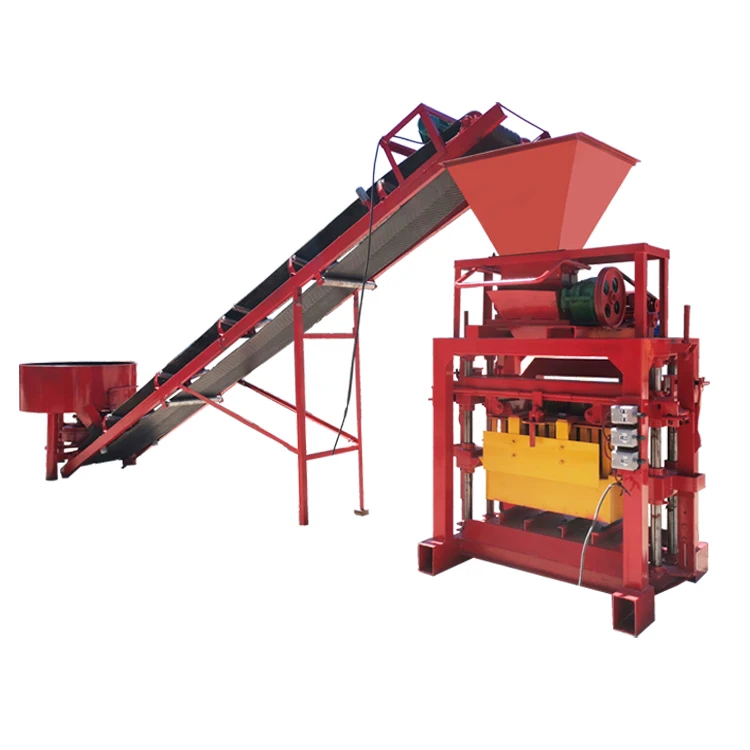
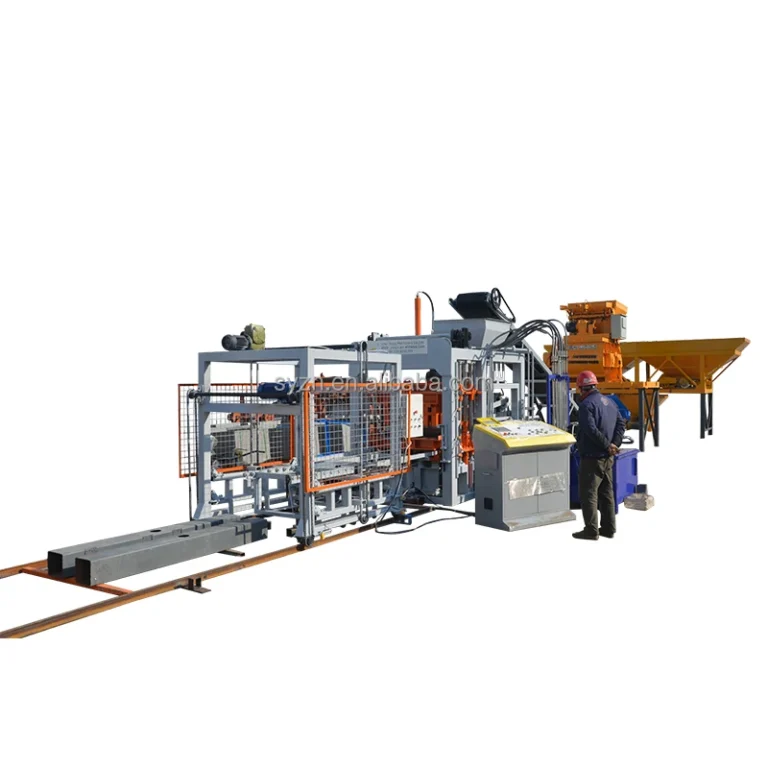 High quality block machine