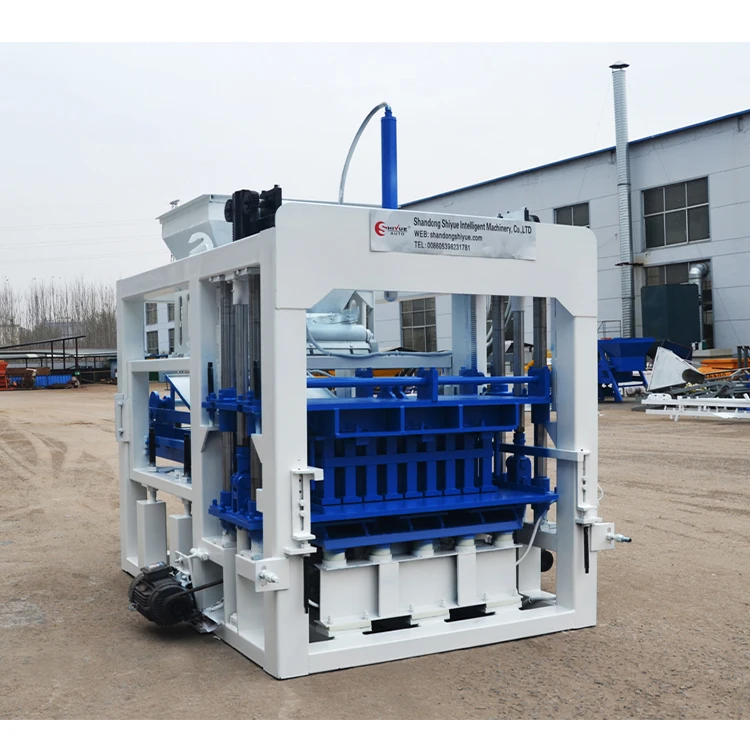
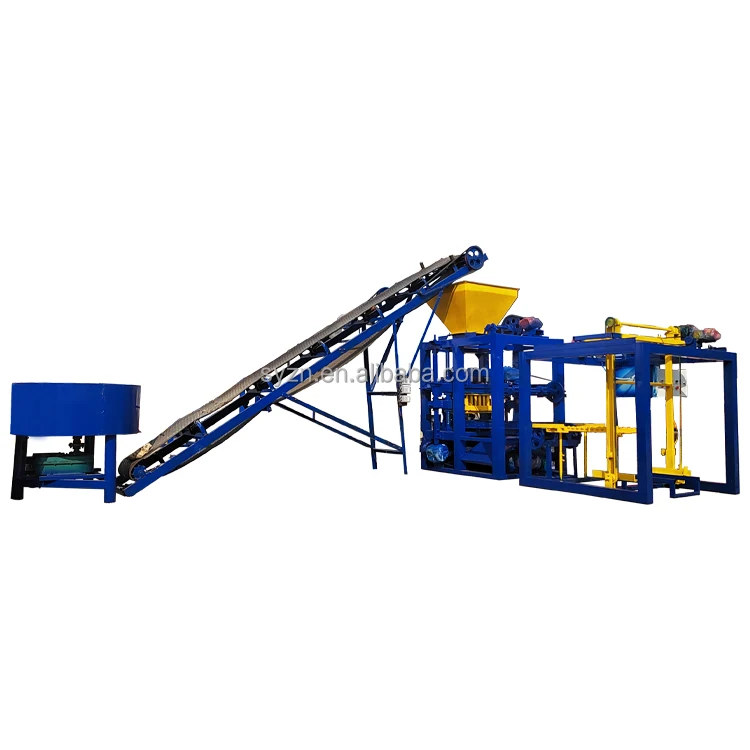
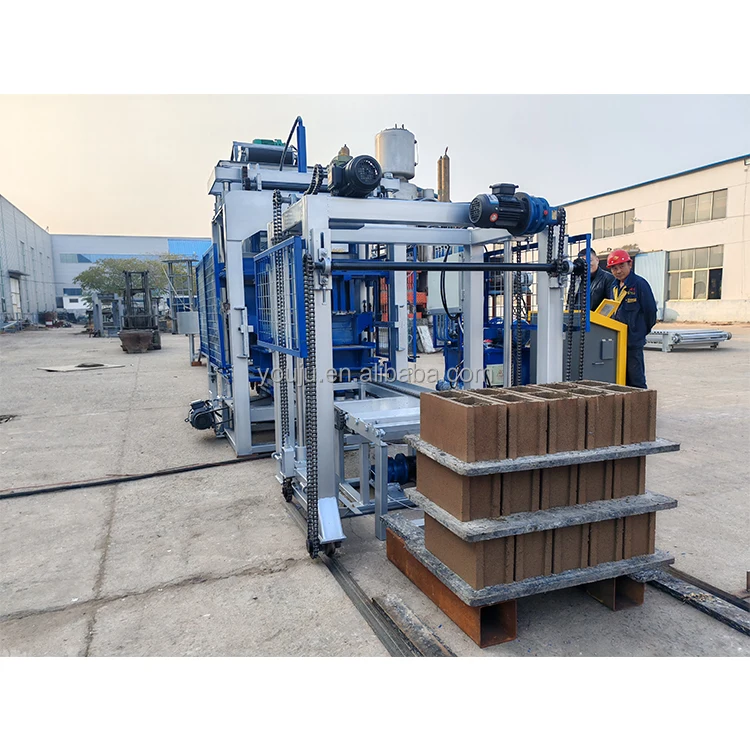
Configuration Set Against Buyer’s Actual Mix — we test your local aggregate on the QTJ4-40 before shipment, matching vibration force and hydraulic pressure to the block format your market actually buys rather than a catalogue default.
Technical Specifications
| Parameter |
Value |
| Model |
QTJ4-40 |
| Product Type |
Semi-Automatic Concrete Block Making Machine |
| Overall Dimensions (L×W×H) |
1350×1460×1800 mm |
| Net Weight |
1.2 T |
| Rated Power |
10.4 kW |
| Voltage & Frequency |
According to buyer’s local voltage (basis to be confirmed) |
| Control System |
Semi-automatic with manual pallet handling |
| Vibration Method |
Bed mould vertical vibration and upper mould compression vibration |
| Pallet Size |
850×450×20 mm |
| Mould Cavities |
4 pcs (400×200×200 mm hollow); 5 pcs (400×150×200 mm); 9 pcs (225×112.5×60 mm) |
| Cycle Time |
40 s (basis to be confirmed — depends on block format, material and thickness) |
| Output Capacity |
360 pcs/h, 2880 pcs/day (based on 400×200×200 mm hollow block, 4 pcs/mould); 450 pcs/h, 3600 pcs/day (based on 400×150×200 mm block, 5 pcs/mould); 800 pcs/h, 6400 pcs/day (based on 225×112.5×60 mm block, 9 pcs/mould) |
| Raw Materials |
Concrete, sand, cement, fly ash, lime, gypsum |
| Automation Level |
Semi-automatic |
| Stacking Method |
Manual pallet transfer to curing area |
| Assembly State |
Host machine, mould and pallets; mixer optional |
Application Suitability
| Application |
Material or Output |
| Small-scale hollow block production for housing projects |
Crushed stone, sand and cement producing 4/5/6/8 inch hollow blocks |
| On-site solid block production for contractors |
Local aggregate and cement for load-bearing and partition walls |
| Paving block manufacturing for walkways and yards |
Cement, sand and fine aggregate for interlocking and rectangular pavers |
| First block plant for entrepreneurs entering the market |
Standard concrete mixes with manual pallet handling and curing |
What "2880 Pieces per Day" Leaves Out When Format Is Ignored
Capacity only means something when tied to the exact block size you intend to sell.
Many quotations list a single hourly figure without revealing which block format produced it. A Semi-Automatic Block Machine for sale might quote 800 pieces per hour — but that number assumes the smallest solid block in the mould set, not the hollow block your customers actually order. I have watched buyers receive machines, run their primary format, and discover daily output sitting well below the headline number [NEED_CITE: capacity calculation methods in block machine quotations]. The QTJ4-40 output is therefore stated per format: 2880 pieces per day for 400×200×200 mm hollow blocks, 3600 for 400×150×200 mm blocks, and 6400 for 225×112.5×60 mm solid blocks — each tied to a specific cavity count and cycle time.

Where the QTJ4-40 Sits in the Stationary Range
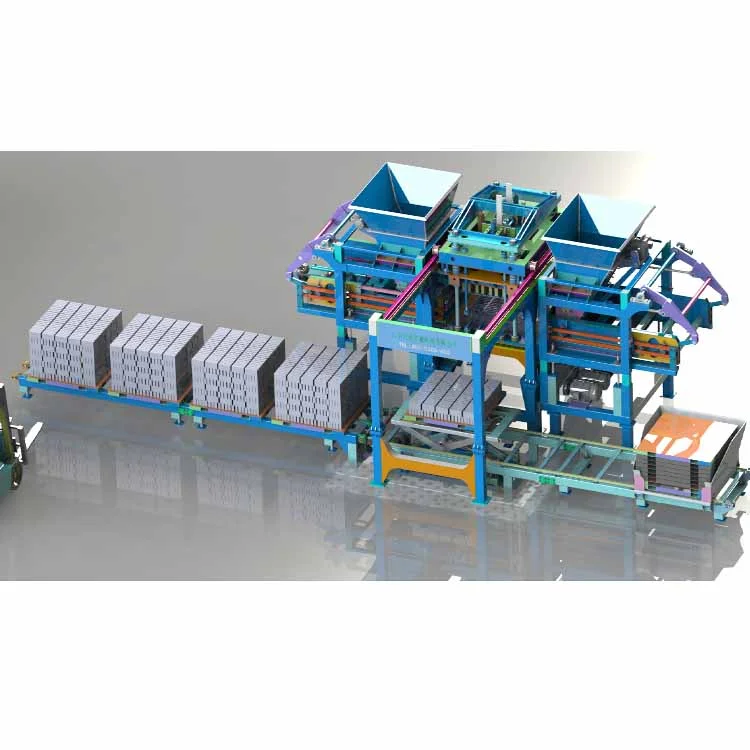
The QTJ4-40 occupies the entry-to-mid tier of our stationary block machine lineup. Buyers evaluating their first plant start here because the footprint and power requirement stay within workshop limits, yet the mould system covers the hollow, solid and paver formats most local markets demand. When daily volume outgrows this tier, the same pallet width carries forward into higher-capacity automatic models, protecting your initial pallet investment.
Matching the Machine to Your Selling Format
Format flexibility matters only if you can change moulds without losing a full shift. The QTJ4-40 accepts cavity plates for 4, 5, 6 and 8 inch blocks within the same 850×450 mm pallet envelope. Before we configure the machine, we ask which format represents your highest weekly volume, then set the vibration timing and pressure against that format first — secondary formats follow [NEED_CITE: vibration and pressure tuning for different block densities]. This sequencing keeps your primary product consistent while leaving room to add pavers or kerbstones later.
Reading the Numbers That Actually Shape Output
The 10.4 kW rated power feeds both the bed mould vertical vibration and the upper mould compression vibration. Together, these two vibration vectors compact the concrete mix from below and above simultaneously, producing denser blocks than bed-only vibration at this machine class. The 850×450×20 mm pallet size defines the curing area grid — buyers who check pallet dimensions against their existing forklift and curing rack spacing avoid costly re-layout after arrival. The 40-second cycle time applies across formats, but actual throughput shifts with cavity count: four cavities for large hollow blocks, nine for small solid blocks. Semi-automatic operation means an operator places and removes pallets by hand, keeping the labour requirement at one or two people per shift depending on curing distance.
The Hidden Cost of Skipping the Pallet Conversation
When pallet size is chosen without checking the curing yard, buyers end up stacking blocks by hand on the ground because their forklift cannot reach the pallet edges. Pallets that are too thin warp under the vibration force, cracking fresh blocks before they cure. One contractor ordered a QTJ4-40 without confirming his curing area dimensions and spent the first month rearranging racks to fit the 850×450 mm footprint [NEED_CITE: pallet and curing area compatibility in block production]. Specifying pallet material and thickness against your actual handling route prevents these delays.
Why Source This QTJ4-40 Semi-Automatic Block Machine for Sale Here
We treat the press, mould, pallet and handling equipment as one matched system rather than assembling components from separate suppliers. Every configuration is set against your local aggregate and target block format — we ask you to send a material sample and run a test press before the machine leaves our Linyi workshop. Mould drawings are prepared for the specific sizes your market sells, including custom profiles when standard cavities do not match. The automation level is selectable, so you can begin with manual pallet handling on the QTJ4-40 and move to automatic stacking on a larger model without replacing the pallet fleet. Installation support includes on-site commissioning and operator training so your crew knows the vibration timing adjustments for each format.
Documentation & Verification
- Line layout showing pallet flow from QTJ4-40 press through curing rack spacing
- Capacity calculation sheet stating output per block format and cavity count
- Mould drawing and format list covering every block size at delivery
- Pallet specification confirming 850×450×20 mm size and material grade
- Voltage and control language confirmation matched to destination country
- Factory test record on your aggregate sample before dispatch
Installation, Commissioning & Support
- Foundation pad sized for the 1350×1460 mm footprint and 1.2 T static weight
- Dedicated circuit rated for 10.4 kW with voltage and frequency confirmed pre-shipment
- Host machine arrives assembled; mould and pallets packed separately for container loading
- Vibration timing calibrated on-site against your mix design and target block strength
- Operator training covers mould change procedure across 4, 5 and 9 cavity plates
- Wear parts list identifies vibration springs and mould liner replacement intervals
What We Need to Configure Your Machine
Tell us the block format that represents your highest weekly demand, the daily output you need for that format, and the raw materials available locally — including aggregate type and maximum particle size. Share your site voltage, frequency and preferred control language so the electrical panel matches your grid on arrival. If you already have curing racks or a forklift, send the dimensions so we match the pallet specification accordingly.
Frequently Asked Questions
Q: How is the output capacity of the QTJ4-40 verified, and which block format does each figure assume?
A: Every output figure is tied to a specific block size and cavity count. We state 2880 pieces per day for 400×200×200 mm hollow blocks at 4 cavities, 3600 for 400×150×200 mm at 5 cavities, and 6400 for 225×112.5×60 mm at 9 cavities. A capacity calculation sheet ships with the machine listing each format.
Q: Where does the QTJ4-40 sit in the full stationary machine range, and can I upgrade later?
A: It occupies the entry-to-mid tier, suited to workshops and first-time plants. Higher tiers share the same pallet width, so you can move to an automatic stacking model later without discarding your existing pallet inventory or curing rack layout.
Q: What voltage, frequency and control language options are confirmed before shipment?
A: We confirm your local voltage, frequency and phase during the quotation stage and build the electrical panel to match. Control labels and any display language are set to your preference before the machine leaves the factory.
Q: What plant footprint and foundation does the QTJ4-40 require?
A: The machine measures 1350×1460×1800 mm and weighs 1.2 T. A level concrete pad bearing that static load plus dynamic vibration force is sufficient. The surrounding curing area must accommodate 850×450 mm pallets with forklift or hand-cart access.
Q: How do I know the mould will produce the block sizes my market actually sells?
A: We prepare a mould drawing and format list before production showing every cavity size included at delivery. If your market requires a non-standard profile, we design a custom mould plate to your drawings within the same pallet envelope.

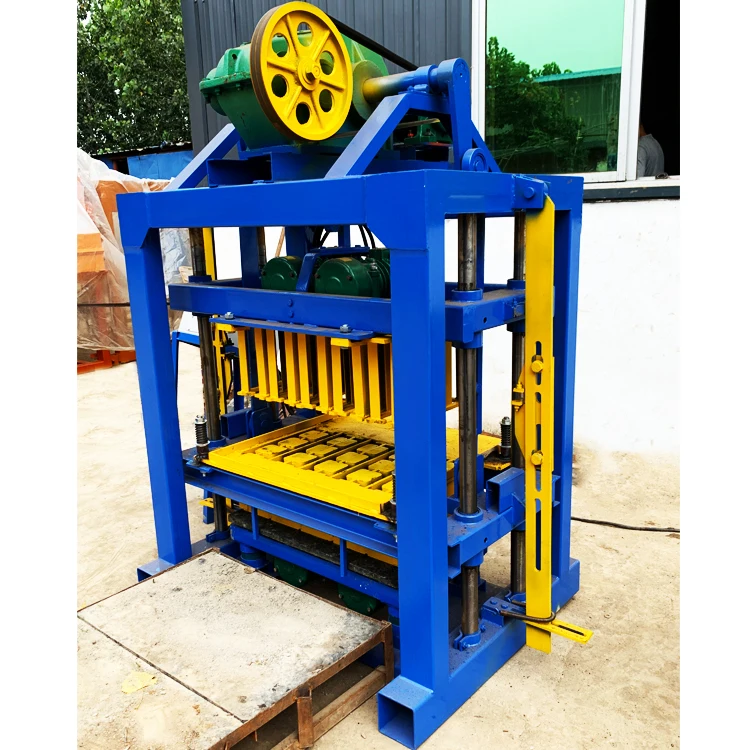
 Stationary block machine