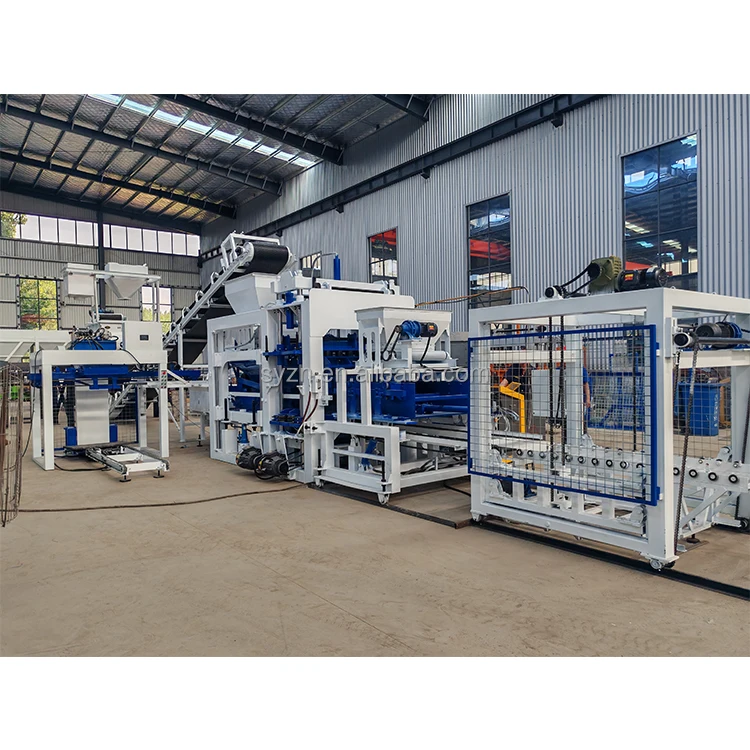
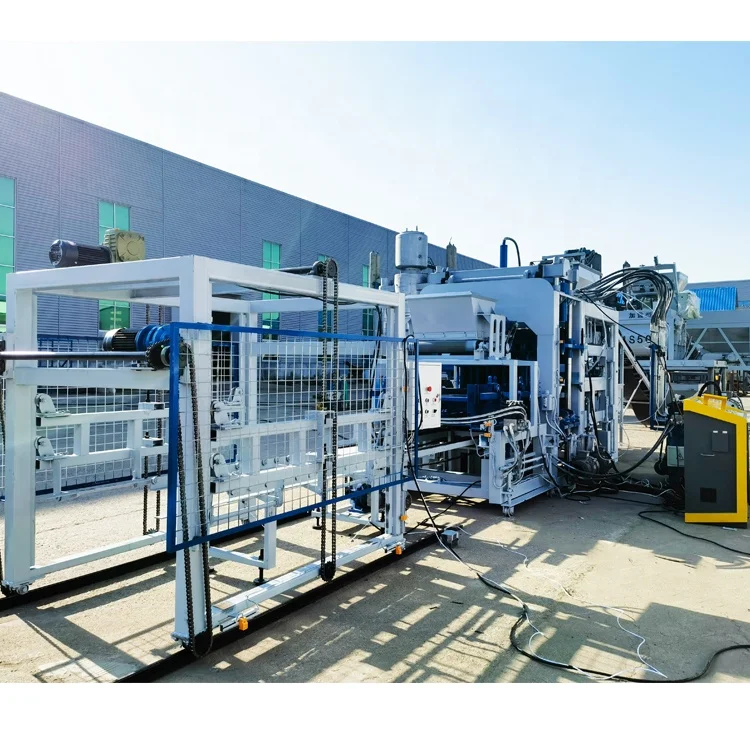
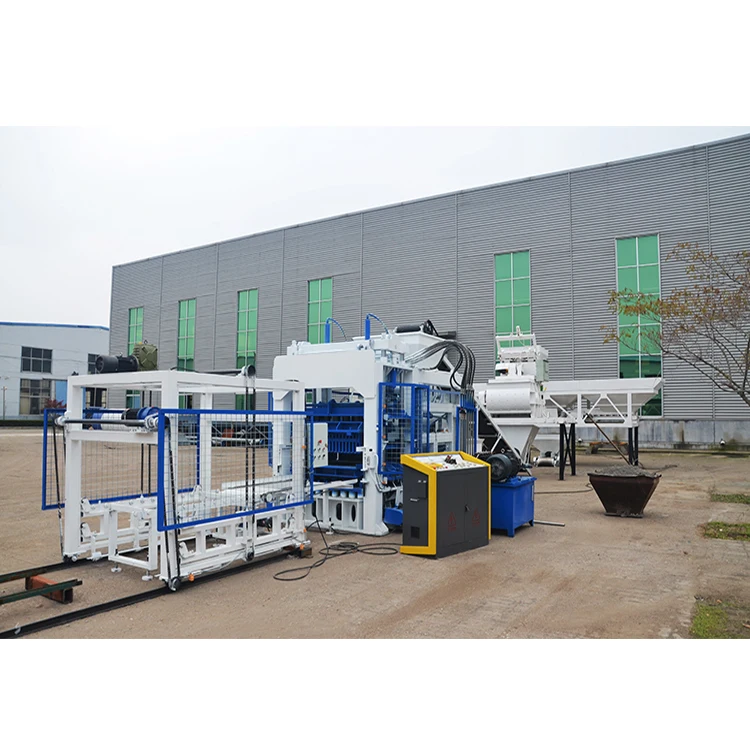
Configuration matched to your block format — the QTJ4-40 is specified against the buyer’s actual mix design and target hollow block dimensions, not a catalogue default, so daily output aligns with real site conditions.
Technical Specifications
| Parameter |
Value |
| Model |
QTJ4-40 |
| Product Type |
Semi-Automatic Concrete Block Making Machine |
| Rated Power |
10.4 kW |
| Molding Cycle |
40 s |
| Theoretical Productivity (400×200×200mm hollow block, 4 pcs/mould) |
360 pcs/h, 2800 pcs/day |
| Theoretical Productivity (400×150×200mm hollow block, 5 pcs/mould) |
450 pcs/h, 3600 pcs/day |
| Theoretical Productivity (225×112.5×60mm solid brick, 9 pcs/mould) |
800 pcs/h, 6400 pcs/day |
| Raw Materials |
Concrete, sand, cement, fly ash, lime, gypsum |
| Machine Weight |
1 T |
| Overall Dimensions |
1350×1460×1800 mm |
| Pallet Size |
850×450 mm |
| Vibration System |
Bed mould vertical vibration + upper mould compression vibration |
| Automation Level |
Semi-automatic (top die push/pull, automatic scraper) |
| Voltage |
Configurable to buyer local voltage and frequency |
| Output Capacity |
2000–2500 pcs/8hours (basis not stated in source — confirm block format) |
Application Suitability
| Application |
Material or Output |
| Small workshop hollow block production |
Crushed stone, sand and cement mixes for 400×200×200mm blocks |
| Solid brick manufacturing for local building supply |
Sand, fly ash and cement for 225×112.5×60mm bricks |
| On-site block production for housing projects |
Local aggregate and cement blends for hollow and solid formats |
| First plant setup by entrepreneurs |
Low-investment semi-automatic line with multiple mould options |
What "2800 Blocks per Day" Actually Means for Your Plant
Every output figure here is tied to a specific mould and block size, so you can plan real shifts instead of chasing a catalogue promise.
Many buyers receive a single daily capacity number without knowing which block format it assumes. A machine that produces 6400 solid bricks per day might deliver fewer than 2800 hollow blocks on the same shift — yet the quotation often presents only the higher number. On a site visit in West Africa, I watched a crew run a machine rated for a high output only to find their local red soil required different vibration and pressure settings, cutting daily volume significantly below what the brochure stated [NEED_CITE: block density and vibration force matching for local aggregate types]. That gap between quoted and actual capacity is exactly what forces plant owners into overtime shifts they never budgeted for. The semi-automatic block machine manufacturer you choose should state capacity per format before you commit.
Where the QTJ4-40 Sits on the Shiyue Range
The QTJ4-40 occupies the entry-to-mid tier of the Shiyue semi-automatic block machine range. It targets buyers who have outgrown manual egg-laying machines but are not yet ready for a fully automatic line with pallet stackers and cubing systems. The compact footprint — roughly 1350×1460 mm at the press — means a small workshop can house the machine alongside raw material bays without a major civil works investment. For a first-time plant owner, this tier offers a practical starting point with a clear upgrade path to higher automation later.
Understanding the Vibration and Compression Moulding System
The dual vibration setup combines bed mould vertical vibration with upper mould compression vibration. This paired action compacts the concrete mix from both directions during the 40-second molding cycle, producing blocks with more uniform density across the top and bottom faces [NEED_CITE: vibration mechanics in concrete block forming]. On sites where I have commissioned machines of this class, consistent density meant fewer breakages during curing rack handling and a lower rejection rate when blocks were tested for compressive strength. The semi-automatic block machine manufacturer should confirm that vibration force matches your specific mix design before the machine leaves the factory.
Reading the Specs That Matter on Site
The 850×450 mm pallet size determines how many blocks press per cycle and, just as importantly, whether your existing curing racks and forklift can handle them. A mismatch here means buying new racks or manually restacking every pallet — an issue I have seen stall production for days after arrival. The 10.4 kW rated power keeps electrical demand manageable for a small workshop panel, but you still need to confirm your site voltage and frequency in writing before production begins. Semi-automatic operation with top die push/pull and an automatic scraper reduces manual handling at the press while keeping the investment lower than a fully automatic line. The 1 T machine weight means a standard concrete slab foundation is typically sufficient, avoiding the deep pit required by heavier hydraulic presses.

The Cost of Skipping the Voltage and Pallet Check
When voltage and frequency are not confirmed before production, the motor and control components arrive mismatched to the local grid, delaying commissioning until replacement parts ship [NEED_CITE: voltage and frequency standards by export market]. I once saw a machine sit idle on a Nigerian site for three weeks because the frequency was wrong for their generator set. Pallet incompatibility is equally disruptive — if your forklift tines or curing rack slots do not match the 850×450 mm pallet, your crew spends every shift manually transferring blocks, wiping out whatever labour savings the semi-automatic press was supposed to deliver. These are not engineering failures; they are specification oversights that a proper pre-order checklist prevents.
Why Buyers Specify Through Shiyue
Block machinery is the single focus at Shiyue, so the QTJ4-40 is quoted as a matched system — press, mould, pallet and handling — rather than assembled from separate suppliers. Configuration is set against the buyer’s actual mix design and local aggregate, not a catalogue default, which directly addresses the capacity gap I described earlier. Mould design covers the formats your market sells, and custom drawings are available when your block dimensions fall outside the standard range. Automation level is selectable, meaning a buyer can start with the QTJ4-40 semi-automatic setup and move to a higher tier without replacing the entire line. Installation and commissioning include operator training on site, and wear parts plus mould replacements are catalogued for ongoing supply.
Documentation & Verification
- Line layout and capacity calculation stating the exact block format for each output figure
- Machine specification sheet with pallet size 850×450 mm and power rating confirmed
- Mould drawing and format list so you can verify included block sizes before production
- Voltage and control language confirmation document signed off before factory build
- Factory test record on your target block format and mix design before dispatch
- Operation and maintenance manual covering mould change and daily greasing points
Installation, Commissioning & Support
- Concrete slab foundation adequate for the 1 T machine weight and 1350×1460 mm footprint
- Dedicated circuit sized for 10.4 kW rated power with voltage and frequency matching site supply
- Machine ships in compact configuration for container loading, reassembled on site
- First-run commissioning includes mould alignment and vibration tuning to your aggregate mix
- Operator training covers top die push/pull operation and automatic scraper adjustment
- Wear parts list and mould inventory supplied at handover for planned replacement scheduling
Before You Request a Quote
Share the exact block formats your market sells, along with daily output targets and the raw materials you source locally — especially aggregate type and cement grade. Confirm your site voltage, frequency, and the language you need on the control interface. If you already have curing racks or a forklift, send their dimensions so the 850×450 mm pallet can be verified against your existing equipment before the order is placed.
Frequently Asked Questions
Q: How is output capacity calculated and which block format does the quoted figure assume?
A: Every output number for the QTJ4-40 is tied to a specific mould and block size. For example, 2800 pieces per day assumes 400×200×200mm hollow blocks at 4 pieces per mould, while 6400 pieces per day assumes 225×112.5×60mm solid bricks at 9 pieces per mould. The capacity calculation document provided with your quotation states the exact format behind each figure.
Q: Where does the QTJ4-40 sit in the full machine range, and what is the upgrade path?
A: The QTJ4-40 sits at the entry-to-mid tier of the Shiyue semi-automatic block machine range, suited for small workshops and first-time plant setups. Buyers can later move to a higher automation tier with automatic pallet feeding and stacking while retaining compatible mould formats, allowing a phased investment rather than a full line replacement.
Q: What voltage and frequency options are available for the target market?
A: The QTJ4-40 voltage is configurable to match the buyer’s local grid or generator supply. The exact voltage and frequency rating must be confirmed in writing before production so that the motor, control panel and any auxiliary equipment arrive ready for immediate connection on site.
Q: How much plant floor space does a semi-automatic machine at this tier require?
A: The QTJ4-40 press itself measures 1350×1460×1800 mm, but you must also account for pallet staging, raw material storage and curing rack placement. A typical small workshop layout for this tier needs a clear span area with a level concrete slab. The line layout document shows recommended clearances around the press for safe operation.
Q: Which mould formats are included and can additional moulds be added later?
A: Standard mould options cover hollow blocks, solid bricks and paving formats in common market sizes. Custom mould design is available to buyer drawings when your block dimensions fall outside the standard list. Additional moulds can be ordered and fitted later, as the QTJ4-40 accepts the same pallet size across all format changes.

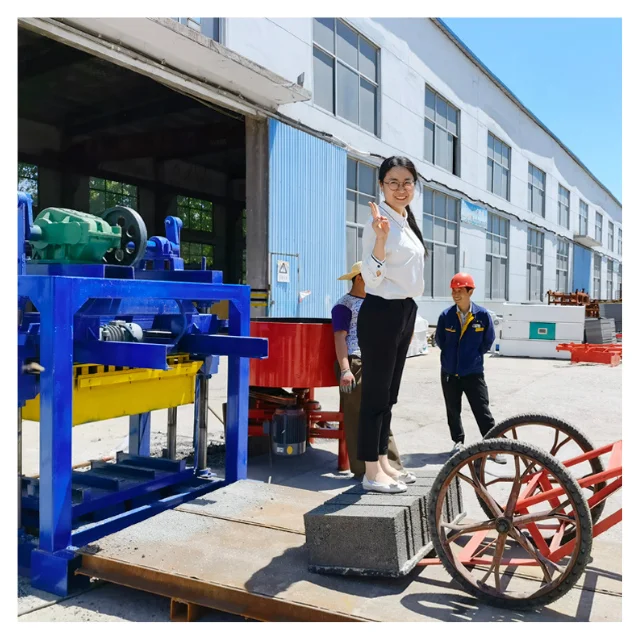
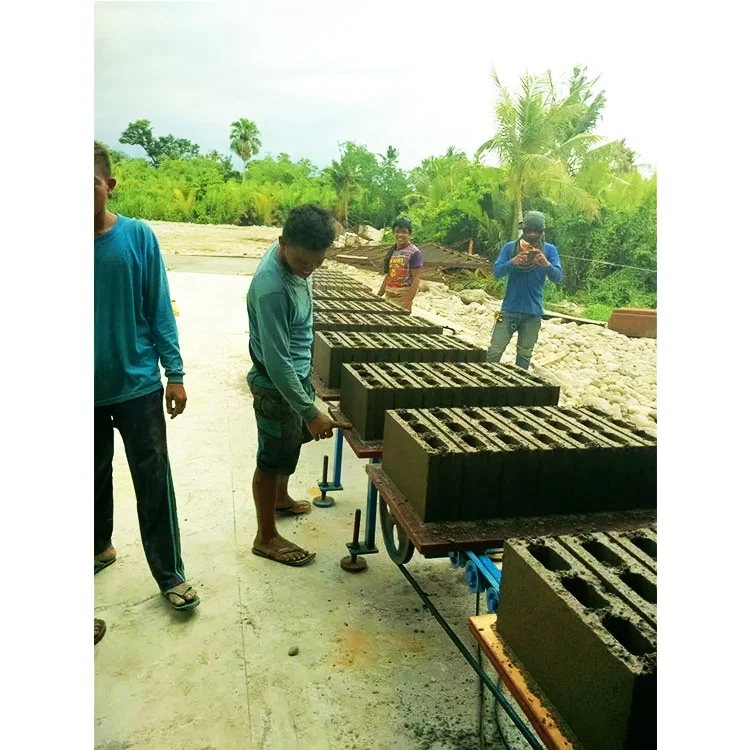 High quality block machine