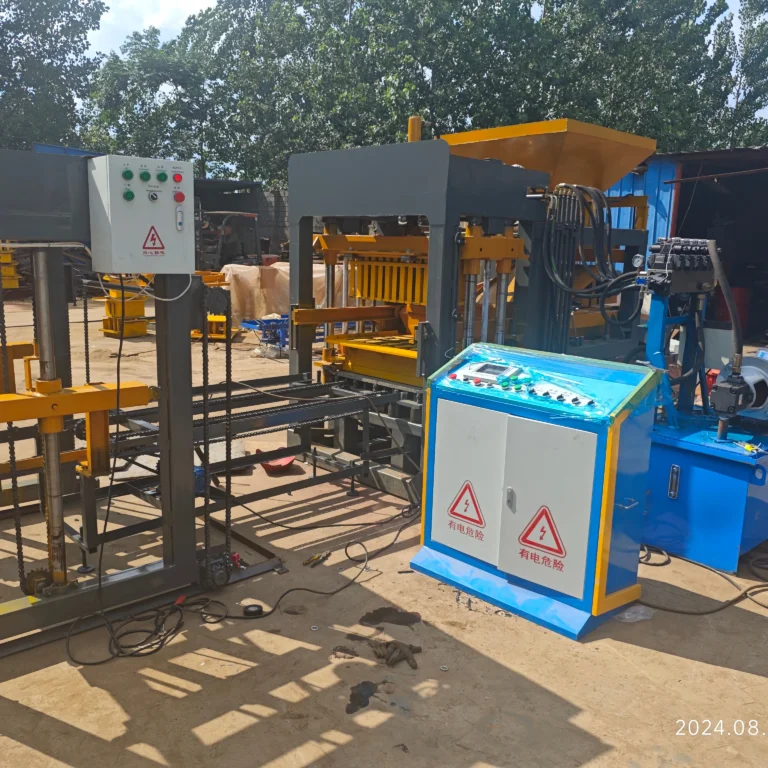
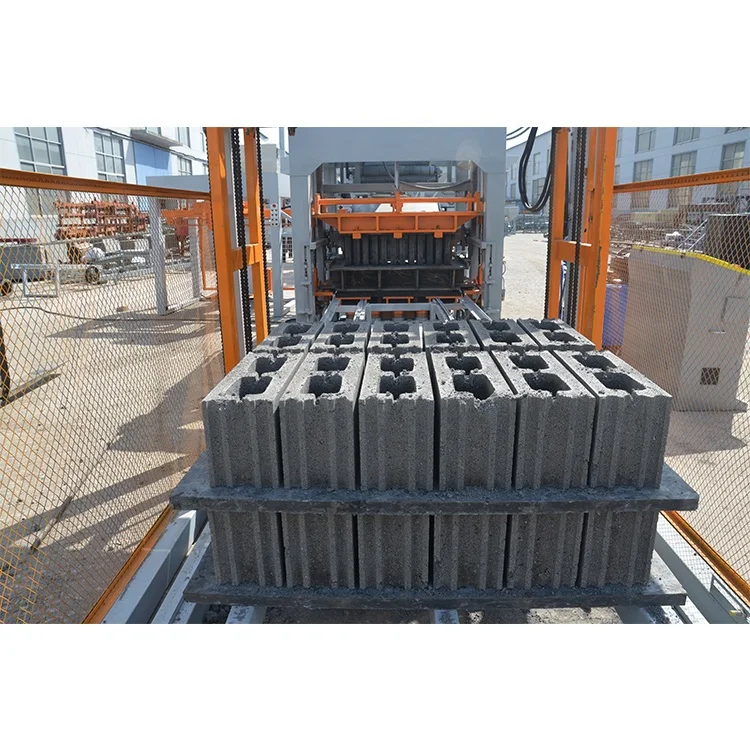
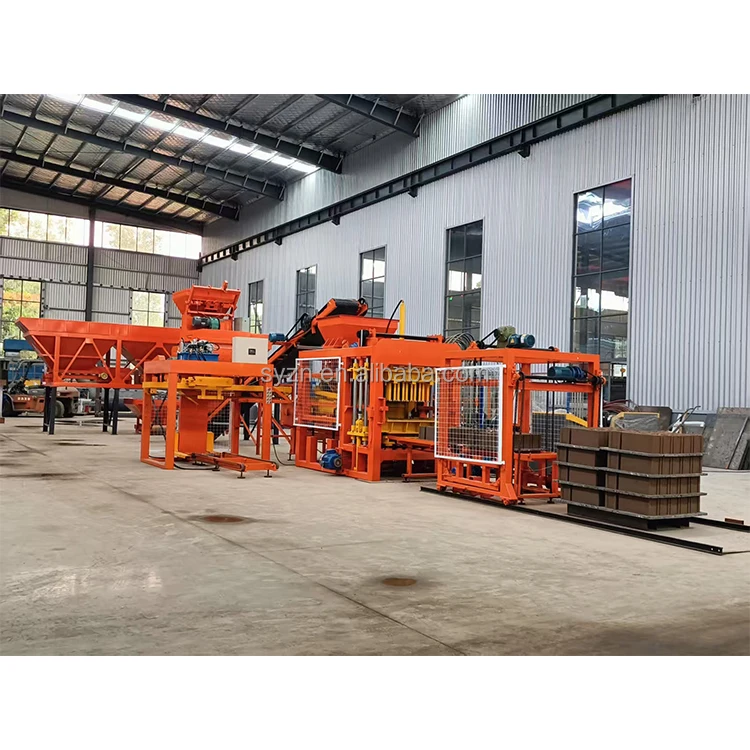
Complete Range Focus — the QTJ4-35 anchors our semi-automatic tier, offering a clear entry point before buyers commit to higher-capacity lines.
Technical Specifications
| Parameter |
Value |
| Model |
QTJ4-35 |
| Product Type |
Semi-Automatic Hydraulic Block Making Machine |
| Overall Dimensions (L×W×H) |
1350×1460×1800 mm |
| Molding Cycle |
35 s |
| Vibration Frequency |
2800 r/min |
| Exciting Power |
30 kN |
| Rated Power |
11.15 kW |
| Mixer Model |
JQ350 |
| Pallet Size |
850×450×20 mm |
| Net Weight |
1500 kg |
| Applied Products |
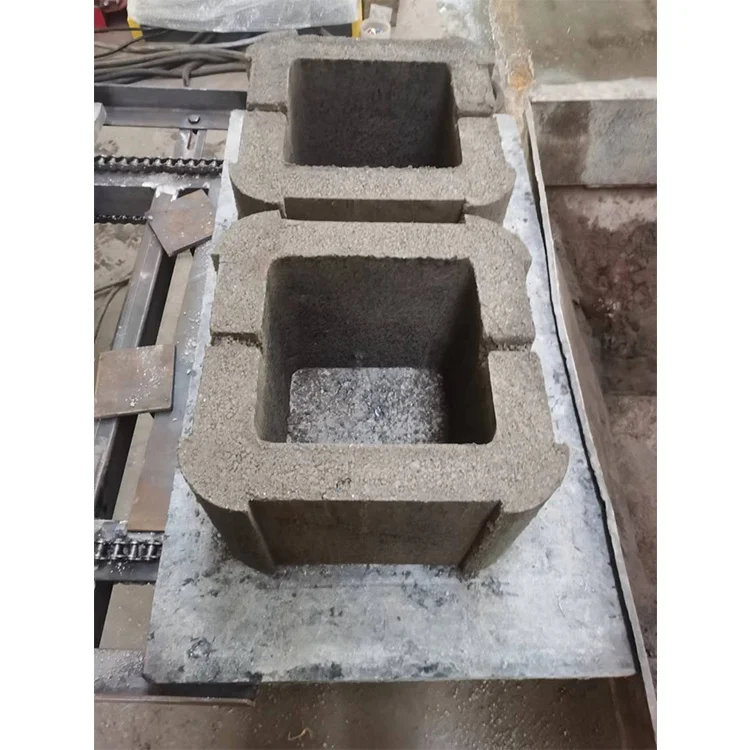
Hollow block, solid brick, paver |
| Automation Level |
Semi-automatic |
| Hydraulic Station |
Equipped |
Application Suitability
| Application |
Material or Output |
| Standard hollow block production |
Crushed stone, sand, cement (8-inch and 6-inch formats) |
| Solid brick manufacturing |
Fly ash, cement, dust blends |
| Paver and interlocking brick |
Cement-aggregate mixes with color pigments |
| On-site contractor block making |
Locally sourced aggregate without fixed plant setup |
What "3264 Pieces Per Shift" Actually Means on the Floor
Capacity numbers are meaningless unless tied to the exact block format and local aggregate you plan to run.
Most catalog sheets quote a single daily output figure, leaving the buyer to discover after installation that their chosen block format cuts that number sharply. I learned this the hard way early on when a customer in West Africa received a Semi-Automatic Block Making Machine manufacturer quote based on an idealized mix, only to find his local sand carried enough clay to drop block strength below the acceptable threshold [NEED_CITE: local aggregate variability and compressive strength]. The QTJ4-35 output here is stated specifically: 3264 pieces per 8-hour shift for a 400×200×200 mm hollow block at 4 pieces per mould, and 4080 pieces per shift for a 400×150×200 mm hollow block at 5 pieces per mould. Solid brick output runs to 17000 pieces per shift for 240×115×53 mm format at 18 pieces per mould. These figures assume consistent raw material and standard curing.

Where the QTJ4-35 Sits Across Our Full Machinery Range
Our line runs from small egg-laying mobile units up to high-capacity fully automatic plants with pallet cubing. The QTJ4-35 occupies the semi-automatic position, meaning the press cycle runs automatically while pallet handling relies on manual or trolley-assisted movement. This keeps the initial investment and plant footprint manageable for a first block plant or a contractor producing on-site. Buyers who outgrow this tier can move to our automatic machines without changing their pallet size or re-engineering their curing yard.
Choosing the Right Tier Before You Commit Floor Space
A semi-automatic machine demands less from the facility: no automatic pallet return conveyor, no stacker, and a simpler electrical supply. For workshops running under 200 square meters with limited three-phase power, this tier often fits where a full automatic line cannot [NEED_CITE: typical block plant space requirements by automation level]. The 1350×1460 mm footprint of the QTJ4-35 leaves room for the JQ350 mixer and raw material staging within a compact bay. The trade-off is labor: an operator moves pallets and stacks cured blocks by hand or trolley.
Reading the Specs That Determine Daily Reality
The 35-second molding cycle governs how many presses complete each hour, but actual throughput depends on how fast the operator reloads the mould and clears the finished pallet. The 30 kN vibration force, combined with upper mould compression, determines block density and ultimately compressive strength — if vibration is too weak for the aggregate gradation, blocks crack during curing. The 2800 r/min vibration frequency is tuned for standard concrete mixes; running very fine fly-ash-dominant blends may require adjusting the mix ratio to maintain face quality. The 850×450×20 mm pallet size dictates curing rack dimensions and forklift tine spacing, so confirming your existing yard layout before ordering avoids a costly mismatch. Hydraulic station pressure must match the mould cavity depth, especially when pressing tall 8-inch hollow blocks where sidewall compaction is critical.
The Hidden Cost of Picking the Wrong Pallet and Voltage
Specifying pallets without checking the buyer’s curing rack spacing leads to pallets that physically do not fit the existing racks, forcing a yard rebuild. Similarly, shipping a machine wired for 380 V / 50 Hz to a region running 440 V / 60 Hz burns out motors within weeks of commissioning [NEED_CITE: voltage and frequency standards by export market]. These oversights do not show up in the quotation stage but surface as downtime and replacement costs once the machine arrives on-site. Confirming voltage, frequency, and pallet material — whether fiberglass or treated wood — before production prevents most of these failures.
Why Buyers Source This QTJ4-35 Block Machine for Sale Through Us
We treat the machine, mould, pallet, and mixer as one matched system rather than assembling components from separate vendors. Every capacity calculation we issue names the block format it assumes, so you know exactly what 3264 pieces per shift refers to. Mould designs cover the hollow block, solid brick, and paver formats your local market actually buys, with custom drawings available for non-standard shapes. The semi-automatic configuration leaves a clear upgrade path to automatic pallet feeding and stacking when volume grows. Our factory test runs your specific block format before dispatch, and the machine ships with documentation matching the exact configuration you ordered.
Documentation & Verification
- Line layout with capacity stated per block format, not a single blended number
- Machine spec sheet confirming vibration force, hydraulic pressure, and pallet dimensions
- Mould drawing and format list matched to your target market products
- Voltage, frequency, and control language confirmation recorded before production begins
- Factory test record on your specified block format before container loading
- Operation and maintenance manual with wear parts and mould replacement list
Installation, Commissioning & Support
- Foundation pad leveled for the 1350×1460 mm footprint with anchor bolt template provided
- Dedicated 11.15 kW three-phase circuit with breaker sizing confirmed against your local supply
- Host machine, JQ350 mixer, and conveyor arrive dismantled with reassembly drawings included
- First-run commissioning covers molding cycle tuning and hydraulic pressure adjustment
- Operator training addresses mould changeover across hollow, solid, and paver formats
- Wear parts list covers hydraulic seals, vibration springs, and mould liner replacement intervals
What We Need to Prepare Your Configuration
To move from a general inquiry to a firm quotation, we need your target block formats with dimensions, the local aggregate type and source, your available three-phase voltage and frequency, and the pallet material you prefer. Share your curing yard dimensions and any existing forklift or rack setup so we can match the 850×450 mm pallet accordingly. If you have a daily output target, tell us which block format that target is based on.
Frequently Asked Questions
Q: How is daily output calculated, and which block format does the capacity figure assume?
A: Every output figure we quote names the block format and pieces per mould. For the QTJ4-35, the 3264 pieces per 8-hour shift applies to a 400×200×200 mm hollow block at 4 pieces per mould, while solid brick output reaches 17000 pieces per shift at 18 pieces per mould. We do not blend formats into a single misleading number.
Q: Where does the QTJ4-35 sit compared to fully automatic and mobile block machines?
A: It occupies the semi-automatic tier within our full range. Mobile egg-laying machines suit on-site production with no pallet system, while fully automatic lines add pallet feeding, stacking, and cubing. The QTJ4-35 offers consistent press automation without the footprint or investment of a full automatic plant.
Q: What pallet size and material should I choose based on my curing area and forklift?
A: The standard 850×450×20 mm pallet must match your curing rack slot width and forklift tine spacing. Fiberglass pallets last longer in humid climates, while treated wood costs less upfront. We confirm your rack and handling equipment dimensions before locking the pallet specification.
Q: Can I start with the QTJ4-35 semi-automatic and upgrade to higher automation later?
A: Yes. The machine frame and pallet size remain compatible with our automatic pallet feeders and stackers. When your volume grows, you can add automatic pallet return and stacking without replacing the host press or changing your curing yard layout.
Q: What voltage and control language options are available for my target market?
A: We configure the motor and control panel to your site’s three-phase voltage and frequency before production. Control labels and documentation language are confirmed during the quotation stage so the operator interface matches your workforce upon commissioning.

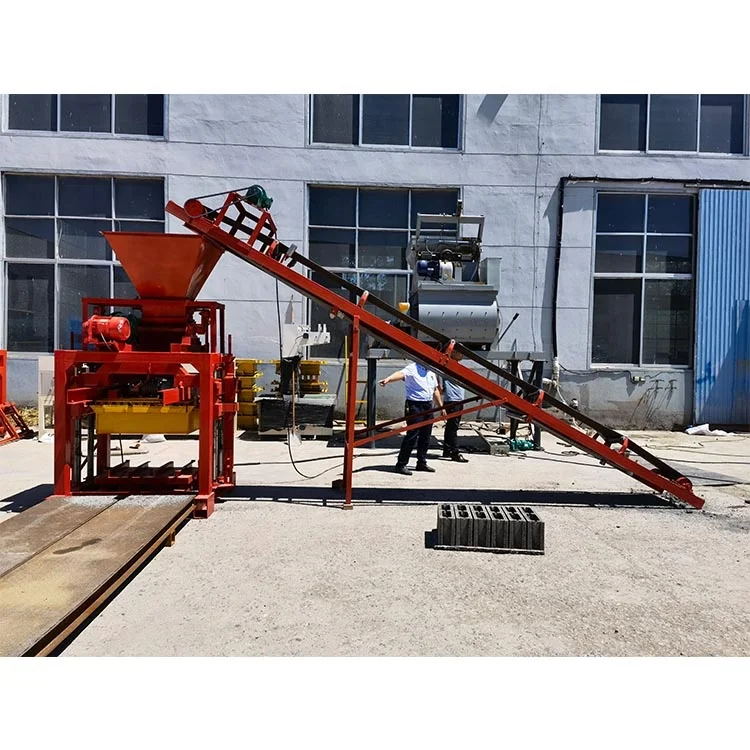
 High quality block machine