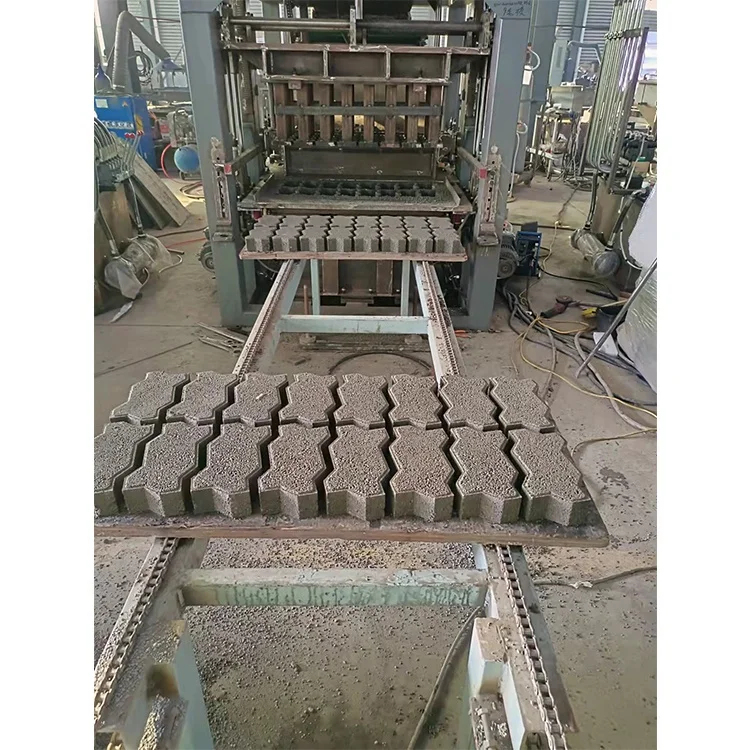
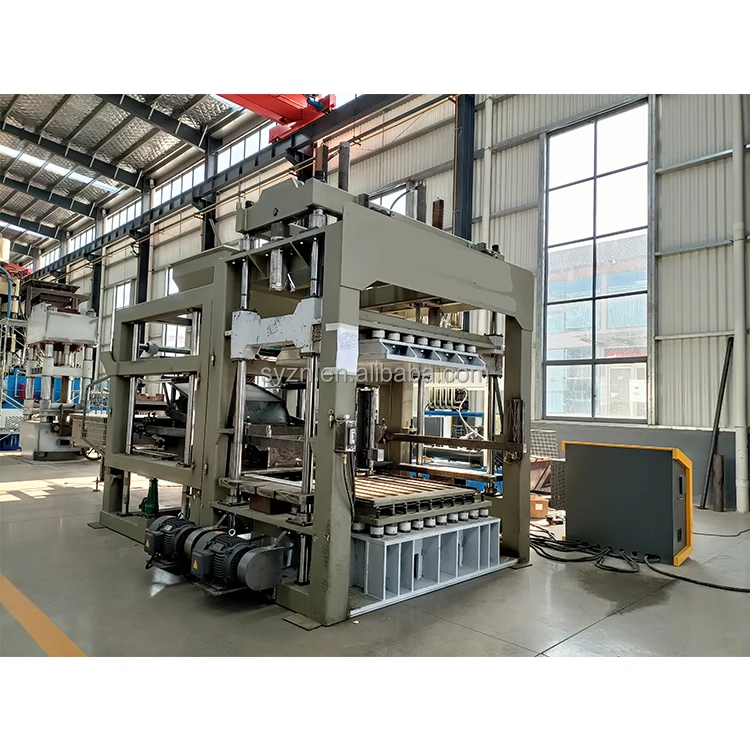
Matched System Supply — machine, mould, pallet and handling specified together against the buyer’s actual block format, not quoted as separate line items.
Technical Specifications
| Parameter |
Value |
| Model |
QTJ4-35 |
| Product Type |
Small Automatic Cement Block Making Machine |
| Overall Dimensions (L×W×H) |
1350×1460×1800 mm |
| Total Weight |
1500 kg |
| Molding Cycle |
35 s |
| Vibration Frequency |
2800 r/min |
| Exciting Power (Vibration Force) |
30 kN |
| Total Power |
11.15 kW |
| Mixer Model |
JQ350 |
| Pallet Size |
850×450×20 mm |
| Output (Hollow Block 400×200×200 mm) |
408 pcs/h, 3264 pcs/8hr (4 pcs/mould) |
| Output (Hollow Block 400×150×200 mm) |
510 pcs/h, 4080 pcs/8hr (5 pcs/mould) |
| Output (Solid Brick 240×115×53 mm) |
2100 pcs/h, 17000 pcs/8hr (18 pcs/mould) |
| Automation Level |
Semi-automatic with belt conveyor |
| Applied Products |
Concrete blocks, hollow block (8 inch, 6 inch), solid brick |
| Raw Materials |
Crushed stones, sand, cement, dust, fly ash |
Application Suitability
| Application |
Material or Output |
| Small-scale block plant startup |
Hollow blocks and solid bricks from crushed stone, sand, and cement |
| On-site production for building contractors |
8-inch and 6-inch hollow blocks using locally sourced aggregate |
| Entry-level brick manufacturing |
Solid bricks from fly ash, sand, and cement blends |
| Secondary line for existing distributors |
Low-footprint supplementary production alongside a primary block line |
Why "Pieces per Hour" Means Nothing Without the Mould Size
Every capacity figure on this page is tied to a specific block dimension, because a single number without a format assumption misleads the buyer before the machine even arrives.
Capacity quoted as a blanket hourly figure ignores the reality that a 400×200×200 mm hollow block takes the same 35-second cycle as a solid brick mould carrying 18 units. The actual output per shift changes dramatically depending on which format runs on the line. When sellers leave the format out of the equation, buyers plan their labour, curing space, and delivery schedules around numbers the machine was never set up to deliver. I have watched contractors schedule three trucks a day based on a catalogue claim, only to find their real throughput matched a completely different block size [NEED_CITE: common block machine capacity misrepresentation in export quotations].

Placing the QTJ4-35 in the Shiyue Range
The QTJ4-35 block machine manufacturer positions this model at the entry tier of the full Shiyue lineup, below the mid-range semi-automatic presses and well below the fully automatic stacking and cubing lines. It is designed for buyers who need a compact footprint and straightforward belt-conveyor operation without the capital outlay of a high-capacity plant. For a first-time block producer or a contractor adding on-site capability, this tier keeps the investment contained while still covering the core hollow and solid formats the local market demands.
Semi-Automatic Operation and the Upgrade Path
Semi-automatic running means the operator manages pallet feeding and block removal manually while the press handles vibration, moulding, and cycle timing. This configuration keeps the initial cost lower and the maintenance demands simpler, which matters when technical support is not immediately available on site. Buyers who later need higher throughput can step up to a Shiyue automatic model without replacing the entire supporting infrastructure, because pallet dimensions and mixer outputs are chosen from the same family of components [NEED_CITE: semi-automatic to automatic block machine upgrade compatibility].
How Vibration Force and Pallet Size Shape Daily Output
The 30 kN exciting power at 2800 r/min is calibrated for standard concrete mixes using crushed stone and sand, delivering enough compaction energy to produce structurally sound hollow blocks without requiring a high-pressure hydraulic system. The four-lead channel steel frame absorbs vibration cycles and maintains alignment across thousands of mouldings per shift. Equally important is the 850×450×20 mm pallet — this dimension must match the curing rack spacing and forklift tine width already in use at the buyer’s facility. A pallet that does not fit existing handling equipment turns every cured load into a manual repositioning problem, slowing the line far more than any cycle-time difference between machines.
The Hidden Cost of Skipping the Pallet and Voltage Check
When a quotation lists the press alone without confirming pallet material, curing rack compatibility, or voltage and frequency at the destination, the buyer faces delays that have nothing to do with the machine itself. Three-phase supply at the wrong frequency can overheat motors within the first week of operation. Pallets ordered separately may arrive in a different thickness, causing jamming at the feed point. These are not defects — they are specification gaps that surface only after the container is opened and the crew is already on site [NEED_CITE: industrial equipment commissioning delays caused by voltage mismatch].
Why Source the QTJ4-35 from This Line
Shiyue treats the small cement block making machine for sale as part of a matched system: the JQ350 mixer, belt conveyor, and pallet specification are selected together rather than quoted from separate catalogues. Configuration is set against the buyer’s local aggregate and target block format, not a generic default. Mould drawings and format lists are provided before production so buyers can verify exactly which block sizes are included. The same pallet dimension philosophy extends across the Shiyue range, meaning a future capacity upgrade does not strand the existing curing and handling investment. Documentation covers factory test records on the buyer’s chosen block format before dispatch, reducing on-site surprises during commissioning.
Documentation & Verification
- Line layout and capacity calculation stating output per block format
- Mould drawing and format list for all included block sizes
- Pallet specification sheet confirming size, material, and thickness
- Voltage and control language confirmation recorded before production
- Factory test record on the buyer’s target block format before dispatch
- Operation and maintenance manual with wear parts list
Installation, Commissioning & Support
- 1350×1460 mm footprint requires a level concrete pad with anchor bolt provisions
- 11.15 kW total power demands a dedicated three-phase circuit with correct voltage and frequency
- Machine ships as a single unit; mixer and conveyor arrive separately for on-site assembly
- First-run commissioning includes cycle timing verification on the buyer’s chosen block mould
- Operator training covers mould change procedure and daily vibration motor inspection
- Wear parts list and spare mould inventory reviewed before shipment to prevent downtime
What to Prepare Before Requesting a Quote
To move from inquiry to a firm QTJ4-35 block machine manufacturer proposal, share the specific block formats your market requires, including dimensions and daily volume targets. Confirm the voltage, frequency, and control panel language at your facility, along with the curing rack and forklift specifications already on site. If local aggregate differs from standard crushed stone — for example, a high fly-ash or volcanic-ash mix — provide a sample description so the mixer and vibration settings can be adjusted before production begins.
Frequently Asked Questions
Q: How is the QTJ4-35 capacity calculated, and which block format does each figure assume?
A: Each output figure corresponds to a specific mould. The 408 pieces per hour rate applies to 400×200×200 mm hollow blocks with four cavities per mould, while the solid brick figure of 2100 pieces per hour uses an 18-cavity mould of 240×115×53 mm. The 35-second cycle is constant; only the cavity count changes the hourly total.
Q: What voltage and frequency options are available for this machine?
A: Voltage and frequency are confirmed during the quotation stage to match the buyer’s local three-phase supply. Control panel language is also specified before production. This prevents motor overheating and commissioning delays that occur when standard export configurations do not match destination grid standards.
Q: Where does the QTJ4-35 sit in the Shiyue range and when should a buyer step up?
A: This model occupies the entry tier, suited for first plants and on-site contractor use with semi-automatic operation. Buyers needing higher daily volumes, automatic pallet feeding, or stacking and cubing should look at the mid-range and automatic tiers within the same Shiyue family, where pallet and handling compatibility carries over.
Q: Which moulds are included and can custom block formats be added?
A: Standard quotations cover the hollow block and solid brick moulds listed in the specification table. Custom mould designs based on buyer drawings are available, with format lists and cycle time adjustments confirmed before production so daily output expectations remain accurate for the chosen block shape.

![QTJ4-35 Block Making Machine for Hollow Block – Manufacturer 记录ID 80035 数字之和:8+0+0+3+5=16 第一层:shiyueblockmachine.com → FULL MACHINE RANGE → 全品类目录类角色 → Manufacturer / Factory Supply / Full Range 第三层:16 % 3 = 1 → Factory Supply 第二层:16 % 6 = 4 → [品类词] with [核心配置] – [站点修饰词] Block Making Machine with Belt Conveyor – Factory Supply](https://shiyueblockmachine.com/wp-content/uploads/2026/04/H226555bf51f44687a8dd9cee247a6ab2c.webp)
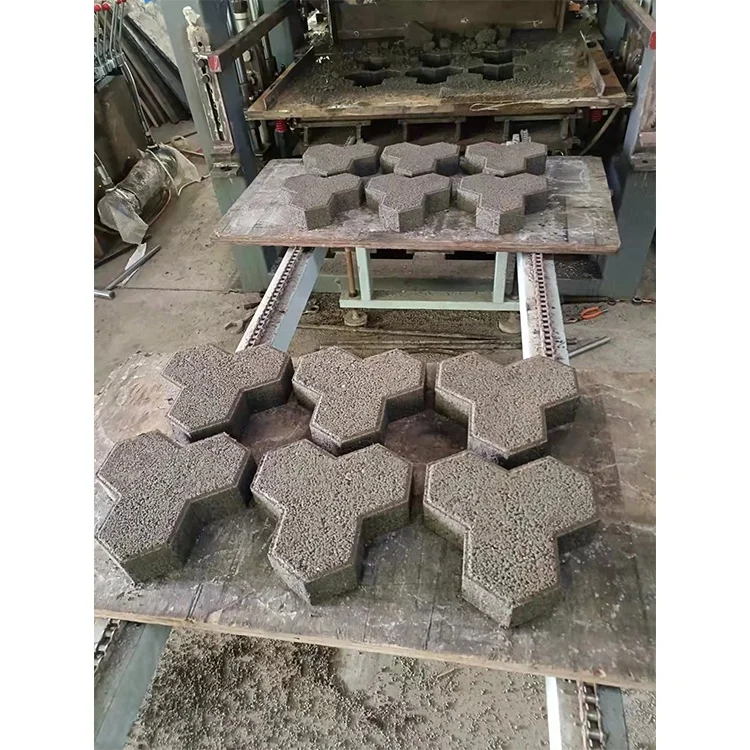 High quality block machine