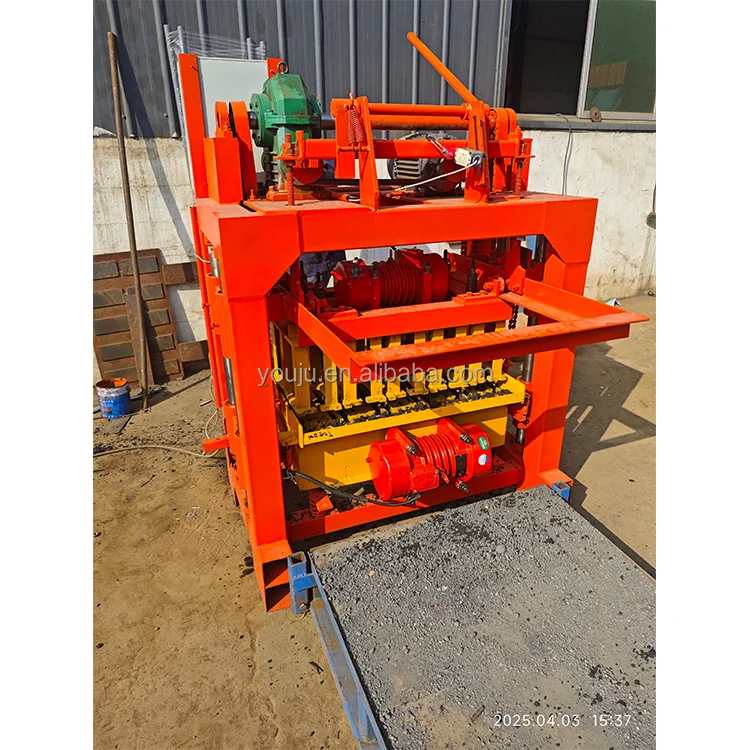
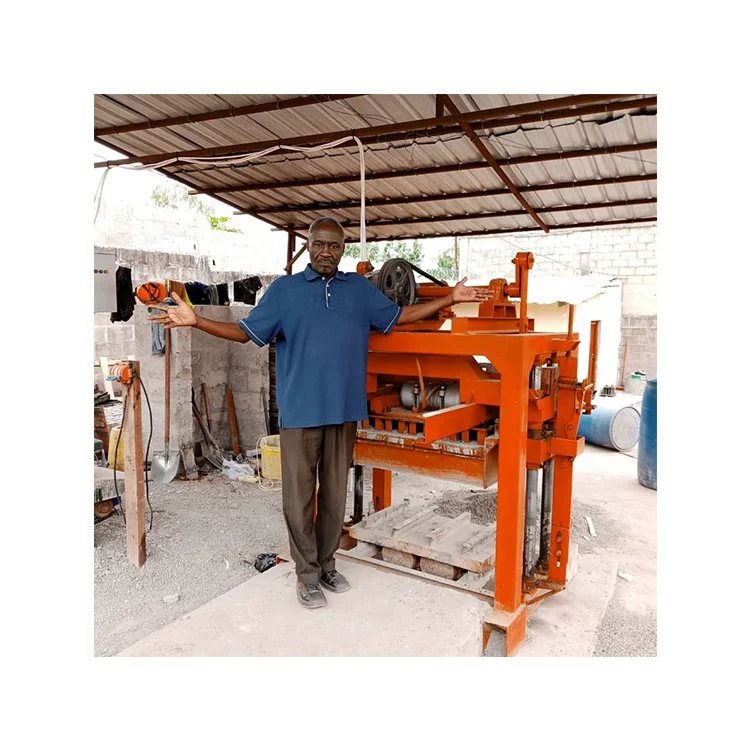
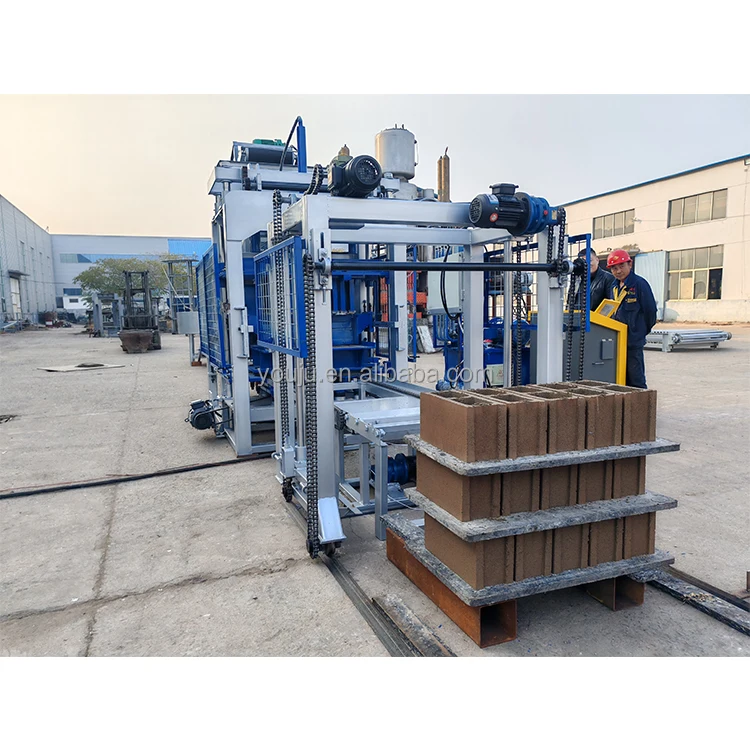
Focused machinery scope — We supply the QTJ4-25 stationary block making machine as part of a complete block production setup, ensuring the press, pallet, and handling equipment are specified together to match your plant layout and curing area.
Technical Specifications
| Parameter |
Value |
| Model |
QTJ4-25 |
| Product Type |
Stationary Concrete Block Making Machine |
| Overall Dimensions (L×W×H) |
3060×1730×2580 mm |
| Rated Pressure |
16–21 MPa |
| Main Vibration Form |
Platform Vibration |
| Vibration Frequency |
4200 r/min |
| Vibration Force |
45.5 kN |
| Pallet Size |
850×550 mm |
| Molding Cycle |
25–30 s (basis not stated in source — confirm block format) |
| Overall Power |
14.9 kW |
| Total Mass |
4 T |
| Demolding Method |
Vibration |
| Factory Area Requirement |
Approx. 200 m² |
| Applied Products |
Hollow/solid blocks, pavers, interlocking blocks, curbstones |
| Raw Materials |
Crushed stone, sand, cement, fly ash, gravel, slag |
| Warranty |
1 year (excluding spare parts) |
Application Suitability
| Application |
Material or Output |
| Small-scale block plant setup |
Concrete and fly ash mixes for standard hollow and solid blocks |
| On-site contractor production |
Crushed stone and sand blends for pavers and curbstones |
| Workshop-based manufacturing |
Interlocking bricks and colored pavers using local aggregates |
What "25–30 Seconds Per Cycle" Actually Means for Your Output
A cycle time is only meaningful when tied to the specific block format and mix design you plan to run.
Many buyers receive quotations stating a stationary block making machine for sale can produce thousands of blocks daily, only to find the actual output falls short once the machine arrives. The QTJ4-25 block machine manufacturer lists a 25–30 second molding cycle, but this figure assumes a standard block size and a mix that responds well to platform vibration at 4200 r/min. If your local aggregate is volcanic ash or a high-clay soil, the vibration parameters must be adjusted, which directly affects cycle time and daily throughput. [NEED_CITE: impact of aggregate type on block machine cycle time]

Positioning the QTJ4-25 Within the Stationary Range
The QTJ4-25 sits at the entry tier of our stationary block making machine lineup. It is designed for buyers who need a compact footprint—roughly 200 square meters of factory space—and who are producing small-to-medium daily volumes. This tier is where most entrepreneurs begin when setting up a first block plant, balancing investment level against the flexibility to produce multiple formats.
Matching Pallet Size to Your Curing Infrastructure
The 850×550 mm pallet is a common format in this class, chosen because it balances the number of blocks per cycle against the curing rack space a small plant typically has available. If your existing forklift and curing area were set up for a different pallet dimension, the mismatch creates bottlenecks downstream of the press. The QTJ4-25 stationary block making machine for sale must be specified alongside your handling equipment to avoid this gap. [NEED_CITE: pallet sizing standards for small-scale block plants]
How Vibration Force and Pressure Shape Block Density
The 45.5 kN vibration force working at 4200 r/min, combined with 16–21 MPa rated pressure, determines the compaction density of every block the QTJ4-25 produces. Platform vibration transmits energy through the pallet into the mold cavity, consolidating the mix around the aggregate particles. When the vibration force is too low for a coarse aggregate, the block emerges with weak edges and inconsistent weight. When the pressure is too high for a fine sand mix, the material over-compacts and sticks to the mold. The QTJ4-25 block machine manufacturer configures these parameters against your submitted aggregate sample before the machine ships.
The Cost of Skipping the Mix Design Conversation
Buyers who order a stationary block making machine for sale without providing their raw material profile often face weeks of lost production after installation. The machine arrives configured for a standard river sand mix, but the buyer’s local source is laterite or crusher dust. Vibration frequency and pressure timing no longer match, blocks crack during curing, and the daily output drops significantly. Resolving this requires remote parameter adjustments or a site visit, both of which delay revenue. [NEED_CITE: common causes of block machine commissioning delays]
Why Buyers Source the QTJ4-25 From Our Range
The QTJ4-25 is specified as one matched system: machine, mold, pallet, and handling equipment are selected together, not assembled from separate suppliers. Configuration is set against your actual mix design and target block format, not a catalog default. Molds are supplied for the formats your market sells, with custom drawings available for non-standard sizes. The automation level is selectable, so you can start with manual pallet handling and add automatic stacking later. Installation support includes operator training on your specific block format.
Documentation & Verification
- Line layout drawing showing the QTJ4-25 footprint with capacity calculation stated per block format
- Machine specification sheet confirming vibration force, pressure, and pallet size as a matched set
- Mold drawing and format list verifying included block types and custom option availability
- Pallet specification sheet matched to your curing rack dimensions and forklift capacity
- Factory test record run on your submitted aggregate sample before dispatch
Installation, Commissioning & Support
- Foundation plan for the 3060×1730 mm machine footprint with vibration isolation requirements
- Electrical schematic confirming voltage and frequency before the 14.9 kW motor is wired on site
- Mold change procedure documented to minimize shift downtime during format switches
- Operator training covering platform vibration adjustment for your specific raw material blend
- Wear parts list identifying mold liners and hydraulic seals with recommended replacement intervals
What to Include With Your Inquiry
To size the QTJ4-25 correctly for your project, provide your target block format and dimensions, the daily volume you need to sustain, and a sample or description of your local aggregate source. Confirm your site voltage and frequency, and indicate whether your curing area and forklift are already in place or need to be planned alongside the machine.
Frequently Asked Questions
Q: How do I verify the QTJ4-25’s real daily output for my block format?
A: Submit your target block dimensions and mix description. We calculate daily output based on the 25–30 second cycle time adjusted for your specific format, accounting for mold fill, compaction, and demolding stages. The capacity figure you receive will state the block size it assumes.
Q: Where does the QTJ4-25 sit compared to automatic and mobile machines?
A: The QTJ4-25 is a stationary, semi-automatic tier machine. It requires more operator involvement than a fully automatic line but offers a smaller footprint and lower investment than high-capacity automatic plants. It is not a mobile egg-laying machine.
Q: What voltage and frequency can the QTJ4-25 be configured for?
A: Voltage and frequency are confirmed during the quotation stage based on your local grid standards. The 14.9 kW overall power and control panel are configured before shipment to match your site supply, avoiding commissioning delays.
Q: What factory space does the QTJ4-25 require?
A: The machine itself occupies 3060×1730 mm, but the total working area including material staging, pallet circulation, and block curing requires approximately 200 square meters. Provide your site dimensions so the line layout can be drawn to fit.
Q: Which mold formats come with the QTJ4-25?
A: The machine supports hollow blocks, solid blocks, pavers, interlocking bricks, and curbstones on the same platform. The quotation specifies which molds are included and which are available as custom options based on your market requirements.

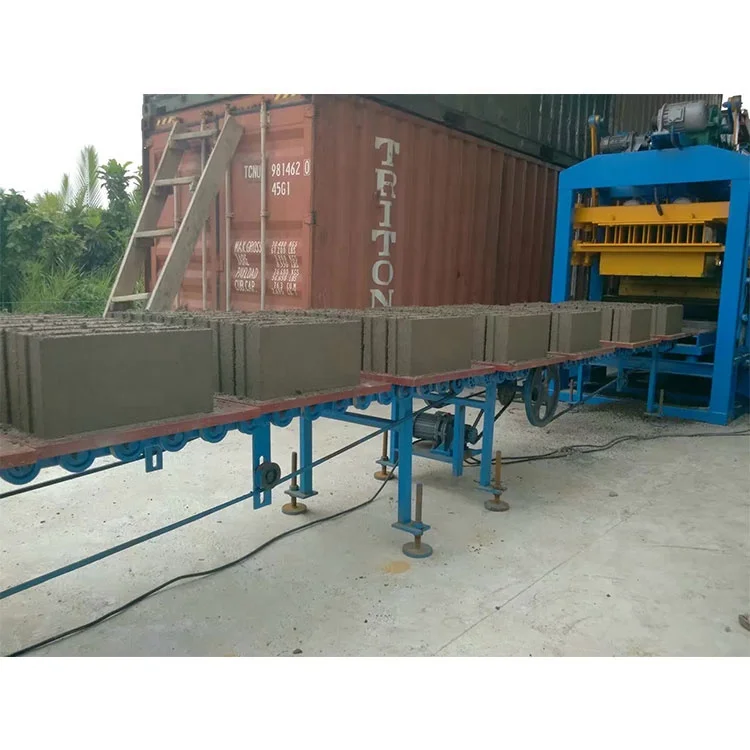
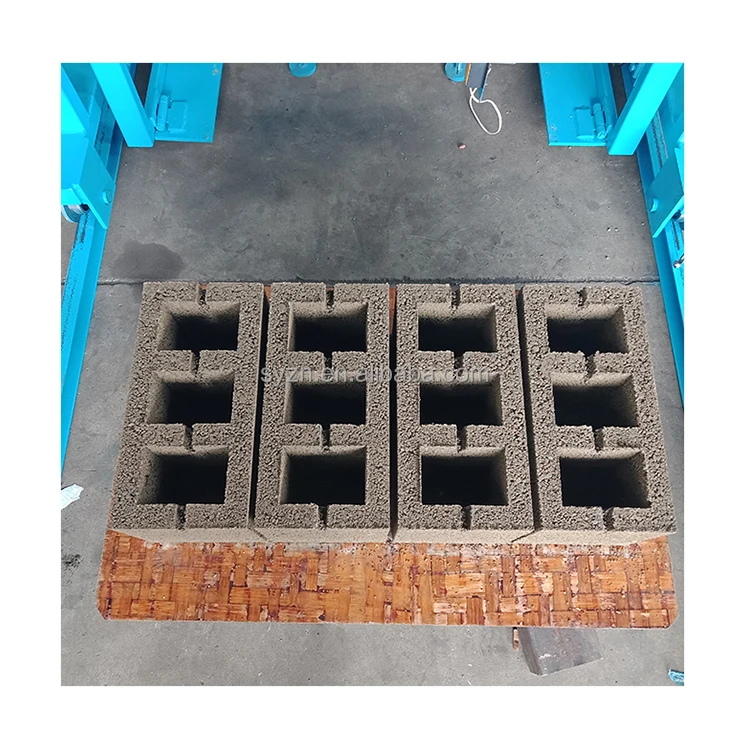 Stationary block machine