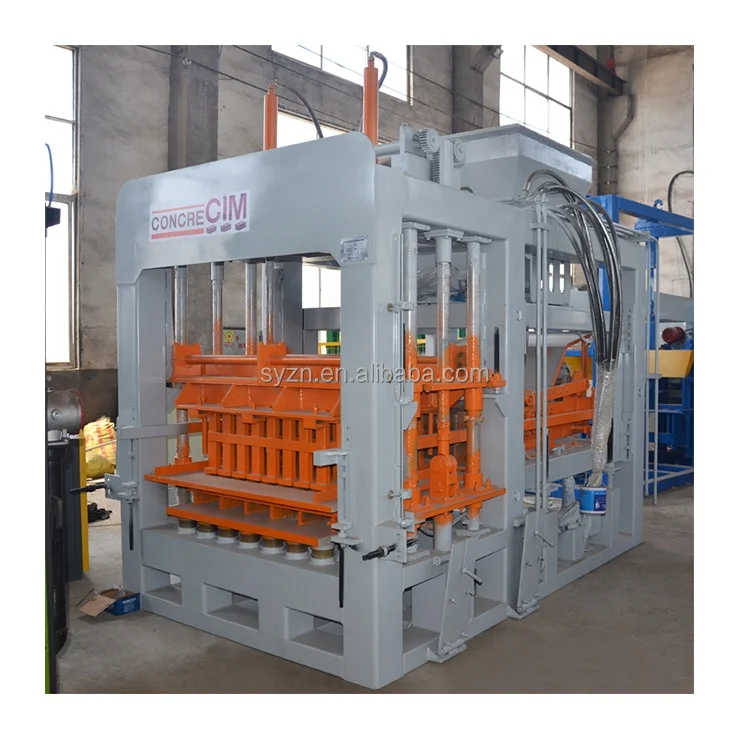
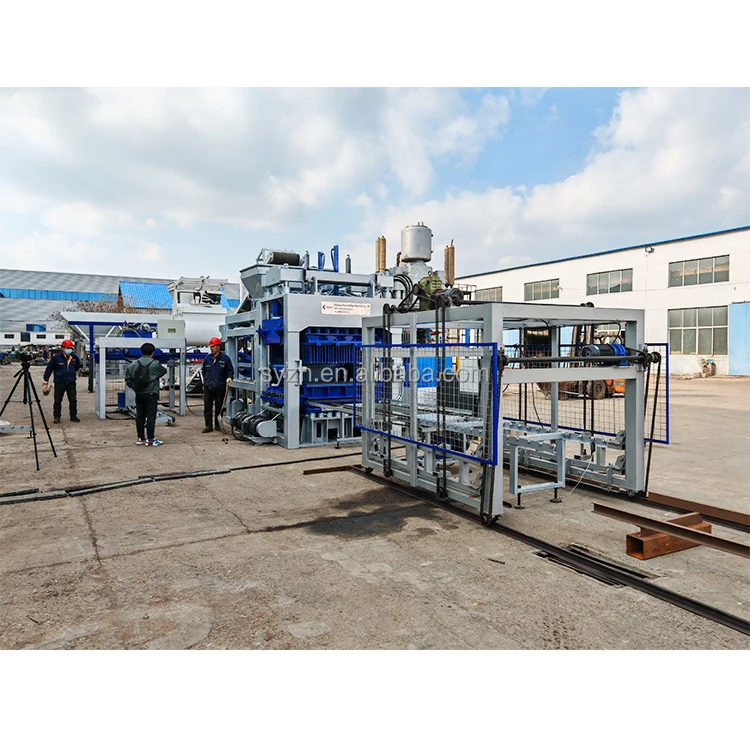
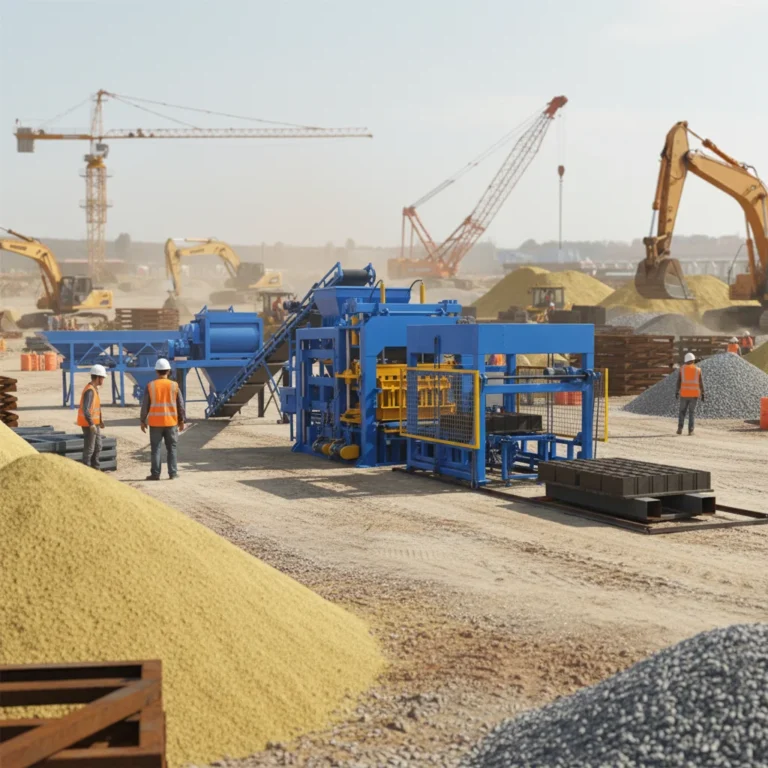
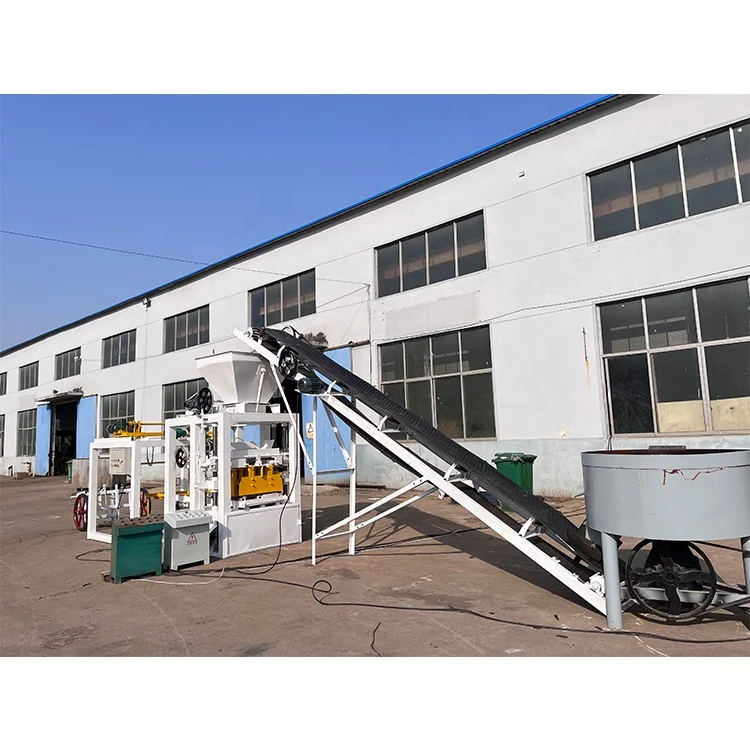
Matched system design — Every component from the QTJ4-25 press to the mixer, pallet, and belt conveyor is specified together so cycle times align across stations instead of leaving the block press waiting on upstream equipment.
Technical Specifications
| Parameter |
Value |
| Model |
QTJ4-25 |
| Product Type |
Semi-Automatic Hollow Block Making Machine |
| Overall Dimensions (L×W×H) |
3060×1730×2580 mm |
| Total Weight |
4 T |
| Cycle Time |
25 s |
| Vibration Force |
45 kN |
| Pallet Size |
850×550 mm |
| Block Height Range |
40–280 mm |
| Workshop Area |
50–150 m² |
| Material Storage Area |
300–500 m² |
| Belt Conveyor Length |
8 m |
| Mixer Model |
JQ500 |
| Motor Brand |
Siemens or ABB |
| Control System |
Electric control |
| Automation Level |
Semi-automatic |
| Voltage & Frequency |
380V, 3-phase, 50Hz (configurable to local supply) |
| Output Capacity |
480 pcs/hour based on 400×200×200mm hollow block, 4 pcs/mould |
| Output Capacity |
600 pcs/hour based on 400×150×200mm hollow block, 5 pcs/mould |
| Output Capacity |
840 pcs/hour based on 400×100×200mm hollow block, 7 pcs/mould |
| Output Capacity |
2880 pcs/hour based on 240×115×53mm solid brick, 24 pcs/mould |
| Mould Change System |
Manual (basis not stated in source — confirm mould change method and time) |
| Stacking Method |
Manual (basis not stated in source — confirm stacking and curing handling) |
| Warranty |
1 year (excluding wearing parts) |
| Assembly State |
Fully assembled, nude or plastic film packing |
Application Suitability
| Application |
Material or Output |
| Hollow block production for residential and commercial walls |
Crushed stone, river sand, cement, fly ash aggregates |
| Solid brick manufacturing for load-bearing structures |
Dense aggregate blends with cement binder |
| Paving block and interlocking brick for driveways and walkways |
Fine aggregate with color pigment options |
| Kerbstone and grassed brick for landscaping |
Coarse aggregate with reinforced mix designs |
| On-site construction block production |
Locally sourced sand, gravel, and cement |
| First block plant for entrepreneurs entering building materials |
Standard concrete mixes with accessible raw materials |
Why "Cycles per Hour" Tells You Nothing Without the Mould
A cycle time only matters when you know which block format fills that cycle.
I once watched a Middle East buyer arrive at our Linyi workshop convinced his new QTJ4-25 semi-automatic block machine for sale would produce a fixed daily tonnage. He had compared quotations based on a single headline number, never asking which block size that number assumed. When we ran a test with his volcanic aggregate, the 25-second cycle stretched considerably because the material demanded longer vibration to reach target density. Capacity planning without format context leads to missed deadlines and idle curing yards [NEED_CITE: aggregate variability and its effect on concrete block cycle times].

Where the QTJ4-25 Sits in the Semi-Automatic Range
The QTJ4-25 occupies the entry-to-mid tier of the Shiyue semi-automatic block machine lineup. It targets buyers who need a defined daily output without the capital outlay of a fully automatic stacking and cubing line. The 50–150 m² workshop footprint keeps site preparation manageable for first-time plant operators or construction contractors producing blocks at the project location. When volume grows beyond what manual pallet handling can sustain, the platform supports an upgrade path toward higher automation tiers.
Automation Level and What It Removes From the Operator
Semi-automatic operation on the QTJ4-25 semi-automatic block machine for sale means the press cycle runs under electric control while pallet feeding, product removal, and stacking remain manual tasks. This configuration reduces the electrical and hydraulic complexity that drives maintenance cost in fully automatic lines. For plants where labour is accessible and production volume does not yet justify robotic stacking, this tier balances throughput with operational simplicity [NEED_CITE: labour cost and automation level selection in block manufacturing].
Vibration Force, Pallet Size, and Block Density
The 45 kN vibration force acting across the 850×550 mm pallet determines how densely aggregate particles compact before the mould lifts. Insufficient vibration leaves voids in hollow block walls, reducing compressive strength below the specification the buyer promised their contractor client. Excessive vibration on a small pallet wastes energy and accelerates mould wear. The QTJ4-25 pairs these two values so that standard concrete mixes achieve consistent density across the full 40–280 mm block height range without requiring the operator to adjust amplitude between formats.
The 25-second cycle time provides a scheduling baseline, but actual throughput depends on the mix design and aggregate source. Volcanic pumice, for example, absorbs water differently than river sand, altering how quickly the concrete reaches sufficient green strength for pallet stripping. Always validate cycle time against your local material before committing to a production schedule.
The Hidden Cost of Skipping Voltage Confirmation
Buyers who finalize a purchase without confirming local voltage and frequency face weeks of idle equipment after arrival. A 380V 50Hz machine shipped to a region running 440V 60Hz will either trip protection circuits or burn out the Siemens or ABB motor before the first production run completes. The cost of a replacement motor, rewinding, or transformer rental frequently exceeds the price difference of specifying the correct voltage at the quotation stage [NEED_CITE: industrial motor failure rates due to voltage mismatch].
Why Source the QTJ4-25 From This Line
Block machinery is our single focus, which means the QTJ4-25 press, JQ500 mixer, 8-metre belt conveyor, and pallet specification are designed as one system rather than assembled from unrelated suppliers. Configuration is set against your actual mix design and target block format, not a catalogue default. Mould design covers the formats your market sells, with custom drawings available when standard options do not match. The automation level remains selectable, so a buyer starting with manual pallet handling can upgrade without replacing the core press. Installation includes on-site commissioning and operator training so the crew understands cycle adjustments for local aggregate variation.
Documentation & Verification
- Line layout and capacity calculation stating the block format assumed for each output figure
- Machine specification sheet confirming vibration force, pallet size, and cycle time per format
- Voltage, frequency, and control language confirmation documented before production begins
- Mould drawing and format list showing covered block types and custom design options
- Factory test record on your target block format before dispatch
Installation, Commissioning & Support
- Workshop floor must accommodate the 3060×1730 mm footprint with clearance for manual pallet circulation
- Dedicated 3-phase circuit matching the confirmed voltage and frequency rating prevents motor damage at startup
- Machine arrives fully assembled; position on levelled concrete pad and connect power for commissioning
- First-run parameter setting adjusts vibration duration to match your local aggregate and mix moisture content
- Operator training covers mould change procedure and daily lubrication points on the vibration table
- Wear parts list supplied at delivery ensures replacement moulds and vibration components are available when needed
Preparing Your Inquiry
Provide the block formats your market requires along with target daily output and the aggregate materials available locally. Specify your site voltage, frequency, and preferred control display language so the electrical configuration is confirmed before production starts. Include workshop dimensions and any existing curing or pallet handling equipment so the line layout integrates with your current setup.
Frequently Asked Questions
Q: How is the output capacity verified for each block format on the QTJ4-25?
A: Each capacity figure is tied to a specific mould cavity count and block dimension. For example, 480 pieces per hour assumes the 400×200×200mm hollow block mould with four cavities running at a 25-second cycle. We document the format, mould, and cycle time together so your daily production plan starts from verified data rather than a generic headline number.
Q: Where does this model sit compared to higher-tier semi-automatic and automatic options?
A: The QTJ4-25 serves buyers who need reliable output with a compact workshop footprint and lower initial investment. When daily volume exceeds what manual pallet handling can support, or when labour cost makes manual stacking uneconomical, stepping up to an automatic line with pallet feeders and stackers becomes the logical next stage.
Q: What voltage and control language options are confirmed before shipment?
A: The standard configuration is 380V 3-phase 50Hz, but voltage and frequency are configurable to match your local supply. Control display language and operation manual language are confirmed during the quotation stage so there are no delays during on-site commissioning.
Q: What workshop area does the QTJ4-25 require compared to larger models?
A: The press itself occupies a section of the 50–150 m² workshop range, with additional space allocated for material storage at 300–500 m². Higher-tier automatic lines require more floor area for pallet circulation systems and automatic stacking equipment, making the QTJ4-25 suitable where site space is constrained.
Q: Can I upgrade from semi-automatic to a higher automation level later?
A: The platform supports an upgrade path as production volume grows. Buyers can start with manual pallet handling and stacking, then add automatic pallet feeding and stacking modules when daily throughput justifies the investment, without replacing the core press unit.

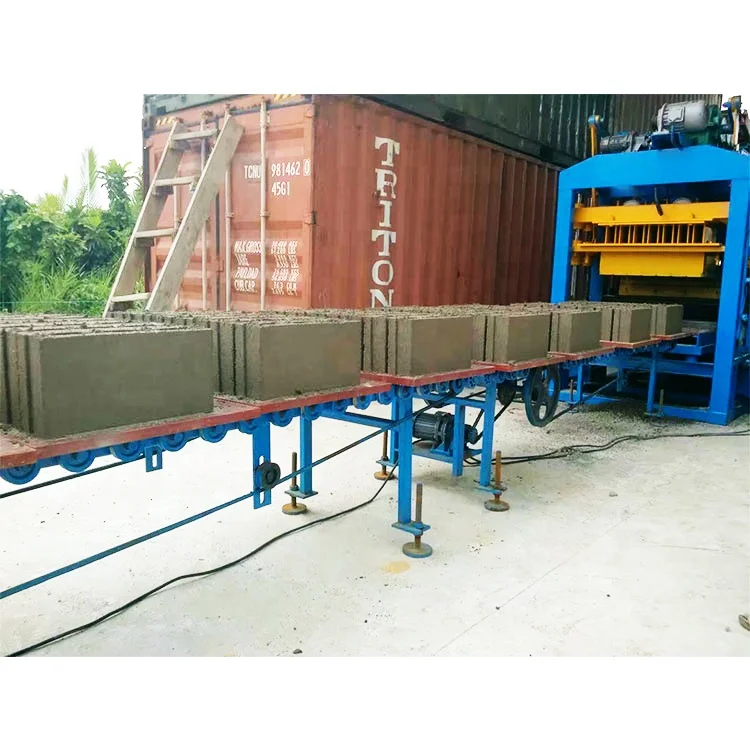
 High quality block machine