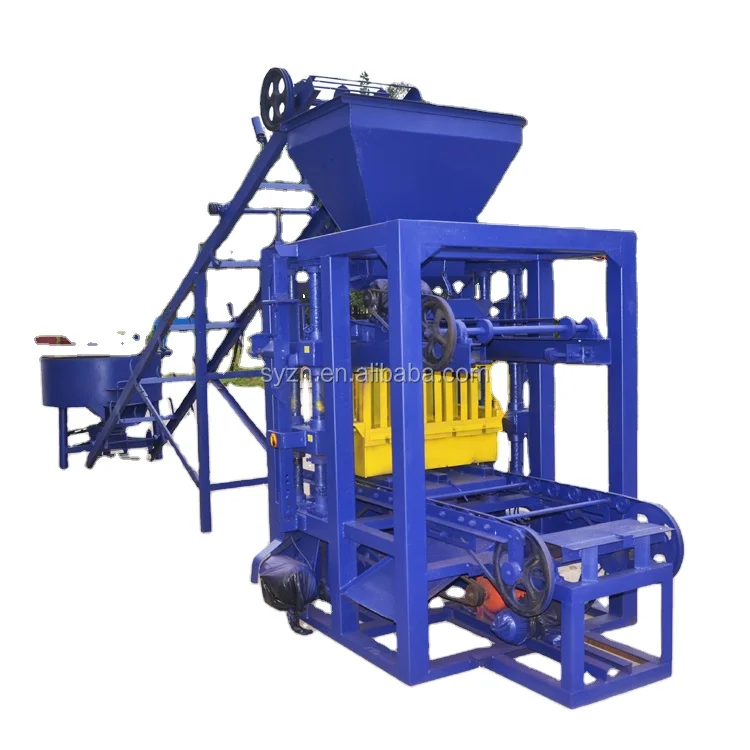
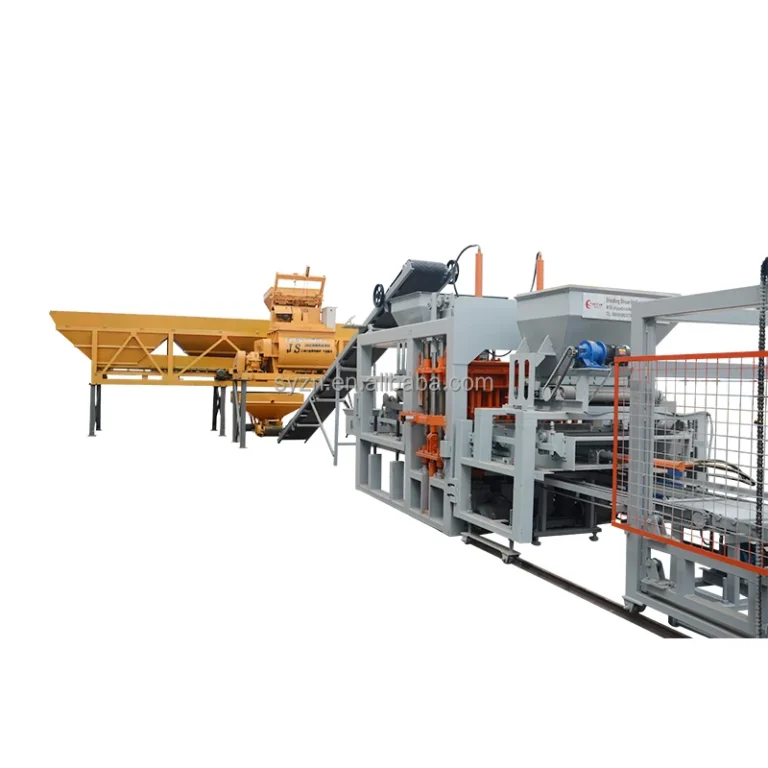
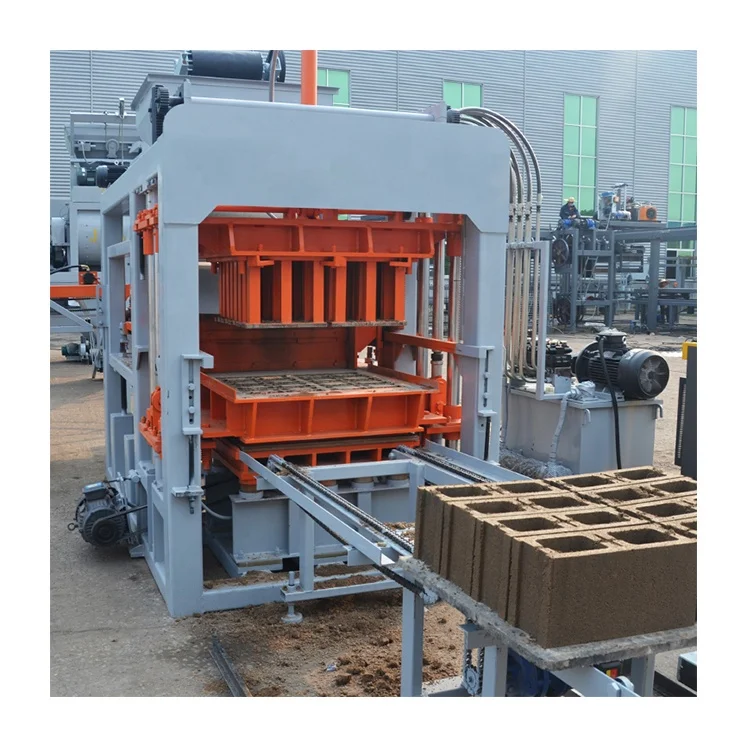
Single-focus machinery sourcing — The QTJ4-25 is specified as part of a matched system covering block machine, mould, pallet and handling, rather than assembled from separate suppliers.
Technical Specifications
| Parameter |
Value |
| Model |
QTJ4-25 |
| Product Type |
Semi-Automatic Concrete Block Making Machine |
| Overall Dimensions (L×W×H) |
6400×1500×2700 mm |
| Molding Cycle |
25 s |
| Vibration Frequency |
2800–5100 r/min |
| Exciting Force |
60 kN |
| Total Power |
17.9 kW |
| Mixer Model |
JQ350 |
| Pallet Size |
850×550×20 mm |
| Net Weight |
2500 kg |
| Control System |
PLC control with automatic plate-supplying, material-disturbing and brick-discharging |
| Output — Hollow Block 390×190×190 mm |
4 pcs/mould, 480 pcs/h, 3800 pcs/8 hr |
| Output — Hollow Block 400×150×200 mm |
5 pcs/mould, 600 pcs/h, 4800 pcs/8 hr |
| Output — Solid Brick 240×115×53 mm |
18 pcs/mould, 2100 pcs/h, 17000 pcs/8 hr |
| Raw Materials |
Crushed stones, sand, cement, dust, fly ash |
| Applied Products |
Concrete hollow blocks (8 inch, 6 inch), solid brick |
| Voltage & Frequency |
Configurable to buyer’s site (basis to be confirmed before shipment) |
Application Suitability
| Application |
Material or Output |
| Small-scale block plant startup |
Hollow blocks and solid bricks from crushed stone, sand and cement |
| On-site contractor production |
8-inch and 6-inch hollow blocks for project-specific masonry |
| Building material distributor evaluation |
Semi-automatic tier trial before committing to fully automatic lines |
| Fly ash brick production |
Solid bricks incorporating fly ash and dust as aggregate |
What "480 Blocks per Hour" Leaves Out for a Semi-Automatic Block Making Machine Manufacturer
Capacity means nothing unless the block format behind the number is stated up front.
I have watched buyers sign off on a semi-automatic block making machine manufacturer quote showing a single hourly figure, only to find their actual product — say, a heavier 8-inch hollow block — runs at a completely different cycle reality. The QTJ4-25 delivers 480 pieces per hour specifically on a 390×190×190 mm hollow block, 600 pieces per hour on a 400×150×200 mm hollow block, and 2100 pieces per hour on a 240×115×53 mm solid brick. When a supplier quotes only one number, the buyer has no way to verify daily output against their actual sales mix. [NEED_CITE: block format assumptions in capacity quotations across the industry]

Where the QTJ4-25 Sits in the Full Machine Range
The Shiyue lineup spans mobile egg-laying machines at the entry level, semi-automatic presses like the QTJ4-25 in the middle, and fully automatic stacking and cubing lines at the top. This semi-automatic block making machine manufacturer tier targets buyers who need consistent PLC-controlled output without the capital outlay and floor space a full automatic line demands. The automatic plate-supplying and brick-discharging functions remove two of the most labour-intensive manual steps while keeping the overall investment moderate.
Footprint and Investment Reality at the Semi-Automatic Tier
A 6400×1500 mm machine footprint means the press itself fits inside a modest workshop, but the buyer must also allocate space for the JQ350 mixer, raw material storage, pallet circulation and a curing area sized to absorb 3800 hollow blocks per shift. The 2500 kg net weight allows transport in a standard container without heavy-lift logistics at the destination. Buyers stepping up from manual machines find this tier offers a meaningful reduction in operator fatigue while keeping the plant layout compact enough for a first production site. [NEED_CITE: typical workshop space planning for semi-automatic block plants]
Reading the Specs That Actually Shape Daily Output
The 25-second molding cycle is the heartbeat of the machine — it determines how many pallets pass through per hour and therefore what curing rack capacity the buyer needs downstream. Vibration frequency ranging from 2800 to 5100 r/min paired with 60 kN exciting force allows the operator to tune compaction for different aggregate gradations; river sand with higher fines content needs a different vibration setting than clean crushed stone. The 850×550×20 mm pallet size must match the curing rack dimensions and the forklift tine spacing the buyer already has on site — ordering a mismatched pallet size is one of the most common and costly oversights at this tier. Total power at 17.9 kW means a dedicated circuit with adequate breaker rating is necessary; running the press on a shared workshop supply risks tripping during the vibration peak.
The Hidden Cost of Skipping Configuration Checks
When voltage and frequency are not confirmed before production, the machine arrives and sits idle while the buyer sources a transformer or re-wires the control panel. PLC display language left at factory default means operators struggle through menus they cannot read, slowing every mould change and fault response. A machine configured for a mix the buyer cannot source locally — for instance, specifying clean crushed sand when only high-clay river sand is available — forces either a costly material switch or a production quality drop that shows up as inconsistent block strength weeks later. [NEED_CITE: commissioning delays caused by unconfirmed electrical specifications]
Why Buyers Source This Tier Here
Block machinery is the single focus of Shiyue, so the QTJ4-25 is never quoted as a standalone press; mould, pallet and handling are specified as one matched system. Configuration is set against the buyer’s actual mix design and local aggregate, not pulled from a catalogue default. Mould design covers the formats the buyer’s market actually sells, with custom drawings available when standard moulds do not match local block dimensions. The automation level is selectable, meaning a buyer can start with the QTJ4-25 semi-automatic tier and move to full automatic stacking later without replacing the press. Installation support includes operator training on the PLC interface and mould change procedure, reducing the learning curve at first startup.
Documentation & Verification
- Line layout showing capacity calculation per block format for the QTJ4-25
- Machine specification sheet confirming vibration force, pallet size and power rating
- Mould drawing and format list detailing included and optional mould designs
- Voltage, frequency and PLC language confirmation record before dispatch
- Factory test record on buyer’s specified block format prior to shipment
Installation, Commissioning & Support
- Foundation pad sized to the 6400×1500 mm footprint with level tolerance for vibration stability
- Dedicated electrical circuit rated for 17.9 kW total draw with correct breaker sizing
- PLC display language and voltage confirmed before production to avoid on-site rewiring
- Operator training on automatic plate-supplying sequence and mould change procedure
- Wear parts and mould inventory list provided for first replacement planning
- Curing area layout guidance matched to 850×550 mm pallet circulation flow
What We Need to Size the Right Configuration
Tell us which block format your market buys most — hollow block dimensions, solid brick, or a mix — and the daily output you need to hit. Share your local raw material type, especially whether your sand is washed crushed sand or river sand with clay content, because that changes vibration tuning. Confirm your site voltage, frequency and preferred PLC display language so the electrical package is built correctly before the machine leaves the factory.
Frequently Asked Questions
Q: How is the QTJ4-25 output capacity verified, and which block format does each figure assume?
A: Every capacity figure we quote names the exact block format behind it. The 480 pcs/h rate applies to 390×190×190 mm hollow blocks, 600 pcs/h to 400×150×200 mm hollow blocks, and 2100 pcs/h to 240×115×53 mm solid bricks. The 25-second molding cycle drives all three figures, and we provide a written capacity calculation sheet with each proposal so buyers can verify daily output against their product mix.
Q: Where does the QTJ4-25 sit in the full machine range?
A: It occupies the semi-automatic tier between mobile egg-laying machines and fully automatic stacking lines. The PLC-controlled plate-supplying and brick-discharging reduce manual handling without requiring the floor space, capital and downstream automation of a full line. Buyers who outgrow this tier can step up to automatic stacking and cubing while keeping familiarity with the Shiyue control interface.
Q: What plant footprint and investment level should a buyer expect at this tier?
A: The press itself measures 6400×1500×2700 mm, but the full working area must include the JQ350 mixer, material feed zone, pallet return path and curing racks sized for up to 3800 hollow blocks per shift. Investment at this tier is moderate compared to a fully automatic line, making it practical for entrepreneurs and contractors funding a first plant without full-line capital.
Q: Which voltage, frequency and PLC language options are confirmed before shipment?
A: We confirm the buyer’s site voltage, frequency and preferred PLC display language before production begins. This step prevents the machine from arriving with an incompatible electrical package or an unreadable control menu, both of which cause costly commissioning delays. The confirmation is documented and included in the shipment paperwork.
Q: What is the upgrade path from the QTJ4-25 to a fully automatic line?
A: The semi-automatic tier can be supplemented with automatic stacking and cubing equipment as the buyer’s output grows. Because the press, pallet size and PLC platform are already part of the Shiyue system, adding downstream automation does not require replacing the core machine. We discuss the upgrade timeline during the initial proposal so the plant layout leaves room for future expansion.

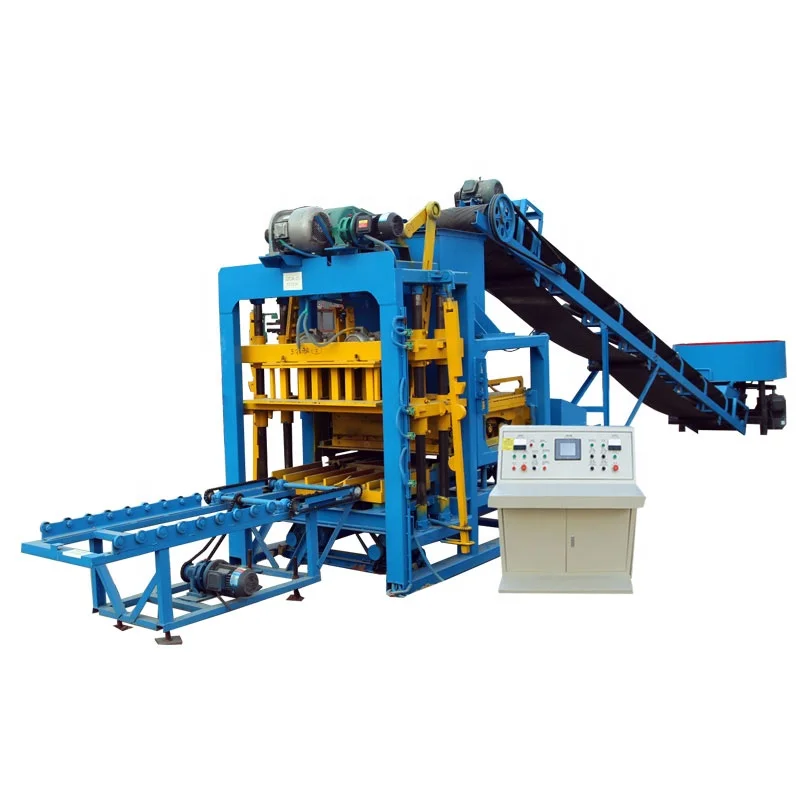
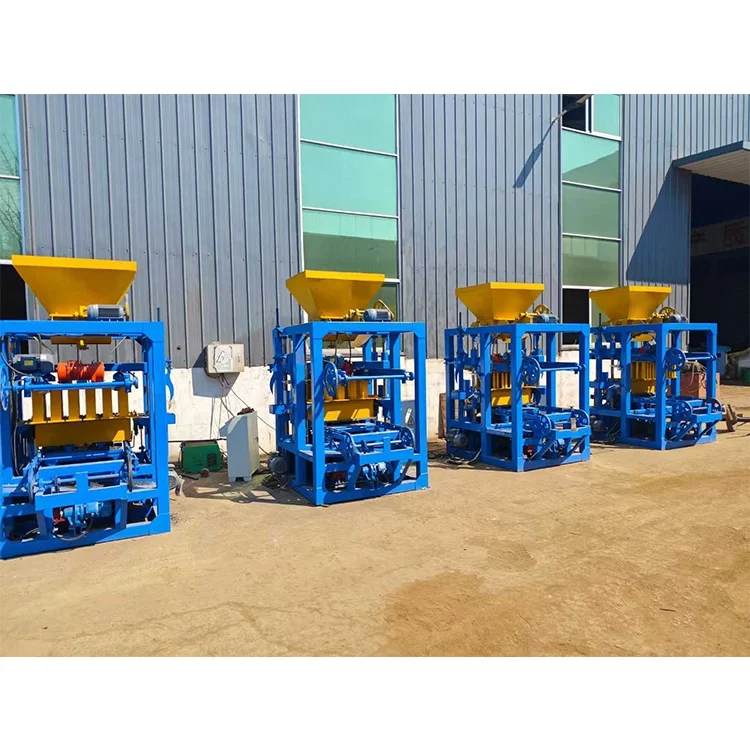 High quality block machine