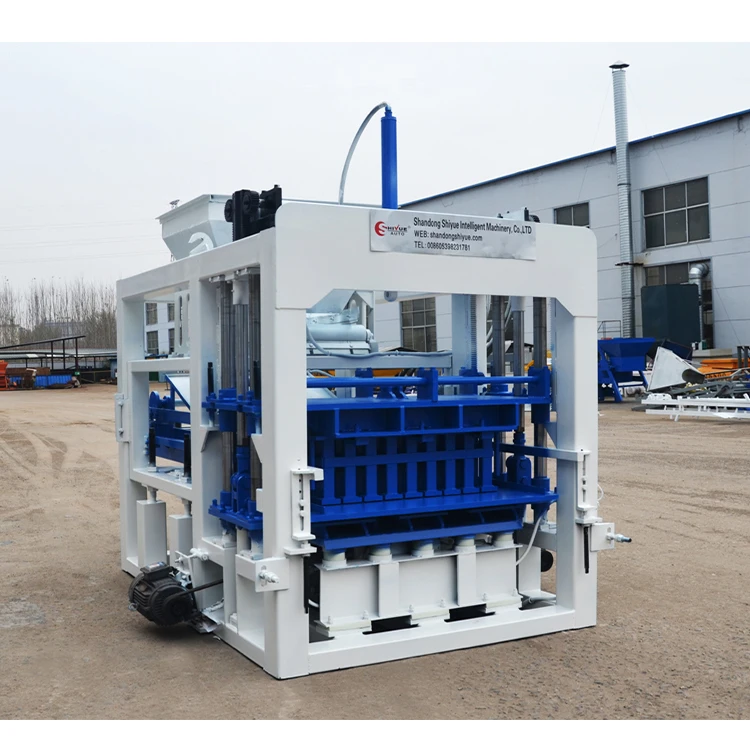
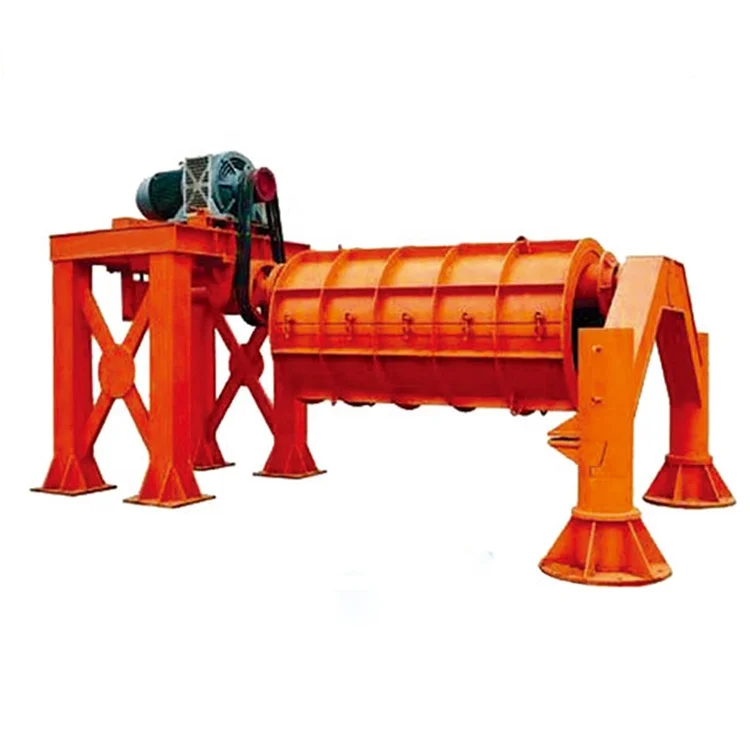
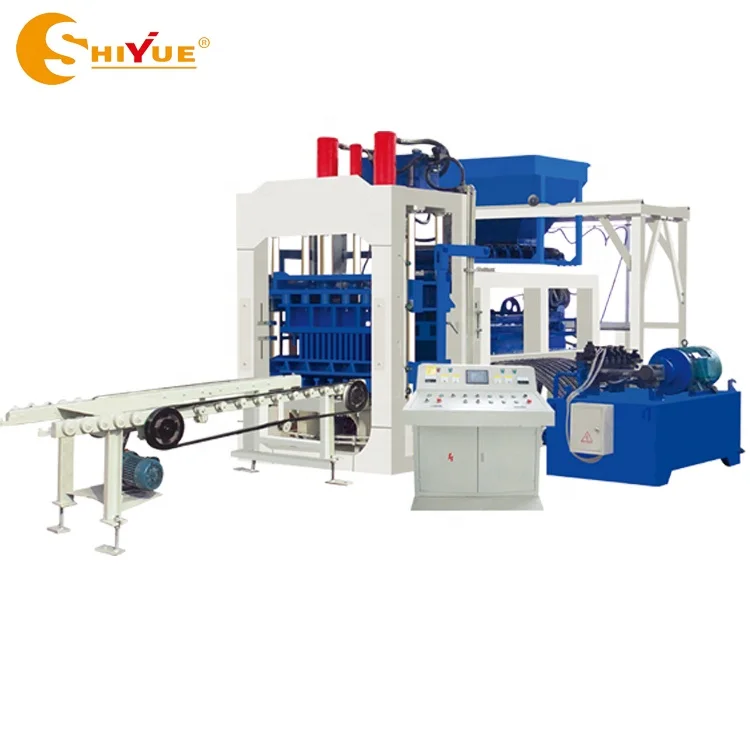
Single-Focus Block Line Design — every QTJ4-25 configuration pairs the press with matched moulds, pallets, and handling gear sized to your actual block format, not pulled from separate catalogues.
Technical Specifications
| Parameter |
Value |
| Product Type |
Semi-Automatic Concrete Block Making Machine |
| Model |
QTJ4-25 |
| Overall Dimensions (L×W×H) |
3000 × 1800 × 2680 mm |
| Total Mass |
3.5 T |
| Overall Power |
16.58 kW |
| Vibration Force |
60 kN |
| Vibration Frequency |
2800–4500 r/min |
| Main Vibration Form |
Platform Vibration |
| Molding Cycle |
25 s |
| Demolding Method |
Mechanical |
| Pallet Size |
850 × 480 mm |
| Guide Column |
Four guide columns, overlong guide design, chrome-plated |
| Frame Material |
National standard manganese steel |
| Hollow Block Output (400×200×200 mm) |
4 pcs/mould, 580 pcs/h, 4,640 pcs/8h shift (basis not stated in source) |
| Porous Brick Output (240×115×90 mm) |
9 pcs/mould, 1,400 pcs/h, 11,200 pcs/8h shift (basis not stated in source) |
| Solid Brick Output (240×115×53 mm) |
21 pcs/mould, 3,300 pcs/h, 26,400 pcs/8h shift (basis not stated in source) |
| Factory Area Requirement |
300 m² |
| Control System |
To be confirmed (PLC / relay / manual panel) |
| Voltage & Frequency |
Configurable, to be confirmed before order |
| Warranty |
1 year for the whole machine (excluding spare parts) |
Application Suitability
| Application |
Material or Output |
| Small-scale hollow block plant |
Crushed stone, sand, cement, fly ash blends |
| On-site contractor block production |
Locally sourced gravel and cement mixes |
| Paving and interlocking brick runs |
Fine aggregate with cement for dense pavers |
| Solid brick supply for masonry |
Sand and cement with optional slag or dust |
| First plant for entrepreneurs |
Multi-format output from one press via mould swaps |
What "Cycles per Hour" Really Means for the QTJ4-25
A cycle time only matters when you know which block format it was measured on.
The QTJ4-25 block making machine manufacturer quote sheet often lists a single molding cycle without naming the mould that produced it. I have watched buyers compare two machines on cycle seconds alone, then discover weeks later that the faster machine was timed on a small solid brick while their target product is a 400 mm hollow block — a format that needs a longer vibration window and a different pallet rhythm. [NEED_CITE: relationship between block format and required vibration dwell time] Capacity figures shift the moment you change the mould, so the only honest number is the one tied to your exact product.

Where the QTJ4-25 Sits in the Full Machine Range
The QTJ4-25 occupies the entry-to-mid tier of our block machine lineup. Buyers stepping up from manual egg-laying machines find the platform vibration and mechanical demolding a clear jump in consistency, while those eyeing high-capacity automatic lines see the QTJ4-25 as a lower-investment starting point. The semi-automatic configuration keeps the pallet handling manual, which holds the initial capital outlay down and leaves room for a future stacking and cubing upgrade without replacing the press itself. This model is often the QTJ4-25 block making machine manufacturer choice for contractors who need dependable daily volumes without a full automatic plant footprint.
Mapping Automation Levels Across the Range
Moving up from the QTJ4-25, the next tiers introduce automatic pallet feeding, hydraulic pressure alongside vibration, and PLC-controlled stacking. Each step reduces the operator count but also raises the electrical supply requirement and the factory floor space. A buyer who currently feeds pallets by hand can later bolt on an automatic pallet feeder if the press was ordered with the hydraulic and electrical interfaces pre-wired. [NEED_CITE: typical automation upgrade paths in block production] Specifying those interfaces at the time of the QTJ4-25 order avoids a costly control cabinet swap later.
How Vibration, Guide Columns, and Cycle Time Interact
Platform vibration at 60 kN across a frequency range of 2800–4500 r/min compacts the mix from below while an upper mould motor presses down, giving uniform density through the block height. The four chrome-plated guide columns with overlong guide design keep the mould aligned over hundreds of thousands of cycles, which directly affects block dimensional tolerance — a worn column lets the mould drift and produces blocks that are out of square. The 25-second molding cycle is achievable on standard hollow blocks, but denser mixes with a high cement ratio may need a few extra seconds of vibration to reach full compaction. Pallet size at 850 × 480 mm determines the curing rack spacing you must build, so confirm your forklift fork width and rack dimensions before ordering.
When the Wrong Configuration Costs More Than the Machine
I once saw a buyer receive a block press configured for river sand when his local quarry only supplied lightweight volcanic aggregate. The vibration frequency that worked perfectly in our factory test left his blocks under-compacted and fragile, cutting usable output to a fraction of the quoted figure until we re-tuned the entire parameter set. [NEED_CITE: impact of aggregate density on block compaction and strength] The QTJ4-25 block making machine manufacturer lesson is straightforward: send a sample of your actual aggregate before we lock the vibration and pressure settings, or plan on a commissioning visit that could have been avoided.
Why Procurement Runs Through a Single-Source Line
Specifying the QTJ4-25 together with its moulds, pallets, and handling stations from one supplier means the cycle times, pallet dimensions, and stacking rhythm are matched before the crate leaves the factory. Our documentation package names the exact block format behind each capacity figure so there is no guessing on site. Mould drawings arrive with the quotation, letting you cross-check every format your market demands before production begins. Factory test records and packing photographs are supplied before shipment, so you see the machine running your chosen moulds rather than a generic demo block.
Documentation & Verification
- Line layout showing QTJ4-25 footprint against your 300 m² factory area
- Capacity calculation sheet stating the block format behind each output figure
- Mould drawing and format list for every block type you plan to produce
- Voltage, frequency, and control language confirmation signed off before build
- Factory test record on your specified mould before dispatch
Installation, Commissioning & Support
- Foundation plan matched to the 3.5 T mass and 3000 × 1800 mm footprint
- Dedicated circuit sized for 16.58 kW total draw at your confirmed voltage
- Guide column and platform alignment check during on-site assembly
- Vibration frequency tuning to your local aggregate and mix ratio
- Operator training covering mechanical demolding and mould change procedure
- Wear parts list for chrome-plated columns and manganese steel frame contacts
What to Share Before Requesting a Quote
Send the block formats your market sells, including dimensions and target compressive strength. Provide a sample or lab report of the aggregate you plan to use so we can set the vibration parameters before the QTJ4-25 block making machine manufacturer build starts. Confirm your site voltage, frequency, and the language your operators need on the control panel. If you already have curing racks or a forklift, share the pallet dimensions and fork width so the 850 × 480 mm pallet spec can be verified or adjusted.
Frequently Asked Questions
Q: How is the QTJ4-25 capacity verified, and which block format does each output figure assume?
A: Every capacity row in our specification sheet names the exact block dimensions and mould used during the factory test. Hollow block, porous brick, and solid brick outputs are listed separately so you can match the figure to your actual product rather than relying on a single headline number.
Q: Where does the QTJ4-25 fit compared to higher-tier automatic machines?
A: The QTJ4-25 sits in the entry-to-mid tier with semi-automatic operation and mechanical demolding. It requires a smaller factory area and lower electrical capacity than full automatic lines, making it suited for first plants or secondary format lines where investment must stay controlled.
Q: What voltage and control language options are available?
A: Voltage and frequency are configurable to your local grid standard, and the control panel language is confirmed before production. We lock these details during the quotation stage to avoid commissioning delays once the machine arrives on site.
Q: Is there an upgrade path from the QTJ4-25 to a more automated tier?
A: The QTJ4-25 can be ordered with pre-wired interfaces for future automatic pallet feeding and stacking. Upgrading later then involves adding the peripheral stations without swapping the main press or control cabinet.

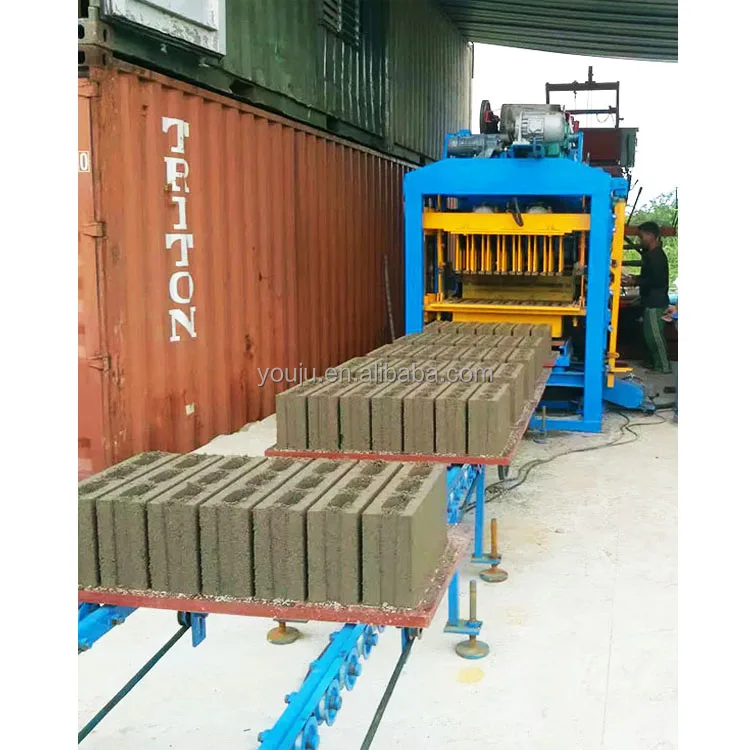
 Automatic block machine