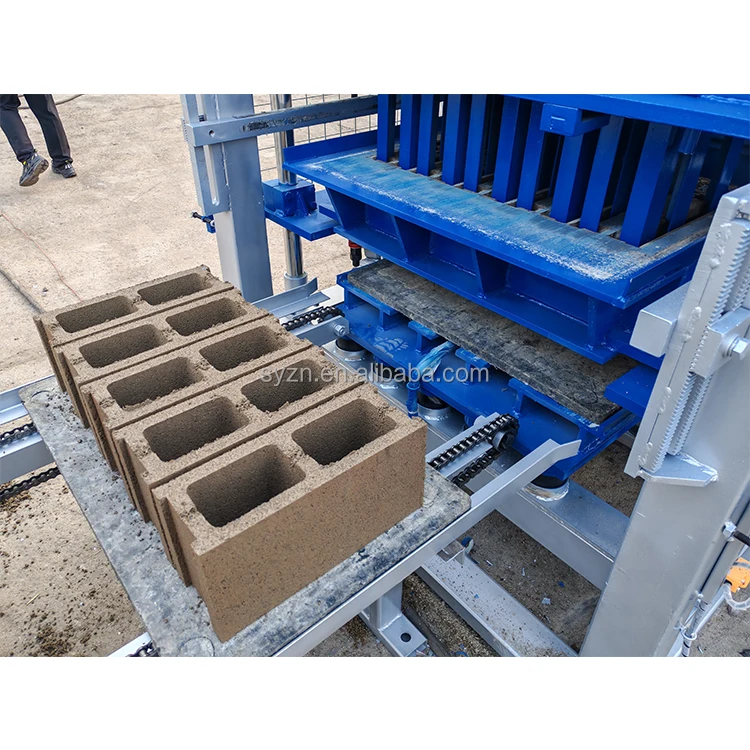
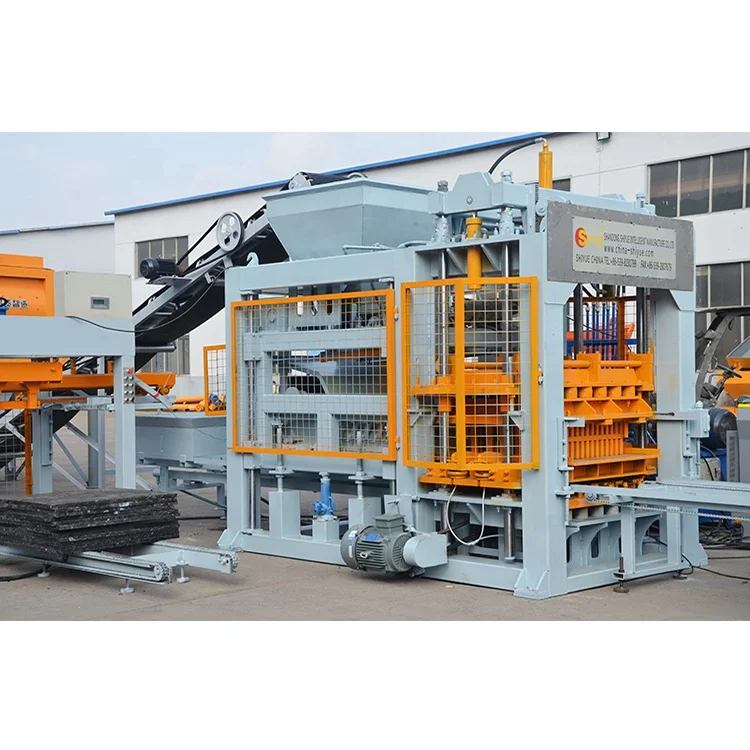
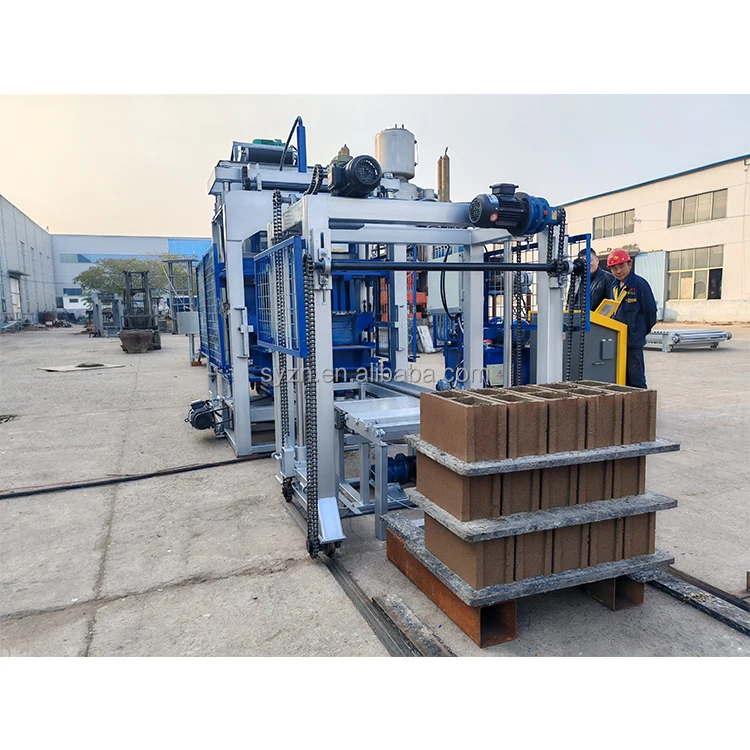
Matched system specification — Every QTJ4-25 block machine leaves our facility with the mould, pallet, and handling equipment verified as one integrated production unit, not assembled from mismatched third-party components.
Technical Specifications
| Parameter |
Value |
| Model |
QTJ4-25 |
| Product Type |
Automatic Concrete Block Making Machine |
| Overall Dimensions |
6400×1500×2700 mm |
| Molding Cycle |
25s (basis not stated in source — confirm block format / material / thickness) |
| Vibration Frequency |
2800-5100 r/min |
| Exciting Power |
60 KN |
| Total Power |
17.9 kW |
| Mixer |
JQ350 |
| Pallet Size |
850×550×20 mm |
| Net Weight |
2500 KG |
| Control System |
PLC |
| Applied Products |
Concrete blocks, hollow block (8 inch, 6 inch), solid brick |
| Raw Materials |
Crushed stones, sand, cement, dust, fly ash |
| Output Capacity (Hollow Block 390×190×190mm) |
480 pcs/hr, 3800 pcs/8hr |
| Output Capacity (Hollow Block 400×150×200mm) |
600 pcs/hr, 4800 pcs/8hr |
| Output Capacity (Solid Brick 240×115×53mm) |
2100 pcs/hr, 17000 pcs/8hr |
| Automation Level |
Automatic plate-supplying, material-disturbing, and brick-discharging |
Application Suitability
| Application |
Material or Output |
| Small Business Block Production |
Hollow blocks and solid bricks from crushed stone, sand, and cement |
| On-site Construction Manufacturing |
8-inch and 6-inch hollow blocks for immediate wall construction |
| Entrepreneur First Plant Setup |
Moderate daily output using locally sourced aggregates and fly ash |
| Workshop Format Expansion |
Adding solid brick 240×115×53mm to an existing hollow block range |
What "4800 Blocks per Day" Leaves Out About the QTJ4-25
Capacity figures mean nothing unless the specific block format is stated alongside the number.
Many buyers receive a quotation stating the QTJ4-25 block making machine manufacturer produces thousands of blocks daily, only to discover the figure assumed a thin solid brick, while their market actually demands 8-inch hollow blocks. The cycle time changes, the mould cavity count changes, and the realistic daily output drops significantly. I have seen contractors in South Asia plan entire project timelines around hollow block volumes that were never achievable on the format they actually needed to produce. [NEED_CITE: block format impact on cycle time and daily output calculations]

Where the QTJ4-25 Sits in the Full Machine Range
The QTJ4-25 block making machine manufacturer positions this model in the entry-level automatic tier. It handles automatic plate-supplying, material-disturbing, and brick-discharging, removing manual pallet handling from the operator. For a buyer setting up a first plant, this tier offers a balance between labour reduction and initial investment, sitting above mobile egg-laying machines but below high-capacity fully automatic lines with integrated stacking and cubing.
Understanding the Automation Boundaries
Automatic plate-supplying and brick-discharging on the QTJ4-25 means the pallet moves into and out of the press station without manual intervention. The material-disturbing function ensures consistent fill across the mould cavity. However, this tier does not include automatic stacking or curing rack handling. Buyers should plan for manual or semi-manual movement of freshly pressed blocks to the curing area. The JQ350 mixer feeds the press, and its capacity must be verified against the intended daily format schedule so the press is never left waiting for material. [NEED_CITE: automation level definitions and operator requirements in block production]
Reading the Specifications That Actually Matter
The 60 KN exciting power combined with the 2800-5100 r/min vibration frequency range determines the compaction density of every block leaving the mould. Higher vibration frequency suits fine aggregates like fly ash and stone dust, while lower frequencies work better with coarser crushed stone. The 850×550×20 mm pallet size is not arbitrary — it dictates how many block cavities fit per mould and must match the curing rack dimensions and forklift tine spacing the buyer already has on site. The 17.9 kW total power requirement means the buyer must confirm voltage and frequency before production begins, as a 50 Hz versus 60 Hz motor changes the vibration characteristics and may void warranty if mismatched.
The Hidden Cost of Unconfirmed Site Conditions
When voltage and PLC display language are not confirmed before the QTJ4-25 ships, commissioning stalls the moment the machine arrives. I have witnessed installations delayed because the control panel displayed in a language the local operator could not read, and the electrician had to rewire the main supply because the frequency specification was never discussed during the ordering process. The mould cavity configuration chosen at the factory cannot be changed easily on site, meaning a buyer who selected the wrong format is stuck with an unproductive machine until replacement moulds arrive. [NEED_CITE: common commissioning delays caused by unconfirmed electrical specifications]
Why Procurement Through This Range Works
Block machinery is the single focus here, meaning the QTJ4-25 is specified as one matched system of press, mould, pallet, and handling, not pieced together from separate suppliers who do not communicate. Configuration is set against the buyer’s actual mix design and local aggregate rather than a catalogue default, preventing the situation where the machine arrives configured for a material the buyer cannot source. Mould design and supply covers the formats the buyer’s market actually sells, including custom drawings if standard formats do not match local building codes. The automation level is selectable, allowing a buyer to start with the QTJ4-25 semi-automatic functions and plan an upgrade path as production volume grows.
Documentation & Verification
- Line layout and capacity calculation stating the block format assumed for each output figure
- Machine specification sheet with vibration force and exciting power ratings for the QTJ4-25
- Voltage, frequency, and PLC display language confirmed in writing before production begins
- Mould drawing and format list included with the quotation for verification against local building codes
- Factory test record on the buyer’s specified block format before dispatch
- Operation and maintenance manual in the confirmed control language
Installation, Commissioning & Support
- 6400×1500×2700 mm overall dimensions require adequate workshop clearance for pallet movement around the QTJ4-25
- 17.9 kW total power demands a dedicated circuit with confirmed voltage and frequency matching the motor specification
- Machine dismantling for container loading and on-site reassembly included in the commissioning scope
- PLC control language set to the operator’s language before the first production run begins
- Mould change procedure training included so the operator can swap formats without losing a full shift
- Wear parts and hydraulic seal list provided with recommended replacement intervals for the QTJ4-25
What to Prepare Before Requesting a Quotation
Provide the specific block format your market sells, including exact dimensions and wall thickness for hollow blocks. State the local raw materials available — crushed stone grading, sand type, and whether fly ash or stone dust are accessible. Confirm your site voltage, frequency, and the language required for the PLC display. If you have an existing curing area and forklift, share the pallet dimensions and rack spacing so the 850×550×20 mm pallet compatibility can be verified before the machine is built.
Frequently Asked Questions
Q: How do I verify the QTJ4-25 output capacity and what block format does it assume?
A: The output capacity varies by block format. For a 390×190×190mm hollow block, the rate is 480 pcs/hr. For a 400×150×200mm hollow block, it is 600 pcs/hr. Always confirm which format the capacity figure assumes before comparing machines, as cycle time and cavity count change with each mould.
Q: Where does the QTJ4-25 sit compared to semi-automatic and higher-tier automatic machines?
A: The QTJ4-25 sits in the entry-level automatic tier, offering automatic plate-supplying and brick-discharging. It sits above mobile and semi-automatic machines that require manual pallet handling, but below high-capacity lines that add automatic stacking and cubing. Buyers can start here and plan upgrades as volume grows.
Q: What pallet size does this machine require and is it compatible with my existing forklift?
A: The QTJ4-25 uses an 850×550×20 mm pallet. Before ordering, verify that your existing curing racks accept this pallet dimension and that your forklift tine spacing can handle the loaded pallet weight. Mismatched pallet size causes bottlenecks in the curing area.
Q: Can I start with the QTJ4-25 and upgrade automation later within the range?
A: Yes. The automation level is selectable across the full range. A buyer can begin with the QTJ4-25 and later add automatic stacking or curing rack handling as production volume increases. The press, mould, and pallet specifications remain compatible across the upgrade path.

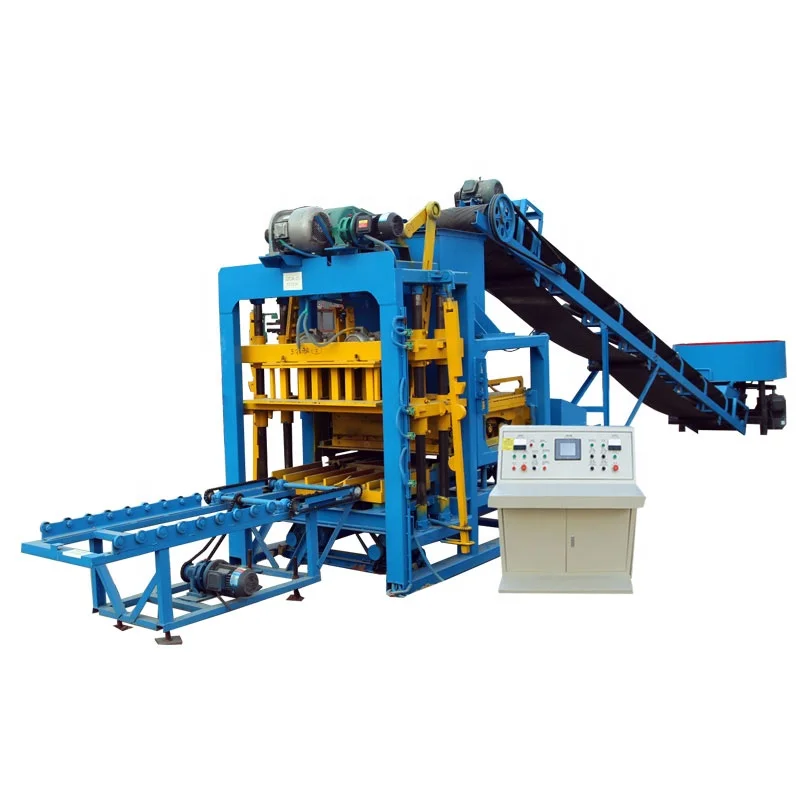
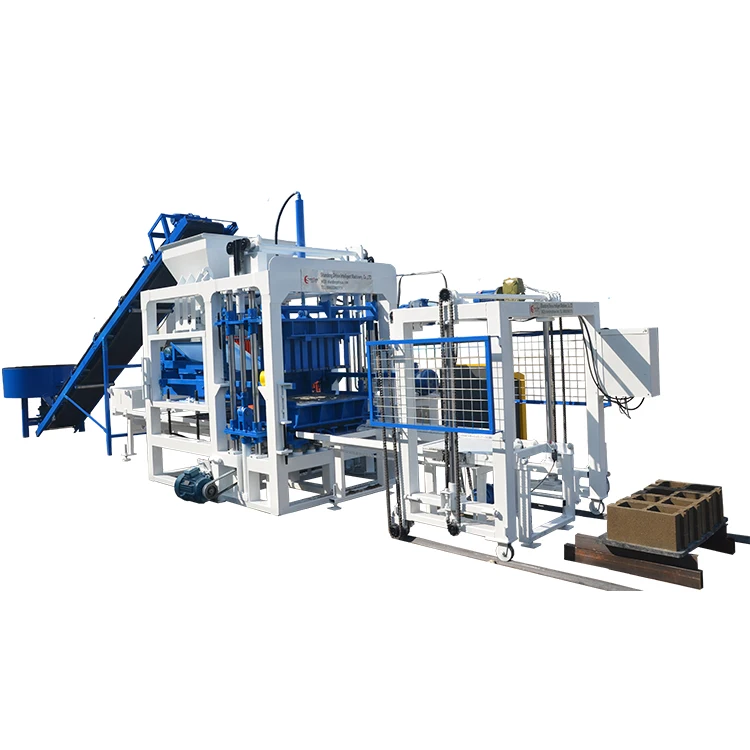 High quality block machine