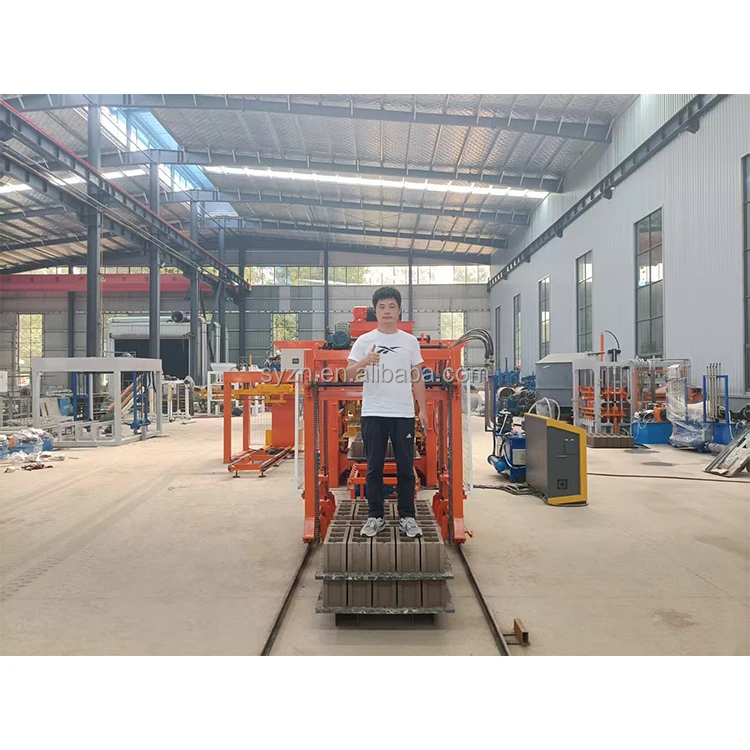
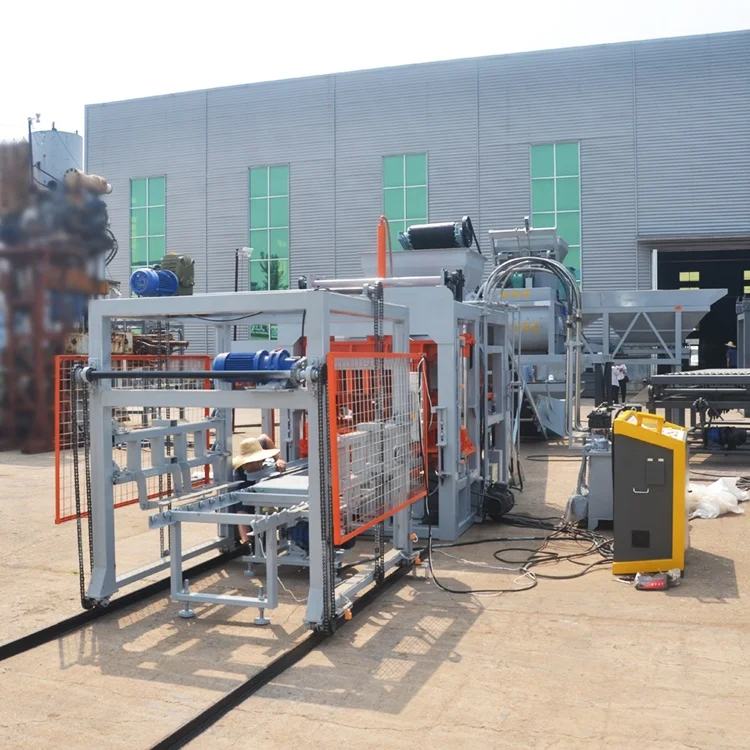
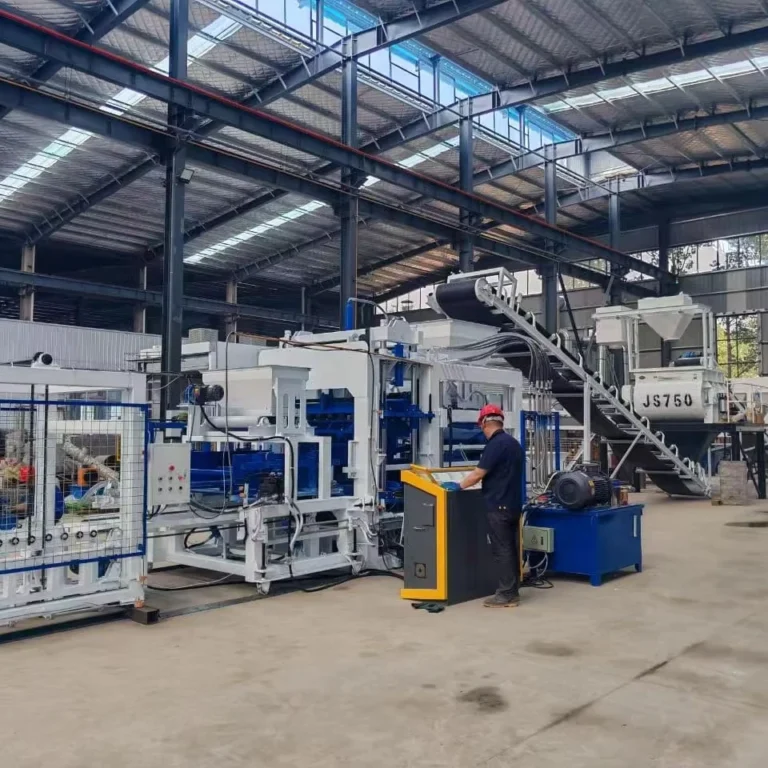
Configuration anchored to buyer context — the QTJ4-25 is presented alongside the rest of the block machine range, with output tied to specific block formats so a first-time buyer can see where this model sits against higher-capacity automatic lines and smaller semi-automatic units before committing capital.
Technical Specifications
| Parameter |
Value |
| Model |
QTJ4-25 |
| Product Type |
Automatic Block Making Machine |
| Overall Dimensions |
3000 × 1800 × 2680 mm |
| Total Mass |
3.5 T |
| Overall Power |
16.58 kW |
| Vibration Force |
60 kN |
| Main Vibration Form |
Platform Vibration |
| Vibration Frequency |
2800–4500 r/min |
| Pallet Size |
850 × 480 mm |
| Molding Cycle |
25 s |
| Demolding Method |
Mechanical |
| Guide Column |
Four guide columns with overlong guide design, chrome-plated |
| Output Capacity (400×200×200 mm hollow block) |
4 pcs/mould, 580 pcs/h, 4640 pcs/day (8 hours) |
| Output Capacity (240×115×90 mm brick) |
9 pcs/mould, 1400 pcs/h, 11200 pcs/day (8 hours) |
| Output Capacity (240×115×53 mm brick) |
21 pcs/mould, 3300 pcs/h, 26400 pcs/day (8 hours) |
| Factory Area Required |
300 m² |
| Voltage & Frequency |
(source value not stated — confirm with buyer’s site supply) |
| Control System |
(source value not stated — confirm PLC / MCC / manual) |
| Warranty |
1 year for whole machine (excluding spare parts) |
Application Suitability
| Application |
Material or Output |
| Hollow block production |
Crushed stone, sand, cement, fly ash blends |
| Solid brick manufacturing |
Gravel, sand, cement mixtures |
| Paving block and colored paver runs |
Aggregate, cement, pigment combinations |
| Interlocking brick and kerbstone |
Slag, dust, sand and cement blends |
| On-site contractor block production |
Locally available aggregates matched to project specs |
What the Quoted Cycle Time Actually Means for Your Daily Run
A 25-second cycle tells only half the story unless the block format behind that number is spelled out.
When buyers compare machines across the range, the first mismatch is usually capacity. A figure like "580 pieces per hour" sounds concrete until you discover it assumes a 400×200×200 mm hollow block; switch to a standard solid brick and the hourly number changes dramatically. The QTJ4-25 illustrates this spread clearly — rated at 580 pcs/h for large hollow blocks, 1400 pcs/h for 240×115×90 mm bricks, and 3300 pcs/h for 240×115×53 mm bricks. Without knowing which format the buyer actually sells, comparing this automatic block making machine manufacturer offering against a higher-tier line is meaningless [NEED_CITE: block format and cycle time correlation in concrete block production].

Placing the QTJ4-25 Within the Complete Machine Range
Before a buyer narrows down, they need to see where each tier sits in terms of output and investment. The QTJ4-25 occupies the entry point of the automatic tier — a 25-second molding cycle with mechanical demolding and platform vibration at 60 kN. Above it, higher-capacity automatic lines add hydraulic pressure, faster cycles, and fully automatic stacking and cubing. Below it, semi-automatic models reduce upfront cost but require manual pallet handling. For an automatic block making machine manufacturer, presenting these tiers side by side lets the buyer match their budget and output target to the right level before discussing mould details.
Why Tier Placement Matters Before Mould Selection
Choosing a tier first avoids a common trap: selecting a mould format that the machine cannot run at a viable daily volume. A buyer targeting interlocking pavers at high volume may find the QTJ4-25 adequate for market entry but limiting once demand grows, while a buyer producing hollow blocks for a housing project may find this tier matches their daily requirement well within the 300 m² factory footprint. Discussing the full range — automatic, semi-automatic, and mobile egg-laying options — ensures the buyer does not over-invest in automation they cannot staff or under-invest in a unit that bottlenecks their curing yard [NEED_CITE: plant capacity planning for concrete block facilities].
Reading the Specifications Against Real Production Conditions
The 60 kN vibration force combined with the 2800–4500 r/min frequency range gives the QTJ4-25 its compaction performance, but vibration alone does not determine block strength. Hydraulic pressure and vibration must match the buyer’s actual mix design and local aggregate — a stone-dust-heavy mix behaves differently from a clean river-sand mix under the same vibration settings. The four-column overlong guide design with chrome-plated surfaces reduces guide wear over extended production runs, keeping the mould alignment consistent so that block dimensions stay within tolerance across shifts. The 850 × 480 mm pallet size dictates how many blocks per cycle and must also match the curing racks and forklift the buyer already has on site. The 16.58 kW overall power draw determines whether the buyer’s existing transformer and switchgear can handle the press plus mixer and feeder motors starting simultaneously.
The Cost of Skipping the Full-Range Comparison
Buyers who jump straight to a model without surveying the range often discover hidden costs after arrival. A machine configured for a mix the buyer cannot source locally forces a material change that drives up per-block cost. Pallet size chosen without regard to existing curing racks means either buying new racks or losing output to floor-curing bottlenecks. Voltage and frequency left unconfirmed delay commissioning — the machine sits under tarps while the buyer sources a transformer or reprograms the PLC display language. These are not machine faults; they are configuration gaps that a proper range survey prevents [NEED_CITE: common commissioning delays in exported block machinery].
Why This Range Is Structured Around Buyer Context
Block machinery is the single focus here, so the QTJ4-25 and every other model in the lineup are specified as matched systems — machine, mould, pallet, and handling equipment evaluated together rather than sourced separately. Configuration is set against the buyer’s actual mix design and local aggregate, not a catalogue default. Mould design covers the formats the buyer’s market actually sells, including custom drawings when standard formats do not match local demand. The automation level is selectable, allowing a buyer to start with mechanical demolding on the QTJ4-25 and move to higher automation within the same machine family as demand grows. Installation, commissioning, and operator training are included so the line reaches stable production rather than stopping at mechanical assembly.
Documentation & Verification
- Line layout and capacity calculation stating the block format assumed for each output figure
- Machine specification sheet confirming QTJ4-25 voltage, frequency, and control language before production
- Mould drawing and format list covering hollow blocks, solid bricks, pavers, and kerbstones
- Pallet specification matched to 850 × 480 mm size and buyer’s curing area layout
- Factory test record demonstrating cycle time and block strength against target format
- Hydraulic and electrical schematic for the 16.58 kW power configuration
Installation, Commissioning & Support
- Site preparation for the 3000 × 1800 × 2680 mm footprint with level concrete foundation
- Dedicated power circuit sized for the 16.58 kW total load plus starting surge
- Confirmation of assembly state and container loading method before dispatch
- On-site parameter tuning of vibration frequency and molding cycle to buyer’s aggregate
- Operator training covering the 25-second cycle, mould change, and mechanical demolding sequence
- Wear parts list for guide columns, vibration motors, and mould surfaces with reorder codes
What to Include in Your Inquiry
To match the QTJ4-25 — or any model in the range — to your actual production need, share the block formats your market demands, the daily volume you need per format, and samples or descriptions of your local aggregate and cement type. Include your site’s voltage, frequency, and preferred control language so that the control system can be confirmed before production begins. If you already have curing racks, forklifts, or a mixer in place, list their specifications so the pallet and feeding configuration aligns with what is already on the floor.
Frequently Asked Questions
Q: How does the QTJ4-25 output tier compare to higher-capacity automatic and semi-automatic models?
A: The QTJ4-25 sits at the entry point of the automatic tier with a 25-second molding cycle and mechanical demolding. Higher tiers add hydraulic pressure and automatic stacking. Semi-automatic models below it reduce upfront cost but require manual pallet handling. Seeing all tiers side by side helps buyers match budget and output before selecting a model.
Q: What block format is assumed when capacity is quoted per hour?
A: Each capacity figure is tied to a specific block size. For the QTJ4-25, output is rated at 580 pcs/h for 400×200×200 mm hollow blocks, 1400 pcs/h for 240×115×90 mm bricks, and 3300 pcs/h for 240×115×53 mm bricks. Always confirm which format the quoted number assumes.
Q: What plant footprint does this tier require compared to mobile or high-capacity lines?
A: The QTJ4-25 requires approximately 300 m² including the press, mixer, pallet return, and basic curing space. Mobile egg-laying machines need less fixed area but produce on the ground without pallets. Higher-capacity automatic lines require more space for automatic stacking and cubing stations.
Q: Can a buyer start with this tier and upgrade later?
A: The machine family allows progression from mechanical demolding to higher automation within the same product range. Buyers often start with the QTJ4-25 to establish market presence and add automatic pallet feeding or stacking as daily volume justifies the investment.
Q: How are voltage, frequency, and control language confirmed before production?
A: These parameters are confirmed during the quotation stage, before the machine enters production. The buyer provides site electrical specifications and preferred PLC display language, and the control system is configured accordingly so commissioning is not delayed after arrival.

![QTJ4-25 Automatic Block Making Machine – Manufacturer 字符数:53(含空格) 结构匹配:0 → [品类词] for [应用或物料] – [站点修饰词],其中机型号前置保留(规则2) 站点修饰词:Manufacturer(全品类目录类角色,shiyueblockmachine.com)](https://shiyueblockmachine.com/wp-content/uploads/2026/04/H82ccaca512804203b7142f1a1233c7bf1.webp)
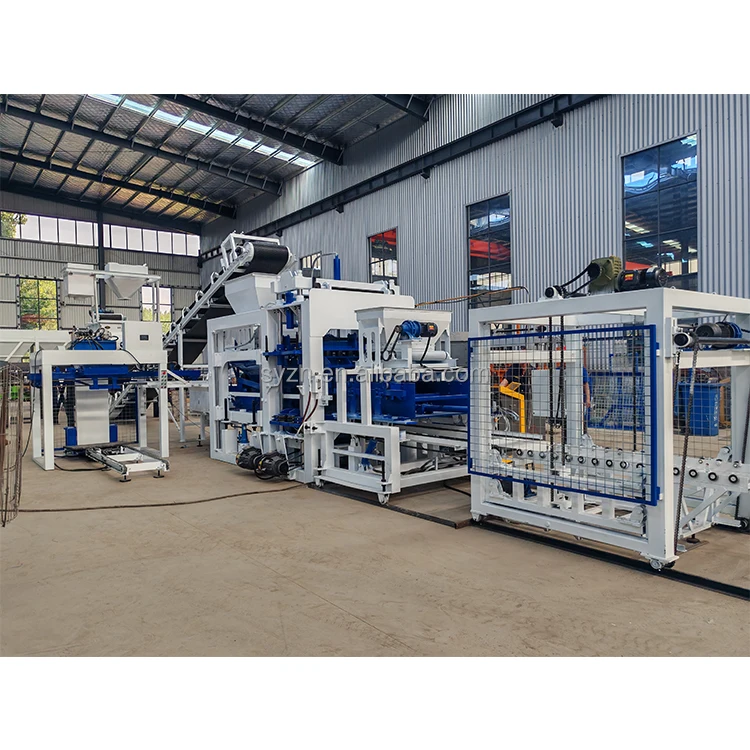 Automatic block machine