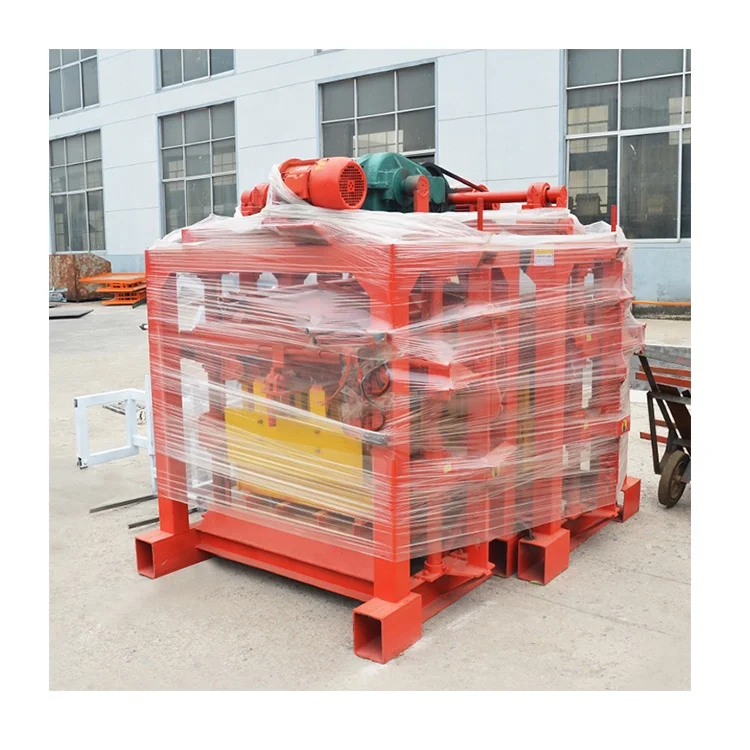
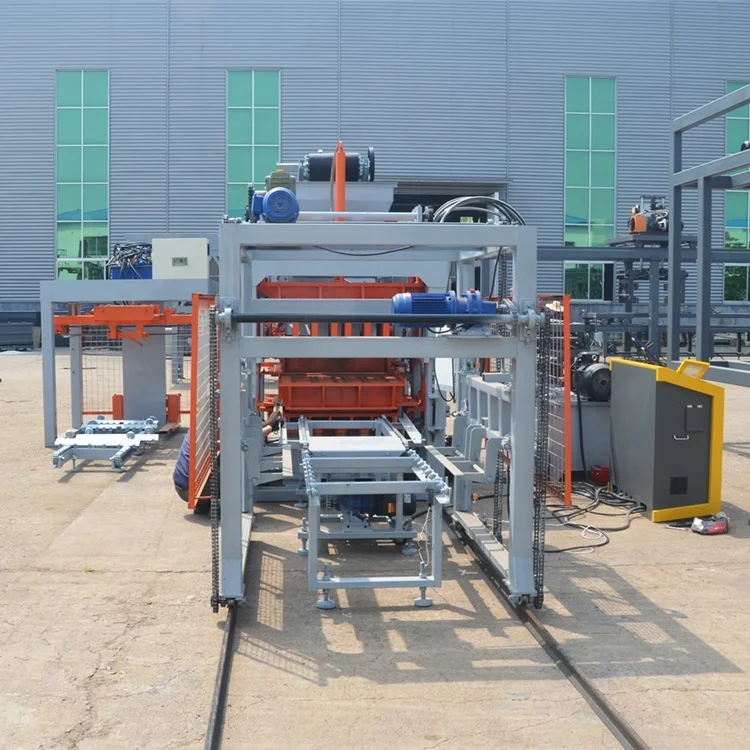
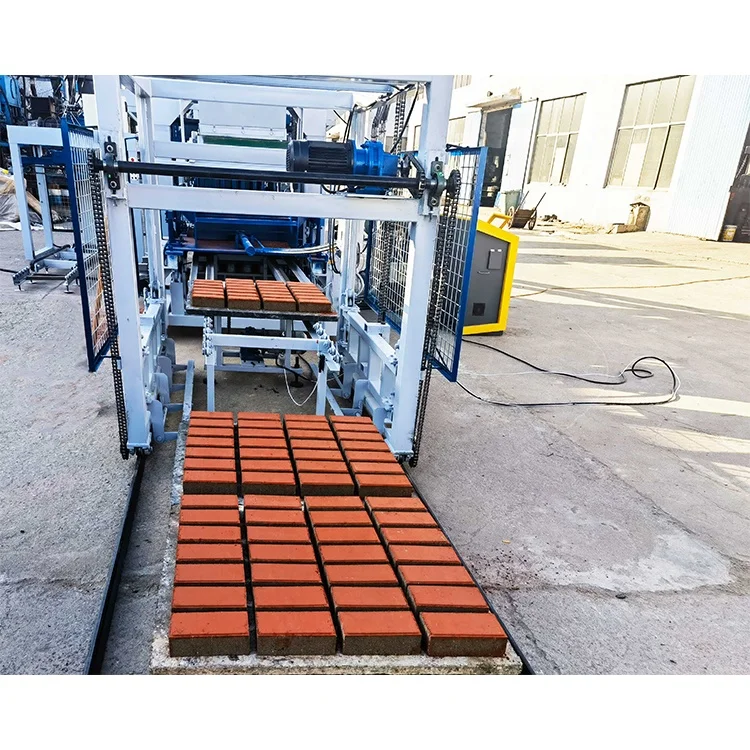
Single-focus block machinery — the QTJ4-24 is specified within a matched system of moulds, pallets and handling, not assembled from unrelated suppliers, so capacity expectations align with your actual block format.
Technical Specifications
| Parameter |
Value |
| Model |
QTJ4-24 |
| Product Type |
Concrete Block Making Machine |
| Overall Dimensions (L×W×H) |
2060 × 1700 × 2650 mm |
| Total Mass |
2000 kg |
| Rated Exiting Force |
35.5 kN |
| Main Vibration Form |
Platform Vibration |
| Vibration Frequency |
4200 r/min |
| Pallet Size |
900 × 450 mm |
| Molding Cycle |
24 s (basis not stated in source) |
| Overall Power |
11.95 kW |
| Demolding Method |
Vibration |
| Required Factory Area |
260 m² |
| Raw Materials |
Crushed stone, sand, cement, dust, fly ash, gravel, slag |
| Applied Products |
Concrete blocks, hollow/solid blocks, pavers, interlocking blocks, curbstone, colored pavers |
| Voltage & Frequency |
Configurable to site supply (basis to be confirmed before order) |
| Control System |
Available with PLC or MCC control |
| Automation Level |
Semi-automatic; upgrade path available |
| Stacking Method |
Manual pallet handling as standard; automatic stacking optional |
Application Suitability
| Application |
Material or Output |
| Hollow block production |
Crushed stone, sand, cement, fly ash blended to local aggregate |
| Solid block production |
Gravel, sand, cement, dust with site-specific moisture content |
| Paving block and colored paver runs |
Fine aggregate with pigment, cement, slag fines |
| Interlocking brick and kerbstone |
Coarser aggregate for structural strength, cement binder |
| On-site production for housing projects |
Locally sourced sand and gravel, minimizing transport cost |
What "24 Seconds per Cycle" Leaves Out for a Concrete Block Making Machine for Sale
A cycle time is meaningless without the block format it assumes.
Many quotations quote a single molding cycle as though it applied to every mould the press accepts. In practice, a 24-second cycle on a thin paver differs sharply from the same number on a tall hollow block that needs longer vibration to settle the mix through deep cavities. I have watched buyers receive a machine, install a hollow block mould, and discover that real output falls noticeably short of the quoted figure because the cycle must be extended to achieve acceptable block density. Before you compare machines, ask the supplier to state the exact block format, wall thickness and mix moisture behind that cycle number [NEED_CITE: block format and cycle time relationship in concrete block production].

Where the QTJ4-24 Sits Across the Full Machine Range
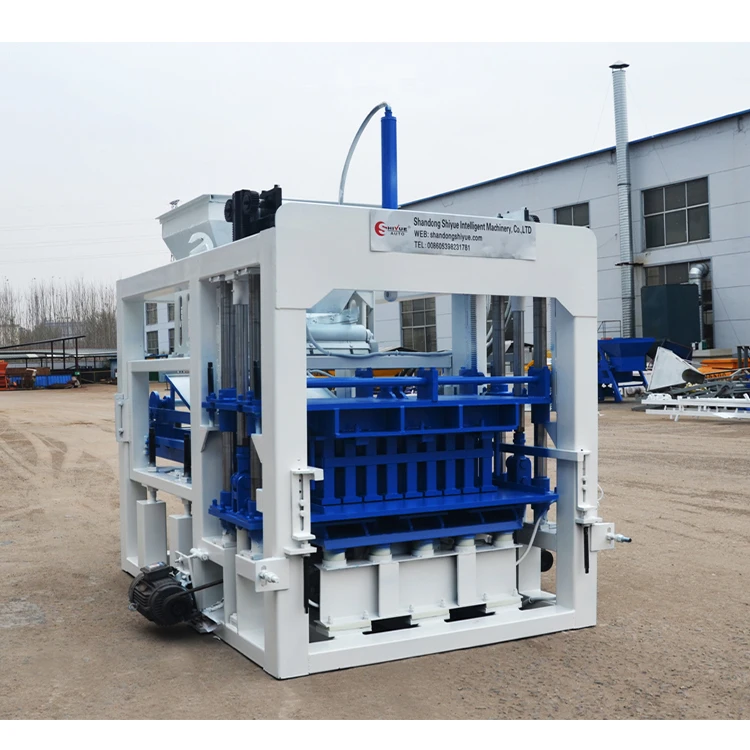
The QTJ4-24 occupies the entry-to-mid tier in our lineup, suited for buyers setting up a first block plant or replacing an aging small workshop press. It delivers semi-automatic operation with manual pallet handling as standard, keeping initial investment contained while leaving room to add automatic pallet feeding or stacking later. For a buyer surveying options, this concrete block making machine for sale represents the point where platform vibration and a dedicated pallet size first appear together, distinguishing it from smaller egg-laying mobile machines that produce directly on the ground.
Matching the Machine Tier to Your Project Timeline
A housing contractor producing blocks on-site needs equipment that arrives quickly and runs without complex infrastructure, while a commercial plant owner may justify a higher-tier automatic line for volume consistency. The QTJ4-24 bridges both scenarios: its 260 m² factory area requirement keeps the footprint manageable for a project site, yet its 35.5 kN rated exiting force and platform vibration deliver block density that a mobile egg-layer cannot match [NEED_CITE: vibration force requirements for structural concrete blocks]. Understanding where you sit between these extremes determines whether this tier serves you now or whether stepping up to a higher-capacity automatic line makes more sense.
Reading the Specs That Matter on the Shop Floor
Platform vibration at 4200 r/min transmits energy through the pallet into the mix, compacting aggregate particles more uniformly than mould-wall vibration alone. The 900 × 450 mm pallet size defines the maximum block footprint per cycle — every mould you order must fit within that boundary, and your curing racks and forklift must handle that pallet dimension. An 11.95 kW overall power draw means the press can typically run on a standard industrial supply circuit, though voltage and frequency must match the local grid exactly or the motor will overheat within hours. The 2000 kg total mass keeps the machine stable under vibration without requiring a heavy reinforced foundation, which matters when the press sits on a concrete slab poured for a temporary project site.
The Hidden Cost of Overlooking Configuration Details
A machine quoted without confirming pallet size against your existing curing area leads to pallets stacking unevenly or forklifts unable to reach the top rows. Voltage mismatch between the motor nameplate and the site supply delays commissioning by weeks while a transformer is sourced and shipped — I once saw a Caribbean project stall for nearly a month over a 220 V versus 110 V discrepancy. When the control language on the PLC display does not match the operator’s working language, simple fault diagnosis becomes a guessing game, and the crew bypasses safety interlocks out of frustration [NEED_CITE: PLC interface language and operator error rates in industrial equipment].
Why Buyers Source This Tier From a Single-Focus Supplier
Block machinery is our only product category, which means the QTJ4-24 is never bundled with unrelated equipment from a trading desk. The machine, mould, pallet and handling components are specified as one matched set, so the pallet you receive fits both the press and your curing racks. Configuration is set against your local aggregate and target block format rather than a catalogue default, and mould design covers the formats your market actually sells. Automation level is selectable — you can start with semi-automatic pallet handling and add stacking modules later without replacing the press. Installation support includes operator training on the specific mould set you ordered, and wear parts lists match the hydraulic and vibration components actually installed on your unit.
Documentation & Verification
- Capacity calculation sheet stating the exact block format and mix assumed for the QTJ4-24
- Machine specification sheet confirming pallet size, vibration force and motor power
- Mould drawing and format list matching your ordered block types
- Pallet specification with dimensions and material grade for curing rack compatibility
- Voltage and control language confirmation signed before production begins
- Factory test record on your block format before dispatch
Installation, Commissioning & Support
- 260 m² factory area requirement confirmed against your site layout before shipment
- 11.95 kW power draw verified against your supply circuit and dedicated breaker rating
- Voltage and frequency matched to your local grid using motor nameplate photos you provide
- Platform vibration system calibrated on-site to your specific mix and aggregate moisture
- Operator training covers mould change procedure on the exact formats you ordered
- Wear parts list provided for vibration bearings, hydraulic seals and platform springs
What We Need From You to Move Forward
To size the QTJ4-24 accurately within our range, share your target block formats with dimensions, your expected daily output per format and the local aggregate available at your site. Confirm your site voltage, frequency and the language you need on the control display so that the motor and PLC are correct before the machine leaves the factory. Let us know the curing area you have and the forklift capacity on hand so the 900 × 450 mm pallets integrate without rework.
Frequently Asked Questions
Q: What block format does the 24-second molding cycle actually assume?
A: The published 24-second cycle for the QTJ4-24 does not state which block format it was measured on. Actual cycle time varies with block height, cavity depth and mix moisture. Request a capacity calculation that names the specific block dimensions and mix design so you can evaluate real daily output for the formats your market requires.
Q: Where does the QTJ4-24 fit in the full machine range?
A: This model sits in the semi-automatic tier, above mobile egg-laying machines and below fully automatic lines with integrated stacking. It suits first-time plant owners and contractors producing on-site. Buyers needing higher volume can step up to automatic models with pallet feeding and cubing while keeping the same mould investment.
Q: Will 900 × 450 mm pallets work with my existing curing area and forklift?
A: Pallet dimensions define the rack layout and forklift tine width needed. Measure your curing rack spacing and forklift capacity before ordering. If your current setup uses a different pallet size, discuss options so that pallets, racks and handling equipment align from day one.
Q: Can the voltage and PLC language be configured for my country?
A: Voltage and frequency are set to match your local grid, and the control display language is confirmed before production. Provide your site voltage, frequency and preferred interface language at the inquiry stage so the motor and PLC ship correctly configured.
Q: Is it possible to add automation later after starting with semi-automatic?
A: The QTJ4-24 supports a stepwise upgrade path. You can begin with manual pallet handling and add automatic pallet feeding or stacking modules later without replacing the main press, allowing investment to grow alongside your production volume.

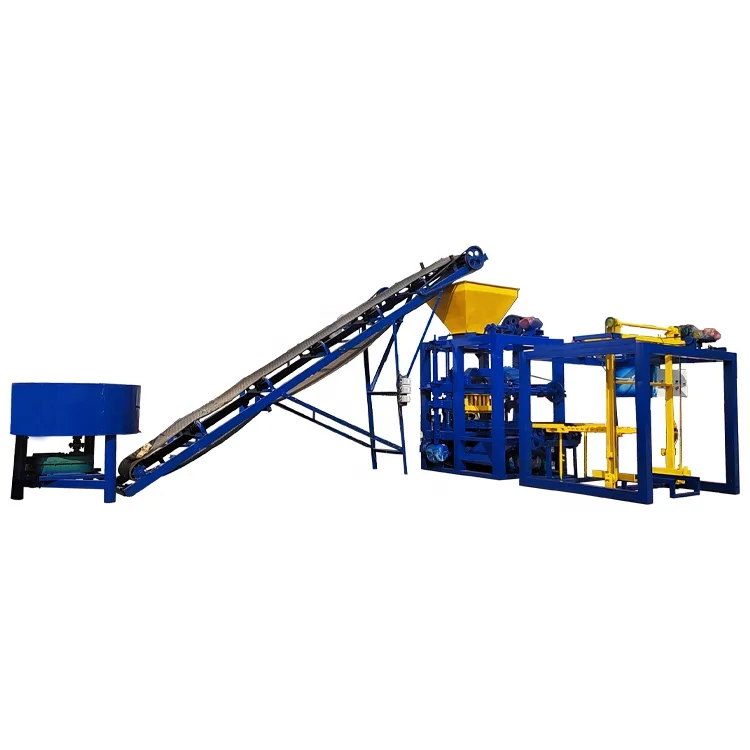
 High quality block machine