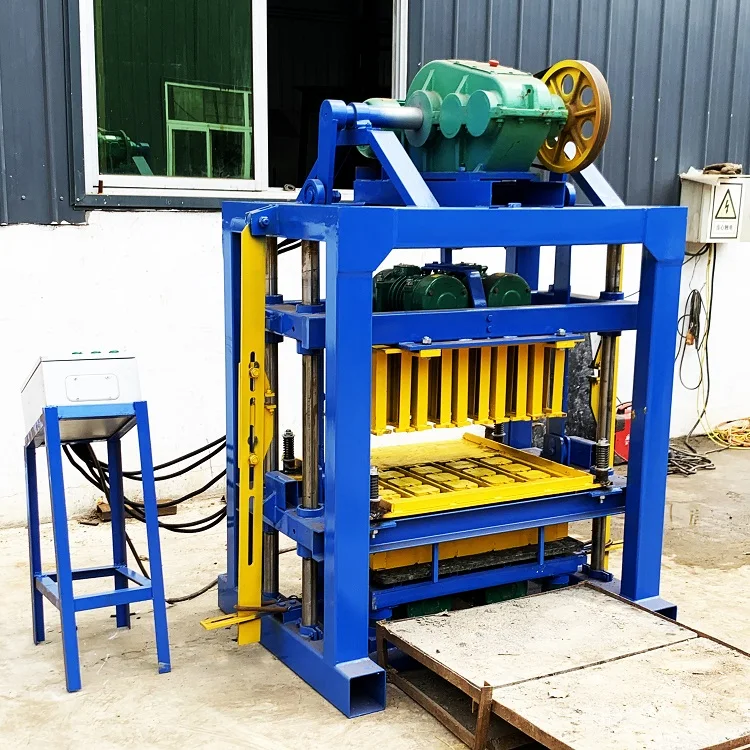
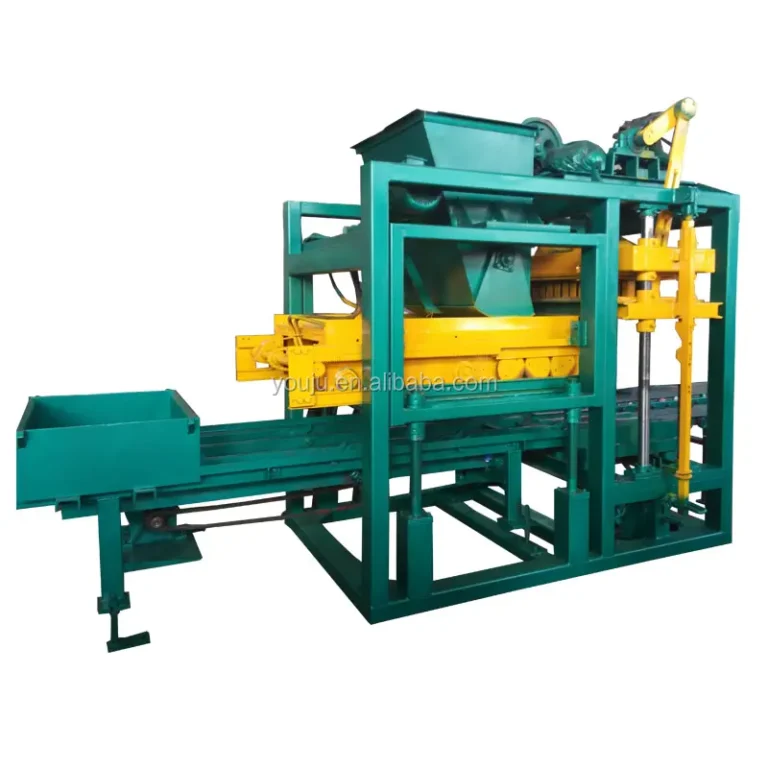
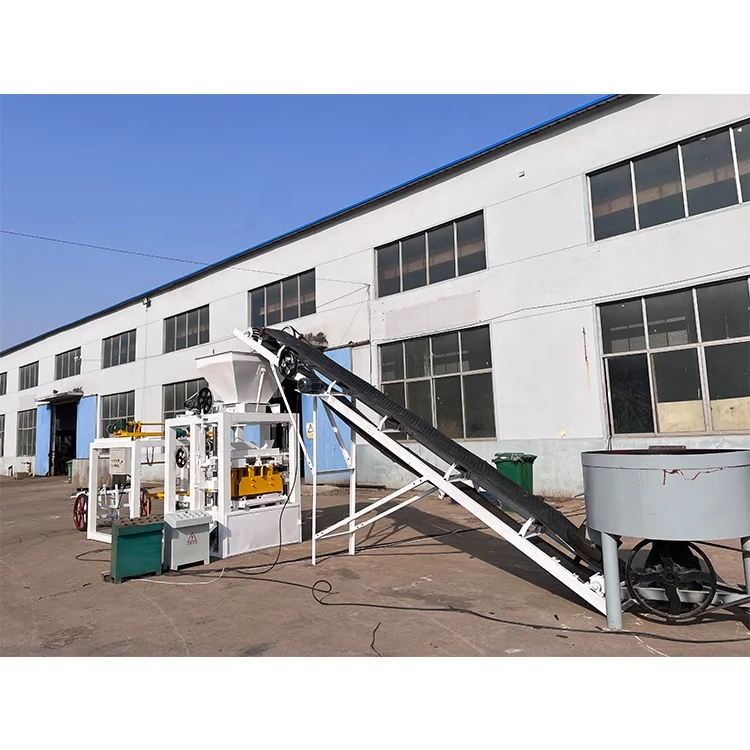
Matched System Sizing — the QTF3-20 semi-automatic block making machine manufacturer delivers hydraulic and vibration specs configured against your local aggregate and target block format rather than a catalogue default.
Technical Specifications
| Parameter |
Value |
| Model |
QTF3-20 |
| Product Type |
Semi-Automatic Stationary Concrete Block Making Machine |
| Automation Level |
Semi-automatic |
| Hydraulic System |
Adopted for consistent pressing cycle |
| Vibration System |
Combined with hydraulic press for high-density forming |
| Output — Paving Block |
2700 pcs/hour (basis: 200×100×60mm, 15 pcs/mould) |
| Output — Hollow Block |
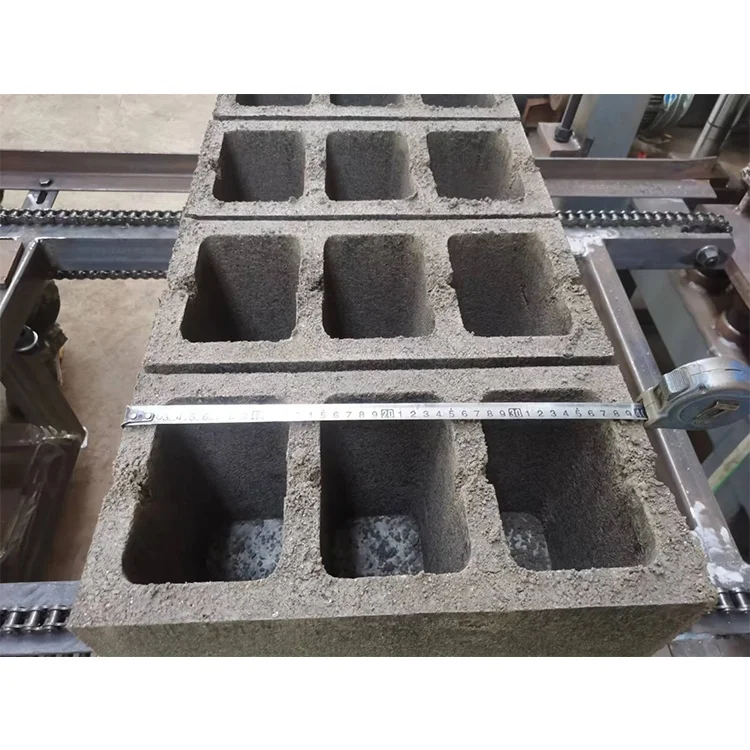
540 pcs/hour (basis: 400×200×200mm, 3 pcs/mould) |
| Output — Interlocking Brick |
1440 pcs/hour (basis: 225×112.5×60mm, 8 pcs/mould) |
| Daily Output (8 hrs) — Paving |
21600 pcs (basis: 200×100×60mm) |
| Daily Output (8 hrs) — Hollow |
4320 pcs (basis: 400×200×200mm) |
| Daily Output (8 hrs) — Interlocking |
11520 pcs (basis: 225×112.5×60mm) |
| Voltage & Frequency |
Customizable to local supply (confirm before order) |
| Control System |
To be confirmed (PLC type and language options) |
| Warranty |
1 year excluding wearing parts |
Application Suitability
| Application |
Material or Output |
| Concrete color paving block production |
Cement, crushed stone, sand, pigment |
| Hollow block manufacturing |
Cement, aggregate, sand mix |
| Interlocking brick production |
Cement, fine aggregate, laterite or stone dust |
| Curbstone block forming |
High-density concrete with coarse aggregate |
| On-site block production for contractors |
Local raw material sourced near project location |
| Small to medium block plant operations |
Semi-automatic workflow with manual pallet handling |
Why "Pieces per Hour" Can Mislead Your Plant Schedule
Capacity only matters when the block format, mould cavity count, and mix design are stated together.
I have watched buyers receive machines whose quoted throughput never materialised on the shop floor because the sales sheet assumed a small paving block while the buyer needed hollow blocks. With the QTF3-20 semi-automatic block making machine manufacturer, you will see three distinct output figures — one for each format — because each cycle time and cavity count differs. If your local sand carries high clay content, as I encountered with a buyer in Southeast Asia last year, the vibration force that works for clean river sand will leave blocks under-compacted. [NEED_CITE: effect of clay content on concrete block density and compressive strength]
Where the QTF3-20 Sits in the Full Machine Range
The QTF3-20 occupies the semi-automatic tier, positioned between mobile egg-laying machines and fully automatic lines with pallet feeders and cubing systems. Buyers who need a dependable press without funding an entire automated line on day one find this tier balances labour cost against capital outlay. The QTF3-20 semi-automatic block making machine manufacturer configuration leaves room to add automatic stacking later when volume justifies the investment.
Matching Machine Tier to Your Project Timeline
Semi-automatic operation means an operator places and retrieves pallets while the press handles the hydraulic and vibration cycle. This keeps the machine footprint compact and the maintenance scope manageable for a first plant. [NEED_CITE: typical labour allocation for semi-automatic versus fully automatic block plants] When your market demands consistent block strength but daily volumes remain moderate, the QTF3-20 delivers a production rhythm that two operators can sustain across an eight-hour shift without fatigue-related slowdowns.
What Hydraulic Pressure and Vibration Force Actually Do to Your Block
The hydraulic system applies static pressure while the vibration table compacts the concrete mix from below. Both forces must be matched to your specific aggregate gradation and cement ratio — too much vibration with a lean mix causes segregation, while insufficient pressure with a rich mix leaves blocks that crumble during curing. The QTF3-20 pairs these two systems so that the mould fills evenly and the resulting block holds its shape when the pallet is moved. Pallet size must also align with your curing rack dimensions and the forklift capacity you already have on site, otherwise you will spend the first month rearranging your yard.

When the Wrong Configuration Costs More Than the Machine
A buyer who selects a pallet size without measuring their curing racks ends up stacking blocks by hand on the ground, losing the output the machine was meant to provide. Voltage left unconfirmed means the motor arrives wound for a frequency your local grid does not supply, and commissioning stalls until a transformer is sourced. [NEED_CITE: industrial motor voltage and frequency mismatch consequences in export markets] These oversights do not show up in the quotation — they appear weeks after the container is opened.
Why Procurement Goes Through a Single Supplier
Block machinery is the sole focus here, so the QTF3-20 arrives with mould, pallet, and handling specified as one system rather than assembled from separate vendors. Configuration is set against your actual mix design and target block format, not a catalogue default. Moulds are designed for the formats your market sells, including custom drawings if your local demand includes non-standard sizes. Automation level starts at semi-automatic and can be upgraded as your plant volume grows. Installation support includes operator training so your crew understands cycle timing and mould change procedure from the first day.
Documentation & Verification
- Line layout with capacity calculation per block format before contract signing
- Machine specification sheet listing hydraulic pressure and vibration force as matched values
- Mould drawing and format list confirming cavity count for each block type you order
- Voltage, frequency, and control language confirmed in writing before production starts
- Factory test record showing cycle runs on your specified block format before dispatch
- Packing photographs and customs documentation support for smooth port clearance
Installation, Commissioning & Support
- Foundation must be level and cured before the vibration table is bolted down
- Power supply circuit dedicated to the hydraulic motor rating confirmed at site
- Machine shipped in modular sections for container loading and on-site reassembly
- First production run supervised to set cycle time against your local mix design
- Operator training covers mould change sequence and daily vibration system inspection
- Wearing parts list provided with recommended reorder intervals for moulds and hydraulic seals
What to Prepare Before Sending an Inquiry
Share the exact block formats you intend to sell, including dimensions and daily volume targets for each. Provide a sample or description of your local sand and aggregate so the vibration and pressure settings can be matched before the machine enters production. Confirm your site voltage and frequency, the control panel language your operators need, and whether you already have pallets and curing racks so the pallet specification is sized accordingly.
Frequently Asked Questions
Q: How is the QTF3-20 capacity calculated and which block format does each figure assume?
A: Every output number on the specification sheet is tied to a specific block size and mould cavity count. The 2700 pieces per hour figure assumes a 200×100×60mm paving block with 15 cavities, while hollow block output drops to 540 pieces per hour on a 400×200×200mm format with 3 cavities. This prevents the common gap between quoted throughput and actual daily production on your shop floor.
Q: Where does the QTF3-20 semi-automatic tier fit and what is the upgrade path?
A: The QTF3-20 sits between mobile machines and fully automatic lines. Pallet handling is manual at this tier, keeping capital cost moderate. When your daily volume grows, you can add automatic pallet feeding and stacking stations without replacing the press itself, extending the useful life of your initial investment.
Q: What pallet size should I specify for the QTF3-20?
A: Pallet dimensions must match your curing rack spacing and the forklift tine width you already operate. We confirm pallet size and material with you before production begins so that blocks move from press to rack to dispatch without manual restacking or yard reorganisation.
Q: Is the motor voltage and control language confirmed before shipment?
A: Yes. Voltage, frequency, and PLC display language are confirmed in writing during the quotation stage and verified again before the machine leaves the factory. This avoids commissioning delays caused by electrical mismatch or operators unable to read the control interface on arrival.
Q: What mould formats are available and how long does a change take?
A: Moulds are available for paving blocks, hollow blocks, interlocking bricks, and curbstones, with custom designs possible to buyer drawings. Mould change time on the semi-automatic tier depends on the bolt pattern and alignment pins — we state the expected changeover duration in the specification sheet so you can plan shift schedules around format switches.

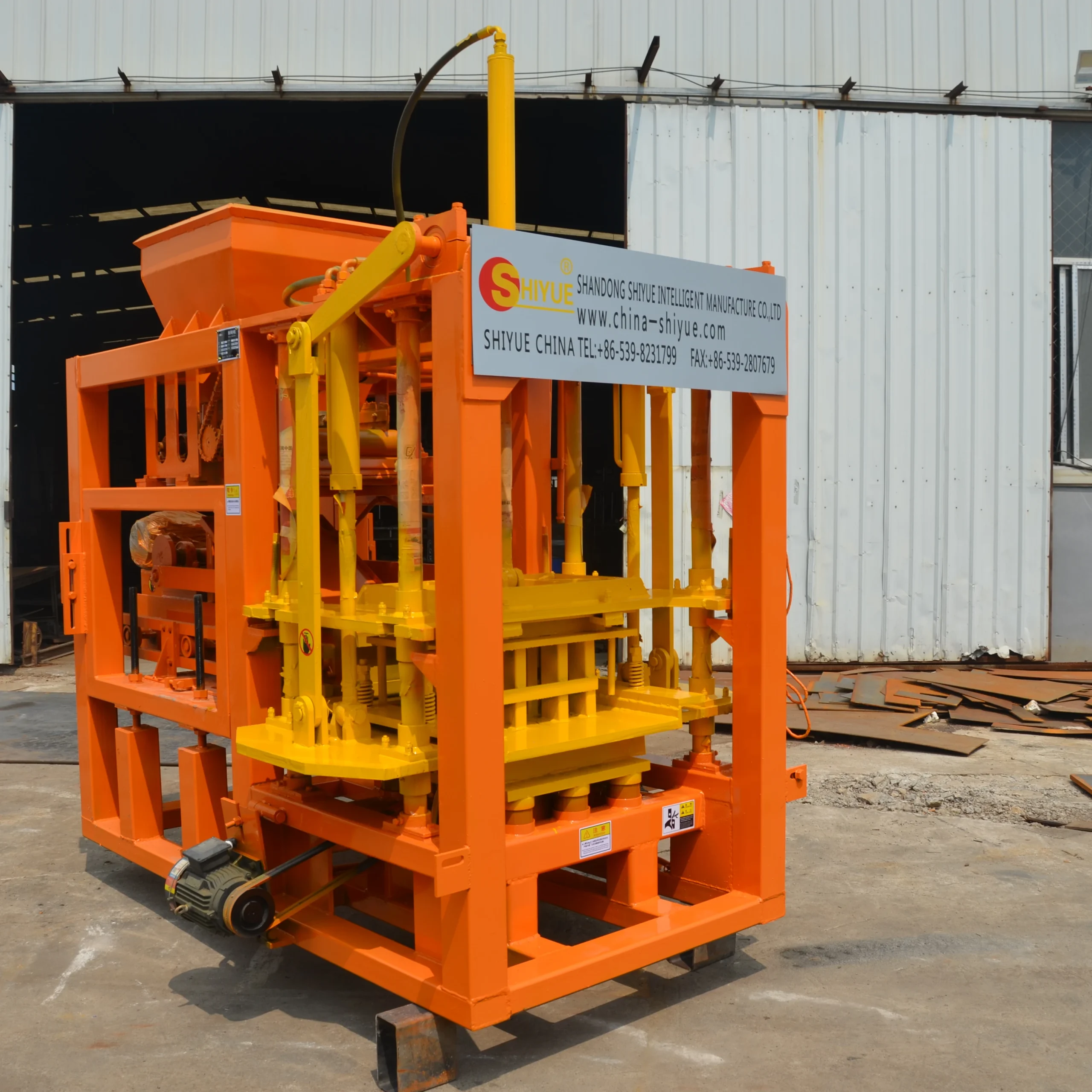
 Stationary block machine