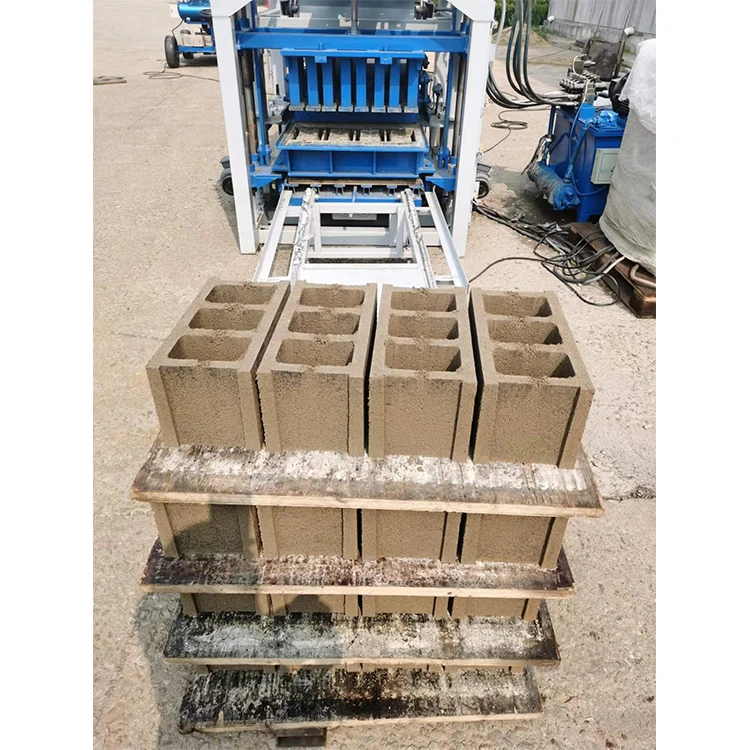
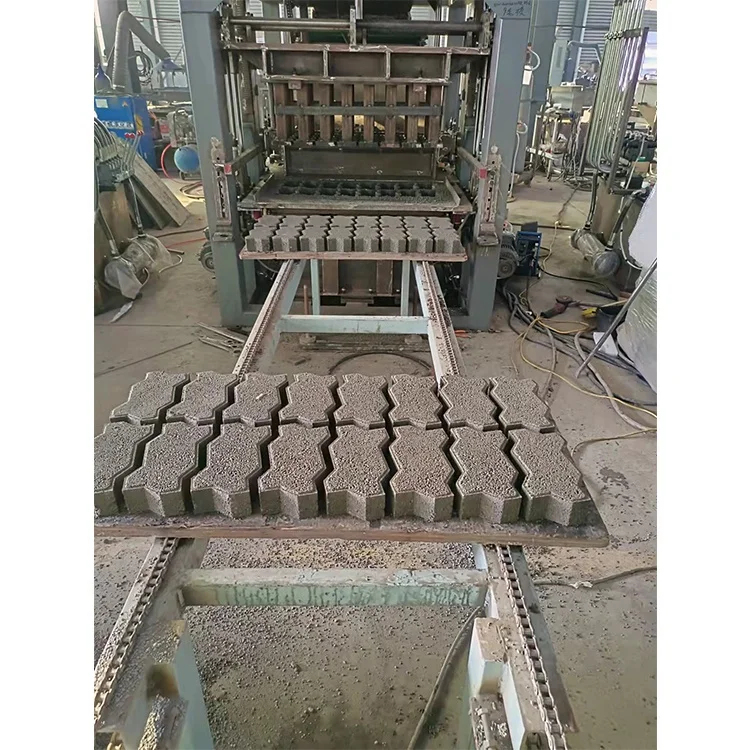
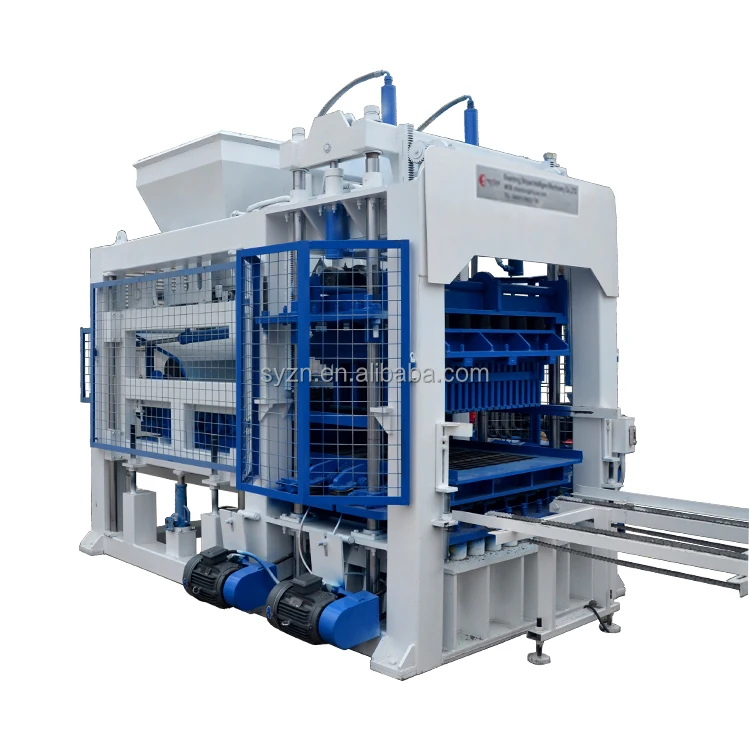
Matched System Engineering — the QT8-15 is specified as a complete press, mould, pallet, and handling package rather than a standalone unit, so buyers see exactly where this tier fits within the full block machine range before committing to a configuration.
Technical Specifications
| Parameter |
Value |
| Model |
QT8-15 |
| Product Type |
Hydraulic Concrete Block Making Machine |
| Overall Dimensions |
8300 × 1860 × 3000 mm |
| Total Mass |
8 T |
| Rated Pressure |
21 MPa |
| Main Vibration Form |
Platform Vibration |
| Vibration Frequency |
2800–4500 r/min |
| Vibration Force |
45 KN |
| Pallet Size |
950 × 900 mm |
| Molding Cycle |
15–20 s (basis not stated in source — confirm block format, material, and thickness) |
| Overall Power |
55.5 kW |
| Demolding Method |
Hydraulic |
| Factory Area |
300 m² |
| Applied Products |
Concrete blocks, hollow/solid blocks, pavers, interlocking blocks, curbstone, colored pavers |
| Raw Materials |
Crushed stone, sand, cement, dust, fly ash, gravel, slag |
| Voltage & Frequency |
Configurable (confirm before ordering) |
| Control System |
PLC-based (brand and display language to confirm) |
| Automation Level |
Semi-automatic to fully automatic (configuration dependent) |
Application Suitability
| Application |
Material or Output |
| Hollow block production plants |
Crushed stone, sand, cement, fly ash blends |
| Solid block manufacturing |
Gravel, sand, cement with local aggregate |
| Paving block and colored paver lines |
Fine aggregate, cement, pigment mixes |
| Interlocking brick and kerbstone output |
Slag, dust, sand, cement combinations |
| On-site construction block production |
Locally sourced aggregate and cement |
| Building material distributor format ranges |
Multiple mix designs across block formats |
What "15-Second Cycle Time" Actually Means for Your Daily Output
A cycle time figure is meaningless without the block format it was measured on.
Many buyers receive a block making machine manufacturer quotation stating a molding cycle of 15–20 seconds, then discover their actual daily output falls well short of what that number implies. The reason is straightforward: a 15-second cycle on a small solid block does not translate to the same throughput on a large hollow block or a thick interlocking paver. The vibration duration, hydraulic press stroke, and demolding travel all change with format. I have watched plant owners recalibrate expectations for an entire week after arrival because the capacity they planned around was based on a format they never intended to produce. [NEED_CITE: block format impact on cycle time and daily output]

Where the QT8-15 Sits in the Full Machine Range
The QT8-15 occupies the mid-to-high tier of the block making machine manufacturer lineup, bridging the gap between small workshop machines and high-capacity automatic lines. Its 8300 × 1860 × 3000 mm frame and 8-ton mass indicate a press built for sustained production rather than intermittent runs. Buyers comparing output tiers will find this model positioned for plants that have outgrown entry-level equipment but are not yet ready for the footprint and investment of a fully continuous high-volume line. The 300 m² factory area requirement gives a clear planning figure for workshop layout.
Automation Levels Across the Range
This platform supports configurations from semi-automatic pallet handling through to fully automatic stacking and cubing. A buyer setting up a first block plant can start with manual pallet transfer and a basic PLC, then add automatic pallet feeding and stacking as volume grows. The upgrade path stays within the same machine platform, meaning the press, mould interfaces, and pallet dimensions remain constant while peripheral handling stations are added. This approach avoids the cost and disruption of replacing the core press when production scales up. [NEED_CITE: automation upgrade paths in block production lines]
Reading the Specs That Matter Most
The 21 MPa rated pressure and 45 KN vibration force work together to determine block density and strength. Hydraulic pressure compresses the mix while platform vibration at 2800–4500 r/min settles aggregate into the mould cavity; if either value is mismatched to the buyer’s mix design, blocks emerge weak or surface-finished poorly. The 950 × 900 mm pallet size must align with the curing rack spacing and forklift fork width already in use at the plant — ordering a pallet size without this check leads to double-handling on the curing floor. The 55.5 kW overall power draw tells the electrical contractor what dedicated circuit capacity to prepare before the machine arrives. Mould change time varies with the quick-change system selected, and this directly determines whether a plant can run multiple formats in a single shift or must dedicate full days to each product.
The Hidden Cost of Skipping Configuration Verification
When voltage, frequency, and PLC display language are not confirmed before production, the machine may arrive with a control panel the operators cannot read or a motor rated for a grid that does not match the local supply. Commissioning stalls while transformers are sourced or control boards are replaced. I have seen plants sit idle for weeks because a 50 Hz machine was shipped to a 60 Hz market, and the vibration frequency — critical to block density — was running outside its designed range. The pallet size mismatch is equally costly: if the 950 × 900 mm pallets do not fit the existing curing racks, the entire curing area must be rebuilt or new racks fabricated locally. [NEED_CITE: voltage and frequency standards by export market]
Why Source This Tier Through a Matched-System Approach
Block machinery is the single focus here, so the QT8-15 press is never quoted in isolation. The mould, pallet, and handling equipment are specified as one system matched to the buyer’s target block format and local aggregate. Capacity calculations state the block format assumed for each output figure, removing guesswork from plant planning. Mould design covers the formats the buyer’s market actually sells, including custom drawings when standard moulds do not fit. Automation level is selectable at order, so investment aligns with current volume rather than projected peak demand. Installation support includes operator training on the specific configuration delivered, not a generic walkthrough.
Documentation & Verification
- Line layout and capacity calculation stating the block format assumed for each QT8-15 output figure
- Machine specification sheet confirming pallet size, vibration force, and hydraulic pressure against your mix design
- Mould drawing and format list covering every block type planned for production on this platform
- Voltage, frequency, and PLC display language confirmation document signed before production begins
- Factory test record run on your specified block format and raw material blend before dispatch
- Hydraulic and electrical schematic matching the as-built QT8-15 configuration
Installation, Commissioning & Support
- Foundation pad sized to the 8300 × 1860 mm footprint with anchor bolt template provided before machine arrival
- Dedicated electrical circuit rated for the 55.5 kW total power draw at confirmed voltage and frequency
- Machine shipped in dismantled modules with reassembly sequence and torque specifications documented
- First-run commissioning includes vibration frequency calibration across the 2800–4500 r/min range for your mix
- Operator training covers mould change procedure, PLC navigation in confirmed language, and daily maintenance checkpoints
- Wear parts list with hydraulic seal and vibration motor brush replacement intervals specific to this model
Before You Request a Quote
To size the QT8-15 correctly within the full machine range, share your target block formats with dimensions, the local aggregate type and gradation you will use, and your planned daily output per format. Confirm your site voltage, frequency, and preferred PLC display language so the electrical and control package is built to match. If you have existing curing racks or forklifts, provide the pallet dimensions they accommodate so the 950 × 900 mm pallet specification can be verified or adjusted.
Frequently Asked Questions
Q: Where does the QT8-15 sit in the full block machine range compared to smaller and larger tiers?
A: The QT8-15 is positioned in the mid-to-high tier, suited for plants that need more output than a small workshop machine but do not yet require a high-capacity continuous line. Its 300 m² factory area and 55.5 kW power draw define the investment and infrastructure step up from entry-level models, while remaining below the footprint of the largest automatic lines in the range.
Q: How is capacity calculated per block format on the QT8-15?
A: Capacity is calculated by multiplying the molding cycle for a specific block format by the number of cavities in the mould for that format, then projecting across a working shift. Because cycle time changes with block thickness and mix composition, each output figure states the format and material assumption it was based on rather than quoting a single blanket number.
Q: What automation levels are available from semi-automatic to fully automatic?
A: The platform supports semi-automatic operation with manual pallet handling, mid-range configurations with automatic pallet feeding, and fully automatic lines adding stacking and cubing. A buyer can begin at one level and add handling stations later without replacing the press, since pallet size and mould interfaces remain constant across configurations.
Q: What plant footprint does this tier require compared to other models in the range?
A: The QT8-15 requires approximately 300 m² of factory area for the press and immediate handling stations. This is a planning figure for the production zone only; additional space is needed for raw material storage, curing racks, and finished block yard. Smaller tiers in the range require less area, while larger automatic lines demand a considerably bigger footprint.
Q: Can I start semi-automatic and upgrade the QT8-15 later on the same platform?
A: Yes. The press, mould interfaces, and pallet dimensions are designed to remain constant as peripheral automation is added. Automatic pallet feeders, stackers, and cubing systems can be integrated into the existing line layout when production volume justifies the investment, avoiding the need to replace the core machine.

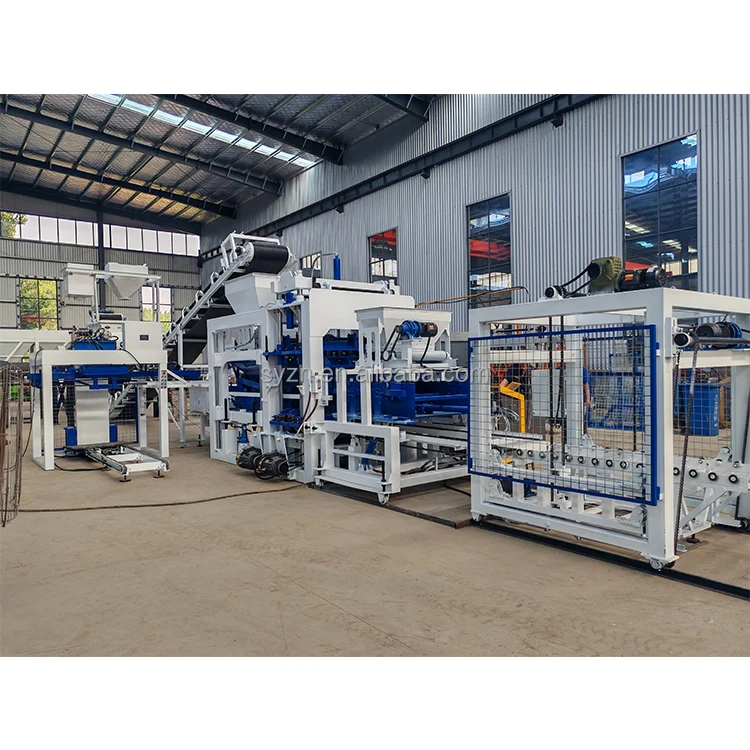
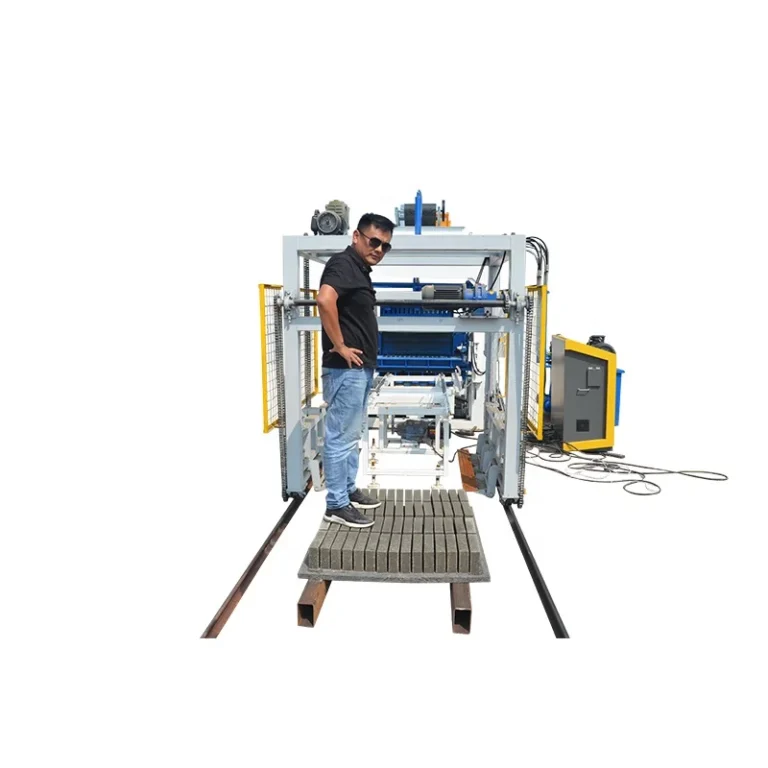 High quality block machine