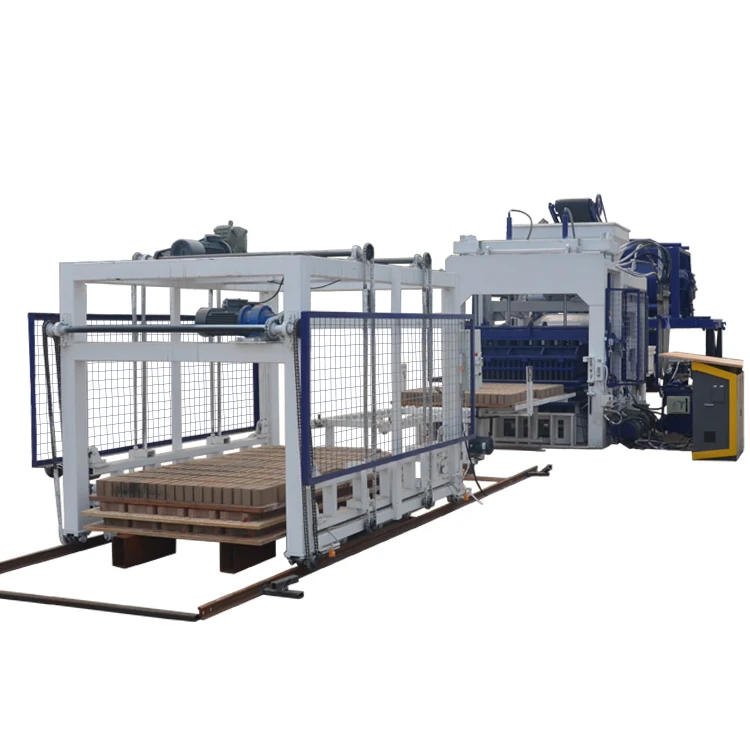
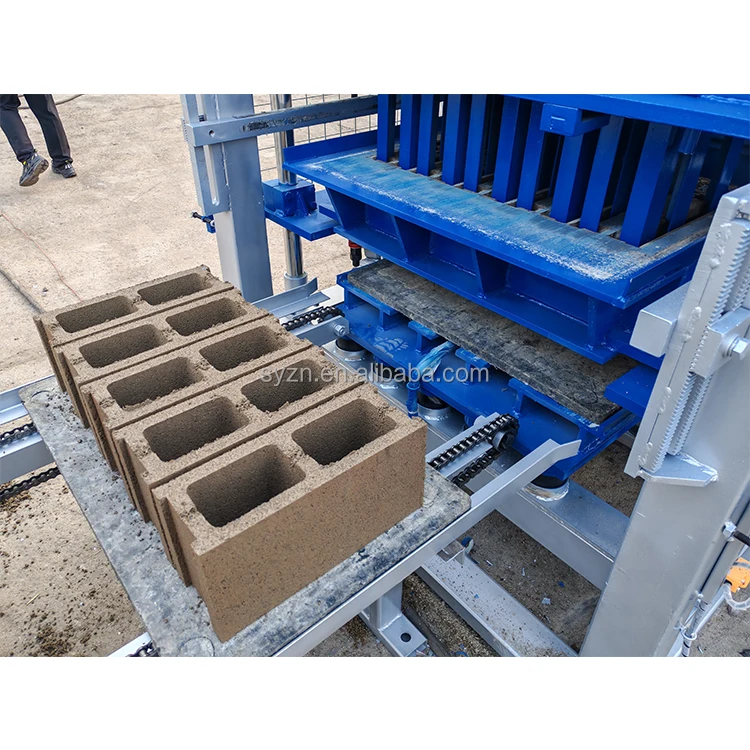
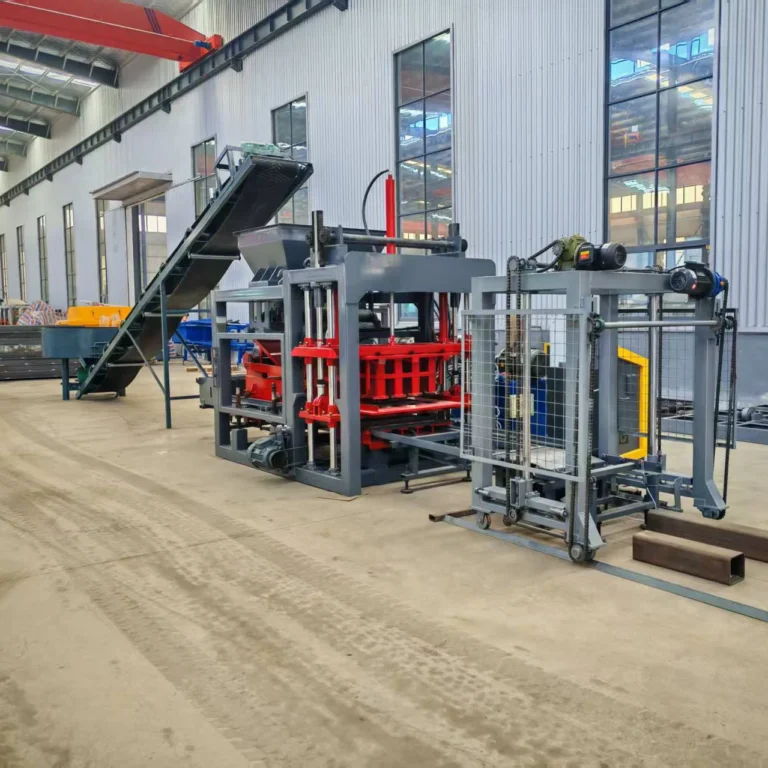
Matched System Configuration — the QT8-15 is specified as one coordinated unit where press, mould, pallet and handling are verified together before leaving the factory floor.
Technical Specifications
| Parameter |
Value |
| Model |
QT8-15 |
| Product Type |
Hydraulic Concrete Block Making Machine |
| Overall Dimensions (L×W×H) |
8300×1860×3000 mm |
| Rated Pressure |
21 MPa |
| Main Vibration Form |
Platform Vibration |
| Vibration Frequency |
2800–4500 r/min |
| Vibration Force |
45 kN |
| Pallet Size |
950×900 mm |
| Molding Cycle |
15–20 s (basis to be confirmed per block format) |
| Overall Power |
55.5 kW |
| Total Mass |
8 T |
| Demolding Method |
Hydraulic |
| Recommended Factory Area |
300 m² |
| Raw Materials |
Crushed stone, sand, cement, dust, fly ash, gravel, slag |
| Applied Products |
Concrete blocks, hollow/solid blocks, pavers, interlocking blocks, curbstone, colored pavers |
| Voltage & Frequency |
To be confirmed before production |
| Control System |
PLC brand and display language to be confirmed |
Application Suitability
| Application |
Material or Output |
| Hollow block production plants |
Crushed stone, gravel, sand, and cement mixes |
| Paving block and interlocking brick manufacturing |
Fly ash, slag, dust blended with cement binder |
| Curbstone and solid block facilities |
Local aggregate with varied grading profiles |
| On-site contractor block production |
Sand and gravel sourced near project locations |
What the "Molding Cycle" Figure Actually Means
A 15–20 second cycle only applies to a specific block format, and real daily output depends entirely on which product you run.
When I sent a mid-tier automatic press to Honduras years ago, the buyer expected the catalogue cycle time to hold across every block type they planned to produce. Local volcanic aggregate required a longer vibration window to achieve target strength, and their daily throughput dropped significantly below what the spec sheet suggested. The concrete block making machine manufacturer you work with must calculate capacity against your actual block format, your local raw material, and your target shift pattern — not a generic figure. [NEED_CITE: block format assumptions in capacity calculations]

Where the QT8-15 Sits in the Full Range
The Shiyue lineup spans from mobile egg-laying units for small on-site jobs through semi-automatic presses for lower-investment startups, up to high-capacity fully automatic lines. The QT8-15 occupies the mid-to-high automatic tier — positioned for buyers who have outgrown workshop-scale production but are not yet ready for the footprint and capital of a maximum-output plant. This concrete block making machine manufacturer designs the range so that stepping between tiers involves clear trade-offs in space, labour, and supporting equipment.
Understanding the Investment Step
Moving from a semi-automatic configuration to the QT8-15 tier means committing to a 300 m² factory area and a matched pallet-handling system. The 8-tonne machine mass and 55.5 kW power draw signal a press that needs dedicated electrical infrastructure and a properly cured concrete floor. Buyers evaluating this tier should confirm that their curing rack layout, forklift capacity, and stacking method align with the 950×900 mm pallet before placing an order. [NEED_CITE: electrical infrastructure requirements for industrial block presses]
How Vibration and Pressure Determine Block Quality
The 21 MPa rated pressure and 45 kN vibration force work together to compact the mix into the mould cavity. Platform vibration at 2800–4500 r/min agitates the aggregate particles into dense packing, while hydraulic pressure from above closes voids. If your local sand is fine-graded, the vibration frequency may need to sit at the higher end of the range to achieve proper consolidation. Conversely, coarse crushed stone with angular edges may require stronger hydraulic pressure and a slightly longer cycle to fill the mould completely. The mould itself must match both the block geometry and the compaction characteristics of your specific mix.
The Cost of Skipping Configuration Checks
When voltage and frequency are assumed rather than confirmed, a machine arrives at port and sits idle while transformers or replacement motors are sourced. When the pallet size is chosen without checking the buyer’s existing forklift fork width or curing rack spacing, every pallet must be handled manually — negating the automation the buyer paid for. When the mould is selected from a catalogue rather than designed around the block format that actually sells in the buyer’s market, format changes eat into production time and the machine’s flexibility goes unused. [NEED_CITE: commissioning delays from unconfirmed electrical specifications]
Why Source This Tier From Shiyue
Block machinery is our single focus, so the QT8-15 is never quoted as a standalone press — it is specified alongside the pallet type, mould format, and handling equipment that match your site conditions. Configuration is set against your actual mix design and local aggregate, not pulled from a default catalogue page. Mould design covers the formats your market sells, including custom drawings when standard options do not fit. Automation level is selectable, meaning a buyer can begin with a simpler pallet-handling setup and add automatic stacking later. Installation support includes operator training so your team understands cycle adjustment and mould change procedures from day one.
Documentation & Verification
- Line layout drawing showing QT8-15 placement within your 300 m² factory area
- Capacity calculation sheet stating the specific block format and cycle assumption used
- Mould drawing and format list matched to your target product range
- Voltage, frequency, and PLC display language confirmation record before production
- Factory test record on your specified raw material mix before dispatch
Installation, Commissioning & Support
- Foundation plan sized for the 8300×1860 mm machine footprint and 8-tonne operating mass
- Dedicated electrical circuit rated for the 55.5 kW total power draw at confirmed voltage
- Hydraulic system filled and bled on-site with pressure verified against the 21 MPa rated value
- Vibration frequency tuned between 2800–4500 r/min based on your first production run results
- Mould change procedure trained with your operators using the actual formats you will produce
- Wear parts list covering hydraulic seals and mould liner components for your first reorder
Before You Request a Quote
Tell us which block formats your market actually sells — hollow, solid, paver, interlocking, curbstone — and the daily volume you need per format. Share your local aggregate type, whether that is river sand, crushed stone, fly ash, or volcanic rock, along with any gradation data you have. Confirm your site’s available voltage, frequency, and whether you need the PLC interface in a language other than English or Chinese.
Frequently Asked Questions
Q: How is QT8-15 output capacity calculated, and which block format does the figure assume?
A: Output capacity depends on the block format, mould cavity count, and the molding cycle your specific mix requires. A 15–20 second cycle applies only to certain formats with standard aggregates. We provide a capacity sheet stating the exact format and cycle assumption used, so you know what daily volume to plan for before ordering.
Q: Where does the QT8-15 sit compared to semi-automatic and mobile options?
A: The QT8-15 is a mid-to-high automatic press requiring a fixed 300 m² factory and dedicated pallet handling. Semi-automatic machines suit lower-investment startups with manual pallet movement, while mobile units produce blocks on-site without a fixed plant. The right tier depends on your volume target and site commitment.
Q: What voltage and control language options are available?
A: Voltage and frequency must be confirmed before production to match your local grid. The PLC display language is also configurable. We record both on a confirmation document so there are no surprises when the machine arrives and commissioning begins.
Q: How large a factory area does the QT8-15 require?
A: The recommended factory area is approximately 300 m², covering the press, raw material feed, pallet circulation, and stacking zone. You also need curing rack space sized to match your daily output volume and the 950×900 mm pallet dimensions.
Q: Can I start semi-automatic and upgrade later?
A: Yes. The automation level is selectable, so you can begin with manual pallet handling or simpler stacking and add automatic pallet feeding and cubing as your production volume grows. The press itself remains the same unit.

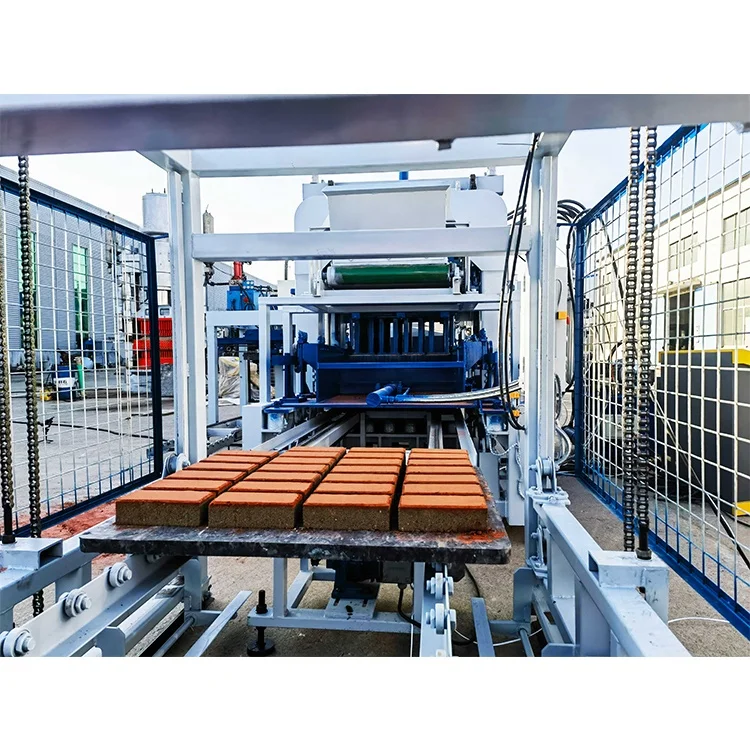
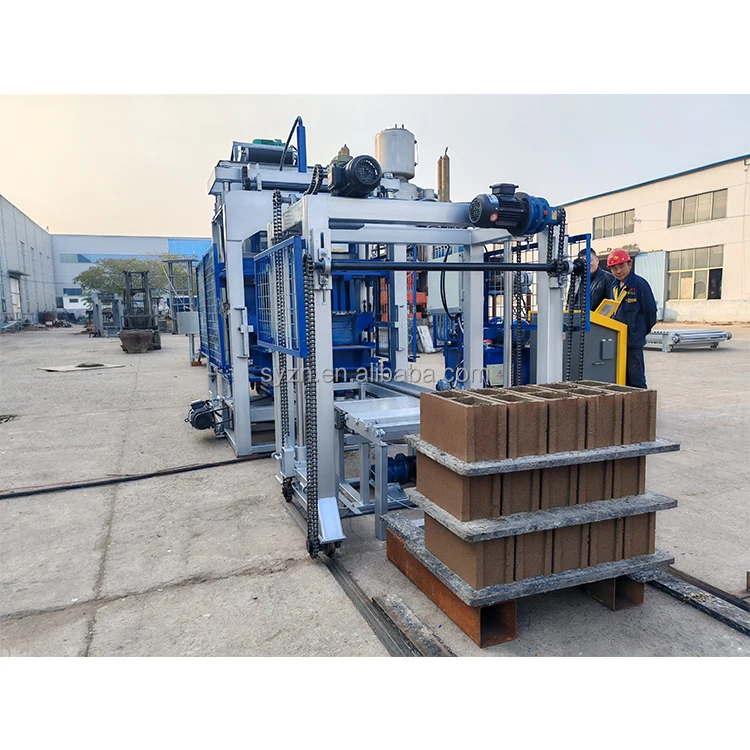 High quality block machine