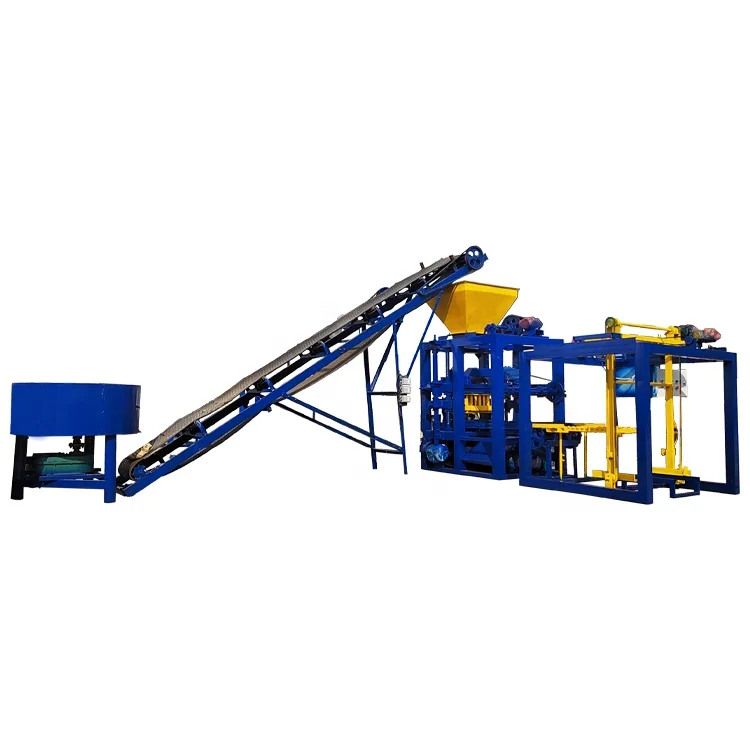
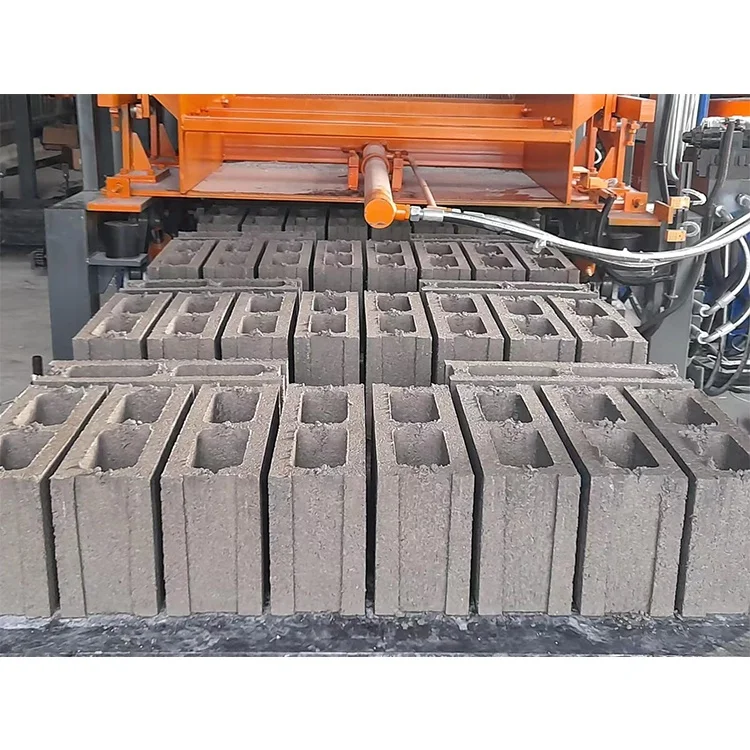
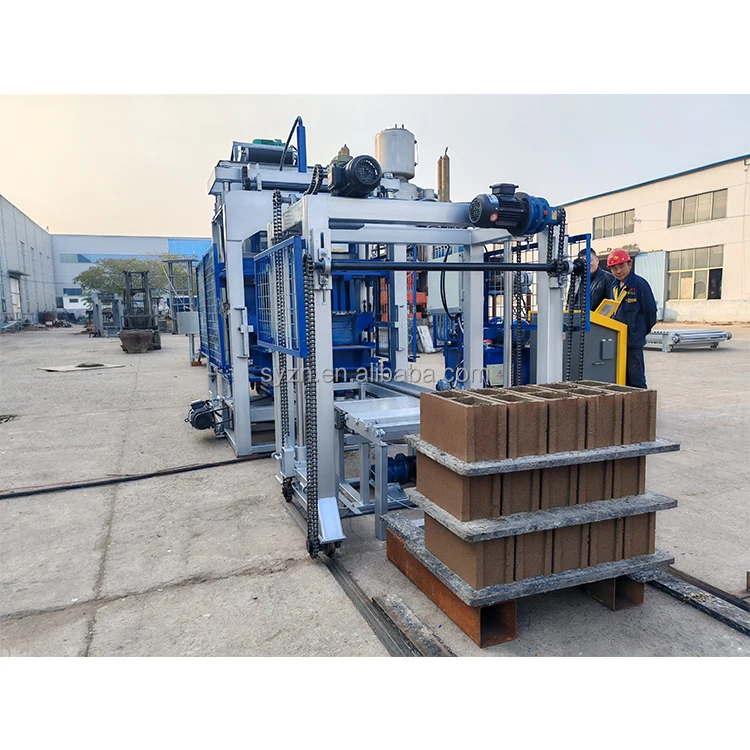
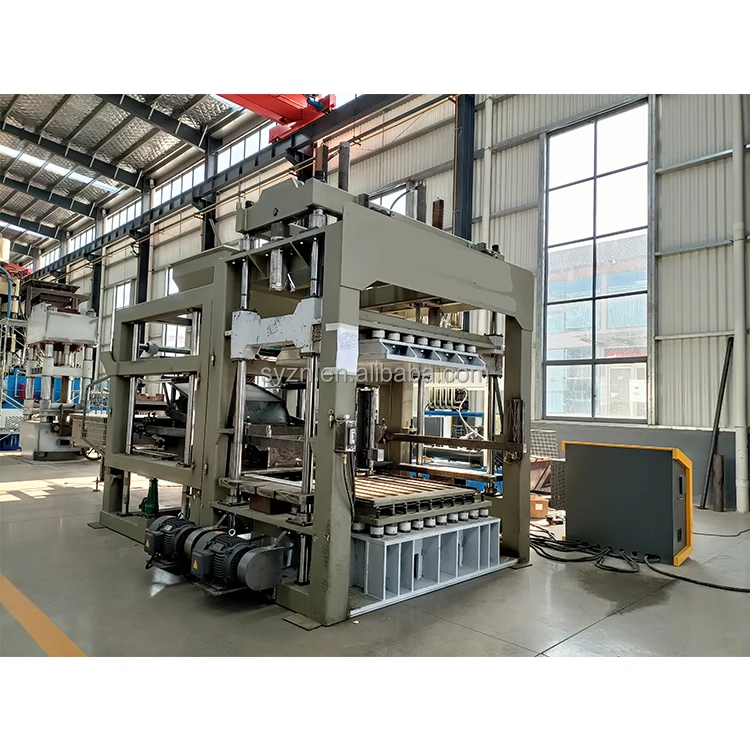
Matched System Design — Machine, mould, pallet and handling are specified as one integrated production line rather than sourced from separate suppliers.
Technical Specifications
| Parameter |
Value |
| Model |
QT7-15 |
| Product Type |
Hydraulic Block Making Machine |
| Pallet Size |
1150 × 700 mm |
| Molding Cycle |
15–20 s (basis not stated in source — confirm block format, material, thickness) |
| Overall Power |
45 kW |
| Vibration Force |
100 kN |
| Vibration Frequency |
0–60 Hz |
| Vibration Form |
Platform Vibration |
| Demolding Method |
Hydraulic |
| Control System |
PLC with touch screen interface |
| Total Mass |
8 T |
| Output — Hollow Block 400×200×200 mm |
1260–1680 pcs/h (10080–13440 pcs/8 hr) |
| Output — Hollow Block 400×150×200 mm |
1440–1920 pcs/h (11520–15360 pcs/8 hr) |
| Output — Rectangular Brick 200×100×60 mm |
3888–4860 pcs/h at 20–25 s cycle (31104–38880 pcs/8 hr) |
| Standard Components |
Pallet feed machine, block making machine, storage hopper, conveyor, hydraulic unit, PLC cabinet |
| Mould Change |
Quick replacement system for multi-format production |
Application Suitability
| Application |
Material or Output |
| Hollow block production for wall construction |
Crushed stone, sand, cement, water — standard concrete mix |
| Solid block manufacturing for load-bearing structures |
Dense aggregate blends with cement binder |
| Paving brick production for roads and walkways |
Fine aggregate with colour pigment options |
| Interlocking brick for landscaping and retaining walls |
Coarse aggregate with interlocking mould profile |
| On-site block production for construction contractors |
Locally sourced aggregate matched to project specification |
What "1260 Pieces per Hour" Actually Means for Your Plant
Every capacity figure on this page names the exact block format it assumes.
The QT7-15 block machine manufacturer you speak with should tell you that 1260–1680 pieces per hour applies specifically to a 400×200×200 mm hollow block. Switch to a 200×100×60 mm rectangular paver and the cycle time shifts to 20–25 seconds, changing the hourly rate entirely. I have watched buyers sign contracts based on a single headline number, then discover on commissioning day that their target format runs at a different pace. [NEED_CITE: block format impact on cycle time and daily output in hydraulic block machines]

Positioning the QT7-15 in Your Machine Range
The QT7-15 sits in the mid-tier automatic bracket, filling the gap between small semi-automatic presses and high-volume fully automatic lines. For a first-time block plant, it offers enough output to serve a regional market without the capital commitment of a high-capacity system. For an existing plant replacing older equipment, the jump from a smaller press to the QT7-15 block machine manufacturer configuration typically means moving from a single-format operation to a line that handles hollow blocks, pavers and interlocking bricks on the same platform.
How Automation Levels Scale With Your Investment
Buyers entering the block market often start with manual pallet handling and add automatic stacking later. The QT7-15 supports this path: the base configuration includes pallet feeding and PLC control, while automatic stacking and cubing modules can be integrated as volume grows. This selectable automation means you do not pay for full-line robotics on day one. [NEED_CITE: automation upgrade paths in mid-tier hydraulic block making machines] The PLC touch screen interface allows operators to store recipes for different block formats, reducing set-up errors when switching moulds.
Reading the Specs That Actually Shape Your Output
The 100 kN vibration force combined with hydraulic demolding determines how densely the concrete is compacted inside the mould cavity. Higher vibration force drives aggregate particles closer together, producing blocks with greater compressive strength — critical when your local building code mandates a minimum load-bearing rating. The 0–60 Hz adjustable frequency range lets the operator tune vibration to the specific aggregate being used; coarser crushed stone generally needs a different frequency than fine river sand. Platform vibration distributes force evenly across the 1150×700 mm pallet, so blocks at the edges of the mould receive the same compaction as those in the centre. The 45 kW overall power rating covers the hydraulic pump, vibration motors, conveyor and PLC cabinet together, which matters when sizing your plant’s electrical supply and dedicated circuit breaker.
The Hidden Cost of Skipping the Voltage Conversation
A machine wired for 380 V / 50 Hz arriving at a site running 440 V / 60 Hz will either trip breakers on start-up or run motors at incorrect speed, damaging the hydraulic pump within weeks. I have seen entire commissioning schedules delayed because voltage and frequency were confirmed after the machine was already crated. [NEED_CITE: electrical mismatch consequences in exported industrial machinery] The PLC display language is another detail that gets overlooked — an operator who cannot read the fault codes on the touch screen will call for remote support on problems that a clear error message would have resolved in minutes.
Why Buyers Source This QT7-15 Block Machine Manufacturer Configuration Here
Block machinery is our single focus, which means the QT7-15 press, its moulds, pallets and handling equipment are designed and supplied as one matched system. We set the vibration force and hydraulic pressure against your actual mix design and local aggregate, not a catalogue default. Mould design covers the formats your market sells, including custom drawings when your buyers request a non-standard profile. The automation level is selectable, so you can begin with semi-automatic pallet handling and add stacking later as daily volume justifies the investment. Installation support includes operator training on the PLC interface, mould change procedure and daily maintenance routines.
Documentation & Verification
- Line layout and capacity calculation stating the specific block format behind each output figure
- Machine specification sheet with hydraulic pressure and vibration force matched to your mix design
- Mould drawing and format list covering every block profile included in the quotation
- Pallet specification confirming size, material and load rating for your curing area
- Voltage, frequency and PLC display language confirmation documented before production
- Factory test record on your target block format before dispatch
Installation, Commissioning & Support
- Foundation plan based on the 8 T total mass and platform vibration load distribution
- Dedicated electrical circuit sized for the 45 kW overall power draw at your confirmed voltage
- Machine arrives in dismantled modules for container loading; reassembly supervised on site
- First-run parameter setting for vibration frequency, hydraulic pressure and molding cycle on your aggregate
- Operator training covering PLC touch screen navigation, mould change and fault diagnosis
- Wear parts and mould maintenance schedule with recommended replacement intervals
Before You Request a Quote
To size the QT7-15 correctly for your plant, we need your target block formats with dimensions, the daily output you plan to sell, and the local aggregate type available at your site. Share your existing curing area dimensions and forklift capacity so the 1150×700 mm pallet can be verified against your handling setup. Confirm your site voltage, frequency and the language your operators will need on the PLC display.
Frequently Asked Questions
Q: How do I confirm the QT7-15 output for my specific block format and aggregate?
A: We run a capacity calculation for each block format you intend to produce, stating the cycle time and pieces per hour for that exact mould. Your local aggregate sample is tested to match vibration frequency and hydraulic pressure, so the output figure reflects your actual material, not a generic benchmark.
Q: Can I start with semi-automatic operation and add full automatic stacking later?
A: Yes. The QT7-15 supports selectable automation levels. You can begin with manual pallet handling and PLC-controlled pressing, then integrate automatic stacking and cubing modules as your daily volume increases, without replacing the core press unit.
Q: Does the 1150×700 mm pallet fit my existing curing racks and forklift?
A: We cross-check the pallet dimensions against your curing area layout and forklift tine spacing before finalising the order. If your existing infrastructure uses a different size, the pallet specification can be adjusted to avoid costly modifications after arrival.
Q: What is included in the complete line versus what I need to source separately?
A: The standard package covers the block making machine, pallet feed unit, storage hopper, conveyor, hydraulic unit and PLC cabinet. Raw material batching mixers and curing rack systems are configurable add-ons — we confirm scope with you before the quotation is issued.
Q: How does the QT7-15 footprint compare to other machines in the range?
A: The QT7-15 occupies a mid-tier position, requiring more floor space than a mobile egg-laying machine but significantly less than a high-capacity fully automatic line. We provide a line layout drawing showing the press, conveyor and pallet circulation path so you can plan your building dimensions before ordering.

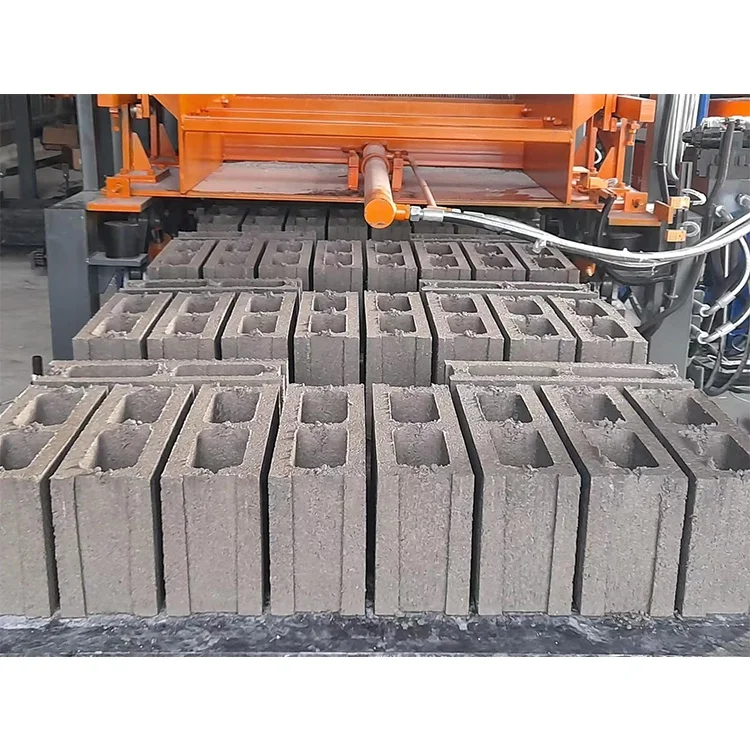
 High quality block machine