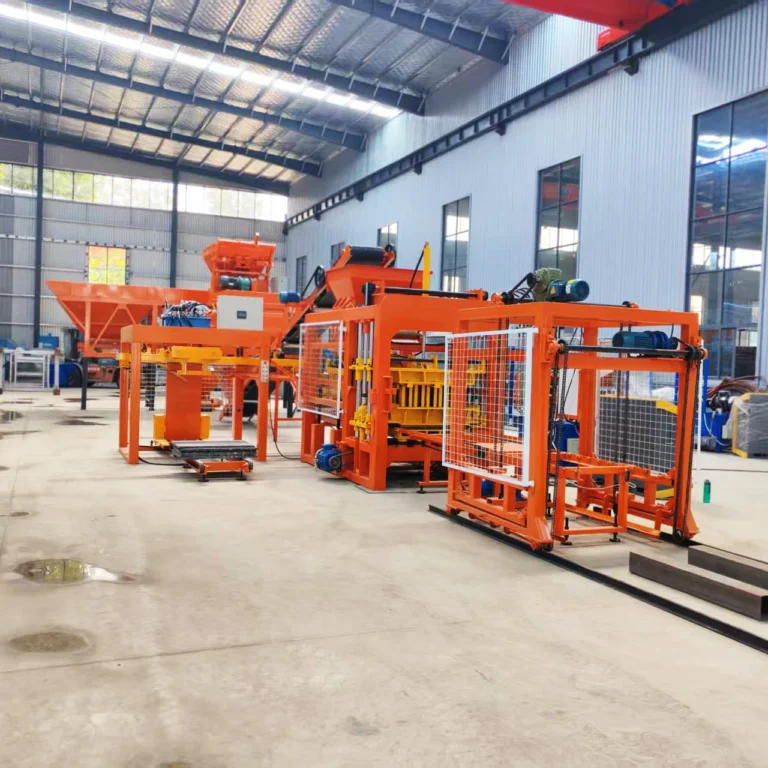
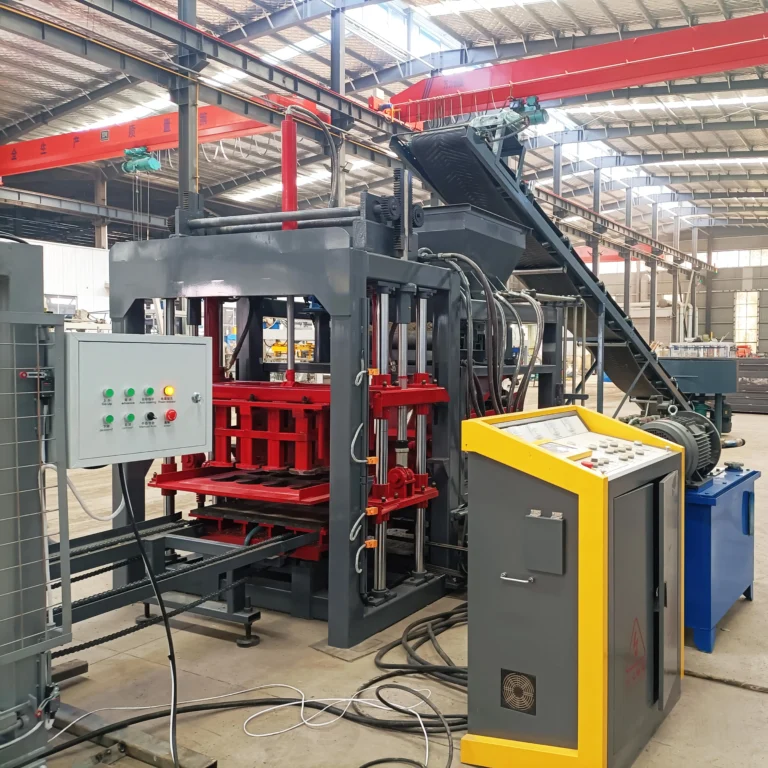
Matched System Specification — The QT6-15 interlocking block making machine is configured as a complete production unit where hydraulic pressure, vibration force, pallet dimensions, and control logic are balanced against your target block format rather than pulled from a catalogue default.
Technical Specifications
| Parameter |
Value |
| Model |
QT6-15 |
| Product Type |
Interlocking Block Making Machine |
| Overall Dimensions (L×W×H) |
8200×1700×2950 mm |
| Total Mass |
7 T |
| Vibration Frequency |
0-60 Hz |
| Vibration Form |
Platform Vibration |
| Vibration Force |
45 kN |
| Moulding Mode |
Automatic loading, vibration moulding |
| Demolding Method |
Hydraulic |
| Pallet Size |
880×850 mm |
| Molding Cycle |
15-20 s (standard blocks), 20-25 s (pavers) |
| Overall Power |
37 kW |
| Control System |
PLC with touch screen interface |
| Hydraulic System |
Independent integrated hydraulic station |
| Block Compressive Strength |
>15 MPa |
| Recommended Factory Area |
1200 m² |
| Output (Hollow block 400×200×200 mm) |
1080-1440 pcs/hour, 8640-11520 pcs/8hr |
| Output (Hollow block 400×150×200 mm) |
1440-1920 pcs/hour, 11520-15360 pcs/8hr |
| Output (Solid brick 240×115×53 mm) |
5760-7680 pcs/hour, 46080-61440 pcs/8hr |
| Output (Rectangular brick 200×100×60 mm) |
2160-2880 pcs/hour (20-25s cycle), 17280-23040 pcs/8hr |
| Output (Zigzag brick 225×112.5×60 mm) |
2160-2880 pcs/hour (20-25s cycle), 17280-23040 pcs/8hr |
| Raw Material Adaptability |
Waste ash, slag, various aggregates; adjustable cement dosage |
| Voltage & Frequency |
Configurable (basis not stated in source — confirm before order) |
| PLC Display Language |
Configurable (basis not stated in source — confirm before order) |
| Warranty |
1 year for whole machine (excluding spare parts) |
Application Suitability
| Application |
Material or Output |
| Load-bearing hollow block production |
Crushed stone, sand, cement with waste ash or slag admixture |
| Interlocking paving brick manufacturing |
Fine aggregate blends for high-density zigzag and rectangular pavers |
| Solid brick runs for masonry walls |
Standard sand-cement mixes targeting >15 MPa compressive strength |
| On-site contractor block supply |
Multi-format output from a single 1200 m² fixed plant layout |
| Distributor format diversification |
Quick mould swaps between hollow, solid, and paver formats on one pallet size |
What "Pieces per Hour" Actually Means for Your Plant
Every capacity figure here is tied to a specific block dimension and molding cycle, not a single headline number.
I once watched a buyer in West Africa unpack a mid-range block machine and immediately schedule two shifts based on the brochure’s peak hourly rate. The problem was that rate assumed a lightweight hollow block with a short cycle, while his market demanded dense interlocking pavers requiring longer vibration and higher cement content. Real output dropped to roughly half. That mismatch is why the QT6-15 interlocking block making machine manufacturer specifications separate each format into its own row with cycle times stated explicitly [NEED_CITE: block format impact on realistic daily output]. When you compare tiers across the Shiyue range, this level of format-by-format transparency is what separates a reliable plant plan from a costly guessing game.

Positioning the QT6-15 Within the Complete Machine Range
The Shiyue lineup spans mobile egg-laying units for small on-site jobs, semi-automatic presses for lower-investment workshops, and high-capacity fully automatic lines. The QT6-15 sits firmly in the mid-to-high automatic tier, offering PLC-controlled production with a touch screen interface and fault diagnosis. For a buyer moving up from a mobile machine or evaluating a first fixed plant, this model delivers consistent multi-format output without the footprint and capital requirement of the largest automatic lines in the range.
How Output Tiers Translate to Real Investment Decisions
Choosing between tiers is not just about peak capacity — it involves pallet handling, stacking automation, and curing area. The QT6-15 requires a recommended 1200 m² factory area and uses 880×850 mm pallets, meaning your curing racks and forklift specifications must align before the machine arrives. Buyers who start at this tier often value the PLC-controlled consistency and hydraulic demolding over the lower upfront cost of a semi-automatic press, especially when local labour reliability is a concern [NEED_CITE: automation tier selection criteria for block plants].
Reading the Specs That Matter on the Shop Floor
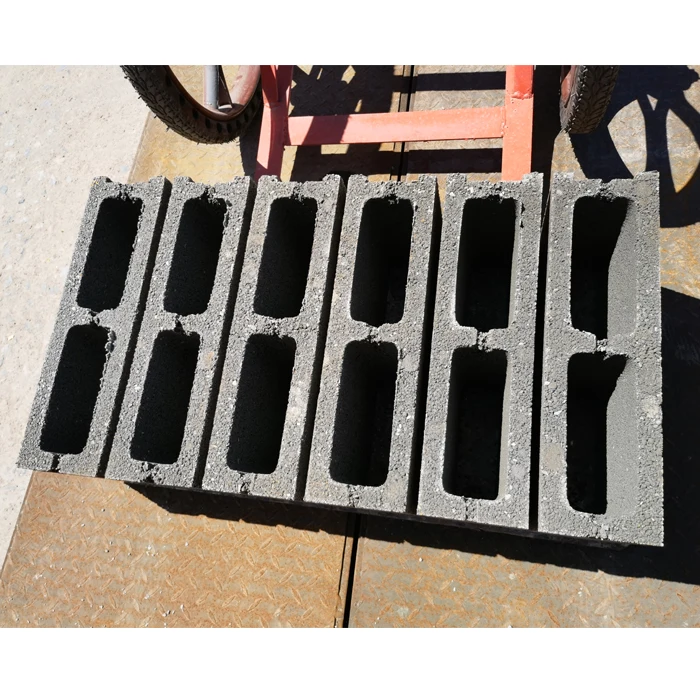
Vibration force and hydraulic pressure work together to determine block density. The QT6-15 delivers 45 kN of vibration force through platform vibration at frequencies up to 60 Hz, combined with an independent integrated hydraulic station that isolates the hydraulic components from dust and main machine vibration. This separation matters because contamination in the hydraulic circuit is a common cause of inconsistent demolding pressure. The 880×850 mm pallet size governs how many blocks per cycle the mould can produce — six standard hollow blocks per stroke — and must match your existing pallet inventory or curing rack dimensions. Molding cycles of 15-20 seconds for hollow and solid formats versus 20-25 seconds for pavers reflect the longer vibration needed to achieve >15 MPa compressive strength in denser interlocking shapes.
The Cost of Skipping Configuration Details
A machine configured for a mix you cannot source locally forces a costly material substitution before the first production run. Unconfirmed voltage and frequency delay commissioning by weeks when the electrical cabinet does not match the site supply. A pallet size chosen without checking your forklift fork width or curing rack spacing means pallets pile up on the floor while operators handle them manually — negating the automation you paid for [NEED_CITE: common commissioning delays from unconfirmed electrical and pallet specs]. These are not theoretical risks; they appear repeatedly in post-delivery service calls.
Why Procurement Starts With Format and Footprint
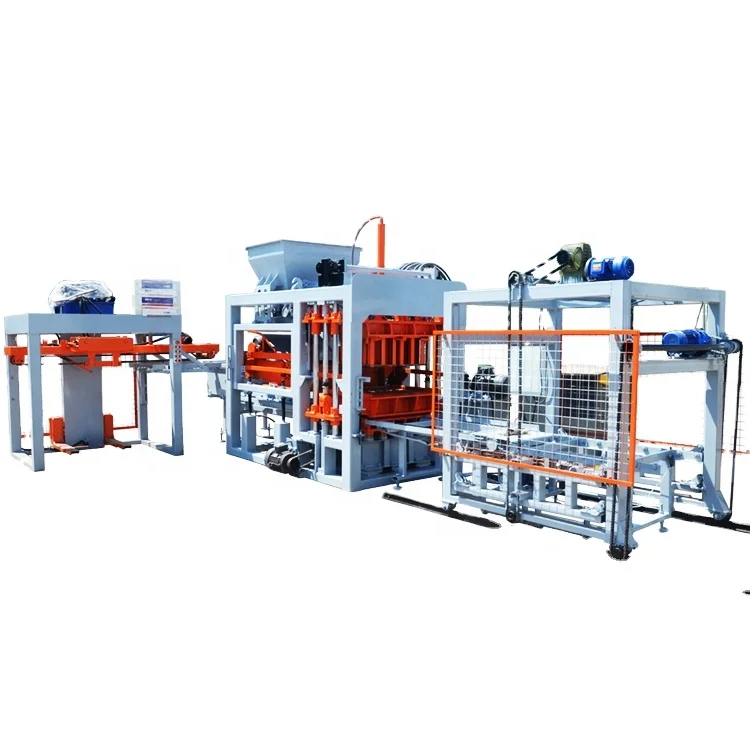
Block machinery is the sole focus here, so the QT6-15 is specified as a matched system — press, mould, pallet, and handling equipment are balanced rather than sourced separately. Configuration is set against your actual mix design, local aggregate characteristics, and the block formats your market demands. Mould design covers every format listed and accepts custom drawings for non-standard shapes. The automation level is selectable, meaning you can begin with the standard PLC setup and add automatic stacking or cubing later as volume grows. Installation support includes on-site commissioning and operator training so your team is producing saleable blocks before the service engineer leaves.
Documentation & Verification
- Line layout and capacity calculation stating the block format assumed for each QT6-15 output figure
- Machine specification sheet with hydraulic and electrical schematics matched to your voltage
- Mould drawing and format list confirming pallet compatibility and cycle times per block type
- Factory test record using your target mould format before container loading
- Packing photographs and customs documentation support for smooth port clearance
Installation, Commissioning & Support
- Foundation must accommodate 8200×1700 mm footprint and 7 T operating mass with vibration isolation
- Dedicated 37 kW power circuit with confirmed voltage and frequency before electrical cabinet build
- Machine shipped in dismantled state with reassembly and alignment performed during commissioning
- PLC touch screen configured to operator language and fault diagnosis parameters set on site
- Mould change procedure trained with your team using actual production formats on day one
- Wear parts and hydraulic seal list provided with recommended replacement intervals
What to Include in Your Inquiry
To size the QT6-15 correctly within the range, share your target block formats with dimensions, expected daily output per format, and the local aggregate types available — including particle size distribution if you are using crushed stone or waste ash. Confirm your site voltage, frequency, and preferred PLC display language. If you already have pallets, forklifts, or curing racks on site, provide their dimensions so the pallet and handling configuration aligns from the start.
Frequently Asked Questions
Q: Where does the QT6-15 sit compared to semi-automatic and higher-capacity automatic models?
A: The QT6-15 occupies the mid-to-high automatic tier with PLC control, hydraulic demolding, and platform vibration. It offers more consistent output and less operator dependency than semi-automatic presses, while requiring a smaller footprint and lower investment than the largest fully automatic lines in the range.
Q: What block formats can the QT6-15 produce and how does output differ?
A: It produces hollow blocks, solid bricks, rectangular pavers, and zigzag interlocking bricks. Output ranges from 1080-1440 pcs/hour for 400×200×200 mm hollow blocks to 5760-7680 pcs/hour for 240×115×53 mm solid bricks, with paver cycles running 20-25 seconds.
Q: What is the recommended plant footprint for this tier?
A: The QT6-15 requires a recommended factory area of 1200 m², covering the press, raw material feeding, mixing, pallet circulation, and curing rack space. This is larger than a mobile machine setup but considerably smaller than a high-capacity automatic line.
Q: Can I start with the QT6-15 and add automation or formats later?
A: Yes. The automation level is configurable, so you can begin with standard PLC-controlled operation and add automatic stacking or cubing modules as production volume grows. Additional moulds for new block formats can be designed and supplied to match the existing pallet size.
Q: What investment level should I expect versus a semi-automatic or mobile machine?
A: The QT6-15 requires higher capital than a semi-automatic press due to PLC control, integrated hydraulic station, and larger pallet format, but lower investment than a full high-capacity automatic line. The 1200 m² plant footprint and 37 kW power requirement should be factored into total project cost.

 High quality block machine