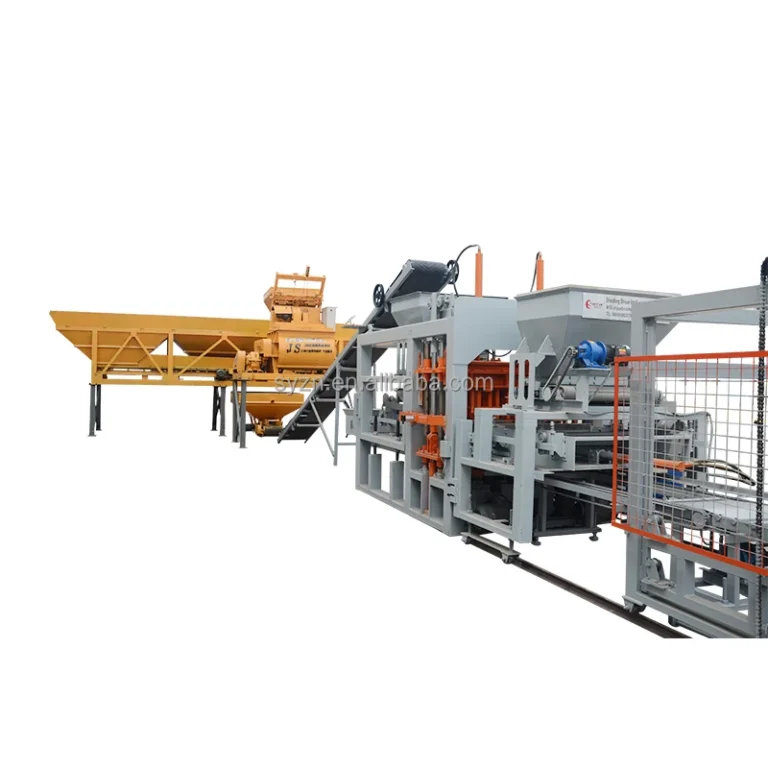
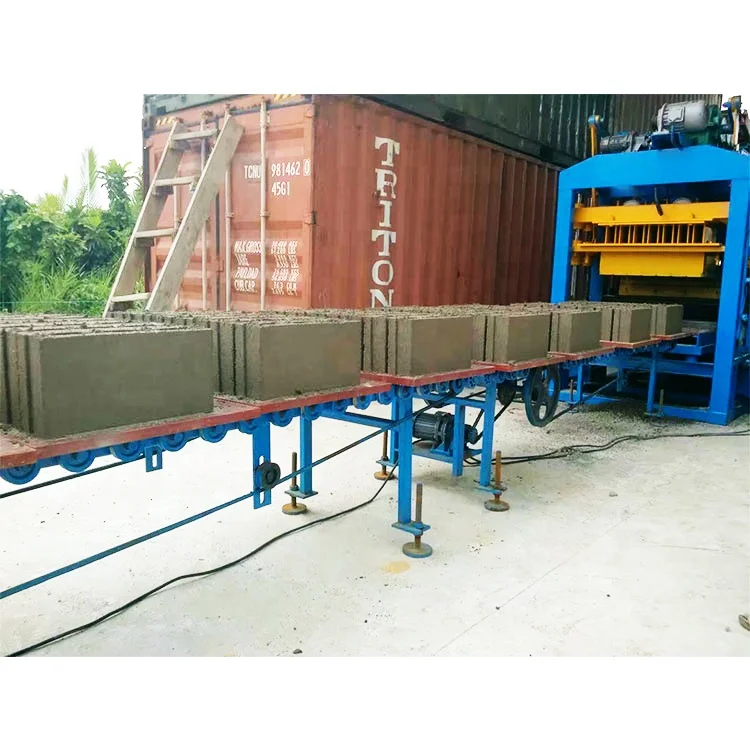
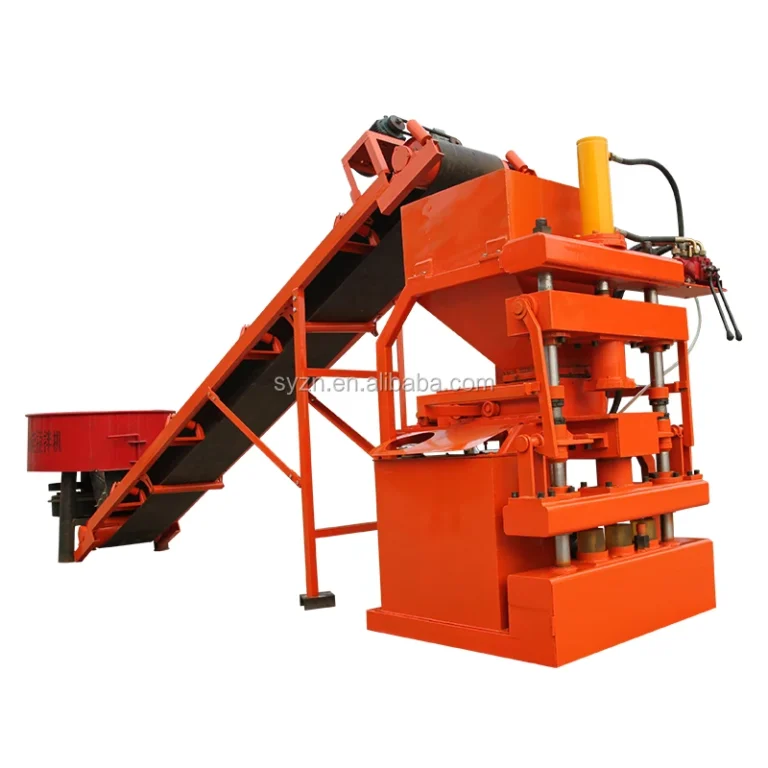
Matched System Engineering — QT6-15 specifications are set against the buyer’s actual block format, local aggregate and pallet handling setup before production begins.
Technical Specifications
| Parameter |
Value |
| Model |
QT6-15 |
| Product Type |
Hydraulic Concrete Block Making Machine |
| Overall Dimensions (L×W×H) |
8200×1700×2950 mm |
| Vibration Form |
Platform Vibration |
| Vibration Frequency |
0-60 Hz |
| Vibration Force |
45 kN |
| Moulding Mode |
Automatic loading, vibration moulding |
| Demolding Method |
Hydraulic |
| Pallet Size |
880×850 mm |
| Molding Cycle |
15-20 s |
| Overall Power |
37 kW |
| Total Mass |
7 T |
| Control System |
PLC with touch screen, fault diagnosis, safe logic interlock circuit |
| Hydraulic System |
Independent integrated hydraulic station |
| Block Compressive Strength |
>15 MPa |
| Factory Area Required |
1200 m² |
| Output: Hollow Block 400×200×200 mm |
8640-11520 pcs/8hr (basis: 6 pcs/mould, 15-20s cycle) |
| Output: Hollow Block 400×150×200 mm |
11520-15360 pcs/8hr (basis: 8 pcs/mould, 15-20s cycle) |
| Output: Solid Brick 240×115×53 mm |
46080-61440 pcs/8hr (basis: 32 pcs/mould, 15-20s cycle) |
| Output: Rectangular Paver 200×100×60 mm |
17280-23040 pcs/8hr (basis: 21 pcs/mould, 20-25s cycle) |
| Output: Zigzag Paver 225×112.5×60 mm |
17280-23040 pcs/8hr (basis: 15 pcs/mould, 20-25s cycle) |
| Voltage & Frequency |
Configurable to buyer’s site requirements |
| PLC Display Language |
Configurable to buyer’s preference |
Application Suitability
| Application |
Material or Output |
| Hollow block production plants |
Crushed stone, sand, cement and waste ash mixtures |
| Paving brick manufacturing |
River sand, slag and fine aggregates for interlocking and rectangular pavers |
| On-site construction block making |
Local quarry aggregates with adjustable cement dosage |
| Solid brick production for housing projects |
Fly ash, slag and cement blends for standard masonry units |
What a Capacity Figure Really Means on a concrete block making machine manufacturer Proposal
Every output number here is tied to a named block size, mould cavity count and measured cycle range.
I have seen buyers sign off on a proposal that quoted a single throughput number, only to discover on commissioning day that the figure assumed a solid brick mould they had no intention of running. When the hollow block mould went in, the daily output dropped significantly. The QT6-15 capacity table above states the exact block dimension, pieces per mould and cycle window behind each figure, so the gap between the quotation and the plant floor closes before the machine ships [NEED_CITE: common discrepancies between quoted and actual block plant output].
A concrete block making machine manufacturer that leaves the block format off the capacity line is asking the buyer to gamble on the difference between a solid brick cycle and a paver cycle. That gap can span several hours of lost production per shift once the plant is running.

Mapping the QT6-15 Across the Full Block Machine Range
The QT6-15 occupies the mid-to-high tier of our lineup, positioned above mobile egg-laying units and semi-automatic workshop presses. Buyers stepping up from a smaller machine typically arrive here because their daily pallet volume has outgrown manual handling and their market now demands consistent block density across multiple formats. A concrete block making machine manufacturer offering this tier expects the buyer to commit to a fixed plant footprint of approximately 1200 m².
This is also the tier where platform vibration and independent hydraulic demolding become standard rather than optional. The vibration system runs at variable frequency up to 60 Hz, and the hydraulic station sits isolated from the main press frame to reduce dust ingress and vibration transfer — both details that separate a fixed-plant machine from a mobile unit that cycles on a concrete floor.
Where Semi-Automatic Ends and This Tier Begins
Below this tier, operators feed pallets by hand and stack wet blocks manually at the exit conveyor. The QT6-15 introduces PLC-controlled sequencing with fault diagnosis and a safe logic interlock circuit, meaning the machine will not advance a cycle if a pallet is misaligned or a safety gate is open. That removes a layer of operator judgement from the process and replaces it with repeatable logic [NEED_CITE: PLC interlock standards for concrete block presses].
For a plant owner comparing tiers, the practical difference shows up on the second shift. A semi-automatic line relies on the operator’s rhythm; the QT6-15 holds the same molding cycle whether the crew is on hour one or hour eight. The automation level is also selectable — a buyer can start with manual pallet handling at the exit end and add automatic stacking and cubing later without replacing the press.
Reading the Specs That Actually Shape Your Daily Output
Platform vibration at 45 kN paired with hydraulic demolding is the combination that determines whether the green block holds its edge when the mould lifts. Insufficient vibration leaves voids in the core walls of a hollow block; insufficient hydraulic pressure during demolding drags the block against the mould face and rounds the corners. The QT6-15 pairs these two forces so that the 0-60 Hz vibration compacts the mix fully before the hydraulic ram pushes the mould clear.
Pallet size 880×850 mm is a number that must match the curing racks and forklifts already on site. I once watched a crew in South Asia re-stack an entire day’s production by hand because the pallets from the new press did not fit their existing curing shelves. Confirm the pallet dimensions against your rack spacing before the machine enters production.
The independent hydraulic station deserves a closer look. Because it sits apart from the press frame, dust from the raw material hopper and vibration from the platform do not reach the valve block and pump. In a plant running waste ash or fine slag, that separation extends service intervals on the hydraulic filters and seals.
The Cost of Skipping the Configuration Conversation
When a buyer accepts a default machine setting without confirming the mix design, the first week of production usually involves scrapped pallets and re-tuned parameters. I spent three days on a site in Pakistan re-calibrating vibration settings because the local river sand had a different moisture profile than the aggregate the factory test had used. That kind of delay is avoidable if the raw material sample reaches the concrete block making machine manufacturer before the PLC parameters are locked in [NEED_CITE: field calibration requirements for varying aggregate moisture content].
Equally costly is the mismatch between pallet specification and curing infrastructure. A pallet that is too thick for the buyer’s rack channels, or too heavy for the forklift on site, turns automatic output into manual labour at the end of the line. These are not engineering failures — they are communication failures that surface only after the container arrives.
What Sets This Procurement Path Apart
Block machinery is our single focus, so the press, mould, pallet and handling equipment are specified as one matched system rather than sourced from separate suppliers and bolted together on site.
Configuration is set against the buyer’s actual mix design, local aggregate and target block format — not pulled from a catalogue default that assumes a standard sand and cement ratio.
Mould design covers the formats the buyer’s market actually sells, and custom mould drawings are accepted when a project calls for a non-standard kerbstone or interlocking profile.
Automation level is selectable, allowing a buyer to install the QT6-15 with manual pallet handling now and upgrade to automatic stacking and cubing as volume grows, without swapping the press.
Installation support includes on-site commissioning and operator training, so the crew running the machine on day one is the same crew that was walked through every parameter during the test phase.
Documentation & Verification
- Line layout and capacity calculation stating the block format assumed for each output figure
- Machine specification sheet with pallet size, cycle time and vibration force confirmed per configuration
- Mould drawing and format list showing every block type produced on delivery
- Voltage, frequency and PLC display language confirmed in writing before production starts
- Factory test record on the buyer’s specified raw material mix
- Operation and maintenance manual with wear parts and mould replacement list
Installation, Commissioning & Support
- Factory area of 1200 m² required; confirm floor level tolerance and drainage before foundation pour
- 37 kW total power demand; arrange dedicated circuit and confirm voltage and frequency with the plant electrician
- Machine ships dismantled for container loading; reassembly on site follows the hydraulic and electrical schematic provided
- First-day commissioning includes vibration frequency tuning and hydraulic pressure calibration on the buyer’s actual aggregate
- PLC touch screen configured in the operator’s language before the training session begins
- Wear parts list and mould maintenance schedule reviewed with the maintenance team during handover
What to Prepare Before Requesting a Quotation
To size the QT6-15 correctly, share the block formats your market demands, the daily volume you need per format, and a sample or description of the local aggregate and sand you plan to use. Include your site voltage, frequency and preferred PLC display language so the control system is configured before the machine leaves the factory. If you already have curing racks and forklifts on site, send the pallet dimensions those systems accept — that single check prevents a handling mismatch on arrival.
Frequently Asked Questions
Q: How is the capacity figure calculated and which block format does it assume?
A: Every capacity number in the table above is calculated from a specific block dimension, the number of cavities in the mould, and the measured molding cycle window. For example, the hollow block 400×200×200 mm figure assumes six pieces per mould and a 15-20 second cycle. If you plan to run a different format, the output will change accordingly, and we provide a revised calculation with every proposal.
Q: Where does the QT6-15 sit in the range compared to semi-automatic and higher-tier models?
A: It sits in the mid-to-high tier, above mobile and semi-automatic presses and below fully automatic lines with integrated batching and cubing. It is the entry point for PLC-controlled platform vibration and hydraulic demolding in a fixed plant, and it supports an upgrade path to automatic stacking without replacing the core press.
Q: What voltage, frequency and PLC language options are available for my market?
A: These are confirmed with the buyer before production begins. Voltage and frequency are set to match the site supply, and the PLC touch screen display language is chosen from available options. Both items are written into the specification sheet so there is no mismatch when the machine arrives on site.
Q: What plant footprint and utility connections does the QT6-15 require?
A: The machine requires approximately 1200 m² of factory area including raw material storage, press space, and wet block curing zones. Power demand totals 37 kW and a dedicated electrical circuit is recommended. Water supply for the mixer and curing area must also be arranged locally before commissioning.
Q: Can I start with this machine and upgrade automation or add moulds later?
A: Yes. The automation level is selectable, so you can begin with manual pallet handling at the exit end and add automatic stacking and cubing as production volume grows. Additional moulds for new block formats can be designed and supplied to match the existing press, including custom profiles drawn to your specifications.

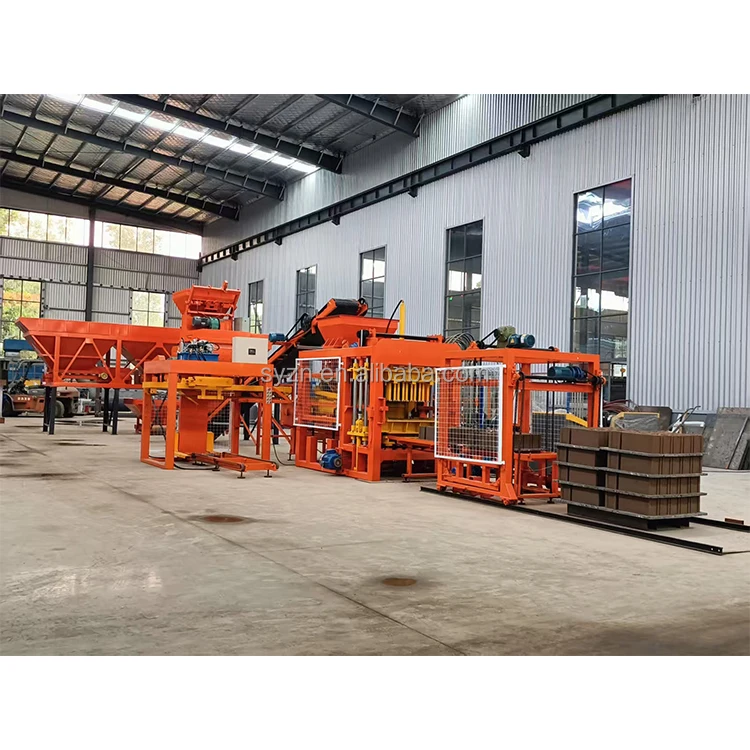
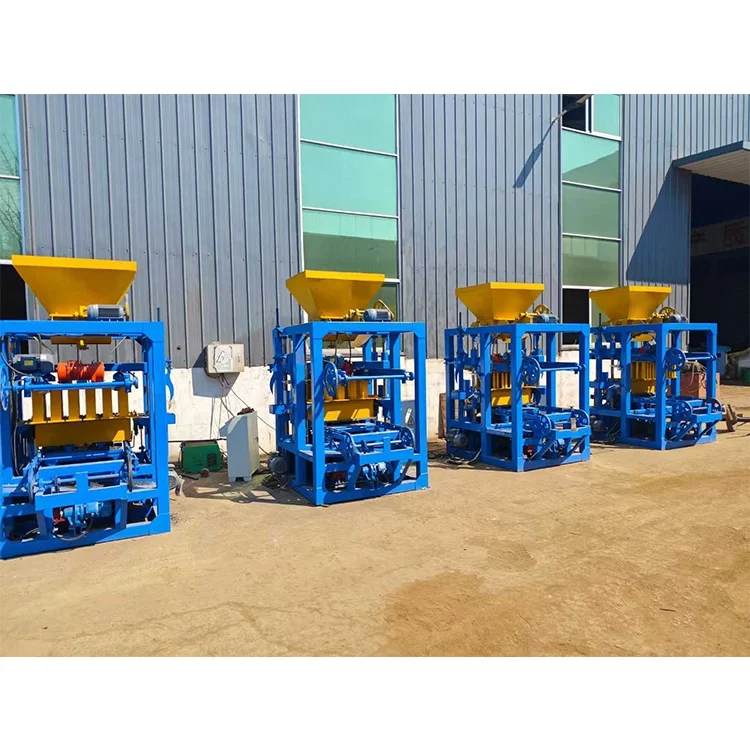 High quality block machine