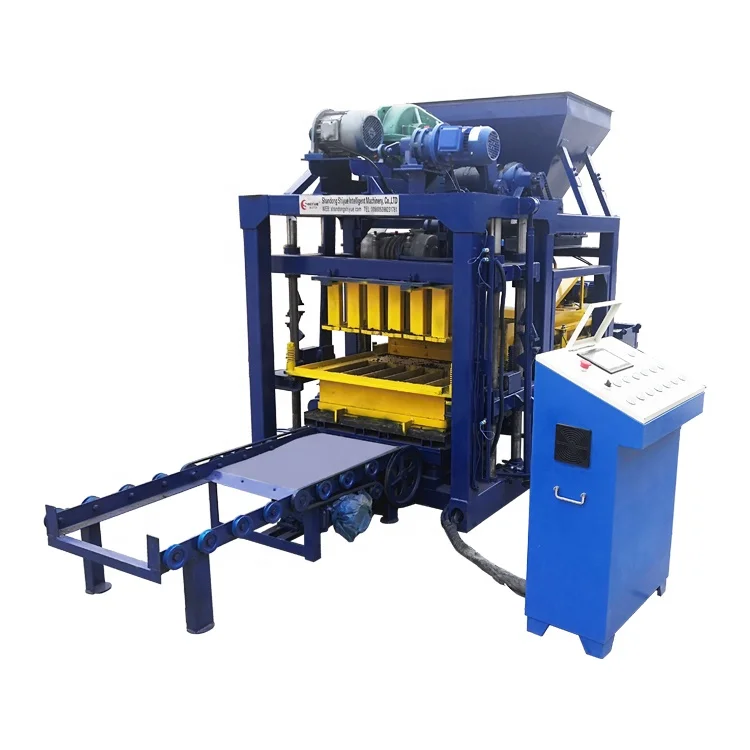
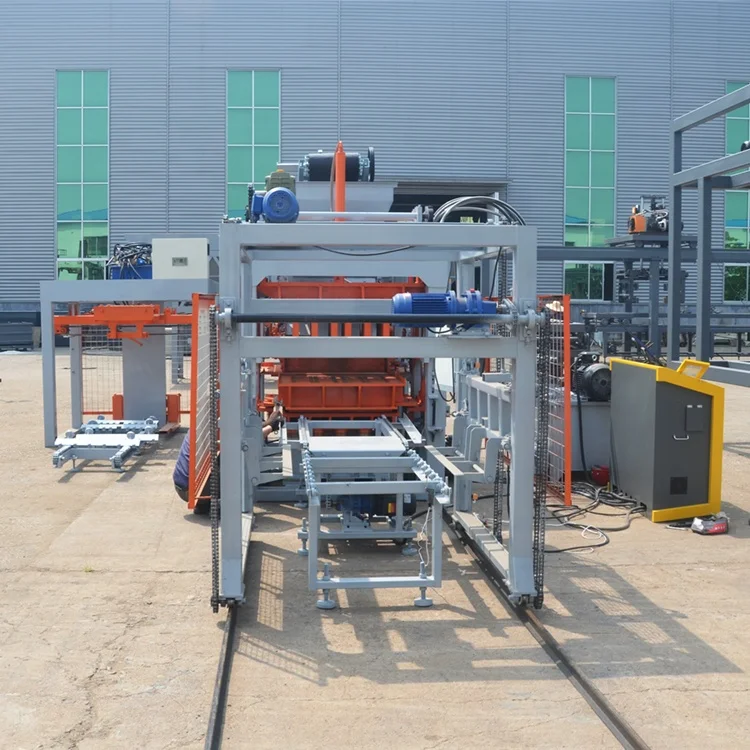
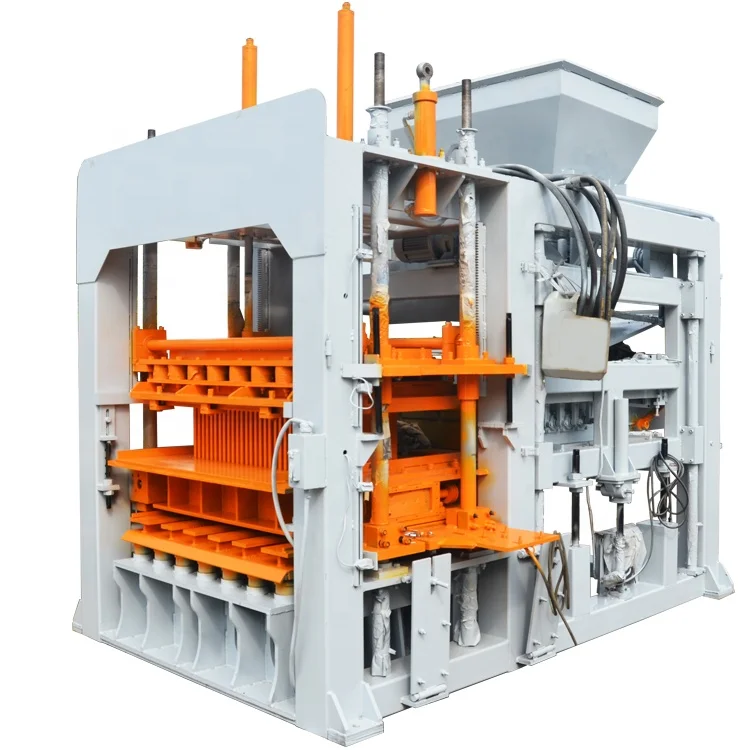
Single-focus block machinery engineering — every QT6-15 configuration is specified around your actual block format, local aggregate and pallet system rather than pulled from a generic catalogue.
Technical Specifications
| Parameter |
Value |
| Model |
QT6-15 |
| Product Type |
Hydraulic Concrete Block Making Machine |
| Overall Dimensions |
8200 × 1700 × 2950 mm |
| Total Mass |
7 T |
| Overall Power |
37 kW |
| Vibration Force |
45 kN |
| Vibration Frequency |
0–60 Hz (adjustable) |
| Vibration Form |
Platform Vibration |
| Moulding Mode |
Automatic loading with vibration moulding |
| Moulding Cycle |
15–20 s |
| Demolding Method |
Hydraulic |
| Pallet Size |
880 × 850 mm |
| Control System |
PLC with touch screen interface and fault diagnosis |
| Hydraulic System |
Independent integrated hydraulic station |
| Factory Area Required |
1200 m² |
| Output — Hollow Block 400×200×200 mm |
1080–1440 pcs/h, 8640–11520 pcs/8h |
| Output — Hollow Block 400×150×200 mm |
1440–1920 pcs/h, 11520–15360 pcs/8h |
| Output — Solid Brick 240×115×53 mm |
5760–7680 pcs/h, 46080–61440 pcs/8h |
| Output — Rectangular Paver 200×100×60 mm |
2160–2880 pcs/h (cycle 20–25 s), 17280–23040 pcs/8h |
| Output — Zigzag Paver 225×112.5×60 mm |
2160–2880 pcs/h (cycle 20–25 s), 17280–23040 pcs/8h |
| Block Compressive Strength |
>15 MPa |
| Raw Material Adaptability |
Waste ash, slag, cement and aggregate |
| Mould Change System |
(basis not stated in source) |
| Voltage & Frequency |
(basis to be confirmed) |
| PLC Display Language |
(basis to be confirmed) |
| Stacking Method |
(basis to be confirmed) |
| Standards |
CE (verify applicability to this specific model) |
Application Suitability
| Application |
Material or Output |
| Hollow block production for load-bearing and partition walls |
Cement, crushed stone, sand and waste ash blends |
| Solid brick manufacturing for masonry and infill |
Cement with local fine aggregate and slag |
| Rectangular paving brick for driveways and walkways |
Cement, granite chips and coarse sand at 200×100×60 mm |
| Zigzag interlocking paver for heavy-traffic surfaces |
Cement with graded aggregate at 225×112.5×60 mm |
| On-site block production for housing and development projects |
Locally sourced ash, slag and aggregate with cement binder |
Why a Quoted Capacity Figure Can Mislead Your Entire Plant Plan
A capacity number means nothing unless you know which block format and cycle time it assumes.
Every QT6-15 block machine for sale output figure in the table above is tied to a specific block dimension and moulding cycle. When suppliers quote a single hourly number, it is almost always the highest possible figure — usually for small solid bricks at the shortest cycle. If your market primarily buys 400×200×200 mm hollow blocks, the real throughput you can expect is roughly half that headline number. I learned this the hard way after a buyer in West Africa ordered a mid-tier press based on a sample capacity, only to find his local stone powder carried high clay content that weakened forming density and forced longer cycles, cutting daily output significantly. [NEED_CITE: effect of aggregate clay content on block compressive strength and cycle time]

Where the QT6-15 Sits in the Full Shiyue Block Machine Range
The QT6-15 occupies the mid-tier position within the Shiyue automatic block machine lineup. Below it sit semi-automatic models suited to smaller workshops with limited investment and lower daily volume requirements. Above it are high-capacity automatic lines designed for plants running multiple shifts with fully automatic stacking and cubing systems. For a buyer evaluating where to place a first or replacement machine, the QT6-15 block machine for sale represents the point where PLC-controlled production, platform vibration and hydraulic demolding come together at a factory area requirement of around 1200 m² — large enough to justify dedicated curing racks and forklift logistics, yet compact enough for a single-shift operation to manage without a full logistics team.
Comparing Tiers Before You Commit to a Plant Footprint
Choosing between tiers is not only about output volume — it is about matching the press cycle to everything upstream and downstream. A smaller semi-automatic model may cycle slower but demands far less from your mixer, pallet return system and curing area. The QT6-15 pushes material handling requirements higher: its 880×850 mm pallet size means you need curing racks and forklifts dimensioned for that footprint. If you later scale to a higher-tier machine with larger pallets, the entire curing yard layout may need reworking. This is why evaluating the complete range now — rather than focusing on a single model — prevents costly infrastructure rework later. [NEED_CITE: block plant layout planning and pallet standardisation across production tiers]
How Vibration Force and Hydraulic Pressure Shape Every Block
The 45 kN vibration force and independent hydraulic station on the QT6-15 work together during each moulding cycle. Platform vibration at 0–60 Hz compacts the mix from below while hydraulic pressure holds the mould head down, and the two forces must be balanced against your specific mix design. A dry mix with coarse aggregate needs higher vibration amplitude to achieve full compaction, whereas a wetter mix with fine ash requires lower frequency to prevent segregation. The adjustable frequency range lets operators dial in the right setting for each format — hollow blocks, solid bricks or pavers — rather than running one compromise setting for all products. Moulding cycles range from 15 to 20 seconds for standard blocks and extend to 20–25 seconds for pavers where surface finish demands a longer press phase.
The Cost of Configuring Without Your Actual Site Conditions
When voltage, frequency and PLC display language are not confirmed before production, the machine arrives and sits idle while transformers are sourced or control panels are reprogrammed. Stacking method is another frequent gap — if the quotation covers the press alone, your team may end up palletising cured blocks by hand, adding labour and breakage that the press output never predicted. Mould change time is equally critical: a buyer who paid for format flexibility but has no powered mould change system can lose most of a shift swapping dies, cancelling the very versatility the investment was meant to deliver. [NEED_CITE: common commissioning delays in exported block making machinery]
What Shiyue Brings to the QT6-15 Purchase Decision
Block machinery is our single focus, so the QT6-15 is specified as one matched system — press, mould, pallet and handling — rather than assembled from separate suppliers. We configure the vibration force and hydraulic pressure against your actual mix design and local aggregate, not a catalogue default. Mould design covers the formats your market sells, with custom drawings available when standard moulds do not match. The automation level is selectable: a buyer can start with automatic loading and PLC control on the QT6-15 and plan an upgrade path to full stacking and cubing as volume grows. Installation support includes on-site commissioning and operator training so your team is running confidently before our technician leaves.
Documentation & Verification
- Line layout and capacity calculation stating the block format assumed for every output figure
- Machine specification sheet confirming voltage, frequency and PLC display language before production starts
- Mould drawing and format list matched to your pallet size and curing area
- Factory test record with pallet loading and demolding photographs before container loading
- Operation and maintenance manual with wear parts list specific to the QT6-15
Installation, Commissioning & Support
- 1200 m² factory area with level concrete foundation to support the 7 T machine mass
- Dedicated power circuit matching confirmed voltage and frequency for the 37 kW total load
- Independent hydraulic station isolated from dust and vibration for extended seal life
- PLC touch screen configured in your operator language before dispatch
- On-site mould change training covering each block format in your product list
- Wear parts and mould supply chain established before first replacement cycle is due
What We Need From You to Size the Right Configuration
Send us your target block formats with dimensions, the daily volume your market absorbs, and a raw material sample or lab report so we can match vibration settings and cycle times accurately. Confirm your site voltage, frequency and preferred PLC display language so commissioning starts the day the QT6-15 block machine for sale is powered on. If you already have curing racks, forklifts or pallet return conveyors, share their dimensions so the 880×850 mm pallet system integrates without modification.
Frequently Asked Questions
Q: Where does the QT6-15 sit in the full Shiyue block machine range compared to semi-automatic and higher-capacity models?
A: The QT6-15 is a mid-tier automatic press positioned above smaller semi-automatic models and below high-capacity lines. It suits buyers who need PLC-controlled production across multiple formats and are ready for a 1200 m² plant footprint, but do not yet require the output volume that a fully automatic stacking and cubing line delivers.
Q: How is the output capacity verified per block format and what cycle time does each assume?
A: Every capacity figure in our specification table is tied to a specific block dimension and moulding cycle. Hollow blocks at 400×200×200 mm run on a 15–20 second cycle, while pavers require 20–25 seconds for surface finish. We provide a capacity calculation document stating the exact format and cycle assumed so there are no surprises at commissioning.
Q: What plant footprint and factory area does the QT6-15 require versus other tiers?
A: The QT6-15 needs approximately 1200 m² including press, mixer area, pallet circulation and curing rack space. Smaller semi-automatic models fit in considerably less area, while higher-tier automatic lines demand larger footprints to accommodate automatic stacking, cubing and extended curing rack lanes.
Q: What automation level does the QT6-15 provide and is there an upgrade path?
A: The QT6-15 block machine for sale comes with automatic loading, PLC control with touch screen interface and built-in fault diagnosis. Buyers can start at this level and plan upgrades to automatic pallet feeding, stacking and cubing as production volume and labour conditions justify the additional investment.
Q: What configuration options should I confirm before placing an order?
A: Confirm your site voltage and frequency, PLC display language, target block formats and pallet size compatibility with your existing curing racks and forklifts. We also need your raw material details — aggregate type, ash or slag availability — so vibration force and cycle times are matched to your actual mix rather than a default setting.

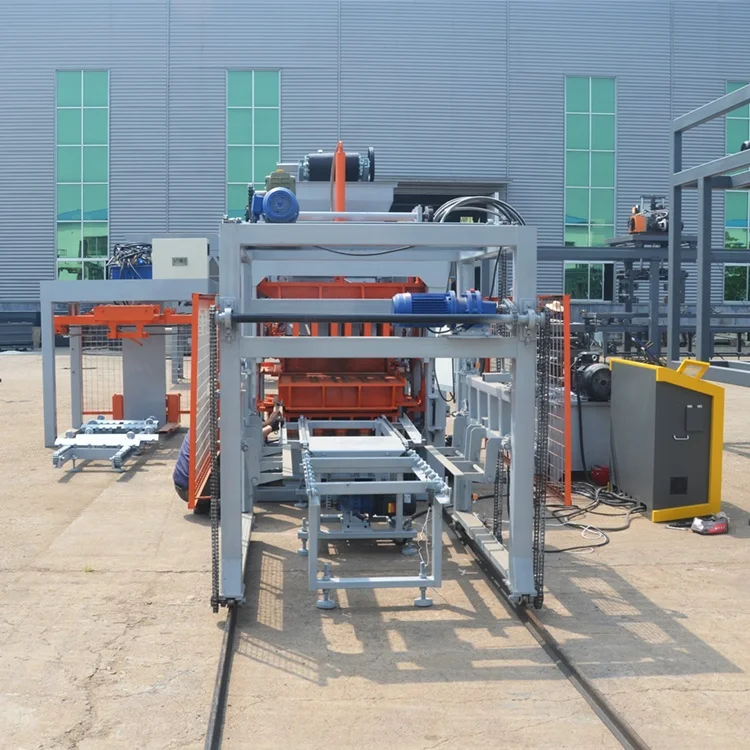
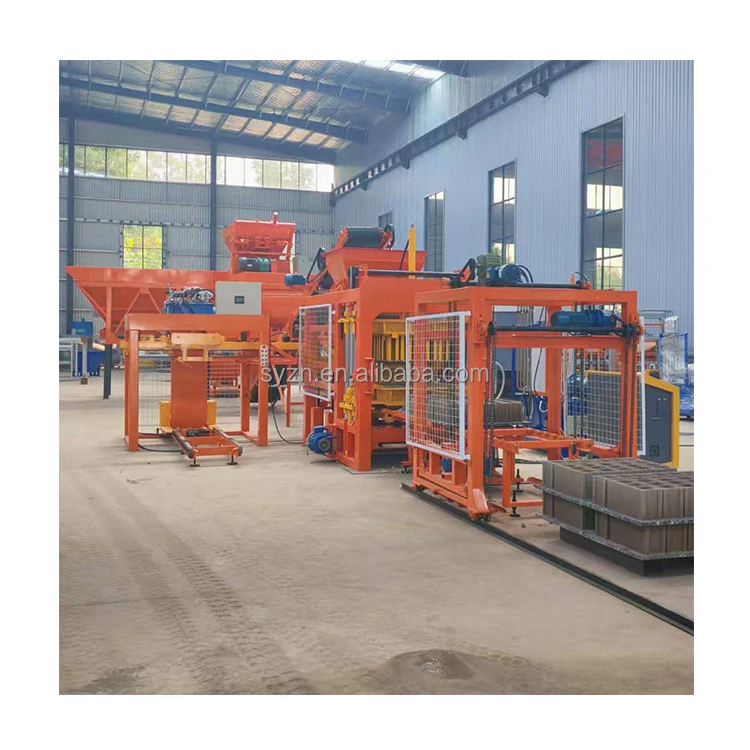 High quality block machine