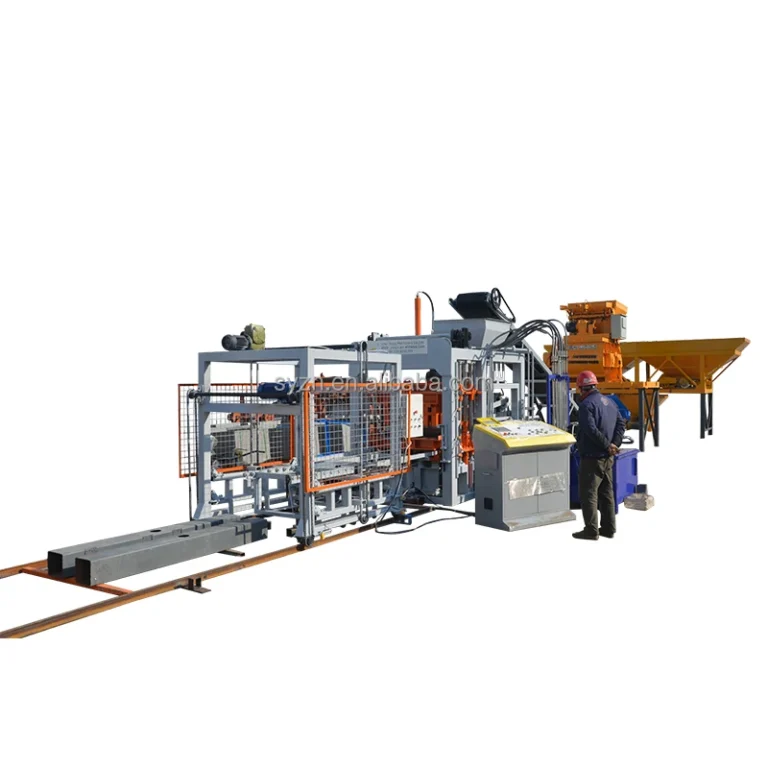
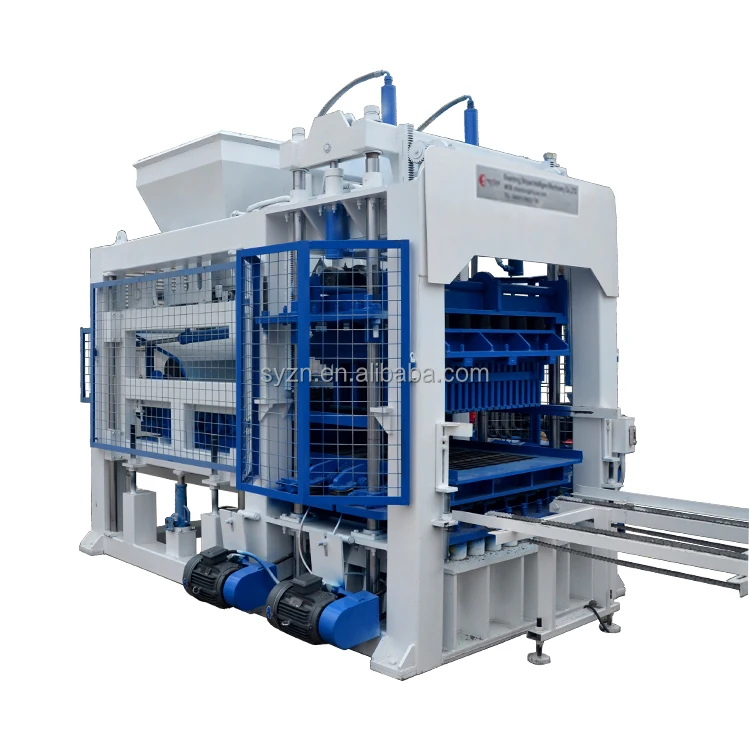
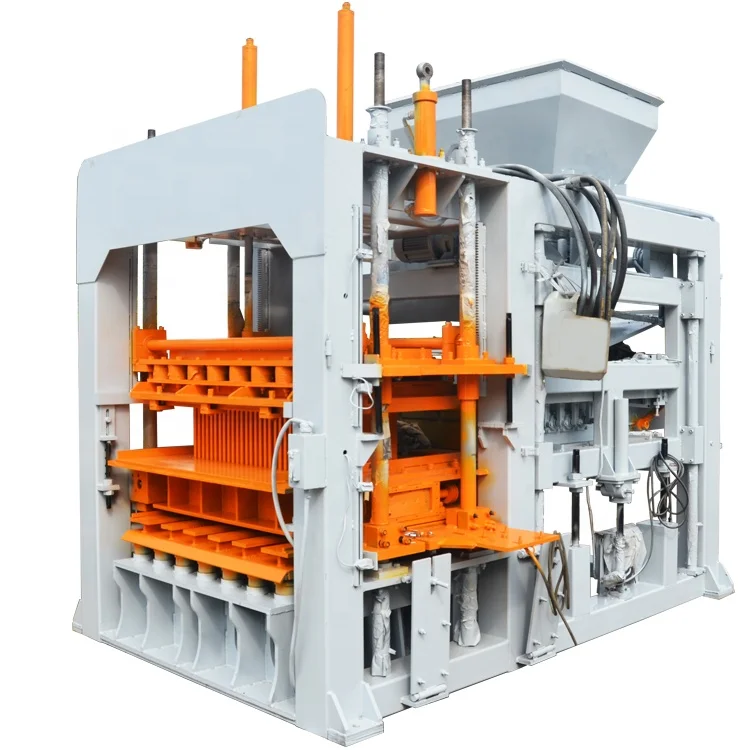
Single Focus On Block Machinery — Every component from the QT6-15 press to its pallet and hydraulic station is specified as one matched production unit rather than assembled from disconnected suppliers.
Technical Specifications
| Parameter |
Value |
| Model |
QT6-15 |
| Product Type |
Hydraulic Concrete Block Making Machine |
| Overall Dimensions (L×W×H) |
8200 × 1700 × 2950 mm |
| Total Mass |
7 T |
| Overall Power |
37 kW |
| Vibration Frequency |
0–60 Hz (adjustable) |
| Vibration Form |
Platform Vibration |
| Vibration Force |
45 kN |
| Pallet Size |
880 × 850 mm |
| Molding Cycle |
15–20 s (hollow/solid), 20–25 s (pavers) |
| Demolding Method |
Hydraulic |
| Control System |
PLC with touch screen interface and fault diagnosis |
| Hydraulic Station |
Independent integrated, isolated from dust and main vibration |
| Factory Area Requirement |
1,200 m² |
| Output — Hollow Block 400×200×200 mm |
8,640–11,520 pcs/8 hr (15–20 s cycle, 6 pcs/mould) |
| Output — Hollow Block 400×150×200 mm |
11,520–15,360 pcs/8 hr (15–20 s cycle, 8 pcs/mould) |
| Output — Solid Brick 240×115×53 mm |
46,080–61,440 pcs/8 hr (15–20 s cycle, 32 pcs/mould) |
| Output — Rectangular Paver 200×100×60 mm |
17,280–23,040 pcs/8 hr (20–25 s cycle, 21 pcs/mould) |
| Output — Zigzag Paver 225×112.5×60 mm |
17,280–23,040 pcs/8 hr (20–25 s cycle, 15 pcs/mould) |
| Automation Level |
High, PLC-controlled with automatic loading and vibration moulding |
| Warranty |
1 year (excluding spare parts) |
Application Suitability
| Application |
Material or Output |
| Hollow block production for wall construction |
Crushed stone, sand, cement, fly ash blends |
| Solid brick manufacturing |
Dense aggregate and cement mixes |
| Rectangular paving block production |
Fine aggregate with cement for high surface density |
| Interlocking zigzag paver manufacturing |
Graded aggregate with pigment layers |
| On-site block production for housing projects |
Locally sourced river sand and coarse aggregate |
| Waste material recycling into building products |
Ash, slag, and construction waste with reduced cement |
What "10,000 Blocks Per Day" Leaves Out About the QT6-15 Block Machine
Capacity figures mean nothing unless they name the exact block format behind the number.
Early in my career on the assembly floor, I watched machines leave the factory with impressive cycle-time numbers. Then a buyer in West Africa called to say his new QT6-15 concrete block making machine for sale was producing barely half what the brochure promised. The reason was simple: the quoted capacity assumed a standard hollow block, but his market demanded a heavier paver format that needed a longer cycle. I have seen this misunderstanding cost contractors entire project timelines [NEED_CITE: block format cycle time assumptions in equipment quotations]. When we discuss output for the QT6-15 block machine manufacturer specifications, every figure in our table ties directly to a named block size, mould cavity count, and cycle range so your daily planning starts from reality.

Placing the QT6-15 Within the Full Machine Range
The QT6-15 sits in the mid-to-high tier of our automatic block machine lineup, bridging the gap between entry-level semi-automatic presses and large-capacity fully automatic lines. Buyers setting up a first block plant often land here because the 1,200 m² factory area requirement keeps the initial footprint manageable while the PLC-controlled automation reduces reliance on skilled operators. The platform vibration system with adjustable 0–60 Hz frequency gives this concrete block making machine for sale the flexibility to handle both lightweight hollow blocks and dense pavers without hardware changes.
How Output Tiers Map to Your Market Format Mix
Choosing between tiers is not simply about maximum volume — it depends on which block formats dominate your local market and how often you switch moulds. A plant producing mostly hollow blocks with occasional paver runs may find the QT6-15 block machine manufacturer tier covers both without the overhead of a higher-capacity line. Conversely, if your market demands frequent format changes across four or five brick types daily, the mould change speed and pallet logistics at this tier become the real bottleneck, not the press cycle itself [NEED_CITE: mould change frequency impact on daily block plant output]. We map your product mix against each tier before recommending where the QT6-15 fits or whether a step up makes sense.
Reading the Specs That Actually Shape Daily Production
Hydraulic pressure and vibration force work together to determine block density and compressive strength, and the QT6-15 delivers 45 kN vibration force through platform vibration rather than mould-only vibration, compacting the full pallet evenly. The independent integrated hydraulic station sits isolated from dust and main machine vibration, which extends seal life and keeps pressure consistent across long shifts. Pallet size at 880 × 850 mm dictates how many cavities each mould carries — a 400×200×200 mm hollow block fits six per pallet, while a standard solid brick fits thirty-two. This relationship between pallet area and cavity count is why output varies so dramatically across formats on the same QT6-15 block machine manufacturer press. The PLC touch screen interface with built-in fault diagnosis lets operators identify sensor or valve issues without waiting for an engineer, keeping unplanned downtime contained.
The Hidden Cost of Mismatched Pallet and Curing Layout
One of the most common complaints I hear from buyers who purchased elsewhere is that the quotation covered the press but ignored everything around it. If the pallet size does not match the curing racks and forklifts already on site, you end up restacking every block by hand before it reaches the yard. A plant running the QT6-15 concrete block making machine for sale at full cycle speed with no automatic stacking arrangement simply moves the bottleneck from the press to the curing area [NEED_CITE: pallet handling bottleneck in block production plants]. We specify pallet dimensions, curing rack spacing, and handling equipment as one package so the output flow stays uninterrupted from moulding through to dispatch.
Why Buyers Place the QT6-15 With Us
Block machinery is our single focus, so every QT6-15 configuration is built around the buyer’s actual mix design and target block format rather than a catalogue default. We provide mould design for the specific formats your market sells, including custom drawings when standard options do not cover your requirements. Automation level is selectable, meaning you can start the QT6-15 block machine manufacturer package at a semi-automatic pallet handling stage and add automatic stacking later as volume grows. Configuration is validated against your local aggregate and available raw materials before production begins, avoiding the costly material substitutions I have seen derail other projects. Installation support includes operator training so your team can run the PLC fault diagnosis and mould change procedures independently from week one.
Documentation & Verification
- Line layout showing QT6-15 placement with capacity stated per block format
- Full hydraulic and electrical schematic matching your voltage and frequency
- Mould drawing and format list confirming included and custom cavity designs
- Factory test record on your specified aggregate and block type before dispatch
- Pallet specification matched to your curing rack and forklift dimensions
Installation, Commissioning & Support
- Foundation plan for 8,200 × 1,700 mm footprint with vibration isolation provisions
- Dedicated 37 kW power circuit with confirmed voltage and frequency for your site
- Machine shipped in dismantled state with reassembly sequence and lifting points marked
- PLC touch screen configured in your operator language before commissioning begins
- Mould change procedure training using your specific block format sequence
- Wear parts list with hydraulic seal and vibration motor replacement intervals
Before You Request a Quotation
Tell us which block formats your market currently demands and the daily volume you need for each, not just a single headline number. Share your local aggregate type and any waste materials you plan to incorporate so we can match vibration force and hydraulic pressure to your actual mix. Confirm your site voltage, frequency, and the language your operators need on the PLC display to avoid delays once the QT6-15 block machine manufacturer unit arrives on your floor.
Frequently Asked Questions
Q: How is the QT6-15 capacity calculated, and which block format does each figure assume?
A: Every output figure we publish names the exact block dimensions, mould cavity count, and cycle time range behind it. For example, the hollow block 400×200×200 mm capacity of 8,640–11,520 pieces per eight-hour shift assumes six cavities per mould and a 15–20 second cycle. Switch to a paver format with a longer cycle and the daily total adjusts accordingly, which is why a single headline number without format context is misleading.
Q: Where does the QT6-15 sit compared to smaller semi-automatic and larger high-capacity models?
A: The QT6-15 occupies the mid-to-high tier, offering PLC-controlled automatic operation with a 1,200 m² factory area requirement. Smaller semi-automatic machines suit lower investment and manual pallet handling, while larger models serve plants running a single format at maximum volume around the clock. Most buyers choosing the QT6-15 concrete block making machine for sale value format flexibility with room to add automation later.
Q: What plant footprint does the QT6-15 need, and how does that compare to other tiers?
A: The 1,200 m² requirement covers the press, raw material feeding, mixing, pallet circulation, and a basic curing area. Smaller semi-automatic units need roughly half that space but sacrifice output, while high-capacity automatic lines demand significantly more room for extended curing racks and automatic cubing stations. We provide a scaled line layout showing exactly where each station fits within your available area.
Q: Can I start with the QT6-15 in a basic configuration and upgrade automation later?
A: Yes. The machine platform remains the same whether you begin with manual pallet handling or full automatic stacking. Upgrading later involves adding pallet feeders, stackers, and the corresponding PLC modules without replacing the press or hydraulic station. This modular path lets entrepreneurs start a first block plant at manageable cost and scale as market demand grows.
Q: What voltage and control language options are available for my market?
A: Voltage and frequency are configured to your site supply before production begins, and the PLC touch screen display is set to your operator language. Confirming these details early prevents commissioning delays after the QT6-15 block machine manufacturer package arrives. We document the agreed electrical specification and language in the machine specification sheet for your records.

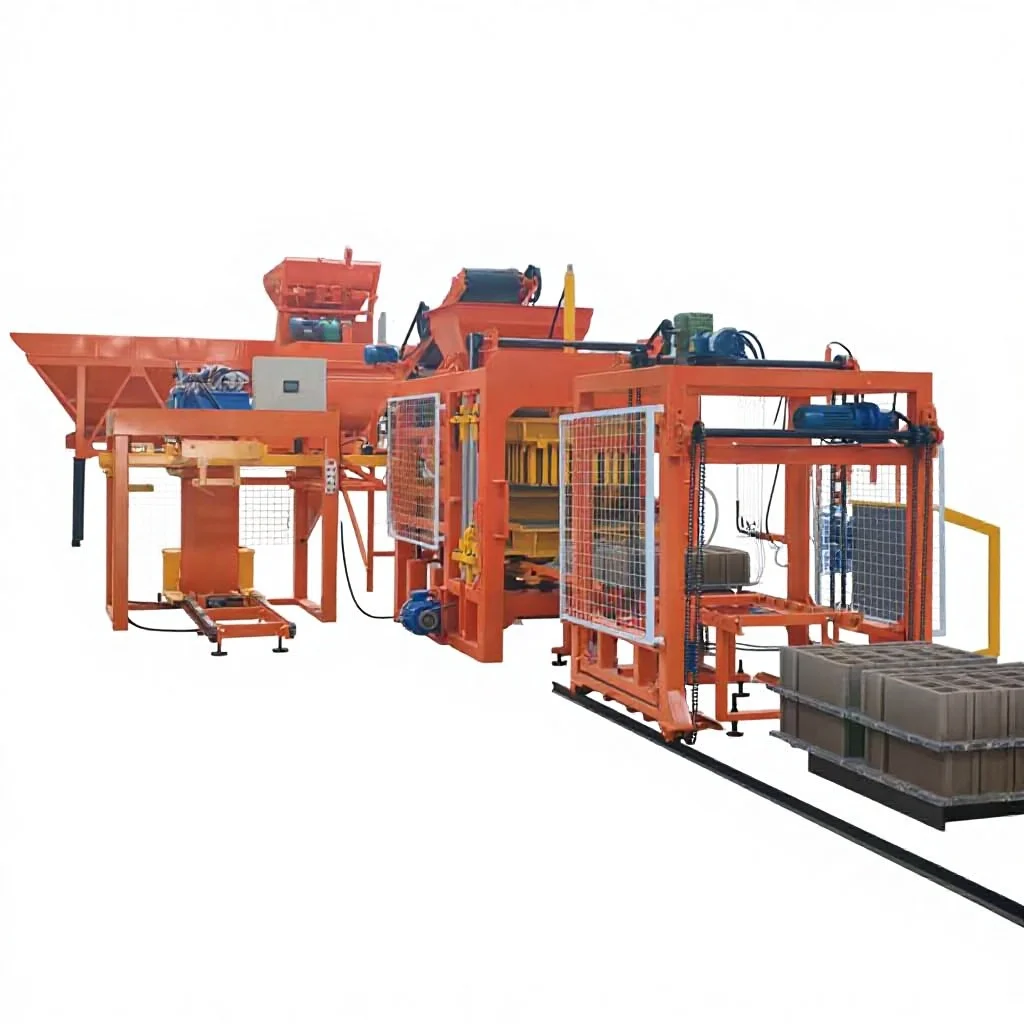
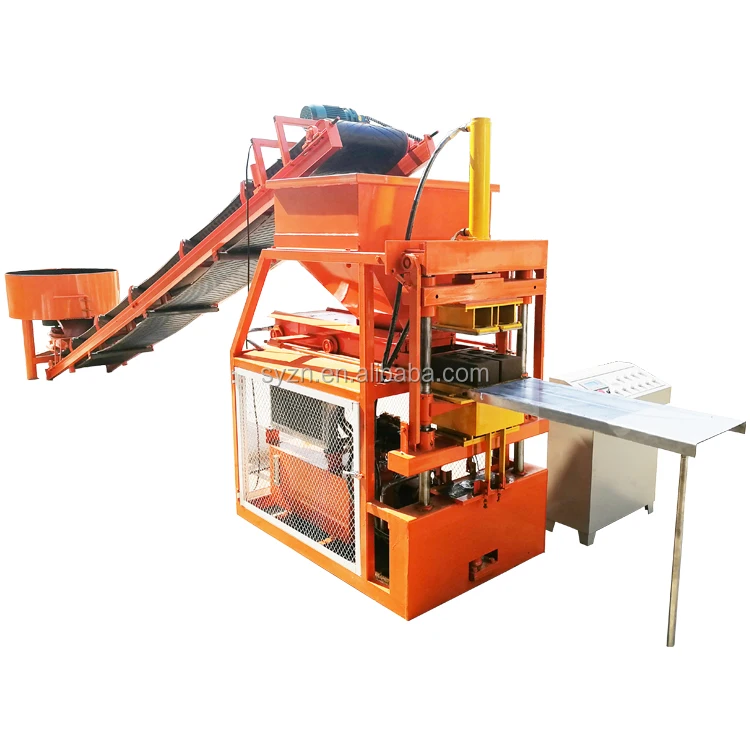 High quality block machine