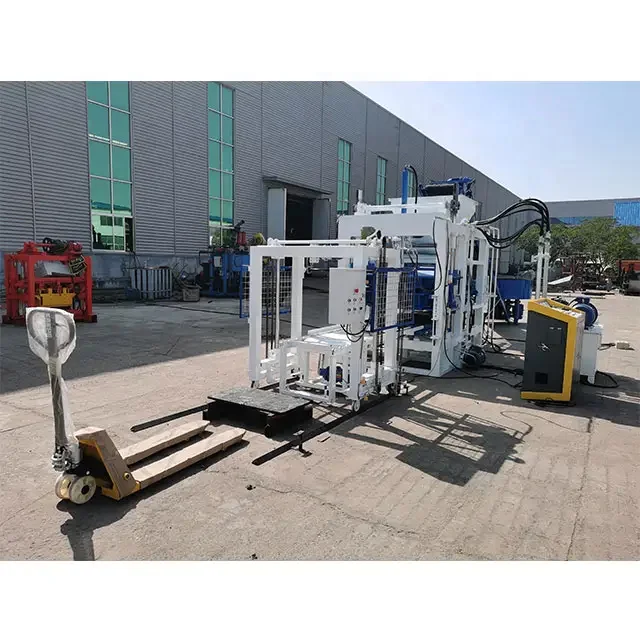
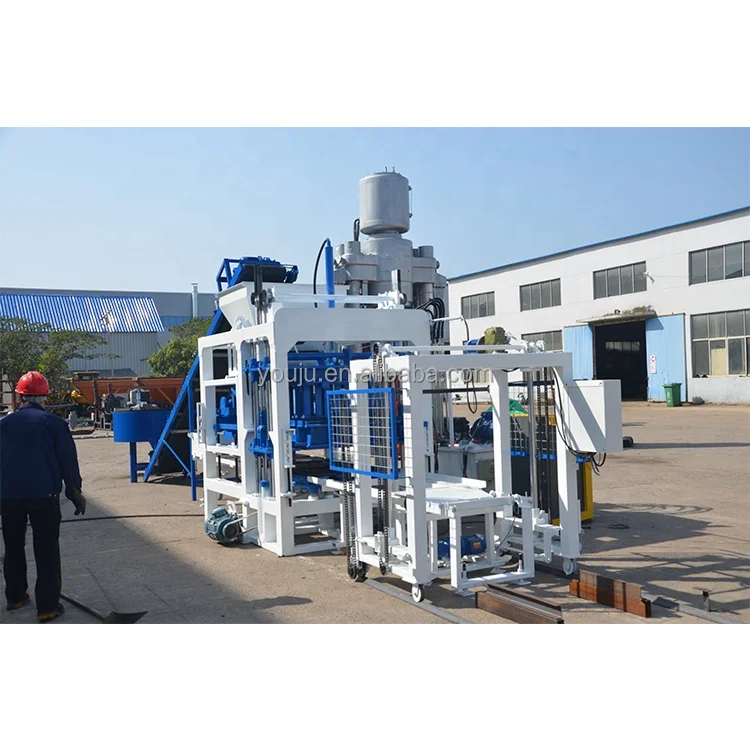
Matched System Sizing — the QT6-15 block making machine is specified as a complete press, mould, pallet and handling combination rather than a standalone unit, so every component is verified against your local aggregate and target block format before production begins.
Technical Specifications
| Parameter |
Value |
| Model |
QT6-15 |
| Product Type |
Automatic Concrete Block Making Machine |
| Molding Way |
Vibration and hydraulic pressing |
| Rated Pressure |
21 MPa |
| Molding Cycle |
15s–20s (basis not stated in source — confirm block format / material / thickness) |
| Pallet Size |
900 x 700 mm |
| Main Machine Weight |
6000 KGS |
| Output Capacity (Hollow Block) |
1440 pcs/h based on 400x200x200 mm, 6 pcs per pallet |
| Output Capacity (Paving Brick) |
5040 pcs/h based on 200x100x60 mm, 21 pcs per pallet |
| Output Capacity (Solid Brick) |
7680 pcs/h based on 240x115x53 mm, 32 pcs per pallet |
| Block Formats |
Hollow block, paving brick, solid brick, interlocking brick, curbstone |
| Automation Level |
Automatic with optional simple semi-automatic line (JS500 mixer, 8M belt, stacker) |
| Control System |
PLC with selectable language options |
| Motor Voltage |
Customizable to buyer’s local voltage and frequency |
| Raw Materials |
Cement, sand, fly ash, stone powder, slag |
| Warranty |
1 year (excluding wearing parts) |
Application Suitability
| Application |
Material or Output |
| Hollow block production for building contractors |
Crushed stone, sand and cement mix, 400x200x200 mm format |
| Paving brick manufacturing for municipal projects |
Fine aggregate and cement blend, 200x100x60 mm interlocking or standard paver |
| Solid brick output for housing developments |
Fly ash or stone powder with cement, 240x115x53 mm standard brick |
| Curbstone production for road and infrastructure work |
Coarse aggregate and cement, heavy-duty mould required |
| On-site block production for construction contractors |
Locally sourced sand and gravel with Portland cement |
What "1440 Pieces per Hour" Leaves Out When Sizing an Automatic Block Making Machine for Sale
Every capacity figure must name the block format it assumes, or the number is meaningless for your plant planning.
I once watched a buyer in Nairobi receive a machine quoted at a single hourly output, only to discover on commissioning day that the figure assumed a small solid brick his market did not purchase. His actual hollow block output was a fraction of what he had used to calculate his cement orders and truck schedules. When evaluating a QT6-15 block machine manufacturer, the per-format breakdown matters far more than a headline number. The 1440 pieces per hour figure applies only to 400x200x200 mm hollow blocks at six per pallet; switch to paving bricks and the cycle dynamics change entirely [NEED_CITE: block format impact on realistic daily output in concrete block production].

Positioning the QT6-15 Across the Investment Spectrum
The QT6-15 sits in the mid-tier of our automatic block making machine for sale range, bridging the gap between entry-level semi-automatic setups and high-capacity fully automatic lines. Buyers who are establishing a first block plant can start with the simple semi-automatic configuration — a JS500 mixer, an eight-metre conveyor belt and an automatic stacker — then add batching and pallet loading stations later without replacing the press itself. This selectable automation level means your initial capital outlay matches your current volume while the machine footprint leaves room for expansion.
How Output Tiers Shape Plant Footprint and Crew Requirements
Moving from a semi-automatic to a fully automatic configuration around the QT6-15 changes more than just output speed; it reshapes your curing yard logistics and the number of operators on the floor. A semi-automatic line typically needs two or three workers handling pallet transfer and block stacking manually, while the full automatic line with pallet feeding and cubing reduces direct press-side labour to a single PLC operator. The nine-hundred-by-seven-hundred-millimetre pallet size dictates your curing rack spacing and the forklift capacity you already have on site, so confirming that dimension against your existing yard layout is a necessary step before the machine ships [NEED_CITE: curing area planning for concrete block plants in East Africa].
Reading the Pressure, Vibration and Cycle Time Together
The 21 MPa rated hydraulic pressure and combined vibration pressing define how densely the QT6-15 compacts your specific mix. Higher pressure alone does not guarantee block strength; the vibration frequency must match the aggregate gradation so that finer particles fill voids between coarser stones before the hydraulic head applies full force. The fifteen-to-twenty-second moulding cycle is a starting reference, but actual cycle time shifts depending on block thickness and whether your local sand runs fine or coarse. This is why we test with your actual raw material sample before locking the vibration parameters at the factory.
The Cost of Skipping Pallet and Voltage Confirmation
A pallet size chosen without checking your curing rack dimensions means blocks stacked on the yard floor, exposed to uneven drying and cracking. We have seen buyers arrive at commissioning with a forklift whose fork width does not match the pallet they ordered, forcing a last-minute rack rebuild. On the electrical side, a PLC wired for a voltage that differs from your local grid delays start-up by weeks while a transformer is sourced. Both problems are avoidable with a ten-minute conversation before the order is confirmed [NEED_CITE: voltage and frequency standards by export market].
Why Buyers Source the QT6-15 Through This Range
Block machinery is our single focus, so the press, mould, pallet and handling equipment arrive as one matched system rather than components assembled from separate suppliers. We set the vibration and pressure parameters against your actual mix design and local aggregate, not a catalogue default. Mould design covers the formats your market sells, and custom drawings are available when standard sizes do not match local building codes. The selectable automation path lets you begin semi-automatic and add stations as demand grows, and every shipment includes installation support with operator training on your specific product range.
Documentation & Verification
- Line layout drawing with capacity calculation stated per block format
- Machine specification sheet confirming pallet size and hydraulic ratings
- Mould drawing and format list matched to your local market dimensions
- Voltage, frequency and PLC display language confirmation before production
- Factory test record run on your target block format before dispatch
- Operation and maintenance manual with wear parts and mould replacement list
Installation, Commissioning & Support
- Foundation plan sized to the 6000 KGS main machine weight and vibration load
- Electrical supply confirmed for your local voltage before the PLC is wired
- Machine shipped dismantled with reassembly guide for container unloading
- Vibration and pressure parameters tuned on-site using your local aggregate sample
- Operator training covering mould change procedure and daily PLC checks
- Wear parts list with reorder intervals for hydraulic seals and vibration springs
What to Include in Your Enquiry
To size the QT6-15 accurately within our automatic block making machine for sale range, share the block formats your market currently demands and the daily volume you plan to sustain. Let us know the source and gradation of your local sand and aggregate so we can set the vibration profile before the machine leaves the factory. Confirming your site voltage, frequency and preferred PLC language at the enquiry stage keeps the commissioning schedule on track once the machine arrives.
Frequently Asked Questions
Q: How is the capacity figure calculated and which block format does it assume?
A: Each output number on the QT6-15 is tied to a specific block dimension and pieces-per-pallet count. The 1440 pieces per hour figure assumes 400x200x200 mm hollow blocks at six per pallet. Paving brick and solid brick outputs differ because mould cavity count and compaction time change with format. We provide a per-format capacity table with your quotation.
Q: What automation level options are available and how does investment differ between tiers?
A: The QT6-15 is available as a simple semi-automatic line with a JS500 mixer, eight-metre conveyor and stacker, or as a fully automatic line with batching, pallet loading and cubing stations. The press itself remains the same; the investment difference lies in the supporting equipment and the labour each tier requires on the production floor.
Q: Can the QT6-15 be expanded from semi-automatic to fully automatic after installation?
A: Yes. The press footprint and pallet size remain constant, so adding automatic pallet feeding, stacking or cubing stations later does not require replacing the main machine. We design the electrical cabinet and PLC program with expansion slots so additional stations integrate into the existing control logic without a full rewiring.
Q: How do I confirm the right pallet size for my curing area and forklift?
A: The QT6-15 uses a 900×700 mm pallet. Measure your curing rack shelf width and your forklift fork spread before ordering. If your existing infrastructure was built around a different pallet dimension, we discuss whether adjusting the rack or selecting a different press tier makes more economic sense for your plant.
Q: What plant footprint does each configuration tier require?
A: A semi-automatic QT6-15 line with mixer, conveyor and manual stacking fits a compact workshop bay. A fully automatic configuration with batching silos, pallet return and cubing station needs a longer linear layout and additional space for the curing yard. We provide a scaled line layout drawing with your proposal so you can verify dimensions against your site.

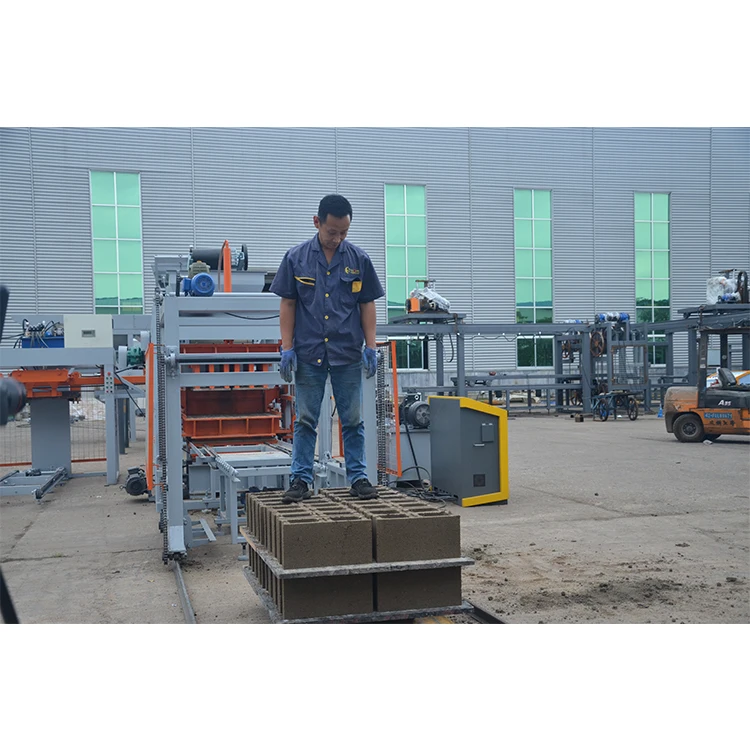
 Semi automatic block