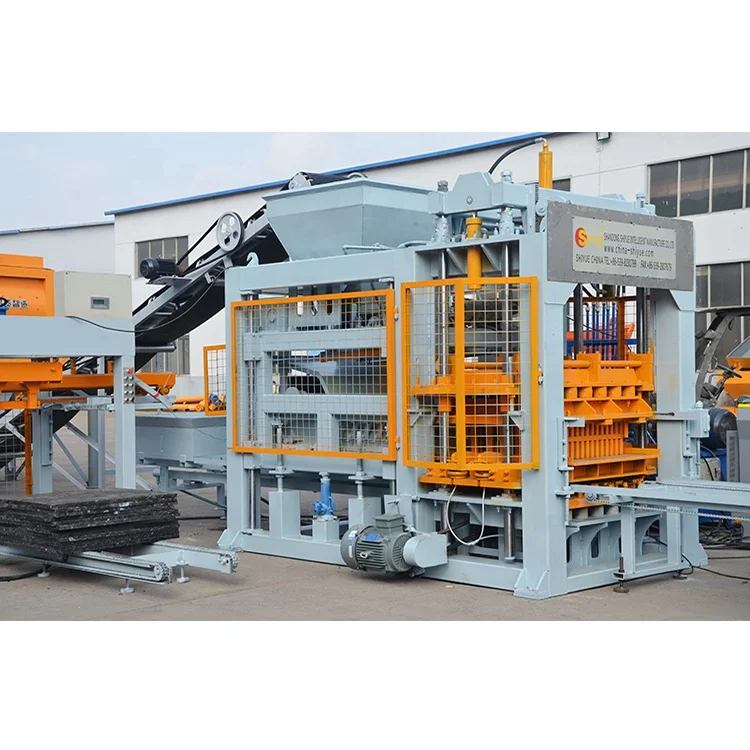
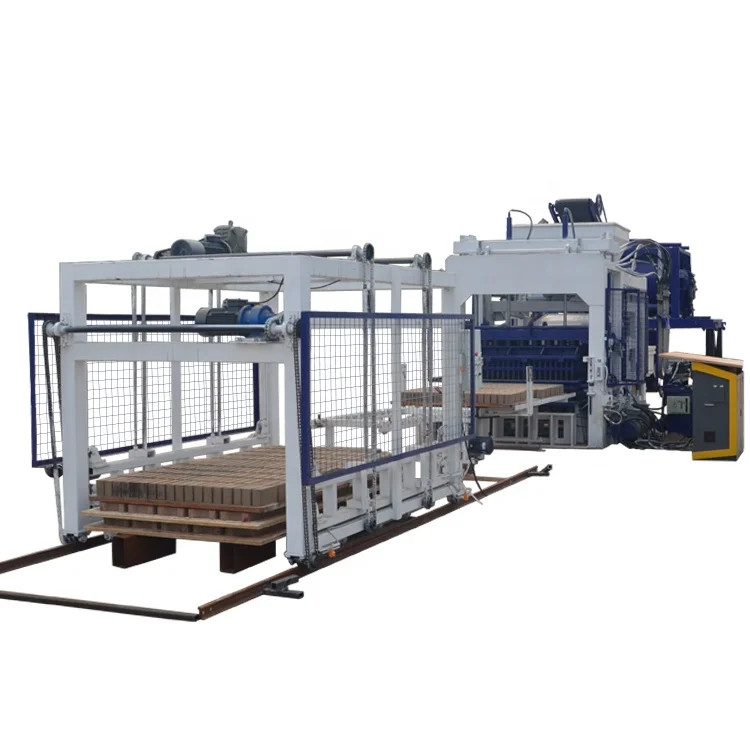
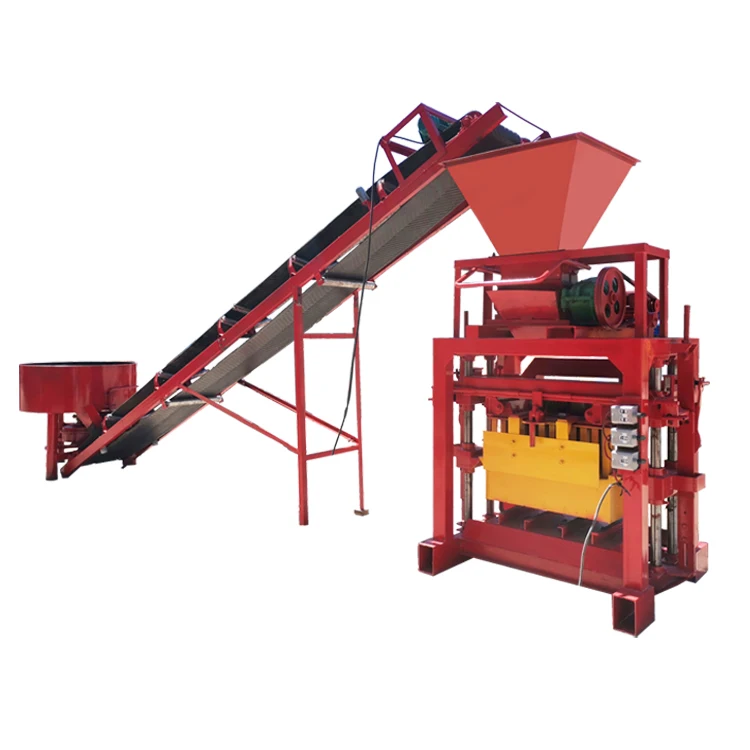
Matched System Specification — The QT6-15 is positioned within Shiyue’s range as a complete block production system where the press, moulds, pallets, and handling equipment are specified together rather than sourced separately, ensuring cycle times align across every station from mixer to curing rack.
Technical Specifications
| Parameter |
Value |
| Model |
QT6-15 |
| Product Type |
Automatic Hydraulic Concrete Block Making Machine |
| Overall Dimensions (L×W×H) |
8200×1700×2950 mm |
| Total Mass |
7 T |
| Vibration Form |
Platform Vibration |
| Vibration Frequency |
0–60 Hz (adjustable) |
| Vibration Force |
45 kN |
| Moulding Mode |
Automatic loading, vibration moulding |
| Demolding Method |
Hydraulic |
| Pallet Size |
880×850 mm |
| Molding Cycle |
15–20 s (basis not stated in source — confirm block format / material / thickness) |
| Overall Power |
37 kW |
| Control System |
PLC with touch screen HMI, fault diagnosis, safety interlock logic |
| Hydraulic System |
Independent integrated hydraulic station, isolated from dust and main machine vibration |
| Block Compressive Strength |
>15 MPa (basis not stated in source) |
| Recommended Factory Area |
1200 m² |
| Output — Hollow Block 400×200×200 mm |
8,640–11,520 pcs/8h (6 pcs/mould, 15–20 s cycle) |
| Output — Hollow Block 400×150×200 mm |
11,520–15,360 pcs/8h (8 pcs/mould, 15–20 s cycle) |
| Output — Solid Brick 240×115×53 mm |
46,080–61,440 pcs/8h (32 pcs/mould, 15–20 s cycle) |
| Output — Rectangular Paver 200×100×60 mm |
17,280–23,040 pcs/8h (21 pcs/mould, 20–25 s cycle) |
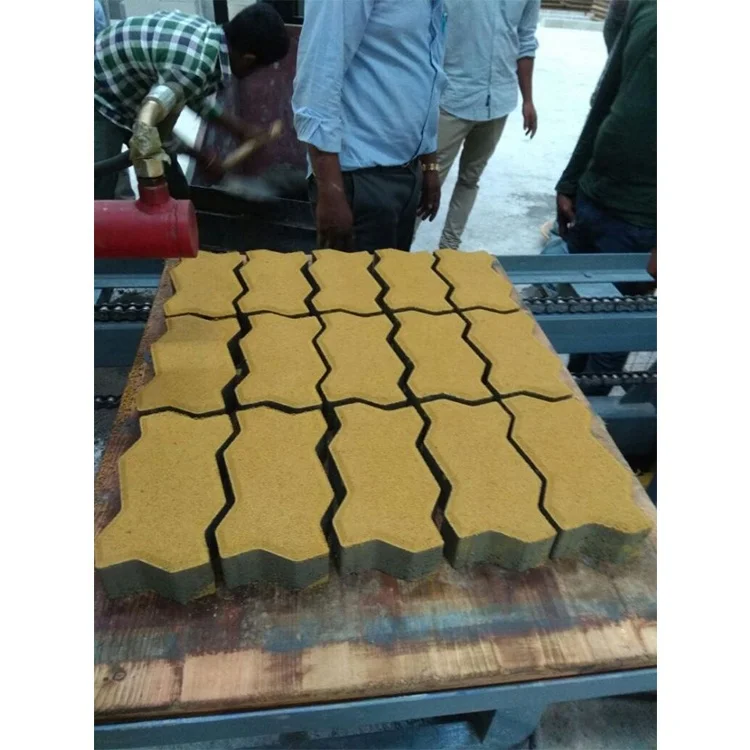
| Output — Zigzag Paver 225×112.5×60 mm |
17,280–23,040 pcs/8h (15 pcs/mould, 20–25 s cycle) |
| Raw Material Adaptability |
Waste ash, slag, cement-based mixes |
| Voltage & Frequency |
Configurable to buyer’s local supply (to be confirmed before production) |
| PLC Display Language |
Configurable to buyer’s requirement (to be confirmed before production) |
Application Suitability
| Application |
Material or Output |
| Hollow block production for residential and commercial walls |
Cement, sand, crushed stone, and waste ash mixes |
| Solid brick manufacturing for load-bearing and partition walls |
Cement-based mixes with local aggregate |
| Interlocking paver production for walkways and driveways |
High-strength cement mixes with fine aggregate |
| Zigzag paver manufacturing for heavy-duty paving |
Cement, slag, and crushed stone blends |
| Concrete product manufacturing using industrial by-products |
Waste ash and slag-based mixes with cement binder |
What "10,000 Blocks per Day" Actually Means on the QT6-15
Every capacity figure must be read alongside the block format, mould cavity count, and cycle time that produced it — no standalone daily number tells the full story.
I have watched buyers on construction sites across the Gulf region sign purchase orders based on a single headline capacity number, only to discover after commissioning that their actual daily output of 400×200×200 mm hollow blocks sits noticeably below the quoted figure. The gap usually traces back to one missing variable: the block format the capacity was calculated against [NEED_CITE: block machine capacity calculation standards and format assumptions]. When the local sand carries high clay content, vibration parameters need recalibration, and cycle times lengthen accordingly. A QT6-15 automatic block machine manufacturer that provides capacity tied to specific formats, mould counts, and cycle ranges gives the buyer a realistic baseline for planning shifts, raw material orders, and delivery commitments.

Where the QT6-15 Sits in the Full Machine Range
The QT6-15 occupies the mid-to-high automatic tier within Shiyue’s complete block machine lineup. Below it sit semi-automatic models suited to smaller plants and lower initial investment, while above it are higher-output automatic lines designed for large-scale production facilities. Understanding this positioning helps a first-time buyer gauge whether the QT6-15 matches current demand or whether a different tier better serves the business plan.
For buyers replacing existing equipment, the QT6-15 offers a step up in automation and output consistency without the footprint and capital requirement of the largest lines. The 8200×1700×2950 mm overall dimensions and 1200 m² recommended factory area place it firmly in a mid-range plant category, making it compatible with existing buildings that were originally set up for smaller machines [NEED_CITE: industrial machinery footprint planning for block production plants].
Automation Tiers and the Path from Semi-Automatic to Full Lines
Shiyue’s range spans from manual pallet handling through to fully automatic stacking and cubing. The QT6-15 comes configured with PLC-controlled automatic loading and vibration moulding, a touch screen HMI with fault diagnosis, and safety interlock logic. This level of automation removes the operator from direct contact with the moulding cycle and introduces batch-to-batch consistency that manual operation cannot sustain over a full shift.
Buyers who start at the semi-automatic level can plan an upgrade path toward full automatic stacking and cubing as production volumes grow and labour costs shift. The key question is not whether automation is available, but which stations — pallet feeding, raw material batching, stacking, curing rack handling — should be automated first based on the buyer’s specific labour environment and output targets. The QT6-15 automatic block machine manufacturer configures each line with these decisions made before production, not after arrival.
Reading the Specs That Determine Real Output
Platform vibration at 0–60 Hz with 45 kN of vibration force is the core forming mechanism on the QT6-15. Vibration frequency and force must be matched to the buyer’s mix design and local aggregate characteristics — a high-clay sand requires different settings than washed crushed stone, and getting this wrong produces blocks with inconsistent compressive strength. The independent integrated hydraulic station is physically isolated from dust and main machine vibration, which matters in block plants where cement dust settles on every surface and hydraulic valve contamination is a frequent cause of unplanned downtime.
Pallet size at 880×850 mm determines how many blocks are formed per cycle and must align with the curing area dimensions and the forklift or handling equipment the buyer already operates. The 37 kW overall power rating requires a dedicated electrical supply circuit, and the PLC display language must be confirmed before production so that operators can read fault codes and cycle parameters in their working language from day one [NEED_CITE: PLC interface language requirements for industrial machinery exports]. Voltage and frequency are configurable to the buyer’s local grid, but this must be settled before the electrical cabinet is wired — arriving with the wrong voltage specification delays commissioning by weeks.
The Cost of Configuring the Line After the Machine Arrives
When a block machine is ordered without confirming the target block format, local aggregate properties, and existing pallet dimensions, the consequences accumulate quickly. Pallets that do not match the curing rack spacing mean blocks are restacked by hand before entering the curing area, adding labour and breakage. Mould changes that take most of a shift eliminate the format flexibility the buyer paid for, leaving the plant producing only one block type despite owning moulds for several [NEED_CITE: mould change time impact on block plant productivity]. Voltage mismatches discovered after the machine is crated and shipped result in transformer purchases or rewiring work that delays first production and strains the relationship between buyer and supplier.
Why Buyers Specify This Range With Shiyue
Block machinery as a single focus means the QT6-15 is never sold as a standalone press — the mould, pallet, and handling equipment are specified as one matched system so that cycle times at each station align with the press output. Configuration is set against the buyer’s actual mix design and local aggregate, not pulled from a catalogue default that assumes materials unavailable at the job site.
Mould design covers the formats the buyer’s market actually sells, including custom drawings when standard moulds do not match local block dimensions. The automation level is selectable, allowing a buyer to start with the QT6-15 in a semi-automatic configuration and add automatic stacking or cubing as volumes justify the investment. Installation support includes on-site commissioning and operator training so that the crew running the machine understands the PLC interface, mould change procedure, and daily maintenance requirements before the service engineer leaves the site.
Documentation & Verification
- Line layout and capacity calculation stating each block format and its assumed cycle time
- Machine specification sheet with confirmed voltage, frequency, and PLC display language
- Mould drawing and format list showing cavity count for every block type ordered
- Factory test record documenting actual cycle times on the buyer’s specified formats
- Packing photographs showing machine condition and component count before container loading
- Hydraulic and electrical schematic for on-site troubleshooting and spare parts ordering
Installation, Commissioning & Support
- Foundation preparation for the 8200×1700 mm machine footprint with level tolerance and drainage provisions
- Dedicated 37 kW electrical circuit with correct voltage and frequency confirmed before wiring
- Machine arrives dismantled for container loading with reassembly guided by numbered component drawings
- First-run commissioning includes vibration parameter calibration against the buyer’s local mix design
- Operator training covers PLC touch screen navigation, fault diagnosis reading, and safety interlock logic
- Wear parts and mould inventory list provided so first replacements are ordered before stock runs out
- Daily maintenance schedule tied to hydraulic station checks and vibration platform inspection intervals
What to Prepare Before Requesting a Quotation
Provide the specific block formats your market sells, including dimensions and target daily output for each type. Share details about your local raw materials — sand source, aggregate size, cement type, and any industrial by-products like ash or slag you plan to incorporate. Confirm your site’s available factory area and ceiling height, existing voltage and frequency supply, and the pallet dimensions and forklift capacity already in use if you are adding to an existing operation.
Frequently Asked Questions
Q: How is capacity verified for the QT6-15 and what does each figure depend on?
A: Every capacity figure is tied to a specific block format, mould cavity count, and cycle time range. For example, hollow block 400×200×200 mm output of 8,640–11,520 pieces per 8-hour shift assumes 6 pieces per mould at a 15–20 second cycle. Changing the block format, mix design, or local aggregate properties shifts the cycle time and therefore the daily output.
Q: Where does the QT6-15 fit compared to semi-automatic and higher-output models?
A: The QT6-15 sits in the mid-to-high automatic tier with PLC-controlled moulding and a 1200 m² recommended factory area. Semi-automatic models below it suit smaller plants and lower investment, while higher-output automatic lines above it serve large-scale facilities. The automation level can be selected and upgraded as production volumes grow.
Q: What voltage and PLC language options are available?
A: Voltage and frequency are configurable to the buyer’s local electrical supply, and the PLC display language is set before production. Both must be confirmed during the quotation stage — specifying them after the electrical cabinet is built causes commissioning delays. These details are documented in the machine specification sheet before production begins.
Q: What factory area does the QT6-15 require and how does it compare across the range?
A: The QT6-15 requires a recommended factory area of 1200 m² with an overall machine footprint of 8200×1700 mm, plus space for pallet circulation, curing racks, and raw material storage. Smaller semi-automatic models need less floor space, while higher-output lines require larger buildings with reinforced foundations and expanded curing zones.
Q: Can the automation level be upgraded after initial installation?
A: Yes. The QT6-15 can start with semi-automatic pallet handling and be upgraded later to include automatic stacking and cubing as output volumes increase. The PLC control system supports these additions, and the upgrade path is discussed during the initial configuration so that structural and electrical provisions are made from the start.

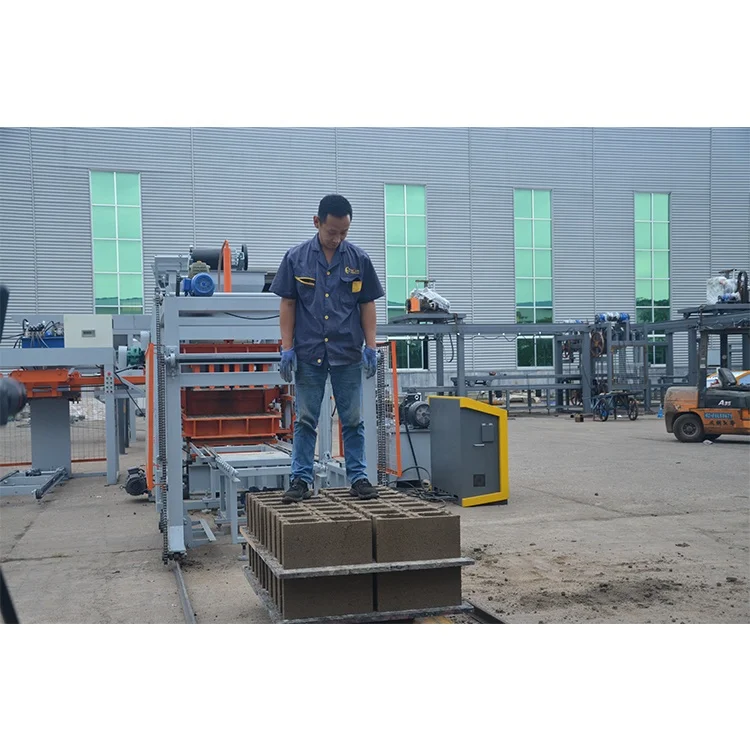
 High quality block machine