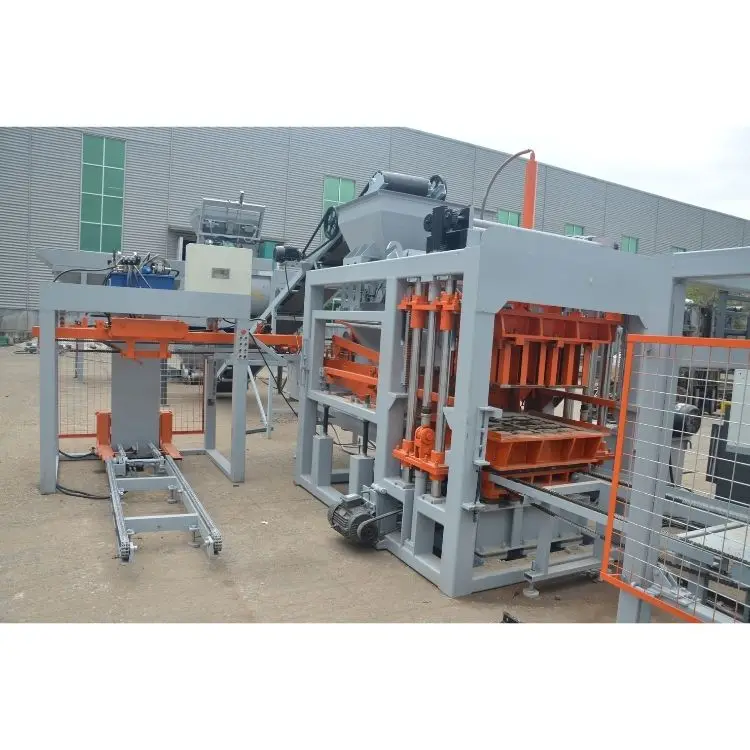
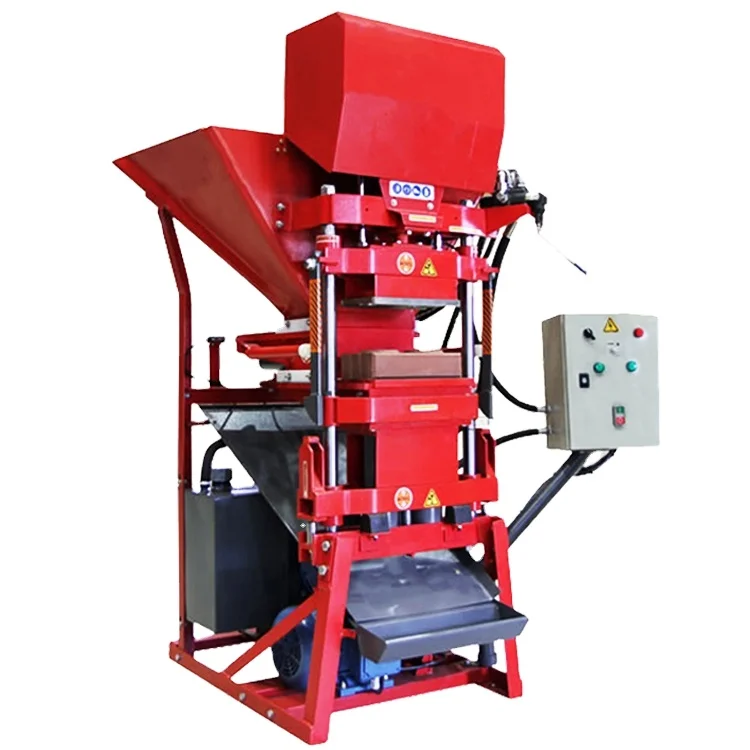
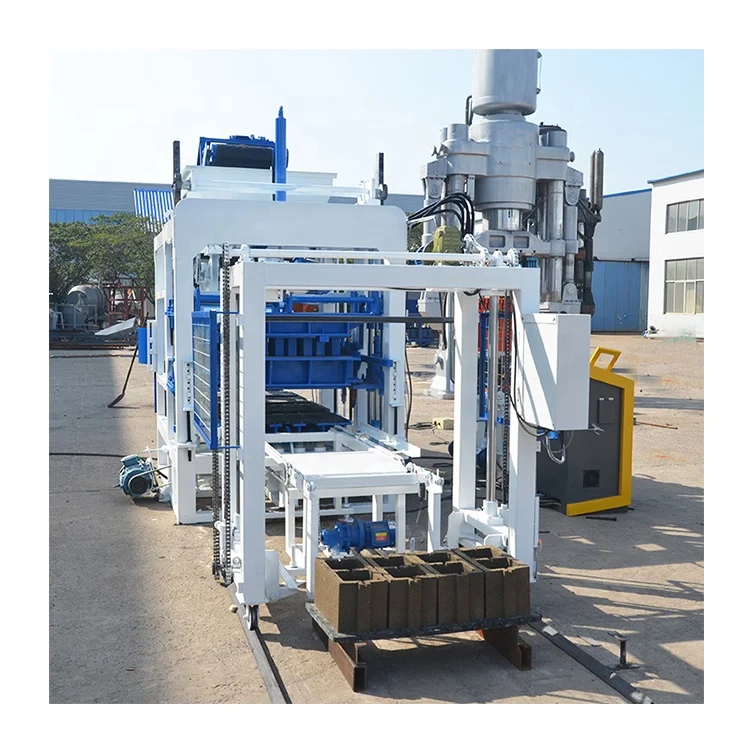
Mid-Range Automation Baseline — The QT5-15 sits at the midpoint of our automatic block machine ladder, giving new and replacement buyers a realistic starting point before scaling up or down the range.
Technical Specifications
| Parameter |
Value |
| Model |
QT5-15 |
| Product Type |
Concrete Interlocking Bricks Making Machine |
| Overall Dimensions (L×W×H) |
7400×1950×2800 mm |
| Total Mass |
5000 kg |
| Pallet Size |
1100×550 mm |
| Vibration Frequency |
0-60 Hz (adjustable) |
| Vibration Form |
Platform Vibration |
| Vibration Force |
80 kN |
| Moulding Mode |
Automatic loading with vibration moulding |
| Demolding Method |
Hydraulic |
| Molding Cycle |
15-20 s |
| Overall Power |
32 kW |
| Hydraulic System |
Independent integrated hydraulic station |
| Control System |
PLC with touch screen interface |
| Automation Level |
Automatic (pallet feeding, material feeding, vibrating, demoulding) |
| Fly Ash Tolerance |
Up to 70% in mix |
| Compressive Strength of Blocks |
>15 MPa |
| Output Capacity |
900-1200 pcs/h (based on 400×200×200 mm hollow block) |
| Output Capacity |
1080-1440 pcs/h (based on 400×150×200 mm hollow block) |
| Output Capacity |
5760-7680 pcs/h (based on 240×115×53 mm solid brick) |
| Output Capacity |
3600-4500 pcs/h (based on 200×100×60 mm rectangular paver) |
| Output Capacity |
2304-2880 pcs/h (based on 225×112.5×60 mm zigzag paver) |
| Recommended Factory Area |
1000 m² |
| Voltage & Frequency |
Configurable to buyer’s local grid (confirm before production) |
| Control Language |
Configurable (confirm target language) |
Application Suitability
| Application |
Material or Output |
| Hollow block production |
Cement, sand, crushed stone and fly ash blends up to 70% fly ash content |
| Solid brick production |
Standard concrete mix for load-bearing and partition bricks |
| Interlocking brick production |
Dry-press mix designs for mortarless wall systems |
| Rectangular paver production |
High-density aggregate blends for pedestrian and light-traffic paving |
| Zigzag paver production |
Interlocking profile mixes requiring high compaction force |
What "1200 Pieces per Hour" Actually Means on This Machine
Capacity only matters when you know which block format it assumes.
Many quotations from automatic concrete block machine manufacturer sources list a single hourly number and leave the buyer to discover, after commissioning, that the figure was based on a large hollow block — while their market sells small pavers. On the QT5-15, the cycle time of 15-20 seconds stays consistent, but each mould change alters how many cavities fit on the 1100×550 mm pallet, so output varies across formats. We state every capacity figure against a named block size so you can size your line against the product you actually sell [NEED_CITE: block format capacity calculation methodology for concrete block machines].

Where the QT5-15 Sits in the Full Machine Range
The Shiyue lineup spans mobile egg-laying machines at the entry end, semi-automatic presses for smaller workshops, and high-capacity automatic lines for large plants. The QT5-15 occupies the mid-tier automatic slot, aimed at buyers who need consistent daily volume without the footprint and capital of a full high-capacity line. Its recommended 1000 m² factory area keeps site costs manageable while the automatic pallet feeding, vibration and hydraulic demoulding cycle remove the manual bottlenecks that limit semi-automatic output.
Understanding the Investment Tier and Plant Footprint
Choosing an automatic concrete block machine manufacturer is partly about matching investment level to realistic demand. The QT5-15 tier supports a dedicated block plant with curing racks, forklift handling and raw material storage, but does not require the extensive conveyor networks or cubing systems of larger lines. Buyers stepping up from a semi-automatic press will find the pallet handling and PLC control already automated, while those evaluating a first plant gain a clear baseline to compare against smaller or larger options before committing [NEED_CITE: plant layout planning for mid-tier concrete block production].
How Vibration Force and Hydraulic Pressure Shape Block Density
The 80 kN vibration force and adjustable 0-60 Hz frequency work together with the independent hydraulic station to compact the mix inside the mould cavity. Vibration loosens the aggregate so it flows into corners, while hydraulic pressure squeezes out air voids before the block sets. If the local aggregate is coarser than the factory test sample — volcanic ash instead of river sand, for instance — the frequency and pressure must be re-tuned or the block will emerge under-compacted and fail the >15 MPa target. The touch screen PLC lets the operator store multiple mix profiles so switching between recipes does not require a technician on-site.
When the Wrong Pallet Size Disrupts Your Entire Curing Area
Pallet dimensions might seem like a minor detail until the blocks arrive at the curing yard and the forklift cannot stack them because the pallets do not match the rack spacing. The QT5-15 runs 1100×550 mm pallets, and this size should be checked against the curing racks, forklift fork width and storage area the buyer already has. Mismatched pallets mean either re-racking by hand or replacing an entire curing system — a cost that never appears in the machine quotation [NEED_CITE: pallet handling compatibility in concrete block curing operations].
The Cost of Skipping the Voltage and Language Conversation
I once watched a block machine sit idle for weeks at an overseas site because the control panel was wired for a voltage the local grid could not supply, and the PLC display text was in a language the operators could not read. These are not engineering failures — they are ordering failures. The QT5-15 electrical system is configurable, but the target voltage, frequency and control language must be confirmed before the machine enters production, not after it arrives in the container.
Why Buyers Choose This Tier from Our Range
- Block machinery is our single focus, so the QT5-15 press, moulds, pallets and handling equipment are specified as one matched system rather than sourced from separate vendors.
- Machine configuration is set against your actual mix design, local aggregate and target block format, not pulled from a catalogue default.
- Mould design covers the formats your market sells, with custom drawings available when standard cavity layouts do not match local demand.
- The automation level is selectable within the range, so a buyer can start at this mid-tier and scale up as volume grows.
- Installation includes on-site commissioning and operator training so the first production run meets spec without weeks of trial and error.
Documentation & Verification
- Line layout and capacity calculation stating the block format assumed for every output figure.
- Machine specification sheet with voltage, frequency and PLC language confirmed before production starts.
- Mould drawing and format list showing cavity count per pallet for each block type.
- Pallet specification matched to your curing rack dimensions and forklift capacity.
- Factory test record and packing photographs provided before the machine is loaded for shipment.
Installation, Commissioning & Support
- 32 kW overall power requires a dedicated circuit with voltage and frequency confirmed before wiring.
- 7400×1950 mm footprint and 5000 kg mass need a level concrete foundation in a minimum 1000 m² building.
- PLC touch screen interface configured in the buyer’s target language before commissioning begins.
- Hydraulic station pressure and vibration frequency tuned to the buyer’s local mix during the first production run.
- Quick mould change system demonstrated on-site so operators can switch formats within a shift.
- Wear parts and mould list provided so replacements are available when the first change is due.
Before You Request a Quote
To narrow the configuration, share your target block formats, the daily volume you need per format, and the raw materials you source locally — especially the aggregate type and any industrial residues like fly ash or slag. Confirm your site’s voltage, frequency and the language you need on the PLC display. If you already have curing racks or forklifts, their dimensions help us match the pallet system.
Frequently Asked Questions
Q: How does the QT5-15 output tier compare with semi-automatic and higher-capacity automatic models?
A: The QT5-15 sits above semi-automatic presses that rely on manual pallet handling and below high-capacity lines with full stacking and cubing systems. It gives buyers consistent automatic cycling through PLC control while keeping the plant footprint and investment at a mid-range level, making it suitable for first-time plants or replacement purchases where volume does not yet justify a larger line.
Q: What plant footprint and factory area should I plan for at this tier?
A: The QT5-15 recommends a minimum 1000 m² factory area to accommodate the press, raw material storage, pallet circulation and curing rack zones. This footprint allows forklift movement around the curing racks and space for block stacking after demoulding. Buyers with smaller plots should check whether a semi-automatic or mobile tier fits their site constraints.
Q: Which block formats are realistic on this machine and how is capacity verified?
A: The QT5-15 produces hollow blocks, solid bricks, interlocking bricks, rectangular pavers and zigzag pavers. Each format has a stated output tied to a specific block dimension — for example, 900-1200 pieces per hour based on a 400×200×200 mm hollow block. Capacity is verified against your chosen format during the factory test before shipment.
Q: What investment level does this tier represent versus stepping up to a larger automatic line?
A: The QT5-15 tier covers the press, PLC automation and hydraulic demoulding without the additional cost of full automatic stacking and cubing systems. Buyers who need higher throughput or want to reduce manual handling further can step up to a larger model within the same range, where pallet circulation, curing rack handling and output cubing are integrated into one line.
Q: Can I start with the QT5-15 and upgrade automation or capacity later?
A: The Shiyue range is designed so buyers can begin at one tier and move to a higher automation level or larger press as demand grows. Mould formats and pallet sizes carry across models where dimensions align, and the PLC control architecture supports additional automation stations being added when the production line expands.

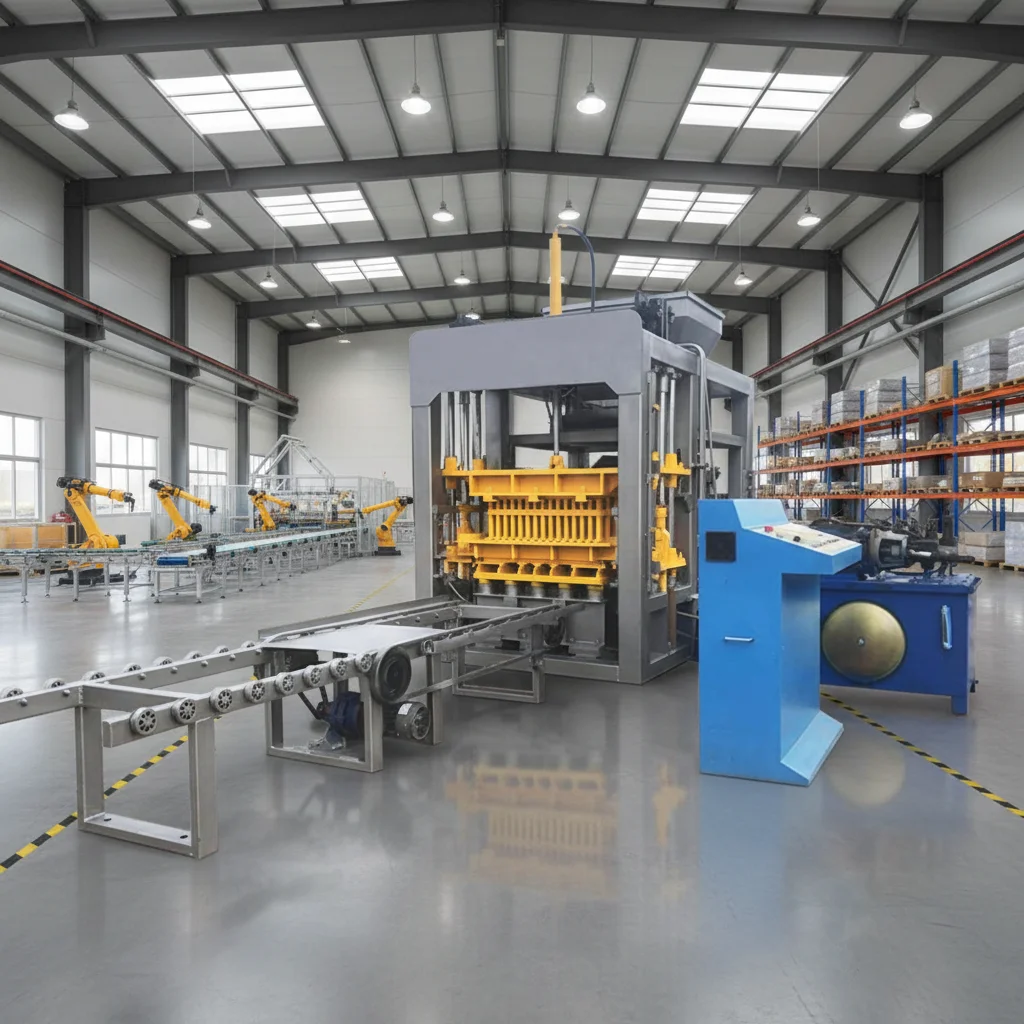
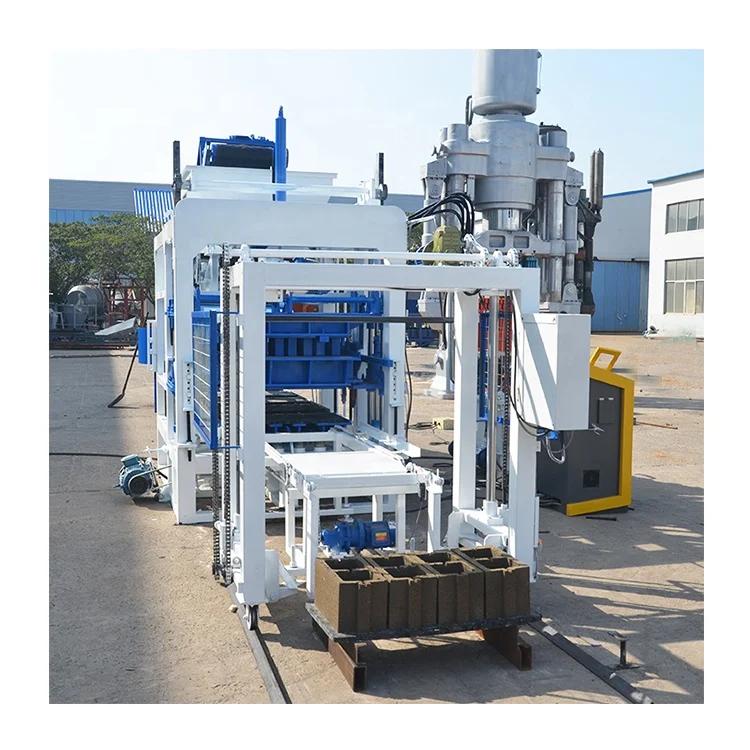 Automatic block machine