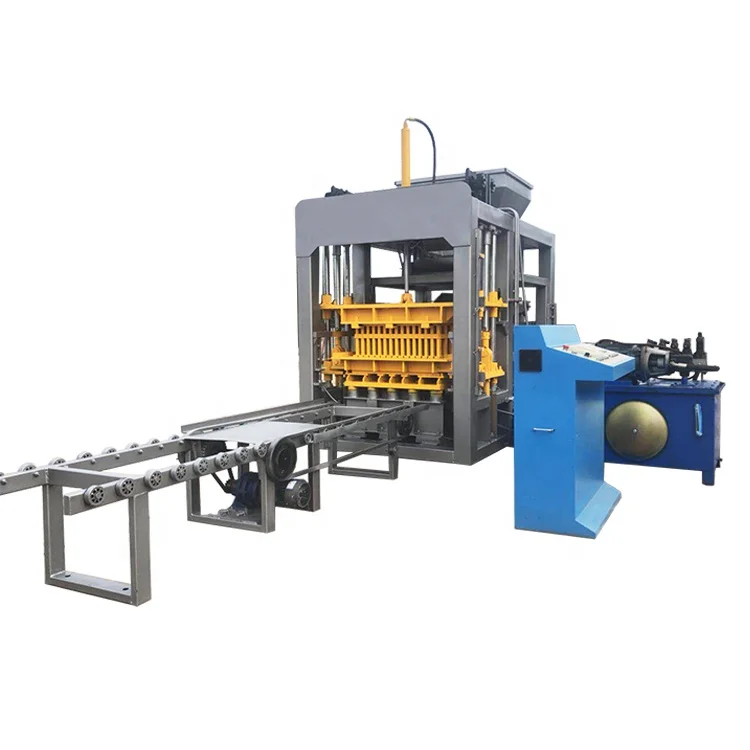
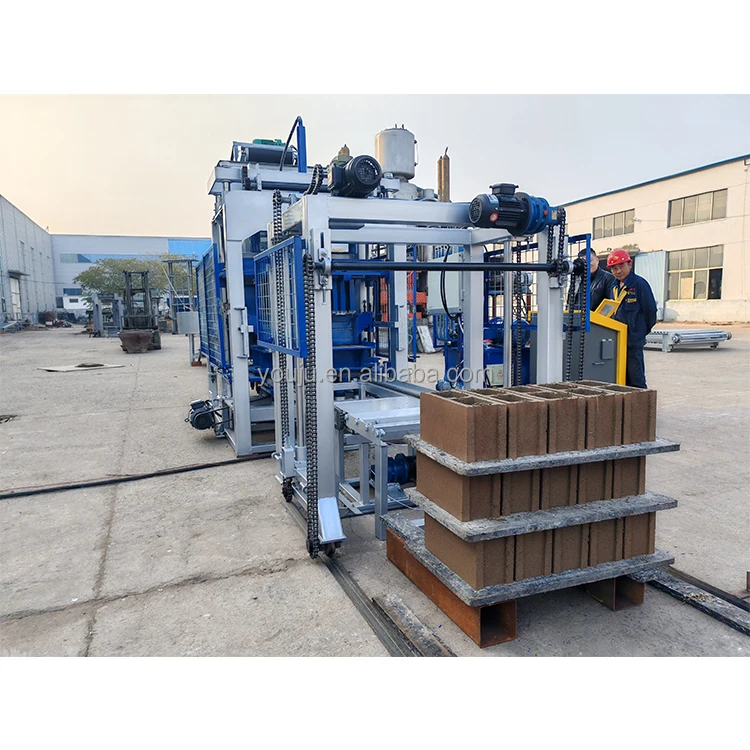
QT4-18 Stationary Block Machine – Full Range
Matched System Sizing — every QT4-18 proposal is configured around the buyer’s actual block format, local aggregate, and curing layout rather than a generic catalogue default.
Technical Specifications
| Parameter |
Value |
| Model |
QT4-18 |
| Product Type |
Semi-Automatic Concrete Block Making Machine |
| Overall Dimensions (L×W×H) |
3900 × 1600 × 2300 mm |
| Net Weight |
3 T |
| Vibration Force |
40–50 kN |
| Molding Cycle |
15–25 s (basis to be confirmed per block format and material) |
| Rated Power |
24 kW |
| Mixer Model |
JQ350 |
| Pallet Size |
850 × 550 × 25 mm |
| Applied Products |
Hollow block, solid brick, paver, curbstone |
| Raw Materials |
Crushed stone, sand, cement, dust, fly ash |
| Output: 400×200×200 mm Hollow Block |
1200–1680 pcs/hr, 9600–13440 pcs/8hr (basis not stated in source) |
| Output: 400×150×200 mm Hollow Block |
1800–2400 pcs/hr, 14400–19200 pcs/8hr (basis not stated in source) |
| Output: 240×115×53 mm Solid Brick |
3240 pcs/hr, 16200–19440 pcs/8hr (basis not stated in source) |
Application Suitability
| Application |
Material or Output |
| Hollow block production for building walls |
Crushed stone, sand, and cement blends; fly ash mixes |
| Solid brick manufacturing for load-bearing structures |
High-density aggregate with cement binder |
| Paver production for walkways and yards |
Fine sand and cement with colored pigment options |
| Curbstone forming for road and site edging |
Coarse aggregate with higher cement content for impact resistance |
| On-site block production for housing projects |
Locally sourced sand and crushed stone |
What "1200 Blocks per Hour" Leaves Out About the Semi-Automatic Concrete Block Making Machine QT4-18 for Sale
Capacity figures only matter when the block format and mix design behind them are stated openly.
I once watched a buyer in the Middle East receive a machine whose quoted output assumed clean, graded aggregate — but the local sand carried high clay content. The molding cycle stretched far beyond the catalogue number, and daily production fell short of what the project schedule depended on. The fix required an on-site visit to adjust vibration timing and material feed, not a machine swap. That is why every capacity line in the table above carries a note about its basis, and why a confirmed trial with your actual raw material should always come before the final configuration is locked in [NEED_CITE: aggregate testing requirements for concrete block production].
Where the QT4-18 Sits in the Full Machine Range
The semi-automatic concrete block making machine QT4-18 for sale occupies the entry tier of the SHIYUE stationary lineup. It is positioned for buyers who need a manageable investment level and a compact plant footprint while still covering multiple block formats. The host machine accepts moulds for hollow blocks, solid bricks, pavers, and kerbstones, giving a first-time plant owner the format flexibility to test local market demand before committing to dedicated machines for each product.
Planning the Line Around the Press, Not Just the Press Itself
A block press does not produce alone — it depends on material arriving on time, pallets cycling without delay, and cured product moving off the line so the next round can begin. The QT4-18 works within a semi-automatic layout where pallet handling and stacking still involve operator input, which keeps the initial investment contained but demands a curing area and forklift route that match the 850 × 550 mm pallet size. When any station in this chain falls out of sync, the press sits idle and the quoted cycle time becomes irrelevant [NEED_CITE: block plant line balancing principles].

Reading the Numbers That Actually Shape Daily Output
Vibration force rated at 40–50 kN works together with hydraulic pressure to compact the mix into a dense, consistent block. If either force is too low for the aggregate being used, the block leaves the mould with weak edges or variable weight. The 850 × 550 × 25 mm pallet dimension was chosen to align with standard curing rack widths and common forklift tine spacing in small-to-mid-size plants, so the buyer does not need to invest in custom handling equipment. A molding cycle of 15–25 seconds spans the range from lighter solid bricks to larger hollow blocks, with the exact figure depending on mix workability and the target strength. The 24 kW rated power covers the press, vibration, and the JQ350 mixer together, which matters when sizing the site’s electrical supply.
The Cost of Skipping Configuration Details
When a buyer orders on catalogue numbers alone, the machine may arrive configured for a mix that local suppliers cannot provide, forcing a material change that disrupts the first months of production. Moulds may not match the block sizes the local market actually buys, leaving the operator spending a full shift on changeover instead of producing. Pallets sized without regard to the curing area layout end up stacked by hand, adding labor and slowing the cycle [NEED_CITE: common commissioning delays in block plant startups].
Why Buyers Source This Tier Here
The QT4-18 is specified as part of a matched system — machine, mould, pallet, and handling are selected together so no station becomes a bottleneck. Configuration is set against the buyer’s actual mix design and target block format, not pulled from a default list. Mould design covers the formats the buyer’s market demands, with custom drawings available when standard options do not fit. The automation level is selectable, meaning a buyer can begin at semi-automatic and add pallet feeding or stacking automation later without replacing the host machine. Installation support includes on-site commissioning and operator training so the first production run meets strength and dimension targets.
Documentation & Verification
- Line layout and capacity calculation stating the exact block format assumed for each output figure
- Machine specification sheet with voltage, frequency, and control language confirmed before production
- Mould drawing and format list matched to the buyer’s local market demand
- Hydraulic and electrical schematic for site preparation and maintenance reference
- Factory test record and packing photographs provided before shipment
Installation, Commissioning & Support
- Foundation pad sized to the 3900 × 1600 mm footprint with leveling provisions for consistent vibration transfer
- Electrical supply matched to confirmed voltage and frequency, with a dedicated circuit for the 24 kW rated load
- Machine arrives partially dismantled for container loading; reassembly supervised during commissioning
- First-run parameter setting covers vibration timing, feed duration, and pressure for the buyer’s confirmed mix
- Operator training on mould change procedure, daily lubrication points, and pallet handling sequence
- Wear parts list and mould maintenance schedule provided with recommended replacement intervals
Before You Send the Inquiry
To size the QT4-18 correctly, share the block formats your market actually sells, the daily output you need per format, and the raw materials available locally — including any test results on aggregate grading or clay content. Confirm the voltage and frequency at your site, the control language your operators will use, and the curing area dimensions you have planned so the pallet system can be matched from the start.
Frequently Asked Questions
Q: How is output capacity verified and what block format does each figure assume?
A: Each capacity line in the specification table is tied to a specific block dimension, and figures without a confirmed basis are marked accordingly. Before the order is finalized, a capacity calculation sheet is provided showing the assumed format, cycle time, and pallet arrangement so the buyer can project daily output against their own shift schedule and mix design.
Q: Where does the QT4-18 sit in the full machine range?
A: It occupies the semi-automatic entry tier of the SHIYUE stationary lineup. Buyers who need higher daily volume or reduced labor can step up to fully automatic tiers with automatic pallet feeding and stacking, but the host machine concept remains consistent, making future upgrades practical without starting from zero.
Q: What voltage, frequency, and control language options are available?
A: Voltage and frequency are confirmed during the proposal stage to match the buyer’s local supply standard. Control display language is agreed before production begins so operators can read settings and fault messages on arrival, avoiding commissioning delays caused by miscommunication [NEED_CITE: voltage and frequency standards by export market].
Q: What plant footprint and supporting equipment does this tier require?
A: The press itself occupies roughly 3900 × 1600 mm, but the working line also needs space for the JQ350 mixer, raw material feed, pallet return path, and a curing area sized for the 850 × 550 mm pallets. A forklift compatible with that pallet dimension is assumed for moving cured product to the yard.

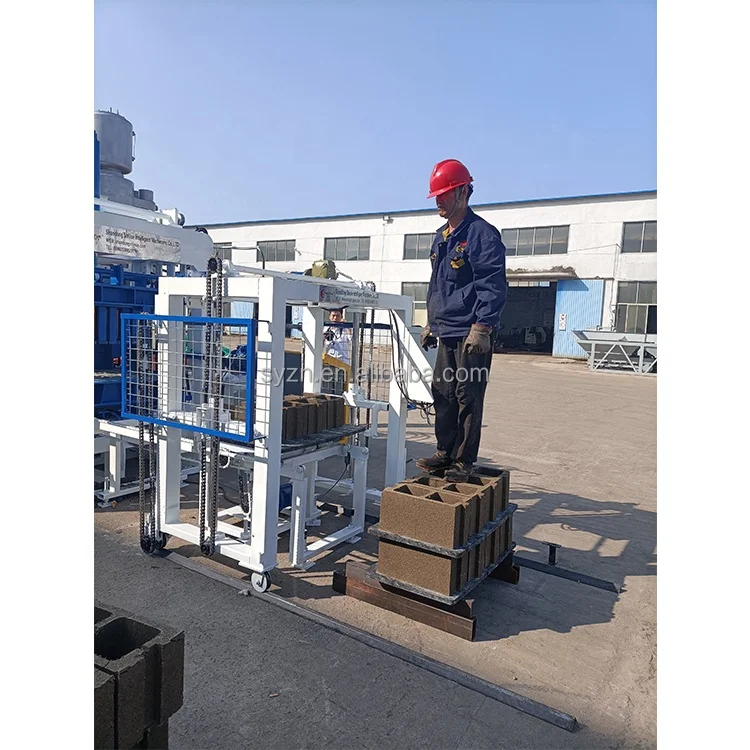
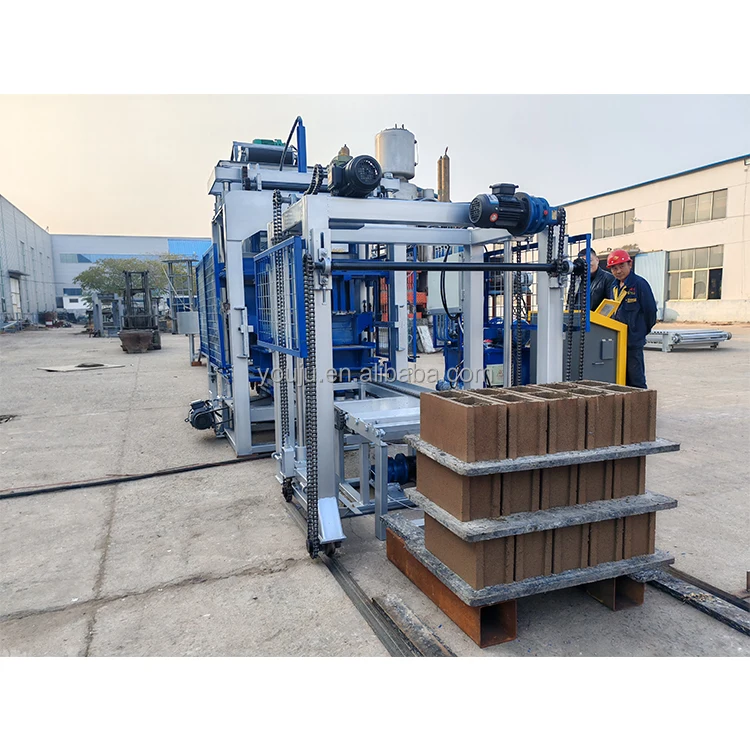 Stationary block machine