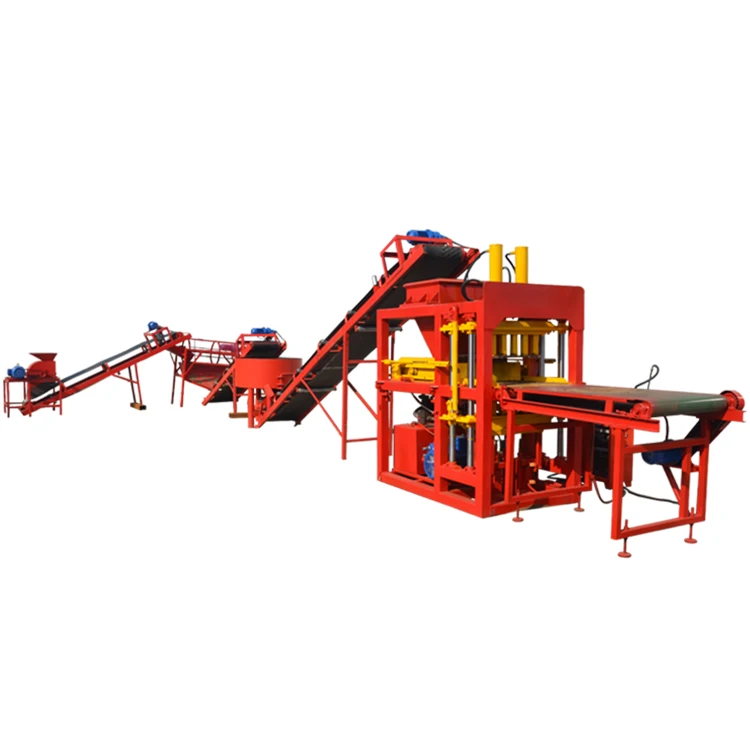
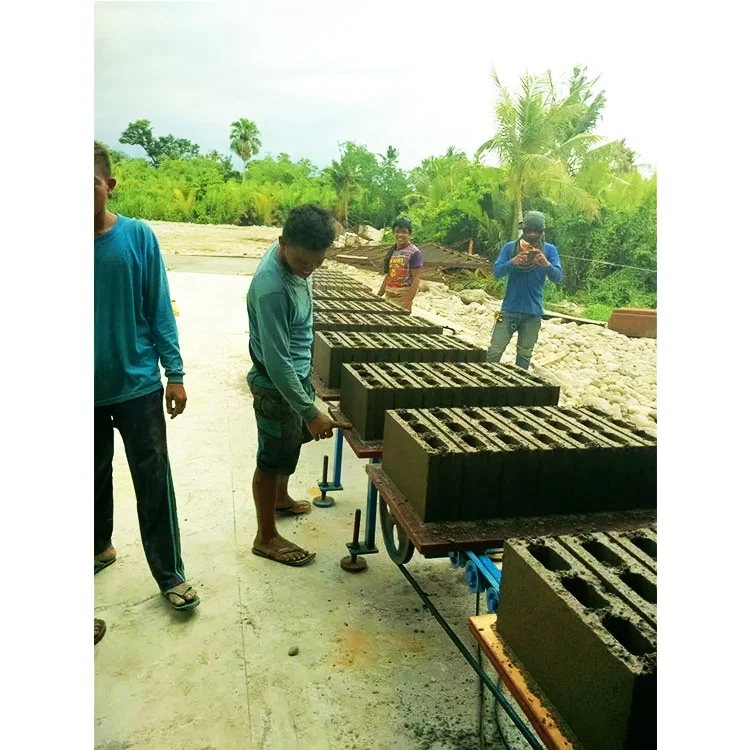
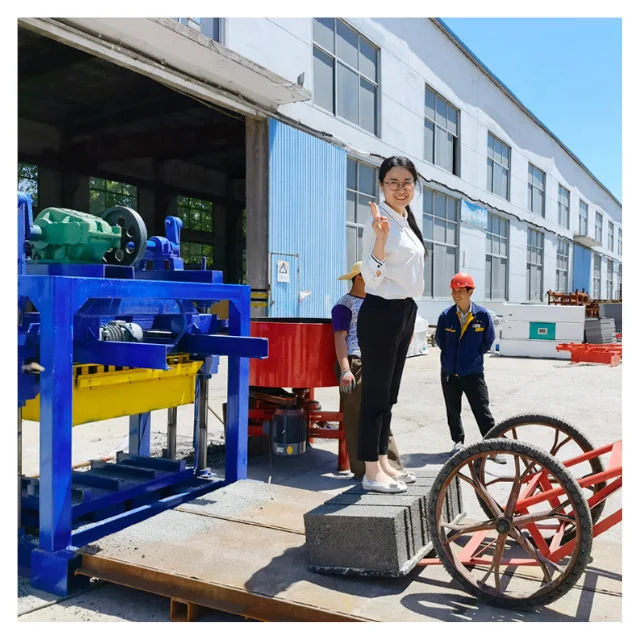
Matched system specification — the QT4-18 hollow brick making machine for sale is configured as a complete press, mould, pallet and handling package rather than a standalone unit, so cycle times and downstream curing match the actual block format you produce.
Technical Specifications
| Parameter |
Value |
| Model |
QT4-18 |
| Product Type |
Automatic Hollow Brick Making Machine |
| Vibration Mode |
Multiaxis synchronizer vibration (vertically downward) |
| Guide Bearing |
Long-period over-length guide bearing |
| Mixer System |
Multiaxis forced mixer |
| Hydraulic System |
High thermal efficiency, low heat generation |
| Control System |
Fully automatic computer controlled |
| Rack Construction |
High strength steel with special welding technique |
| Automation Level |
Fully automatic |
| Primary Mould Format |
Hollow brick |
| Output Capacity |
basis not stated in source (confirm block format / material / thickness) |
| Cycle Time |
basis not stated in source (confirm block format / material / thickness) |
| Pallet Size |
basis not stated in source |
| Vibration Force |
basis not stated in source |
| Hydraulic Pressure |
basis not stated in source |
| Overall Dimensions |
basis not stated in source |
| Net Weight |
basis not stated in source |
| Rated Power |
basis not stated in source |
| Voltage & Frequency |
basis not stated in source |
Application Suitability
| Application |
Material or Output |
| Hollow brick production plants |
Crushed stone, sand, cement and fly ash mixes |
| On-site block manufacturing for construction contractors |
Local aggregate with variable clay content |
| Building material distributors expanding format range |
Standard and custom hollow block dimensions |
| First plant setup by entrepreneurs |
Mid-tier automatic hollow brick output |
What "Cycles per Hour" Leaves Out When Sizing a QT4-18 Hollow Brick Making Machine for Sale
Daily output only becomes real when the block format, mix design and local aggregate are stated alongside the cycle time.
I once watched a buyer in Latin America receive a mid-tier automatic machine rated for a certain number of cycles per hour, only to discover that their local aggregate carried a high clay content that forced the vibration cycle to stretch significantly. Daily production dropped well below the brochure figure because the capacity calculation had assumed a clean, well-graded sand that simply was not available in their region [NEED_CITE: impact of local aggregate properties on block machine cycle time]. That gap between quoted capacity and real output is the single most common disappointment I encounter on the route, and it is entirely preventable when the QT4-18 hollow brick making machine for sale is specified against the buyer’s actual material.

Where the QT4-18 Sits on the Full Shiyue Range
The Shiyue block machine lineup spans mobile egg-laying units at one end and high-capacity automatic lines at the other. The QT4-18 occupies the mid-tier automatic position, aimed at buyers who have outgrown semi-automatic or mobile machines and need fully computer-controlled production with consistent block density. It serves as an entry point into the automatic range for entrepreneurs, and as a dedicated hollow brick line for manufacturers who already run a separate solid or paving block press. Investment level and plant footprint scale accordingly — the QT4-18 does not demand the curing yard and pallet inventory of the highest-tier models, making it a practical fit where space and capital are still being managed carefully.
Automation Level and the Upgrade Path
Fully automatic computer control on the QT4-18 means the operator sets parameters and monitors the run; the system handles the press cycle, vibration sequence and hydraulic pressure without manual intervention at each stroke. This removes the batch-to-batch inconsistency that comes from different operators adjusting timing by feel [NEED_CITE: operator variance in semi-automatic block production]. For a buyer transitioning from semi-automatic equipment, the immediate gain is labour reduction at the press station. The automation level is also selectable within the broader Shiyue range, so a buyer can start with the QT4-18 in its standard configuration and later integrate automatic stacking and cubing as production volume justifies the additional handling stations.
Reading the Core Parameters Beyond the Brochure
The multiaxis synchronizer vibration mode directs force vertically downward, which is critical for hollow brick walls where uneven compaction shows up as weak corners and breakage during demoulding. The long-period over-length guide bearing maintains precise alignment between the upper mould and mould box across thousands of cycles — when this clearance drifts, wall thickness varies and block rejection rates climb. The high strength steel rack with special welding technique is built to absorb the vibration shock without fatigue cracking, a failure mode I have seen on lighter frames after sustained production runs. The multiaxis forced mixer adapts to different raw material properties, which matters when your aggregate source changes seasonally or when you need to incorporate fly ash at varying percentages. Together, these parameters determine whether the QT4-18 delivers the block density your market requires, not just the cycle count on a specification sheet.
The Cost of Skipping Configuration Details
When voltage, frequency and PLC display language are not confirmed before the QT4-18 ships, commissioning stalls the day the container arrives. I have seen machines sit idle for weeks because the control panel displayed in a language the local operator could not read, or because the electrical cabinet was wired for a frequency the site did not supply [NEED_CITE: voltage and frequency standards by export market]. The pallet size chosen without checking the curing area dimensions and the forklift the buyer already owns leads to a secondary problem — pallets that do not stack in the available yard space or cannot be moved by existing equipment. These are not engineering failures; they are specification failures, and every one of them is avoidable if the questions are asked before production begins.
Why Source the QT4-18 Through This Line
Block machinery is the single manufacturing focus here, which means the QT4-18 press, its moulds, pallets and handling equipment are specified as one matched system rather than assembled from unrelated suppliers. Configuration is set against your actual mix design and local aggregate, not pulled from a catalogue default — so the capacity calculation you receive states the hollow brick format assumed. Mould design covers the block dimensions your market actually sells, with custom mould options available from buyer drawings. Automation level is selectable, so the machine can start at its current tier and absorb additional handling stations as your operation grows. Installation support includes operator training on the specific controls and parameters of your line.
Documentation & Verification
- Line layout and capacity calculation stating the exact hollow brick format assumed for QT4-18 output
- Machine specification sheet confirming voltage, frequency and PLC display language before production
- Mould drawing and format list showing configured block dimensions and custom mould availability
- Hydraulic and electrical schematic for on-site maintenance team reference
- Factory test record demonstrating cycle time and block strength against your specified mix design
Installation, Commissioning & Support
- Foundation plan matched to the QT4-18 rack weight and vibration load for stable long-term operation
- Electrical supply confirmation covering voltage and frequency before the control cabinet is wired
- Factory test witnessed against your mix design before dismantling and container loading
- On-site commissioning with parameter tuning to your local aggregate and block density target
- Operator training on the QT4-18 computer control system covering cycle adjustment and fault response
- Mould and hydraulic wear parts list supplied with recommended replacement intervals
Before You Request a Quotation
To size the QT4-18 hollow brick making machine for sale accurately, share the hollow brick dimensions you need to produce, your daily output target, and a description of the local aggregate and cement available in your area. Confirm the voltage and frequency at your site, the preferred PLC display language, and the pallet size that matches your existing curing yard and forklifts. If you already operate a block line, note the upstream mixing equipment and downstream handling so the QT4-18 can be integrated without bottlenecking adjacent stations.
Frequently Asked Questions
Q: How is the QT4-18 daily output calculated and which hollow brick format is assumed?
A: Output is calculated per specific hollow brick dimension, wall thickness and mix design rather than quoted as a single cycles-per-hour figure. Before quotation, we confirm the exact block format you intend to produce and provide a capacity calculation based on that format, your local aggregate properties and the resulting cycle time. This ensures the daily production figure matches what you will actually achieve on your shop floor.
Q: Where does the QT4-18 sit compared to semi-automatic and higher-tier automatic models?
A: The QT4-18 occupies the mid-tier position in the Shiyue automatic range. It offers fully computer-controlled operation above the semi-automatic tier, with lower investment and a smaller plant footprint than the highest-capacity lines. It suits buyers moving up from manual or semi-automatic production who need consistent hollow brick output without the curing yard and pallet inventory that a top-tier automatic line demands.
Q: What voltage, frequency and PLC language options are confirmed before the QT4-18 ships?
A: Voltage, frequency and PLC display language are confirmed during the specification stage before production begins. The control cabinet is wired to match your site electrical supply, and the operator interface is set to the language your team reads. This step prevents commissioning delays when the machine arrives, and is documented on the machine specification sheet you receive before shipment.
Q: Can the QT4-18 be upgraded later to include automatic stacking and cubing?
A: Yes. The automation level within the Shiyue range is selectable, and the QT4-18 can start in its standard fully automatic press configuration and later accept automatic pallet feeding, stacking and cubing stations as your production volume grows. The upgrade path is planned at the initial specification stage so the press layout leaves space for the additional handling equipment.
Q: What plant footprint and curing area does a QT4-18 line require?
A: Footprint depends on the pallet size, pallet circulation method and whether stacking is manual or automatic at this stage. We provide a line layout showing press station, mixer position and pallet flow before order confirmation. Pallet size is selected to match your existing curing yard dimensions and forklift capacity so that cured blocks can be moved without purchasing new handling equipment.

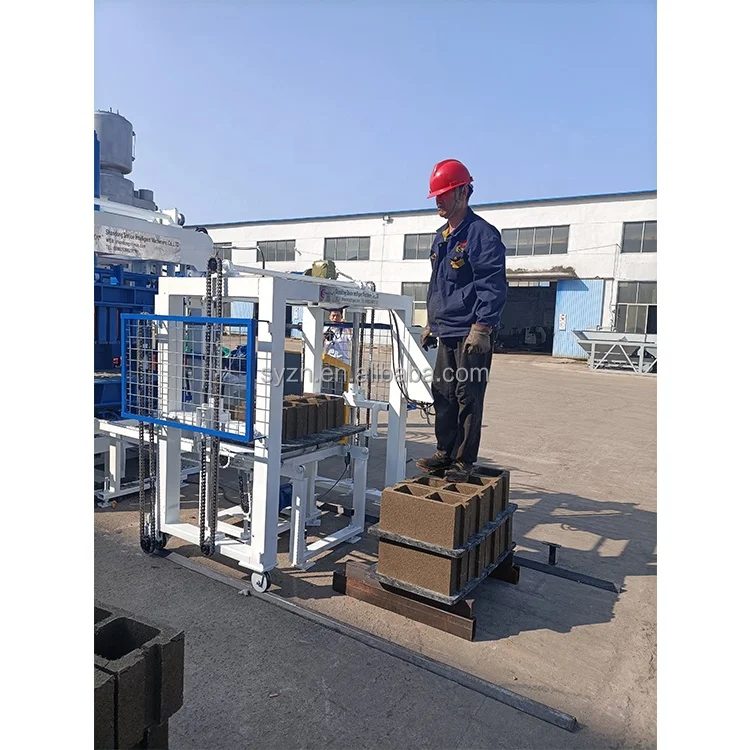
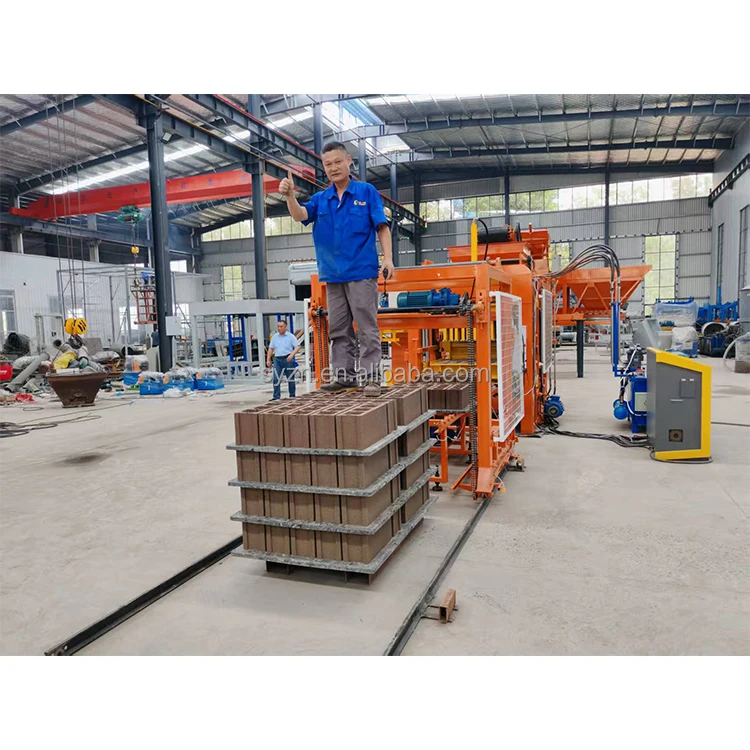 High quality block machine