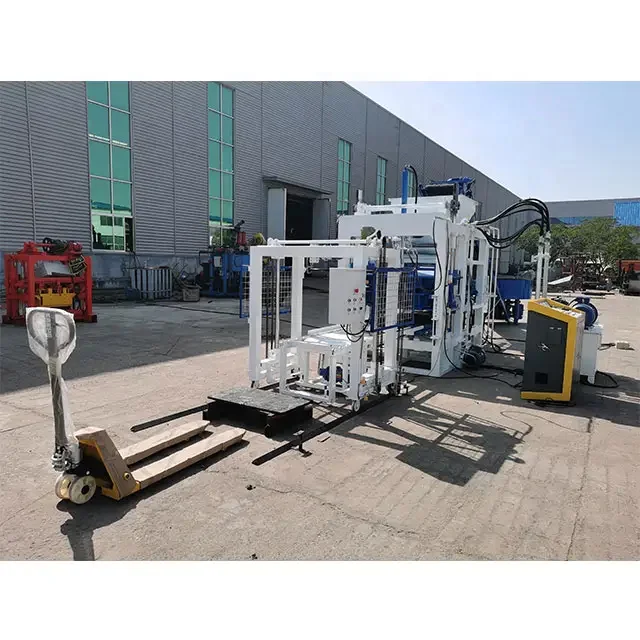
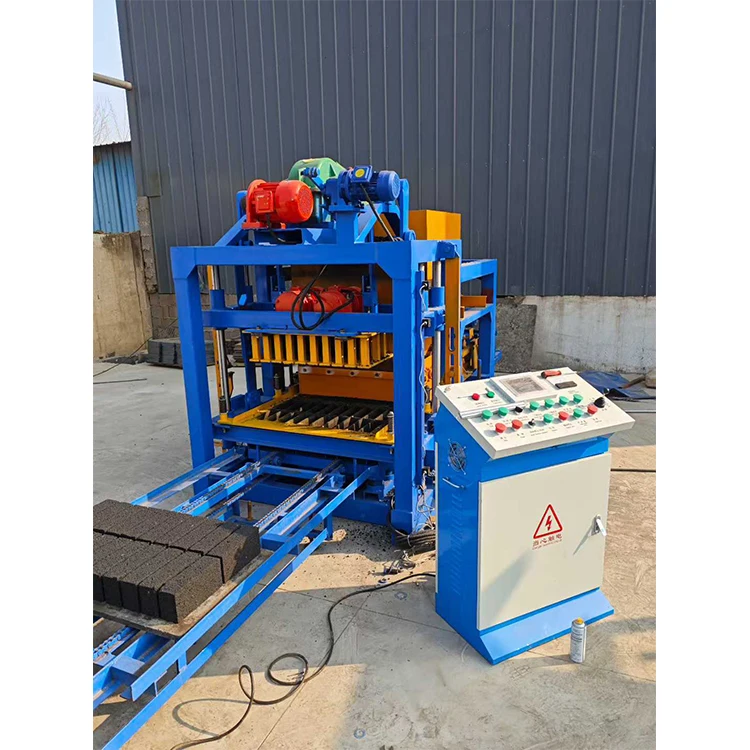
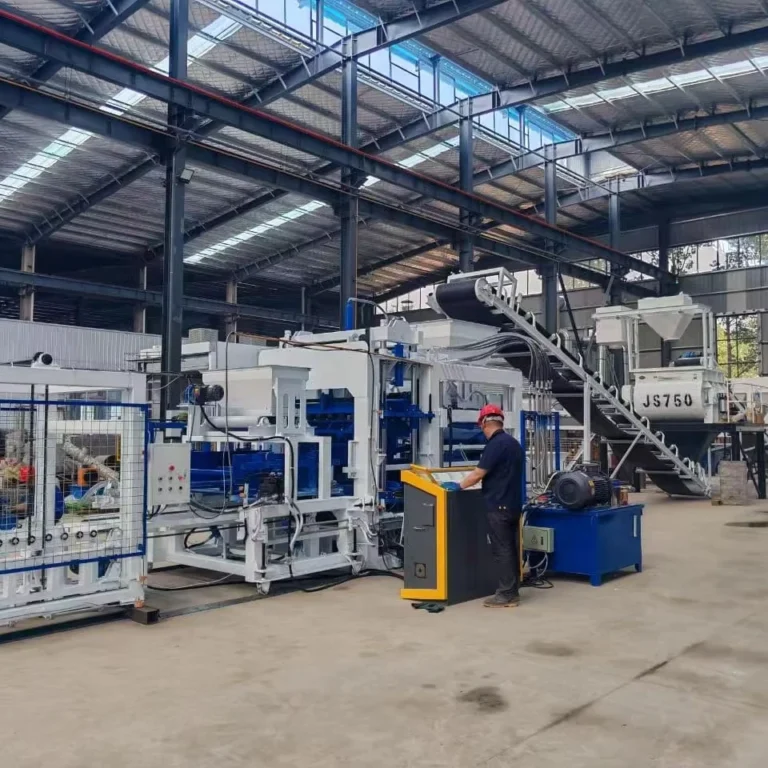
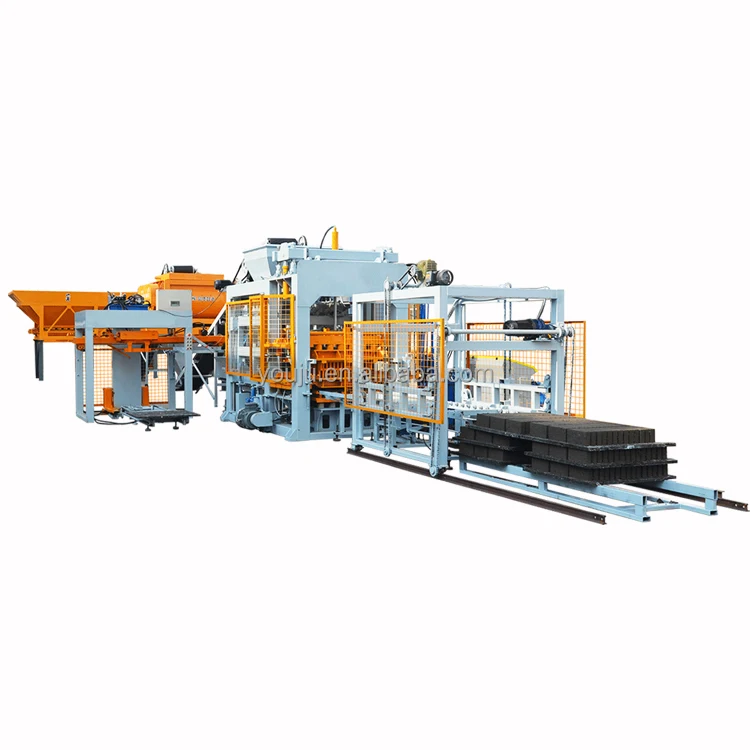
Matched System Specification — QT4-18 block machine, pallet, and handling equipment configured together against your target format rather than sourced separately.
Technical Specifications
| Parameter |
Value |
| Model |
QT4-18 |
| Product Type |
Automatic Concrete Block Making Machine |
| Overall Dimensions (L×W×H) |
2500×1750×2200mm |
| Rated Pressure |
16MPa |
| Vibration Form |
Platform Vibration |
| Pallet Size |
950×550mm |
| Molding Cycle |
18-25s (basis to be confirmed per block format) |
| Overall Power |
27.5kW |
| Control System |
PLC with frequency converter |
| Electrical Components |
Schneider brand |
| Mold Lifting Mechanism |
Double-sided sync gears |
| Material Feeding System |
Distribution belt hopper |
| Automation Level |
Automatic, single-operator PLC control |
Application Suitability
| Application |
Material or Output |
| Hollow block production |
Crushed stone, sand, cement, fly ash aggregates |
| Solid block production |
Dense concrete mix with local gravel or sand |
| Paving block production |
High-strength face mix with fine aggregate surface layer |
| Contractor on-site manufacturing |
Project-specific volumes using site-available raw materials |
| Small to medium plant output |
Daily runs scaled to pallet circulation and curing area |
What the "18-25 Second Cycle" Actually Means for Your Output
A cycle time only matters when you know which block format it was measured on.
Quoting an Automatic Block Machine manufacturer on cycles per hour without naming the block format is how buyers end up with half the daily volume they expected. A hollow block with large voids fills and compacts faster than a dense solid block or an interlocking paver that requires a face-mix layer. When I first started quoting machines from the factory floor, I used to pass along the cycle number from the test bench. One buyer in North Africa set up his entire curing yard and shift schedule around a number that was only true for a specific hollow block we ran during factory testing. His actual product took noticeably longer per cycle, and his daily output reflected that gap. [NEED_CITE: block format impact on cycle time and daily capacity]
Where the QT4-18 Sits in the Full Machine Range
The QT4-18 occupies the mid-tier position in our automatic block machine lineup. Below it, semi-automatic machines require manual pallet handling and stacking, keeping investment lower but demanding more labor on the production floor. Above it, high-capacity automatic lines add full cubing systems, automatic curing rack handling, and higher vibration force ratings for faster cycles on demanding formats. This model bridges that gap: it delivers PLC-controlled single-operator capability with a 950×550mm pallet that supports a practical range of block sizes, without the footprint and capital outlay of a full high-volume plant.
Matching the Tier to Your Project Timeline
For contractors producing blocks on-site, the QT4-18 tier offers enough daily volume to keep a masonry crew supplied without committing to a permanent production facility. For first-time plant owners, it provides the automation baseline—PLC control with frequency converter, automatic material feeding via distribution belt hopper—that can later integrate with stackers and block grippers as production scales. The decision between this tier and the next one up comes down to whether your target daily output and curing area can absorb the higher press speed, or whether the bottleneck will simply move downstream to pallet circulation. [NEED_CITE: matching block machine tier to plant layout and curing capacity]
Reading the Specs That Shape Daily Production
The 16MPa rated pressure combined with platform vibration determines how densely the concrete pack into the mold cavity. Higher pressure with matched vibration produces blocks that reach handling strength faster, reducing breakage during pallet transfer to the curing area. The 950×550mm pallet size dictates which block formats fit per cycle—a standard 400×200×200mm hollow block fits in a specific cavity count on this pallet, while smaller formats like interlocking pavers multiply the pieces per cycle. The double-sided sync gears on the mold lifting mechanism keep the mold box level during extraction, which matters most when producing thin-walled hollow blocks where uneven withdrawal causes edge damage. The 27.5kW overall power draw signals the electrical supply you need to confirm before the machine leaves the factory, particularly if your site runs on generator power rather than grid supply.

The Cost of Skipping the Raw Material Conversation
Configuring vibration force and pressure settings for a standard sand-and-gravel mix, then shipping the machine to a site using fine desert sand or high-clay aggregate, produces blocks that crumble at the edges or fail to reach target strength. The buyer assumes the press is underperforming; in reality, the settings were never matched to what actually goes into the hopper. Mould wear accelerates when the aggregate profile differs from what the cavity surfaces were specified for, and replacement parts arrive too late to prevent a production shutdown. [NEED_CITE: aggregate variation effect on block machine mold wear and block strength]
Why Buyers Source This Tier Here
Block machinery is our single focus, so the QT4-18 press, its 950×550mm pallets, and the supporting JQ500 mixer and 8-meter belt conveyor are specified as one system rather than assembled from separate suppliers. We configure the machine against your actual mix design and target block format, not a catalogue default, which means the capacity calculation we provide names the specific block the cycle time was measured on. Mould design covers the formats your market actually buys, with custom drawings available when standard cavity layouts do not match. Automation starts at single-operator PLC control and can integrate pallet stacking and handling equipment as your plant grows, so the initial investment does not lock you into a fixed configuration. Electrical components are Schneider brand, and voltage, frequency, and PLC display language are confirmed before production begins.
Documentation & Verification
- Line layout with capacity calculation stating the block format assumed for the QT4-18 cycle time
- Machine specification sheet distinguishing press, pallet, and supporting equipment scope
- Voltage, frequency, and PLC display language confirmation document before production
- Factory test record on your target block format and mix design before dispatch
- Wear parts and mould list with part numbers for first reorder planning
Installation, Commissioning & Support
- Foundation pad leveled to QT4-18 overall dimensions of 2500×1750mm with anchor bolt provision
- Dedicated electrical circuit sized for 27.5kW overall power draw at confirmed voltage and frequency
- PLC display language and frequency converter parameters set during on-site commissioning
- Distribution belt hopper and 8m belt conveyor aligned and tensioned before first production run
- Mold lifting sync gears inspected and lubrication schedule established during operator training
- Extra molds and JQ500 mixer commissioning included when ordered as part of the line
What We Need to Configure Your Line
To position the QT4-18 correctly within your plant layout, share your primary block format and the daily volume your curing area can support. Confirm your local aggregate type—sand gradation, stone size, any fly ash or alternative materials in the mix—so we can match vibration and pressure settings before the machine is built. Provide your site voltage, frequency, and the language your operators need on the PLC display.
Frequently Asked Questions
Q: What block format does the 18-25s cycle time assume, and how does it change for hollow versus solid blocks?
A: The cycle range depends on the specific block format, cavity count on the 950×550mm pallet, and concrete mix behavior under vibration. Hollow blocks with large voids typically compact faster than dense solid blocks or face-mix pavers. We provide a capacity calculation that names the exact block format and its measured cycle time so your output projection is grounded in a real product, not a catalogue average.
Q: Where does the QT4-18 sit compared to semi-automatic and high-capacity tiers in floor space and investment?
A: This model sits between workshop-scale semi-automatic machines and full high-capacity automatic lines. It occupies a footprint based on its 2500×1750mm press dimensions plus supporting equipment space, with single-operator PLC control reducing labor compared to manual pallet handling. The investment difference versus the tier above comes from automation scope—stacking, cubing, and curing rack handling are additions you can plan for as production scales.
Q: Can I start with a basic QT4-18 configuration and add pallet handling and stacking later?
A: Yes. The PLC control with frequency converter provides the automation baseline, and supporting equipment like stackers, block grippers, and trolleys can be integrated as your plant volume grows. We design the line layout so that adding downstream handling does not require repositioning the press or replacing the control system, keeping the upgrade path open from the initial installation.
Q: Is the JQ500 mixer and 8m belt conveyor included in the QT4-18 line, or quoted separately?
A: These are supporting equipment items that can be included in the line quotation or sourced independently depending on what you already have on site. When included, the mixer capacity and belt conveyor length are matched to the QT4-18 cycle rate so the press is not left waiting for material. We clarify what is inside and outside the quotation scope before you commit.
Q: What voltage and PLC language options are available before shipment?
A: Voltage, frequency, and PLC display language are confirmed during the quotation stage, before production begins. Electrical components are Schneider brand, and the control system is configured to your site supply and operator language requirements. This confirmation step prevents commissioning delays when the machine arrives and ensures the frequency converter parameters match your local grid standards.

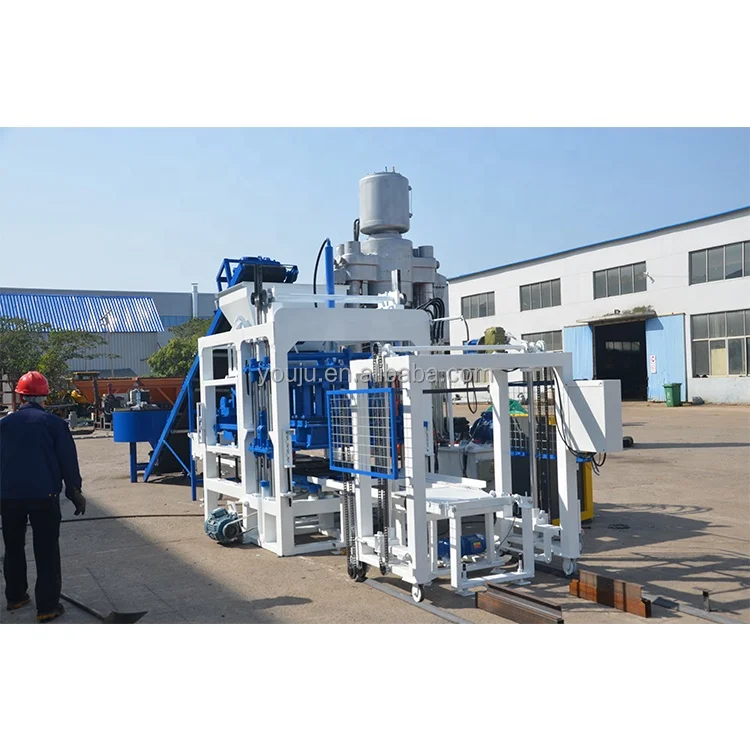
 Automatic block machine