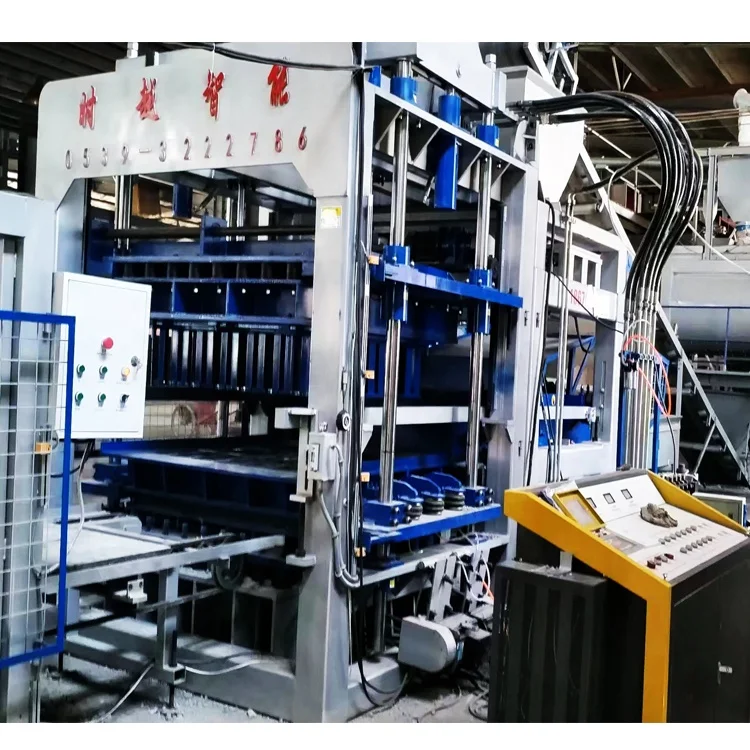
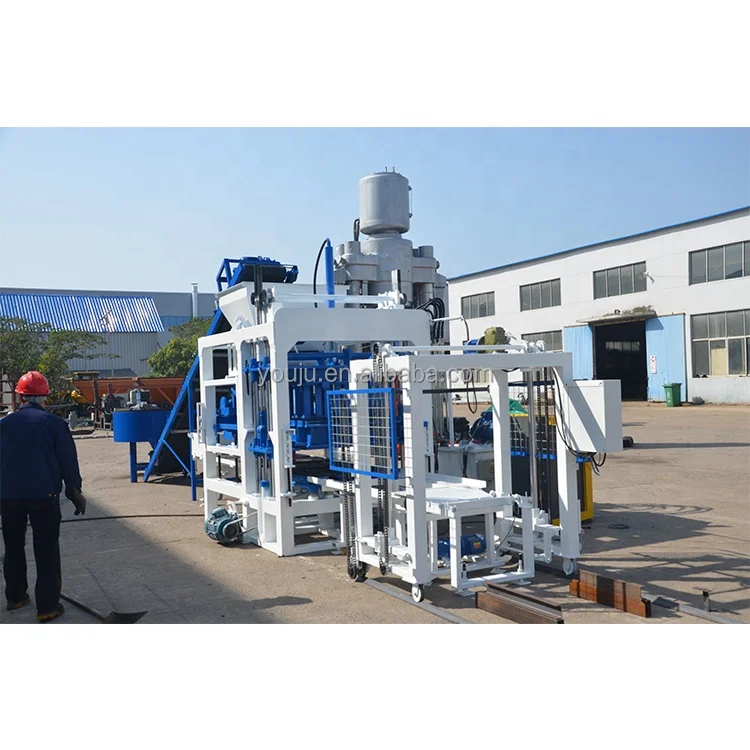
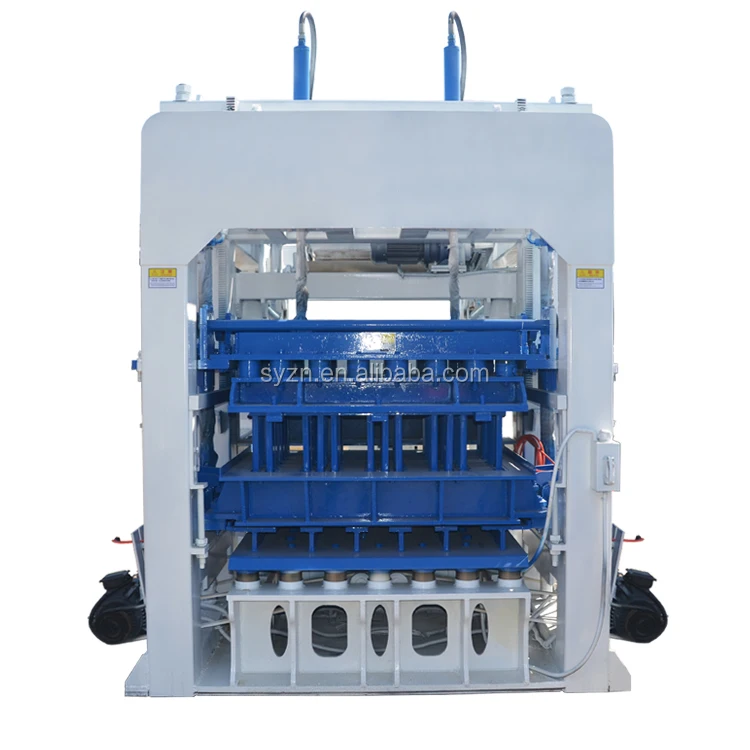
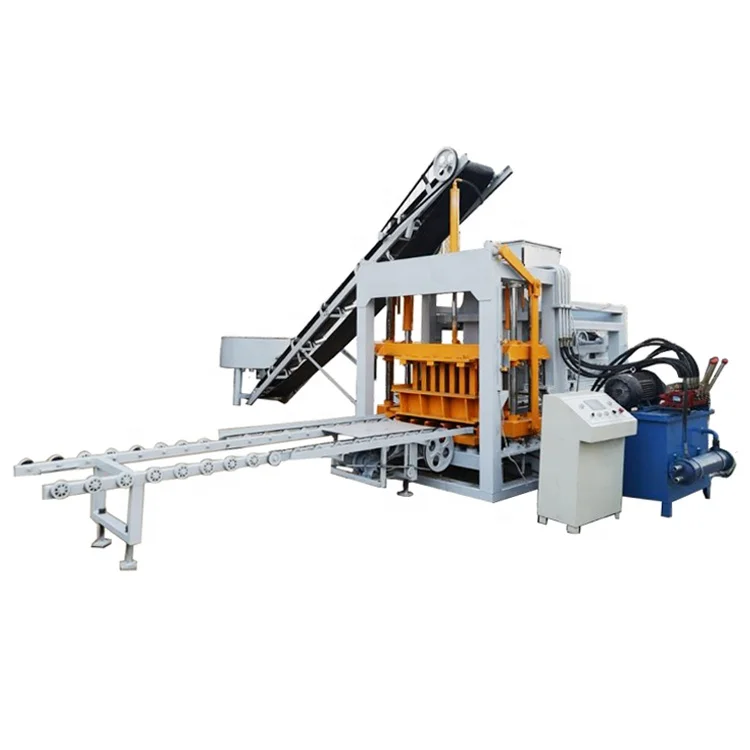
Matched System Specification — the QT4-18 is positioned as a complete block production unit where the press, pallet dimensions, and mould configuration are defined together, preventing the mismatch between machine capability and curing infrastructure that plagues standalone purchases.
Technical Specifications
| Parameter |
Value |
| Model |
QT4-18 |
| Product Type |
Automatic Concrete Block Making Machine |
| Overall Dimensions |
2500×1750×2200 mm |
| Rated Hydraulic Pressure |
16 MPa |
| Vibration Form |
Platform Vibration |
| Pallet Size |
950×550 mm |
| Molding Cycle |
18–25 s (basis not stated in source — confirm block format) |
| Total Installed Power |
27.5 kW |
| Control System |
PLC with frequency converter |
| Electrical Components |
Schneider brand |
| Mould Lifting Mechanism |
Double-sided synchronous gears |
| Material Feeding |
Distribution belt hopper |
| Automation Level |
Automatic (hydro-cylinder pallet feeder, automatic block conveyor) |
Application Suitability
| Application Scenario |
Typical Material & Output Context |
| Small-to-medium block plant startup |
Hollow and solid blocks from local river sand, crushed stone, and cement |
| On-site contractor production |
Masonry units for housing projects using locally sourced aggregate |
| Format expansion for existing producers |
Paving blocks and kerbstones added to current product range via mould change |
| Building material distributor demo |
Standard hollow block production for buyer demonstrations and training |
What the "18-Second Cycle" Claim Actually Means for Your Output
A cycle time without a stated block format is a number without context.
When an automatic block making machine for sale lists a molding cycle of 18–25 seconds, that range exists because different block geometries demand different vibration durations and pressure holds. A thin paving block may release at 18 seconds, while a tall hollow block with thin webs needs the full 25 seconds to achieve adequate green strength. I have watched machines ship overseas with a single cycle preset, only to find the buyer’s target format was the one that required the longer end of the range — cutting real daily output well below the figure quoted in the brochure [NEED_CITE: block format impact on cycle time and daily throughput]. The QT4-18’s PLC with frequency converter allows cycle parameters to be adjusted per mould, but the buyer must confirm which format drives their capacity calculation before the machine leaves the factory.

Where the QT4-18 Sits in the Full Machine Range
The QT4-18 occupies the entry-automatic tier, meaning it removes manual pallet handling from the operator’s workflow while keeping the overall line footprint compact. Buyers comparing this model against semi-automatic options will find the hydro-cylinder pallet feeder and automatic block conveyor eliminate two labor positions on the press side. For those surveying the complete range, this automatic block making machine for sale represents the threshold where PLC-controlled consistency begins to replace operator-dependent timing.
Matching the Pallet to Your Curing Infrastructure
The 950×550 mm pallet defines not just the block footprint per cycle but also the racking, forklift, and curing area dimensions downstream. A buyer whose existing curing racks are built for a different pallet size will face costly modifications or dual inventory. We specify pallet material — bamboo, PVC, or steel — against the buyer’s curing method and local humidity, because a pallet that warps in tropical conditions will jam the automatic feeder and halt the line [NEED_CITE: pallet material selection for block curing environments]. This is why the pallet discussion happens before the quotation, not after.
Reading the Specs That Actually Shape Your Daily Run
The 16 MPa rated hydraulic pressure, combined with platform vibration, determines the compaction density your mix can achieve — too little pressure on a coarse aggregate blend and blocks crumble at demoulding; too much on a fine sand mix and you waste cycle time. The double-sided synchronous gear mould lifting mechanism keeps the mould box level during extraction, which matters most on thin-web hollow blocks where uneven withdrawal causes cracking. The 27.5 kW total power draw signals the electrical supply requirement: a dedicated circuit with adequate breaker capacity, confirmed against local voltage and frequency before production begins. The distribution belt hopper feeds material across the mould cavity, and its consistency directly affects block weight uniformity from cycle to cycle. Schneider electrical components are specified so that replacement contactors and relays are sourceable in most export markets without waiting for a proprietary part to ship from the factory.
The Cost of Skipping the Configuration Conversation
When a buyer orders an automatic block machine without confirming the local aggregate gradation, the preset vibration profile may not compact their specific mix, resulting in blocks that fail strength tests or break during pallet transfer. Choosing a pallet size without checking the curing area forklift capacity means pallets pile up on the floor because the lift cannot handle the loaded rack weight. Omitting the stacking and handling equipment from the initial quotation leaves finished blocks stacked by hand, negating the labor savings the automatic tier was supposed to deliver [NEED_CITE: hidden costs of incomplete block line specification]. These mismatches do not show up in the factory test — they appear on the first week of production with local materials.
Why Source This Automatic Tier Here
Block machinery is our single focus, so the QT4-18 is specified as a matched system — press, mould, pallet, and conveyor — rather than assembled from unrelated suppliers. Configuration is set against your actual mix design and target block format, not pulled from a catalogue default. Mould design covers the formats your market sells, with custom drawings available for non-standard shapes. The automation level is selectable: a buyer can begin with the QT4-18’s automatic press and add stacking or cubing automation later as volume grows. Installation support includes operator training on the PLC interface, ensuring the team can adjust cycle parameters when switching moulds.
Documentation & Verification
- Line layout drawing showing QT4-18 footprint with pallet flow and conveyor routing
- Capacity calculation document stating the exact block format behind each output figure
- Mould drawing and format list with cycle time noted per block type
- Voltage, frequency, and PLC display language confirmation sheet signed before production
- Factory test record with photos of blocks produced during the pre-shipment run
Installation, Commissioning & Support
- Foundation plan sized to the 2500×1750 mm footprint with vibration isolation notes
- Electrical supply spec confirming 27.5 kW demand and circuit breaker rating at your local voltage
- Machine arrives dismantled for container loading; reassembly sequence documented with photographs
- First-run commissioning includes cycle tuning on your specific block format and mix
- Operator training covers PLC parameter adjustment, mould change procedure, and daily greasing points
- Wear parts list identifies hydraulic seals, vibration springs, and mould liner replacement intervals
Before You Request a Quote
To size the QT4-18 correctly, share your target block format with dimensions, the daily volume you need to hit, and the local aggregate type you plan to use. Confirm your site voltage and frequency, the language your operators need on the PLC screen, and the pallet size that fits your existing curing racks and forklift. If you are comparing this automatic tier against semi-automatic or mobile options, tell us your available floor space and labor headcount so we can map where each tier lands.
Frequently Asked Questions
Q: How do I confirm the QT4-18’s actual daily output for my block format?
A: We provide a capacity calculation document that states the assumed block format, cycle time, and operating hours behind every output figure. You share your target block dimensions and local mix, and we run a factory test on that format before shipment so the number is verified, not theoretical.
Q: Where does this model fit compared to semi-automatic and mobile machines?
A: The QT4-18 sits at the entry-automatic tier, adding PLC-controlled pallet feeding and block conveying while keeping the line footprint manageable. Semi-automatic models require manual pallet handling; mobile machines skip fixed foundations entirely but trade off cycle consistency and format range.
Q: What plant footprint and site conditions does the QT4-18 require?
A: The press itself measures 2500×1750×2200 mm, but the full line including mixer, belt conveyor, and curing rack area requires additional space. You need a level concrete foundation, a dedicated electrical circuit for the 27.5 kW load, and overhead clearance for mould changes and maintenance access.
Q: Can I start with the QT4-18 and add automation later?
A: Yes. The machine is delivered with automatic pallet feeding and block conveying, and stacking or cubing automation can be integrated afterward as your volume justifies the investment. The PLC architecture supports these additions without replacing the core control hardware.
Q: Which pallet material should I choose for my climate and curing setup?
A: Pallet material — bamboo, PVC, or steel — is selected based on your curing environment humidity, rack load capacity, and forklift rating. We confirm the 950×550 mm pallet spec against your existing infrastructure before production so there are no surprises at commissioning.

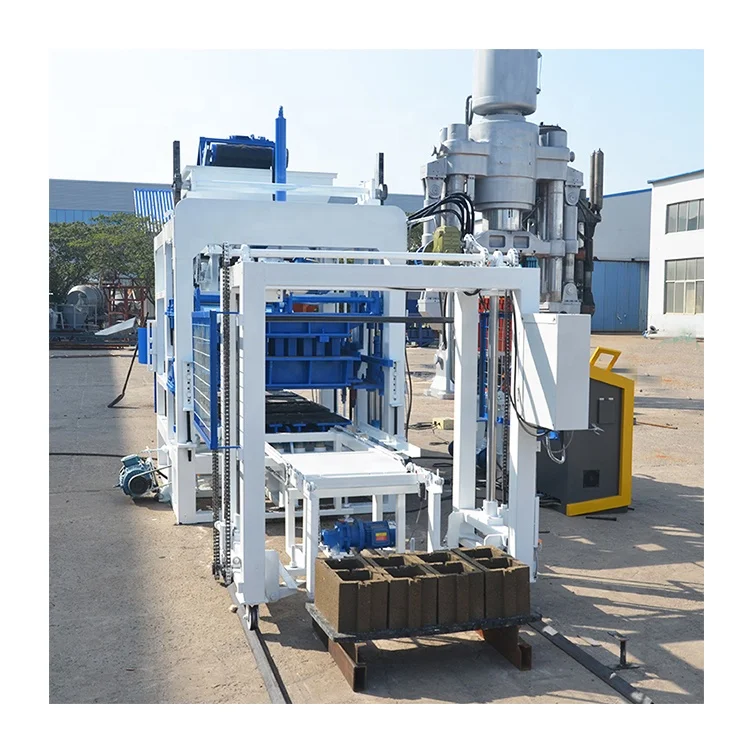
 Automatic block machine