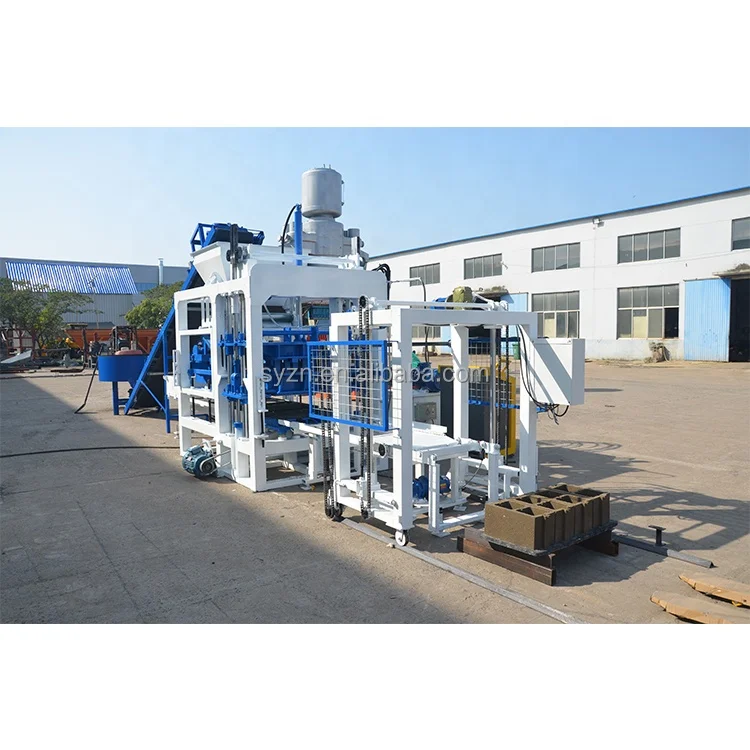
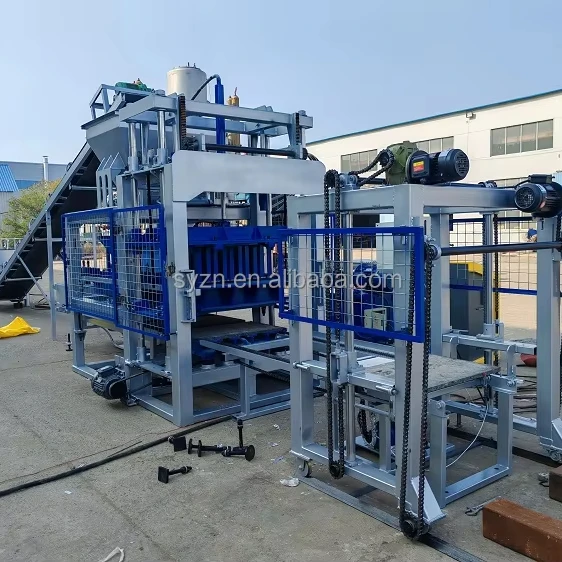
Complete system matching — we specify the QT4-15A hydraulic block making machine alongside its mould, pallet, and handling equipment as one coordinated line, preventing the output gaps that occur when components are sourced separately.
Technical Specifications
| Parameter |
Value |
| Model |
QT4-15A |
| Product Type |
Hydraulic Block Making Machine |
| Overall Dimensions (L×W×H) |
7100 x 1600 x 2610 mm |
| Total Weight |
3 T |
| Molding Cycle |
15-25 s |
| Vibration Frequency |
4600 r/min |
| Exciting Power (Vibration Force) |
40-50 KN |
| Total Power |
18.45 kW |
| Mixer Model |
JQ350 |
| Pallet Size |
850 x 550 x 25 mm |
| Control System |
PLC control system |
| Hydraulic Station |
High-pressure hydraulic station included |
| Applied Products |
Paver, solid block, hollow block, curbstone |
| Raw Materials |
Crushed stones, sand, cement, dust, fly ash |
| Output Capacity |
408 pcs/hr (basis: 400×200×200mm hollow block, 4 pcs/mould) |
| Output Capacity |
510 pcs/hr (basis: 400×150×200mm hollow block, 5 pcs/mould) |
| Output Capacity |
2100 pcs/hr (basis: 240×115×53mm solid brick, 18 pcs/mould) |
| Included Auxiliary Equipment |
Pallet feeder, brick conveyor, block sweeper, manual hydraulic trolley |
Application Suitability
| Application |
Material or Output |
| Hollow block production for masonry walls |
Crushed stone, sand, cement, fly ash |
| Solid brick manufacturing for load-bearing structures |
Cement, stone dust, sand blends |
| Paver and curbstone production for landscaping |
Aggregate, cement, pigment mixes |
| Mid-scale fixed block plants |
408 to 2100 pcs/hr depending on block format |
What "408 Pieces per Hour" Actually Means for Your Plant
Every output figure we quote is tied to a specific block size and mould cavity count.
Too many block machine quotations lead with a single capacity number, leaving buyers to discover later that the figure assumed a format their market does not buy. I have watched contractors in Southeast Asia receive machines rated at a certain cycle speed, only to find their actual hollow block format cut that throughput nearly in half. The QT4-15A Hydraulic Block Making Machine manufacturer specifications here list three distinct outputs, each anchored to a real mould configuration [NEED_CITE: block machine capacity calculation standards by format]. That way, your daily production plan starts from a number you can actually hit.

Where the QT4-15A Sits in the Full Machine Range
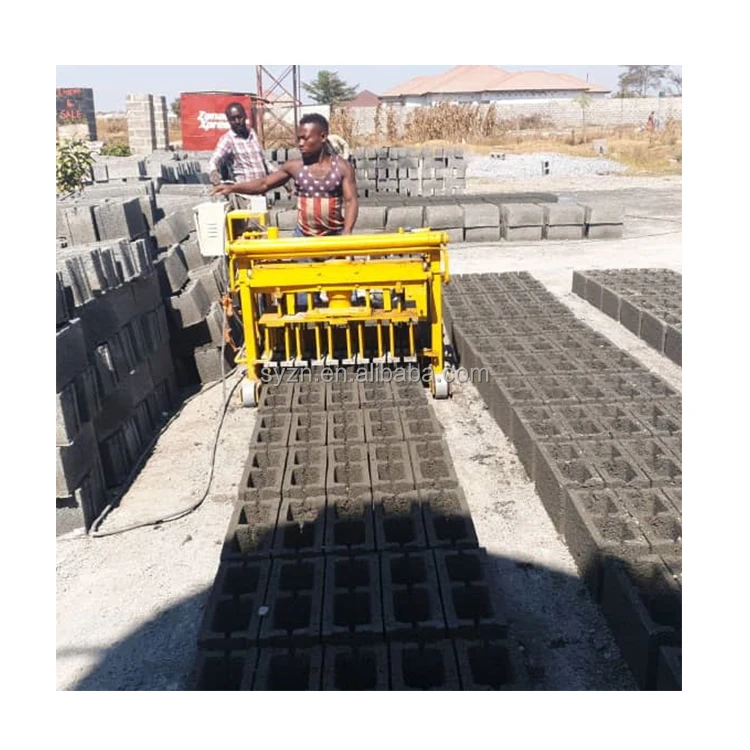
The QT4-15A occupies the mid-tier of our hydraulic block making machine lineup, positioned between entry-level semi-automatic presses and high-capacity fully automatic lines. For a first-time block plant entrepreneur, this tier provides a balanced entry point — enough automation to hold cycle consistency through the PLC system, yet moderate enough in footprint and investment to allow scaling later. Buyers who have outgrown mobile or egg-laying machines typically land here before deciding whether a higher tier justifies the additional conveyor and stacking infrastructure.
Choosing Between Semi-Automatic and Full Line Integration
At this tier, the QT4-15A ships with a pallet feeder, brick conveyor, and block sweeper as standard auxiliary equipment, covering the immediate press zone. What remains configurable is the degree of downstream automation — whether cured blocks move to stacking racks by manual hydraulic trolley or by automatic cubing systems. This is where buyers working to a project deadline often split: contractors needing blocks on-site within weeks may run the semi-automatic configuration, while plant owners planning long-term supply contracts invest in the full handling line from the start [NEED_CITE: automation level impact on block plant labour requirements].
How Vibration Force and Hydraulic Pressure Shape Block Density
The QT4-15A delivers vibration force between 40 and 50 KN at 4600 r/min, working simultaneously with the high-pressure hydraulic station. In block making, vibration alone settles the mix into the mould cavity, but hydraulic pressure determines the final compaction and green strength. If the pressure is too low for a given aggregate — laterite in tropical regions, for instance — blocks crack within days of demoulding and moulds wear prematurely. The 850×550×25mm pallet size further governs how much mix volume each cycle processes, so pallet, vibration, and pressure must be read as one system rather than separate line items.
The Cost of Skipping the Voltage Conversation
Confirming voltage, frequency, and PLC display language after the machine enters production delays commissioning and risks motor damage. A 380V/50Hz hydraulic station running on a 440V/60Hz supply without a verified transformer setup will overheat within the first shift. Buyers who leave this detail until the container arrives often face weeks of idle time while replacement electrical components ship [NEED_CITE: voltage and frequency standards by export market]. We treat electrical confirmation as a production gate, not a post-sale detail.
Why Source the Full Range Through One Supplier
Block machinery is our single focus, so the QT4-15A press, its moulds, pallets, and handling equipment are specified as one matched system. Configuration is set against the buyer’s actual mix design and local aggregate rather than a catalogue default. Mould design covers the formats the buyer’s market sells, including custom drawings to buyer specifications. Automation level remains selectable, allowing a buyer to start semi-automatic and add stacking or cubing later. Installation support extends through operator training and ongoing mould and wear parts supply.
Documentation & Verification
- Line layout and capacity calculation stating the block format assumed for each QT4-15A output figure
- Machine specification sheet confirming hydraulic pressure rating, vibration force, and pallet size
- Mould drawing and format list showing every block type producible on the 850×550mm pallet
- Voltage, frequency, and PLC display language confirmation recorded before production begins
- Factory test record on the buyer’s target block format before dispatch
- Packing photographs and customs documentation support for the specific shipment configuration
Installation, Commissioning & Support
- Foundation plan sized to the 7100×1600mm footprint and 3 T operating weight of the QT4-15A
- Dedicated electrical circuit rated for 18.45 kW total power with confirmed voltage and frequency
- Machine dismantling state for container loading and reassembly sequence documented on arrival
- PLC control system parameter setting and cycle time adjustment during first-run commissioning
- Operator training covering mould change procedure and hydraulic station maintenance intervals
- Wear parts and mould replacement list provided with recommended stocking quantities
What to Include in Your Inquiry
To match the QT4-15A to your project, provide the target block format and daily output you need to hit, the raw materials available locally including aggregate type and cement grade, and your site’s voltage and frequency. If you already have curing racks or forklifts, share the pallet dimensions they accept so the 850×550×25mm pallet can be confirmed or adjusted before the machine enters production.
Frequently Asked Questions
Q: Where does the QT4-15A sit in the full machine range, and when should I step up to a higher tier?
A: The QT4-15A is our mid-tier hydraulic press, suited to medium-scale plants and contractors who need consistent hollow block and paver output without the investment of a fully automatic line. Step up when your daily volume target exceeds what a 15-25 second cycle on your primary format can deliver, or when downstream stacking labour becomes the bottleneck.
Q: How is output capacity calculated per block format, and what can I realistically plan for?
A: Each output figure is tied to a specific block size and mould cavity count — for example, 408 pieces per hour based on a 400×200×200mm hollow block with four cavities per mould. Daily throughput depends on your shift length, curing time, and pallet circulation. We provide a capacity calculation for your exact format in the proposal.
Q: What automation level does the QT4-15A ship with, and can I upgrade later?
A: The QT4-15A ships with a PLC control system, pallet feeder, brick conveyor, and block sweeper. Downstream stacking and cubing can be added as the plant scales. The hydraulic station and control architecture are specified to accommodate future automation additions without replacing the press itself.
Q: How do I confirm voltage, frequency, and PLC language before production?
A: Electrical and control specifications are confirmed during the proposal stage and locked before the machine enters production. We document voltage, frequency, and PLC display language in the specification sheet so the machine arrives ready for your site’s power supply and operator language.

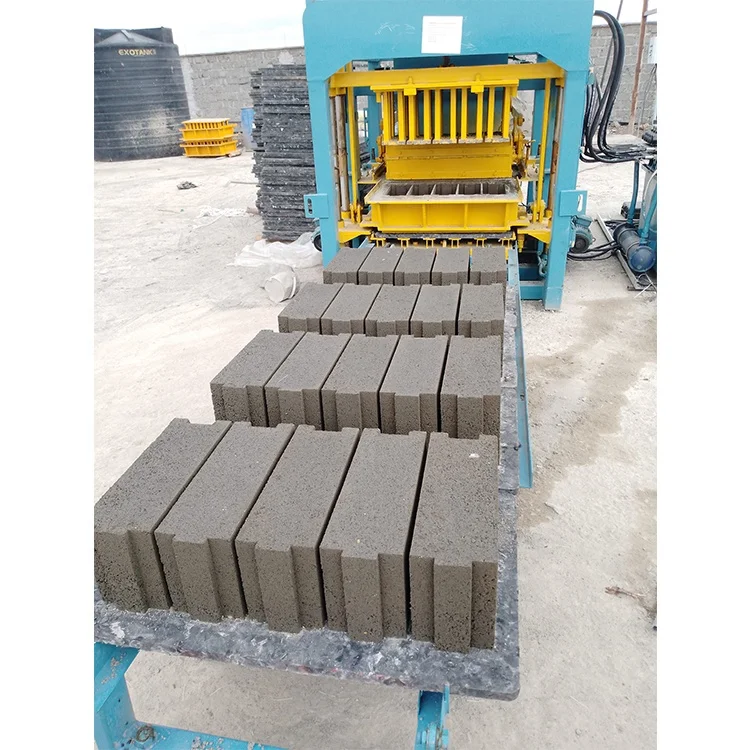
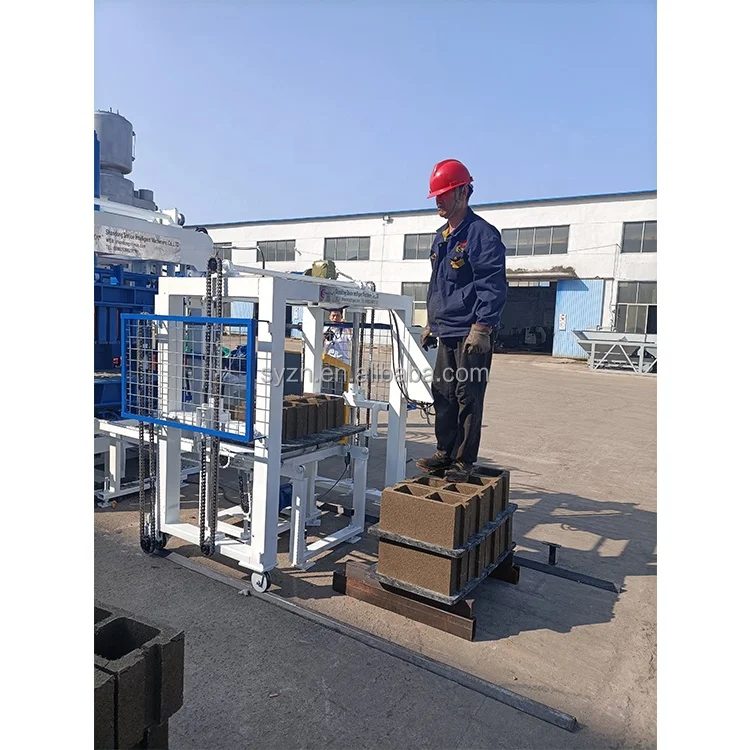 High quality block machine