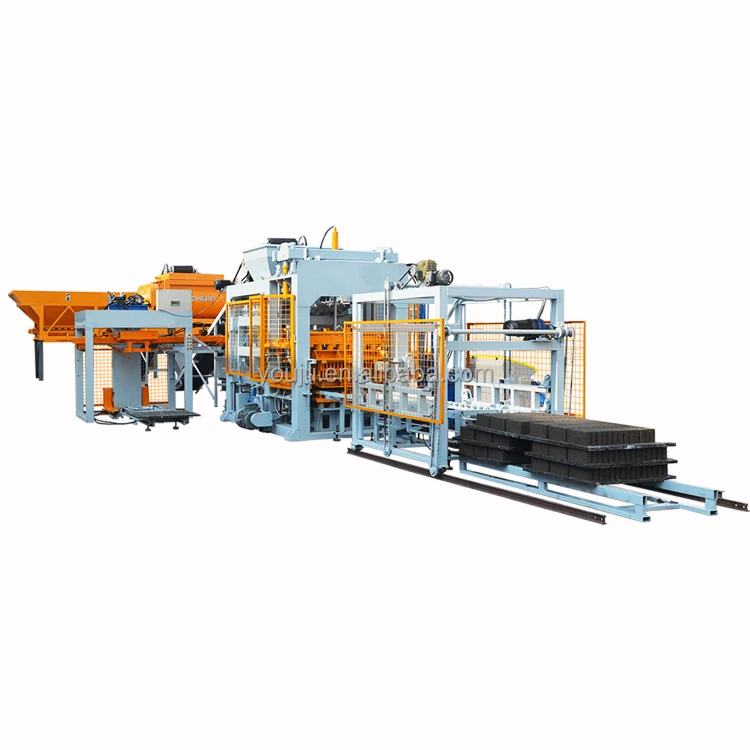
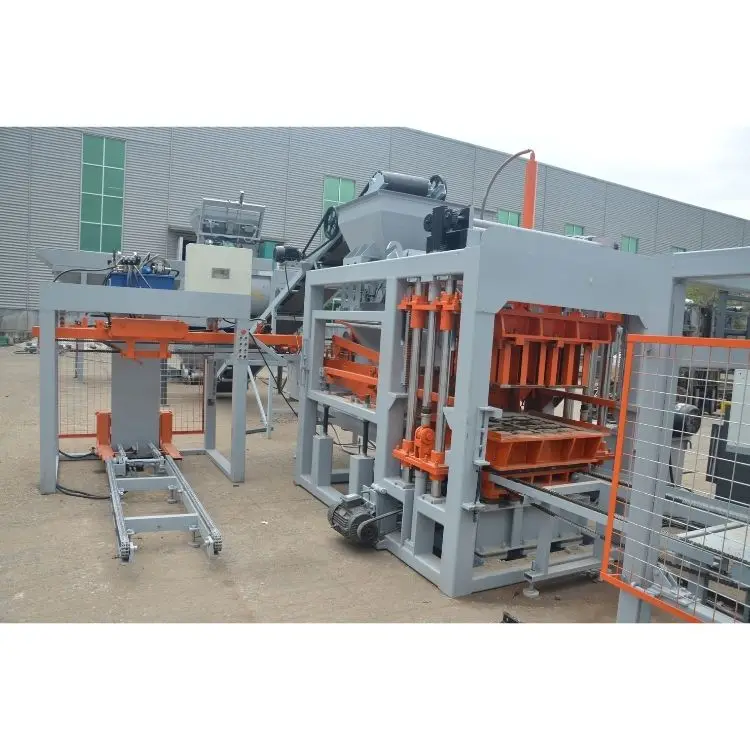
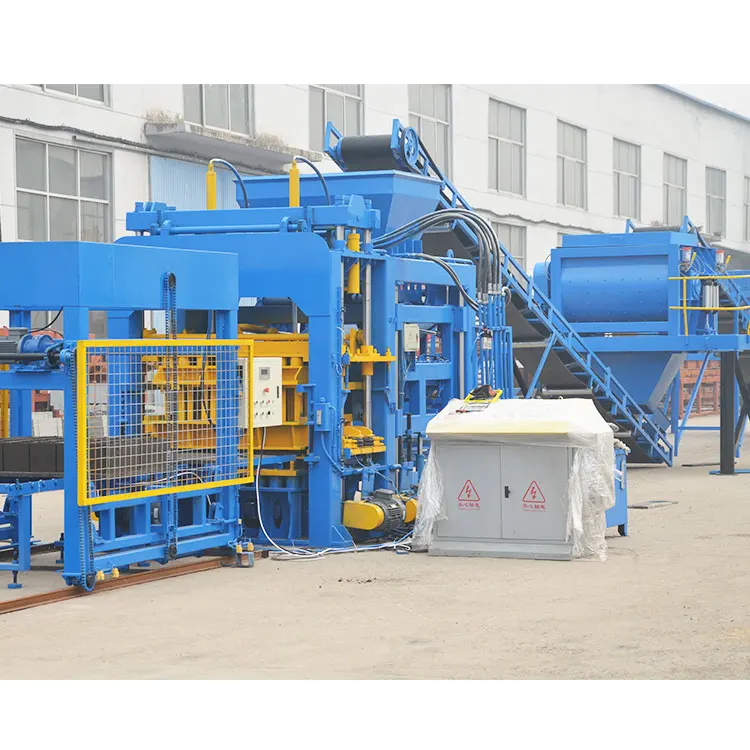
Matched System Sizing — the QT4-15A Automatic Block Making Machine is configured against your actual mix design and target block format rather than shipped as a catalogue default with unverified output claims.
Technical Specifications
| Parameter |
Value |
| Model |
QT4-15A |
| Product Type |
Automatic Concrete Block Making Machine |
| Overall Dimension |
7100 x 1600 x 2610 mm |
| Rated Pressure |
16 MPa |
| Vibration Form |
Platform Vibration |
| Pallet Size |
1020 x 570 mm |
| Molding Cycle |
15–25 s (basis not stated in source — confirm block format, material and thickness) |
| Overall Power |
27.5 kW |
| Control System |
PLC electronic console |
| Hydraulic Station |
Included |
| Mixer |
JQ500 concrete pan mixer |
| Belt Conveyor |
8 m (6 m optional) |
| Material Feeder System |
Hopper, feeding box, feeding platform and conveyor |
| Block Receiver |
Frame, conveyor system and idler wheels |
| Stacker |
Included (layer-by-layer removal) |
| Block Clamper |
Included |
| Moulds |
One free hollow mould (extra moulds customized) |
| Trolley |
Included |
| Optional Equipment |
Cement silo, batching plant |
Application Suitability
| Application |
Material or Output |
| Hollow block production for commercial building |
Crushed stone, cement, sand and fly ash blends |
| Solid load-bearing block for housing projects |
Local aggregate with cement binder |
| Paving block for compound and road works |
Fine aggregate with pigment and cement |
| On-site production for contractors |
Project-specific mix using locally sourced sand and gravel |
| First block plant for entrepreneurs |
Standard concrete mix adjusted to regional aggregate availability |
What "15–25 Seconds per Cycle" Actually Means for Daily Output
A molding cycle figure without a stated block format is a number that cannot be planned against.
I once worked with a buyer in West Africa who ordered a mid-tier machine based on a cycle time printed in a brochure. The quotation assumed a small solid block, but the buyer’s market demanded large hollow blocks. The real cycle stretched well beyond the quoted range, and daily output dropped sharply. The machine was not at fault — the capacity conversation was [NEED_CITE: block format assumptions in capacity quotations for concrete block machines]. When evaluating any Automatic Block Making Machine manufacturer, the first question should always be which block format, thickness and mix the cycle time refers to.

Where the QT4-15A Sits Across the Full Range
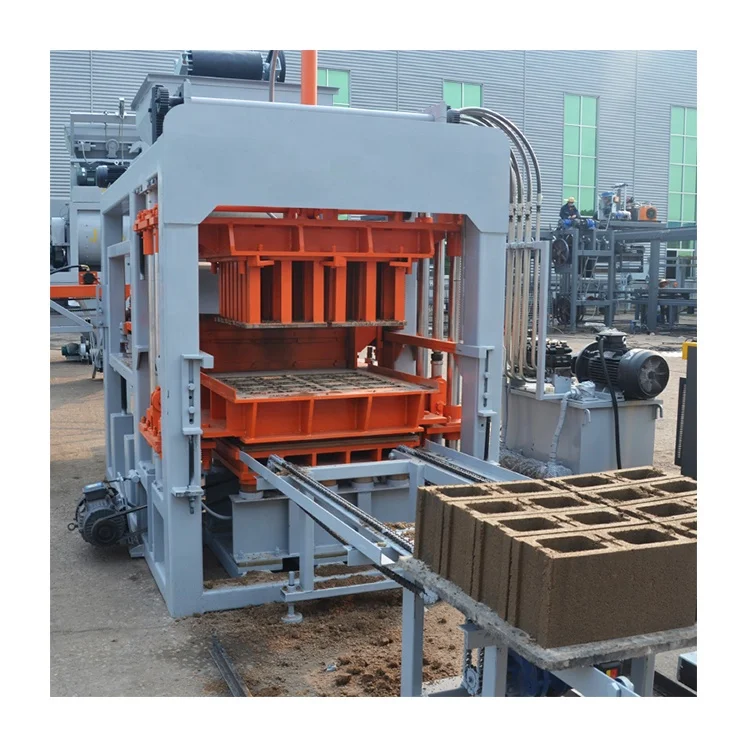
The QT4-15A occupies the mid-tier of the automatic lineup. Below it, semi-automatic models require manual pallet handling and stacking, keeping capital cost lower but demanding more labour on the floor. Above it, high-capacity automatic lines add batching plants, automatic cubing and curing rack systems for continuous large-volume output. This machine bridges the gap: PLC-controlled cycling with an integrated stacker and block conveyor, giving a buyer a clear step up without committing to a full high-capacity plant footprint. For an Automatic Block Making Machine manufacturer serving first-time plant owners, this tier is where most buyers land after comparing investment against expected market volume.
How the Line Stations Connect Around the Press
A block press does not run in isolation. The JQ500 pan mixer feeds the 8 m belt conveyor, which charges the hopper and feeding box above the molding station. The PLC console coordinates pallet feeding from the conveyor, vibration and hydraulic pressing, demoulding, and block removal to the receiver. If any station runs slower than the press cycle, the press waits and real output drops. This is why the QT4-15A ships as a matched set — mixer, conveyor, press, receiver and stacker — rather than a press with separately sourced peripherals. Matching cycle times across stations is the difference between quoted capacity and actual daily production [NEED_CITE: line balancing principles in concrete block production].
Reading the Specs That Shape Block Quality
The 16 MPa rated hydraulic pressure works together with platform vibration to compact the concrete mix inside the mould. Higher pressure alone does not guarantee strength — the vibration must distribute the mix evenly before compression locks it in place. The 1020 x 570 mm pallet size determines which block formats fit and how many pieces form per cycle; a mould for standard hollow blocks will yield a different count than one for interlocking pavers on the same pallet. The PLC electronic console controls the full sequence, meaning cycle parameters can be adjusted when switching between formats. The 27.5 kW overall power must be matched to the buyer’s site voltage and frequency before shipment to avoid commissioning delays. Mould change time depends on the synchronizing mechanism — a well-designed system lets one operator swap moulds without shutting down the entire line for an extended period.
The Hidden Cost of Skipping Configuration Detail
When a buyer confirms an order without specifying pallet material, curing area layout and forklift capacity, the pallets that arrive may not stack correctly in the yard. When voltage and PLC display language are not confirmed before production, the machine sits idle on site while panels are rewired and software is reloaded. I have seen entire commissioning schedules slip because these details were treated as minor [NEED_CITE: common commissioning delays in exported concrete machinery]. The cost is not the machine — it is the weeks of lost production while mismatches are corrected.
Why Source This Tier From a Single-Focus Manufacturer
Block machinery is the only product category here, so the QT4-15A is specified as one matched system — press, mould, pallet, mixer, conveyor and stacker — rather than assembled from unrelated suppliers. Configuration starts from the buyer’s local aggregate and target block format, not a catalogue default. Moulds are designed for the formats the buyer’s market actually sells, with custom drawings available for non-standard shapes. The automation level is selectable: a buyer can begin with the included stacker and later add automatic cubing as volume grows. Installation support includes on-site commissioning and operator training so the crew understands PLC parameter adjustments from day one.
Documentation & Verification
- Line layout with capacity calculation stating the block format assumed for the 15–25 s cycle
- Machine specification sheet confirming voltage, frequency and PLC display language before dispatch
- Mould drawing and format list showing which blocks the 1020 x 570 mm pallet accommodates
- Factory test record run on your specified mix design before shipment
- Pallet specification matched to your curing area dimensions and forklift capacity
Installation, Commissioning & Support
- Foundation plan sized to the 7100 x 1600 x 2610 mm footprint and dynamic vibration load
- Electrical supply matched to the 27.5 kW total draw with dedicated circuit breaker specification
- Machine arrives dismantled for container loading with reassembly guided by the hydraulic and electrical schematic
- First-run parameter setting on the PLC console covering vibration duration, pressure hold and cycle timing
- Operator training on mould change procedure and daily maintenance of the vibrating platform and hydraulic seals
- Wear parts list covering hydraulic seals, vibration springs and mould liners with reorder references
Preparing Your Inquiry
To size this machine correctly, share your target block format with dimensions, the daily output you need to sustain your market, and a sample or test report of your local aggregate. Confirm your site voltage and frequency, the language you need on the PLC display, and whether your curing yard already has pallets and forklifts the system must be compatible with. If you are deciding between this tier and a semi-automatic or high-capacity line, describe your available plant footprint so the right range position becomes clear.
Frequently Asked Questions
Q: Where does the QT4-15A sit compared to semi-automatic and high-capacity automatic tiers?
A: It sits in the mid-tier. Semi-automatic machines below it require manual pallet handling and stacking, lowering initial investment but demanding more labour. High-capacity lines above it add automatic cubing and curing rack handling for continuous large-volume plants. The QT4-15A gives PLC-controlled automation with an integrated stacker, suited to buyers who have outgrown manual operation but do not yet need full-line automation.
Q: What plant footprint and investment level should I expect at this tier?
A: The machine itself measures 7100 x 1600 x 2610 mm, but the full line includes the mixer, belt conveyor, block receiver and curing yard space for loaded pallets. Budget for the complete footprint including raw material storage and curing racks. This tier requires a higher investment than a semi-automatic setup but avoids the larger building and electrical infrastructure a high-capacity automatic line demands.
Q: How do I verify real daily output when molding cycle is quoted without a block format?
A: Ask the Automatic Block Making Machine manufacturer for a capacity calculation that names the exact block format, dimensions and mix design behind the cycle time. The 15–25 second range shifts depending on block height, wall thickness and material. Without a stated format, the number cannot be used for production planning or revenue projection.
Q: Can I start semi-automatic and move to this tier later?
A: The automation level is selectable. Some buyers begin with semi-automatic pallet handling and add the stacker and PLC-controlled cycling later as volume justifies the upgrade. Discuss your growth plan during inquiry so the base machine configuration leaves room for that transition without replacing the entire press.
Q: Which supporting equipment comes matched and which must I source separately?
A: The QT4-15A package includes the JQ500 mixer, belt conveyor, hydraulic station, PLC console, stacker, block clamper, one hollow mould and trolley. Cement silos and batching plants are optional and quoted separately. Pallets are specified to your curing setup. Any additional moulds for other block formats are customized to your drawings.

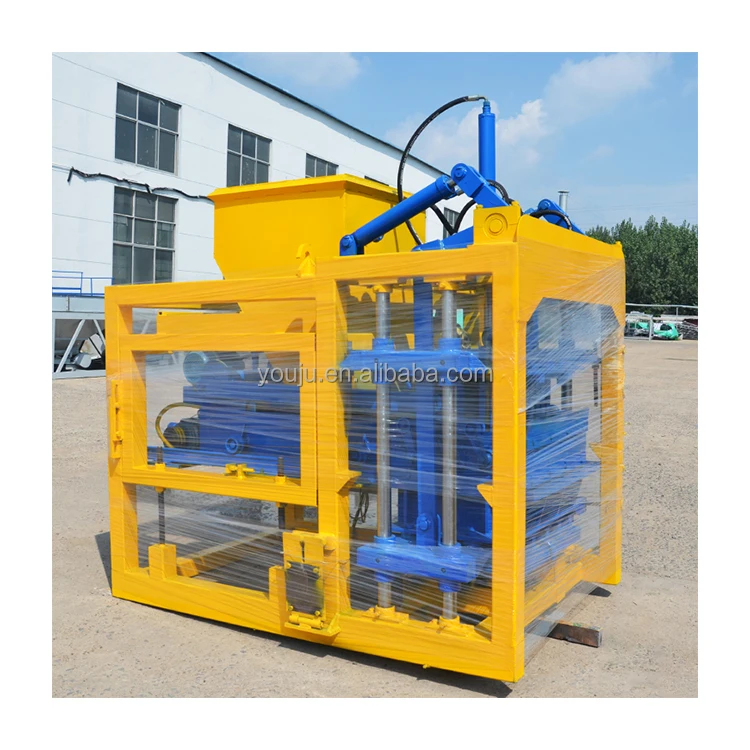
 Semi automatic block