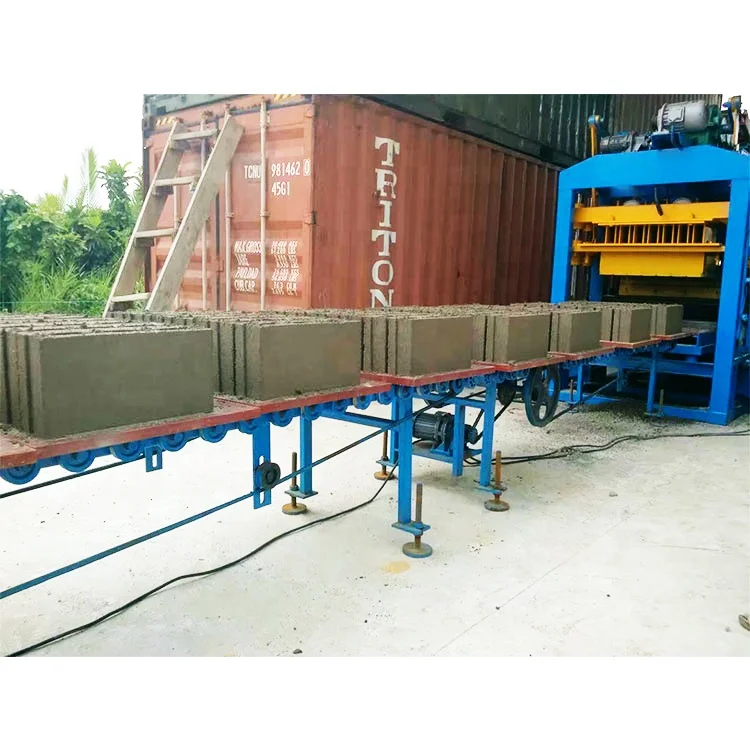
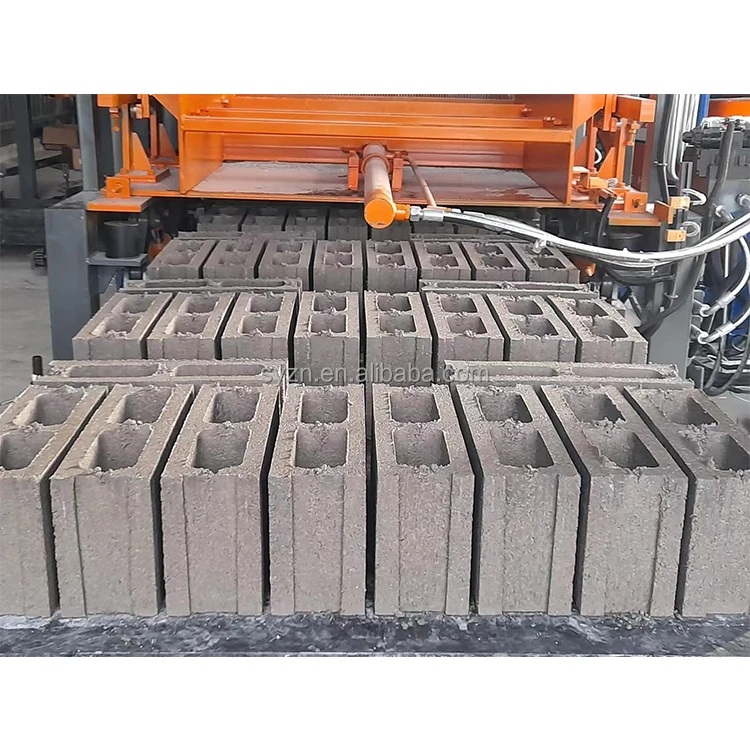
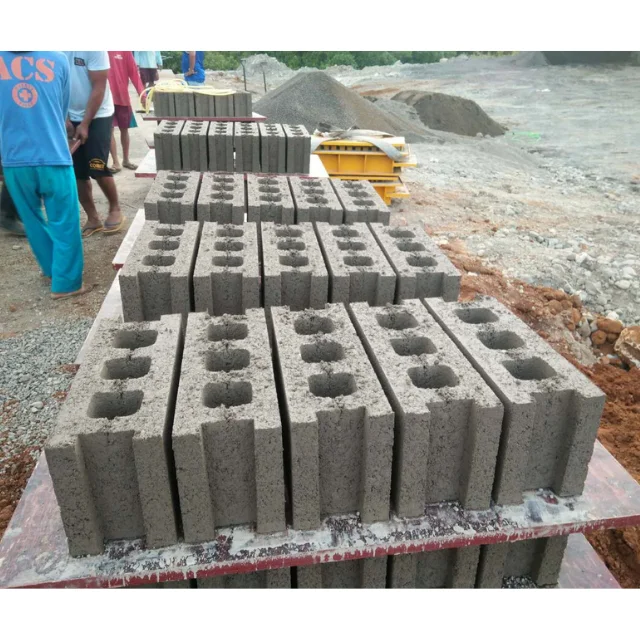
Complete Range Fit — The QT4-15A anchors the mid-tier of our automatic block press lineup, giving first-time plant buyers a fixed-layout option with hydraulic demolding and platform vibration before scaling to higher output tiers.
Technical Specifications
| Parameter |
Value |
| Model |
QT4-15A |
| Product Type |
Fully Automatic Hydraulic Concrete Block Making Machine |
| Overall Dimensions (L×W×H) |
4100×1600×2600 mm |
| Total Mass |
4 T |
| Rated Pressure |
16–21 MPa |
| Vibration Form |
Platform Vibration |
| Vibration Frequency |
4200 r/min |
| Vibration Force |
55 kN |
| Pallet Size |
880×550 mm |
| Molding Cycle |
25–30 s (basis not stated in source — confirm block format / material / thickness) |
| Overall Power |
18.45 kW |
| Demolding Method |
Hydraulic |
| Control System |
PLC (confirm brand and language) |
| Factory Area Required |
300 m² |
| Automation Level |
Fully automatic |
| Loading |
1×40HQ container (for basic equipment) |
| Warranty |
1 year (excluding spare parts) |
Application Suitability
| Application |
Material or Output |
| Concrete hollow block production |
Crushed stone, sand, cement, fly ash, gravel |
| Solid block manufacturing |
Local aggregate mixed with cement and dust |
| Paving block and colored paver runs |
Sand, crushed stone, slag, and pigment |
| Interlocking brick and kerbstone forming |
Dry-mix concrete with graded aggregate |
| On-site production for housing projects |
Locally sourced sand, gravel, and cement |
What the QT4-15A Block Machine Manufacturer Leaves Out About Cycle Time
A 25–30 second molding cycle only translates to your target daily output when the block format, mix design, and aggregate match the machine’s vibration profile.
Most catalog sheets quote a cycle time without naming the block size or wall thickness that produced the number. I have watched buyers in West Africa and Southeast Asia sign off on QT4-15A block machine manufacturer proposals, then see their real daily production fall short because their local river sand required a different vibration amplitude to achieve full compaction. The hydraulic pressure and platform vibration must be set against your specific mix, not a factory default. [NEED_CITE: aggregate grading and vibration force matching for concrete block density]

Where the QT4-15A Sits in the Shiyue Block Machine Range
The Shiyue range starts with mobile egg-laying machines for contractors who pour on a slab and move, steps up through semi-automatic presses that require manual pallet handling, and then enters the fully automatic tier where the QT4-15A block machine manufacturer product lands. It is the entry point for buyers who want a fixed plant with PLC-controlled cycling but do not yet need the output volume of a high-capacity line.
Comparing Automation Tiers and Plant Footprint
A first-time block plant entrepreneur often compares the semi-automatic tier against the QT4-15A because the investment gap feels significant. The real difference shows up in labor: semi-automatic machines need operators moving pallets by hand between press, curing rack, and stacking station, while the fully automatic tier integrates pallet feeding and block handling into the cycle. The QT4-15A requires roughly 300 m² of factory area, which keeps the initial footprint manageable for a buyer leasing their first industrial space. [NEED_CITE: typical labor requirements for semi-automatic versus fully automatic block plants]
Reading the Hydraulic Pressure and Vibration Force Together
The 16–21 MPa rated pressure and 55 kN vibration force on the QT4-15A are not independent specifications — they work as a pair to determine block density and surface finish. Hydraulic pressure compresses the mix from above while platform vibration at 4200 r/min settles the aggregate from below. If your local aggregate has a high proportion of fine sand, the vibration force may need adjustment upward to prevent air pockets, and that adjustment affects the effective pressure delivered to the block. The 880×550 mm pallet size defines the maximum molding area, so block formats must be designed to fit within that envelope with enough spacing for consistent demolding. A buyer planning to produce hollow blocks, solid blocks, and pavers on the same machine will find that each format places different demands on the pressure-vibration balance.
The Cost of Skipping Voltage and Control Confirmation
I have seen block machines sit idle for weeks at a job site because the local power supply runs at 60 Hz while the motor was wound for 50 Hz, or the PLC display arrived in a language the operators could not read. These are not warranty issues — they are specification gaps that belong in the pre-order confirmation. The QT4-15A ships with configurable voltage and frequency options, and the PLC display language can be set to match your local workforce. Skipping this step delays commissioning and forces on-site rewiring that voids the motor warranty. [NEED_CITE: voltage and frequency standards by export market for industrial machinery]
Why Buyers Source This Tier from Shiyue
Block machinery is our single focus, which means the press, mould, pallet, and handling equipment are specified as one matched system rather than pulled from separate vendors. We configure the QT4-15A against your actual mix design and target block format, not a generic catalog default, so the vibration force and cycle time reflect what your plant will actually produce. Mould design covers the formats your local market sells, and custom drawings are available when your product line includes non-standard shapes. The automation level is selectable, so a buyer can start with the QT4-15A and move up the range later without replacing the entire line. Installation support includes operator training on the specific formats and settings your plant will run.
Documentation & Verification
- Line layout showing block format assumed for cycle time calculation
- Machine specification sheet confirming voltage, frequency, and PLC language
- Mould drawing and format list for the 880×550 mm pallet envelope
- Pallet specification matched to your curing area and forklift
- Hydraulic and electrical schematic for local maintenance teams
- Factory test record before container loading
Installation, Commissioning & Support
- 300 m² factory area with level concrete floor for the 4100×1600 mm footprint
- Dedicated power circuit matching confirmed voltage and frequency at 18.45 kW total draw
- Machine arrives dismantled for 1×40HQ loading and reassembled on site
- First-run commissioning with vibration force and pressure set to your mix
- Operator training on PLC interface and mould change procedures
- Wear parts list covering hydraulic seals and mould liners for the first replacement cycle
- Daily maintenance checklist tied to the hydraulic demolding system
What to Include in Your Inquiry
To size the QT4-15A correctly for your plant, we need your target block format with dimensions, the local aggregate and sand type you plan to use, your available factory area and ceiling height, and the voltage and frequency at your site. If you already have a curing rack system and forklift, share the pallet dimensions so the 880×550 mm standard can be confirmed or adjusted. Let us know whether you need mould drawings for formats beyond standard hollow and solid blocks.
Frequently Asked Questions
Q: What daily output can the QT4-15A produce, and for which block format is the 25–30 s cycle valid?
A: The 25–30 second molding cycle was measured under specific conditions that are not stated in the source data. Your actual daily output depends on the block format, wall thickness, mix design, and aggregate grading you will run. We calculate capacity per format during the proposal stage so your business plan reflects realistic numbers rather than catalog defaults.
Q: Where does the QT4-15A sit in the Shiyue range compared to smaller and higher-capacity models?
A: The QT4-15A is the entry point of our fully automatic tier, positioned above semi-automatic and mobile machines but below high-capacity automatic lines. It suits buyers who want PLC-controlled operation and hydraulic demolding in a 300 m² footprint without the investment of a larger plant.
Q: What voltage, frequency, and PLC language options are available for my market?
A: Voltage and frequency are configurable to match your local power grid, and the PLC display language is set before shipment. These details must be confirmed during the ordering stage so the machine arrives ready for immediate commissioning without on-site electrical modifications.
Q: Which mould formats are compatible with the 880×550 mm pallet, and can custom moulds be supplied?
A: The pallet supports hollow blocks, solid blocks, pavers, interlocking bricks, and kerbstones within the 880×550 mm envelope. Custom mould designs are available from your drawings when your market requires non-standard shapes or dimensions that fall outside the standard format list.

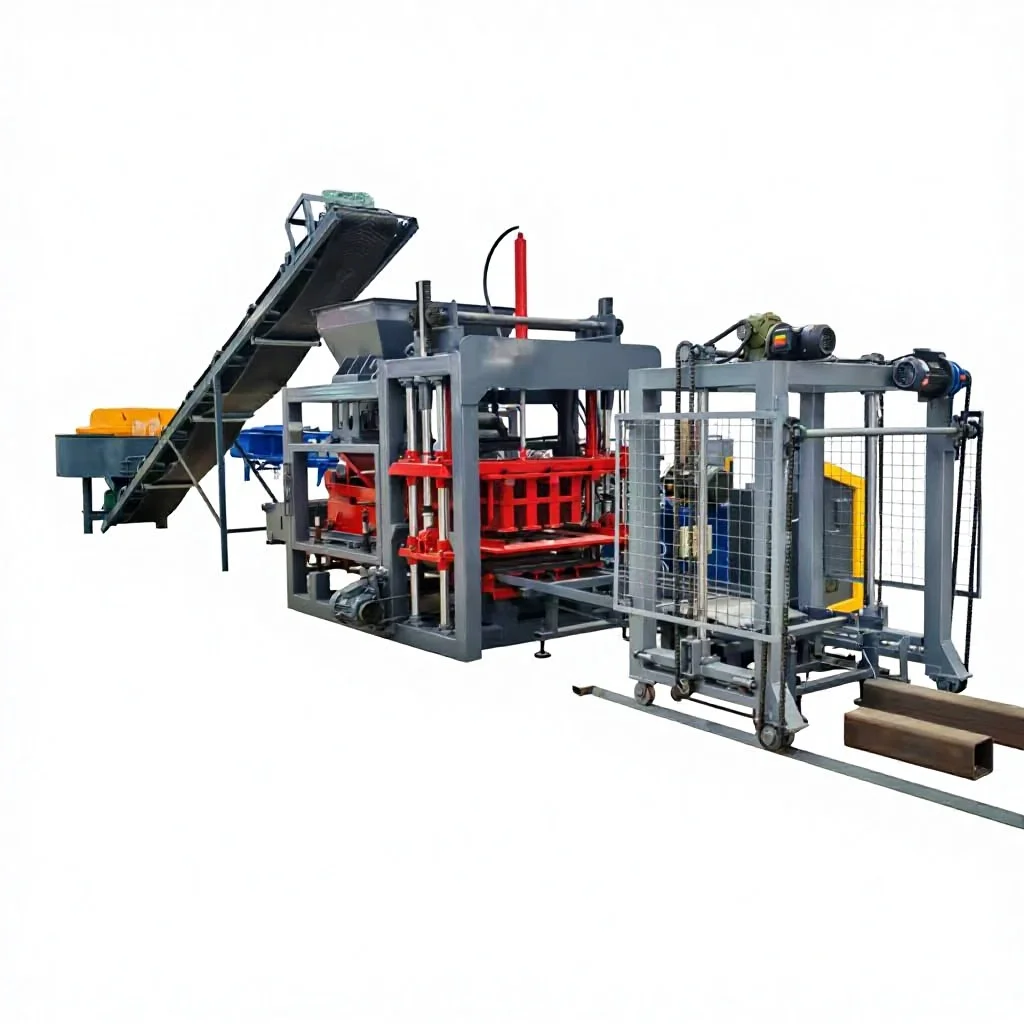
 High quality block machine