Mid-Tier Range Anchor — the QT4-15 is positioned within our complete block machine lineup so buyers can compare output tiers, automation levels, and plant footprint before committing to a configuration.
Technical Specifications
| Parameter |
Value |
| Model |
QT4-15A |
| Product Type |
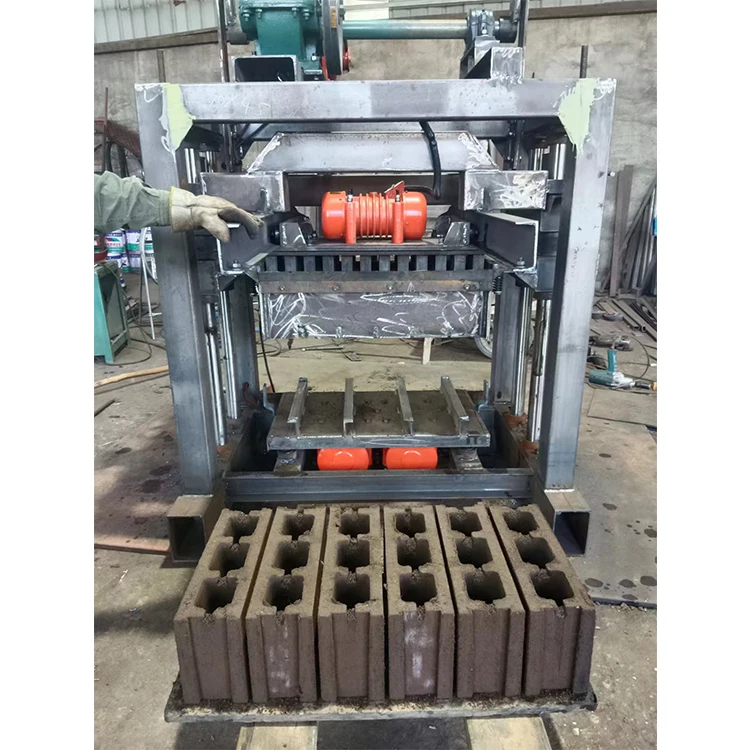
Automatic Concrete Block Making Machine |
| Overall Dimensions (L×W×H) |
7100×1600×2610 mm |
| Molding Cycle |
15–25 s |
| Vibration Frequency |
4600 r/min |
| Exciting Power (Vibration Force) |
40–50 kN |
| Rated Power |
18.45 kW |
| Mixer Model |
JQ350 |
| Pallet Size |
850×550×25 mm |
| Net Weight |
3 T |
| Applied Products |
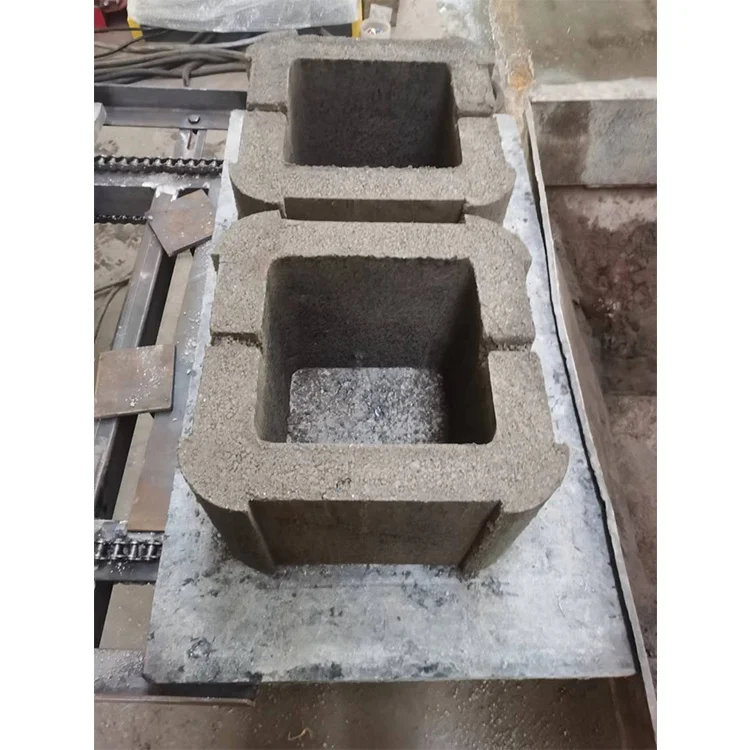
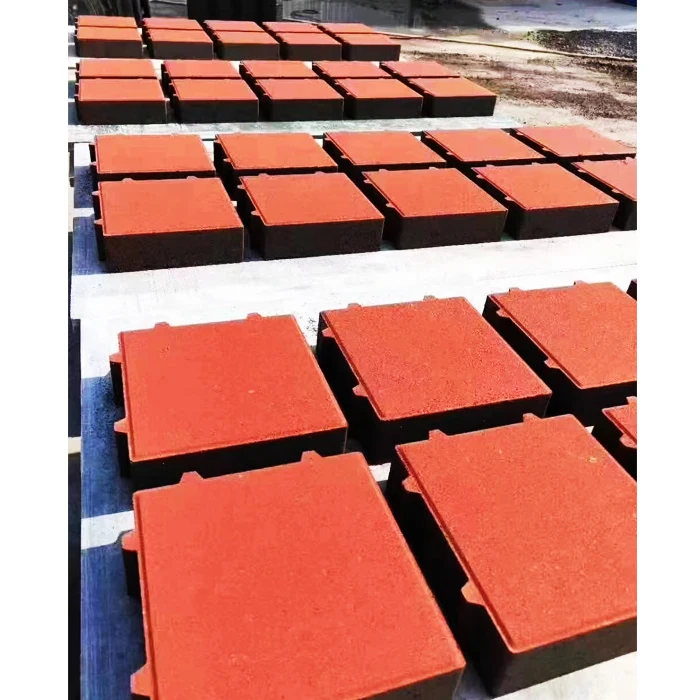
Paver, solid block, hollow block, curbstone |
| Raw Materials |
Crushed stones, sand, cement, dust, fly ash |
| Output Capacity |
408 pcs/h (basis: 400×200×200 mm hollow block, 4 pcs/mould) |
| Output Capacity |
510 pcs/h (basis: 400×150×200 mm hollow block, 5 pcs/mould) |
| Output Capacity |
2100 pcs/h (basis: 240×115×53 mm solid brick, 18 pcs/mould) |
| Daily Output |
3264 pcs/8hr (basis: 400×200×200 mm hollow block) |
| Daily Output |
4080 pcs/8hr (basis: 400×150×200 mm hollow block) |
| Daily Output |
17000 pcs/8hr (basis: 240×115×53 mm solid brick) |
| Hydraulic Station |
Equipped (high pressure, stable operation) |
| Automation Level |
Semi-automatic (basis to be confirmed) |
| Voltage & Frequency |
Configurable — confirm with buyer before production |
| Control System |
Configurable — confirm with buyer before production |
| Standards |
CE |
Application Suitability
| Application |
Material or Output |
| Hollow block production for building walls |
Crushed stone, sand, cement, fly ash mixes |
| Solid brick manufacturing for masonry |
Cement and aggregate blends |
| Paving block production for walkways and yards |
High-density concrete mixes |
| Curbstone forming for road and landscape projects |
Coarse aggregate and cement compositions |
| On-site block manufacturing for construction contractors |
Locally sourced sand and crushed stone |
What "408 Pieces per Hour" Actually Means for Your Plant
Capacity figures only matter when the block format behind them is clearly stated.
I have watched buyers sign contracts based on a single hourly number, then discover on commissioning day that the figure assumed a small solid brick they never planned to sell. The QT4-15 produces 408 pieces per hour only when running 400×200×200 mm hollow blocks at four per mould. Switch to 240×115×53 mm solid bricks at eighteen per mould and the same concrete block making machine for sale reaches 2100 pieces per hour — a completely different operation in terms of raw material feed rate, pallet turnover, and curing space. Every block machine manufacturer should state the format behind each number [NEED_CITE: capacity declaration standards for concrete block machinery]. Without that clarity, daily production planning becomes guesswork.

Where the QT4-15 Sits in the Full Machine Range
The Shiyue lineup spans mobile egg-laying units for on-site work, semi-automatic presses for smaller plants, and fully automatic lines with pallet feeding, stacking, and cubing. The QT4-15 occupies the mid-tier as a semi-automatic concrete block making machine for sale, giving first-time plant owners a practical entry point. Buyers who expect to grow can start here and move to a higher automation tier later without replacing the entire material handling setup.
Matching Machine Tier to Your Actual Daily Requirement
Before narrowing down, calculate how many blocks your market absorbs each day and which formats sell fastest. A contractor producing hollow blocks for a single housing project may find the QT4-15 output of 3264 pieces per eight-hour shift (basis: 400×200×200 mm hollow block) sufficient, while a distributor supplying multiple retail outlets may need the next tier up. The right block machine manufacturer will walk you through this comparison before quoting [NEED_CITE: block plant capacity planning methodology].
Vibration, Pressure, and What They Mean for Block Density
The QT4-15 delivers 40–50 kN of exciting power at a vibration frequency of 4600 r/min, applied through bed mould vertical vibration and upper mould compression vibration. This dual-action approach compacts the concrete mix from both directions, which matters when your local aggregate contains a higher proportion of fine sand. The hydraulic station provides sustained high-pressure operation throughout the molding cycle of 15–25 seconds. If vibration force and hydraulic pressure are not matched to the buyer’s mix design, blocks can emerge with uneven density and crack during curing — a problem I first saw on a fly ash line in Mauritania where the local sand had too much clay for the default configuration.
The Cost of Overlooking Pallet and Curing Compatibility
A pallet size of 850×550×25 mm seems like a minor line item until the machine arrives and the buyer’s existing forklift cannot handle the loaded pallets, or the curing racks are spaced for a different dimension. Blocks then sit stacked by hand on the floor, occupying triple the area and slowing turnover. Pallet material also affects block bottom finish and lifespan — bamboo, PVC, and steel pallets each behave differently under repeated vibration cycles. These mismatches rarely show up in a quotation review but surface quickly once production starts [NEED_CITE: pallet specification guidelines for concrete block plants].
Why Source This Range Here
Block machinery is our single focus, so the QT4-15 is specified as part of a matched system — machine, mould, pallet, and handling — rather than assembled from separate suppliers. Configuration is set against your actual mix design and local aggregate, not a catalogue default. Mould design covers the formats your market sells, including custom drawings to buyer specifications. Automation level is selectable, allowing a start at semi-automatic with a defined upgrade path. Installation support includes operator training so the crew running the press on day one knows the mould change sequence and the maintenance intervals.
Documentation & Verification
- Line layout and capacity calculation stating the exact block format assumed for the QT4-15
- Machine specification sheet confirming rated power of 18.45 kW and configurable voltage before production
- Mould drawing and format list covering hollow block, solid brick, paver, and curbstone options
- Factory test record showing vibration frequency and cycle time achieved on your target format
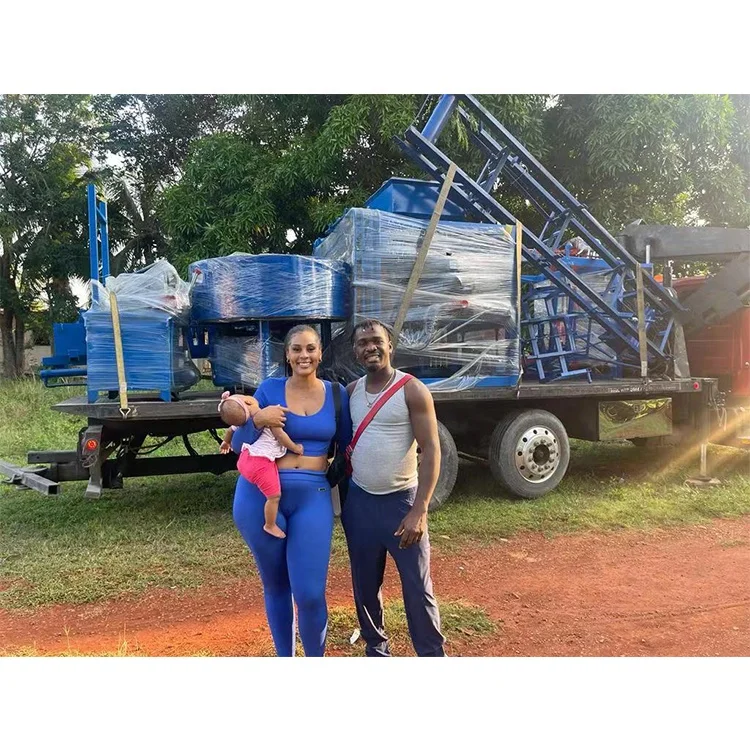
- Packing photographs documenting QT4-15 condition before container loading
Installation, Commissioning & Support
- Foundation pad sized to the 7100×1600 mm footprint with anchor bolt template provided before QT4-15 arrival
- Dedicated power circuit rated for 18.45 kW plus mixer load, voltage and frequency confirmed before dispatch
- Hydraulic station filled and bled on-site, pressure set to match your block density requirement
- Mould change procedure trained with your operators using the actual formats you will produce first
- Wear parts list for vibration table bearings and hydraulic seals with recommended reorder intervals
Before You Request a Quote
To size the QT4-15 correctly within our range, share the block formats your market currently demands, the daily volume you need per format, and the raw materials available locally including a sieve analysis if possible. Tell us your site voltage and frequency so the electrical package is built right the first time. If you already have curing racks, forklifts, or a mixer in place, send their specifications so the pallet size and feed height align with your existing setup.
Frequently Asked Questions
Q: How is QT4-15 capacity verified per block format, and what does the daily output assume?
A: Every capacity figure we quote references a specific block dimension and mould cavity count. For the QT4-15, 408 pieces per hour is based on 400×200×200 mm hollow blocks at four per mould, while 2100 pieces per hour is based on 240×115×53 mm solid bricks at eighteen per mould. Daily output assumes an eight-hour shift with standard material feed continuity and no format changeovers within that period.
Q: Where does the QT4-15 sit in the Shiyue range and what upgrade paths exist?
A: The QT4-15 is a mid-tier semi-automatic press within our full lineup, which starts at mobile egg-laying machines and extends to high-capacity fully automatic lines with pallet stacking and cubing. Buyers can begin with this tier and later add automatic pallet feeding and stacking modules, keeping the core press and mould investment intact while reducing manual labor.
Q: What voltage, frequency, and control language options are available for my market?
A: The QT4-15 electrical package is configured after we confirm your site supply — common ranges include 220V/380V/440V at 50Hz or 60Hz. The control panel display language is also set before production. We document the agreed voltage, frequency, and language on the machine specification sheet so there are no commissioning delays when the concrete block making machine for sale arrives at your facility.
Q: How do I match pallet size and material to my existing curing area and handling equipment?
A: The standard pallet for the QT4-15 is 850×550×25 mm, but we confirm compatibility with your curing rack spacing and forklift tine width before finalizing the order. Pallet material — bamboo, PVC, or steel — is chosen based on the vibration intensity required for your block format and the expected service life under your shift pattern.

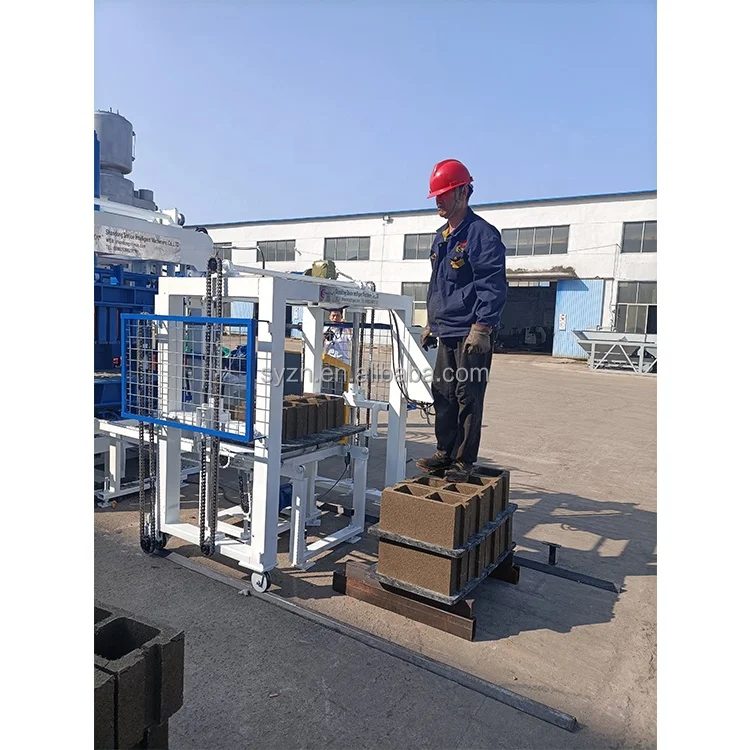 High quality block machine