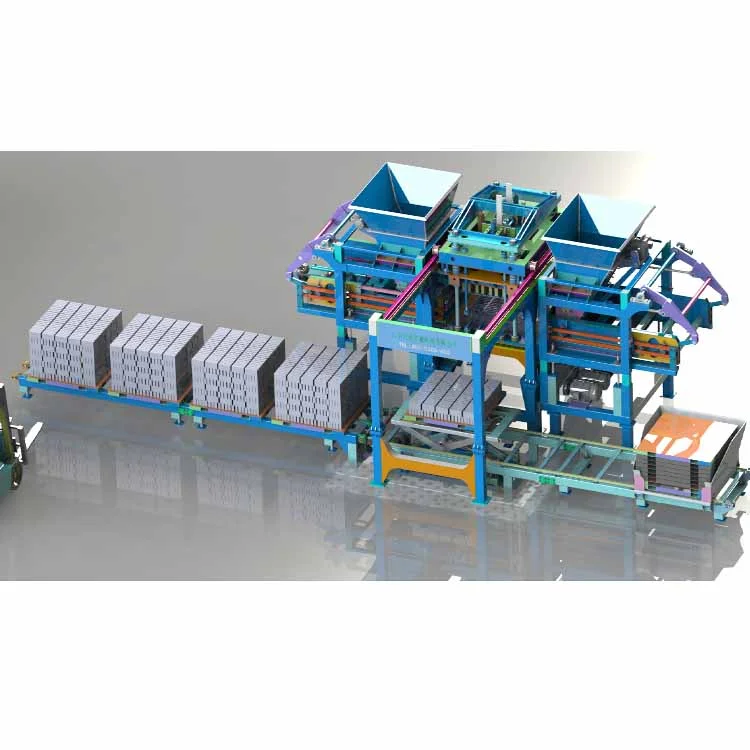
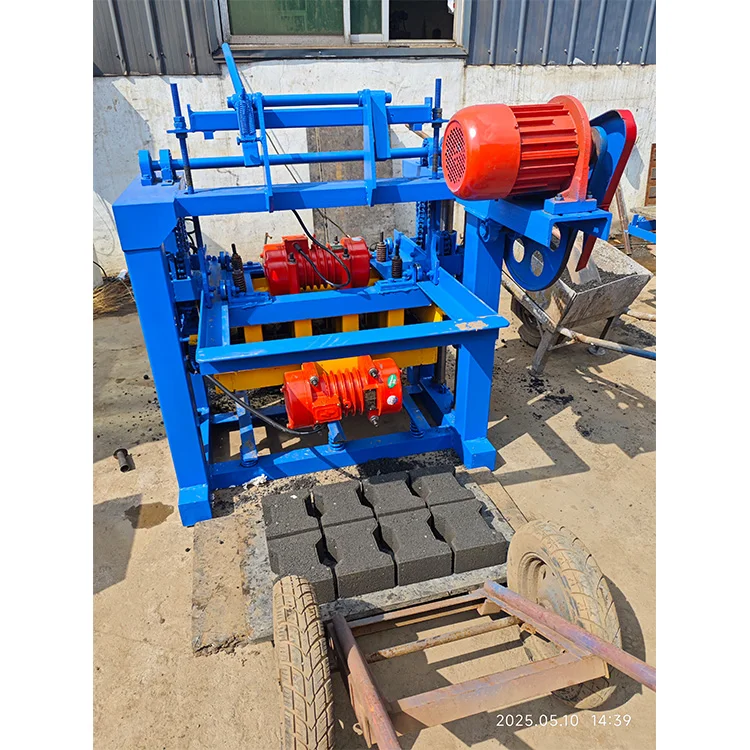
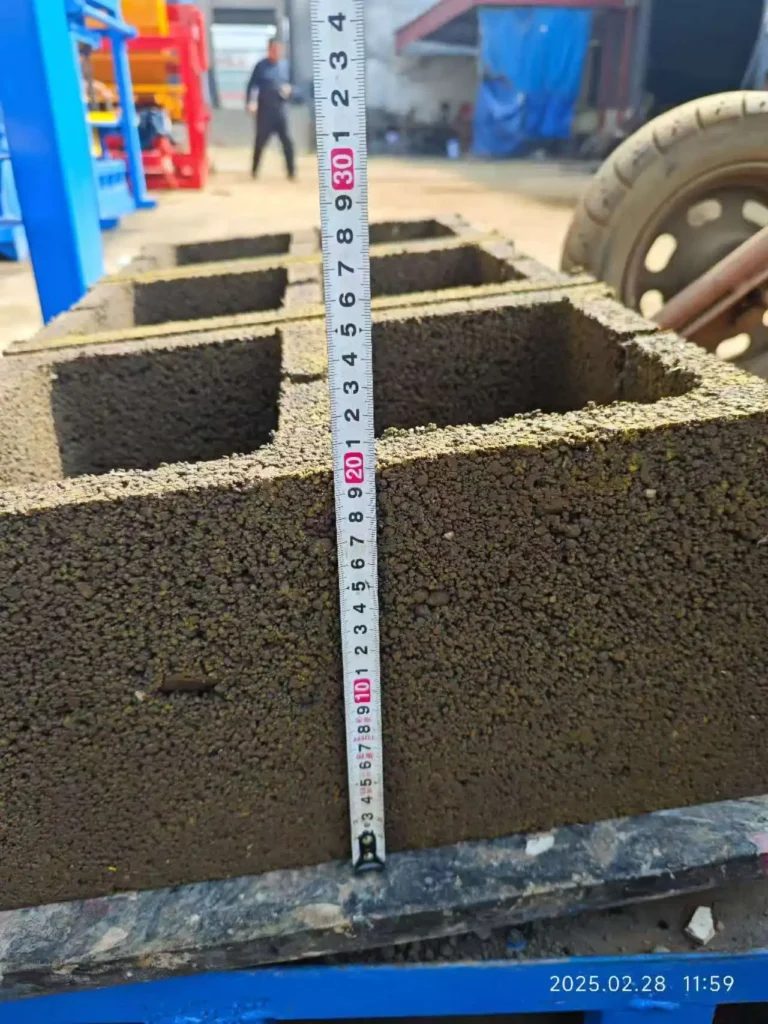
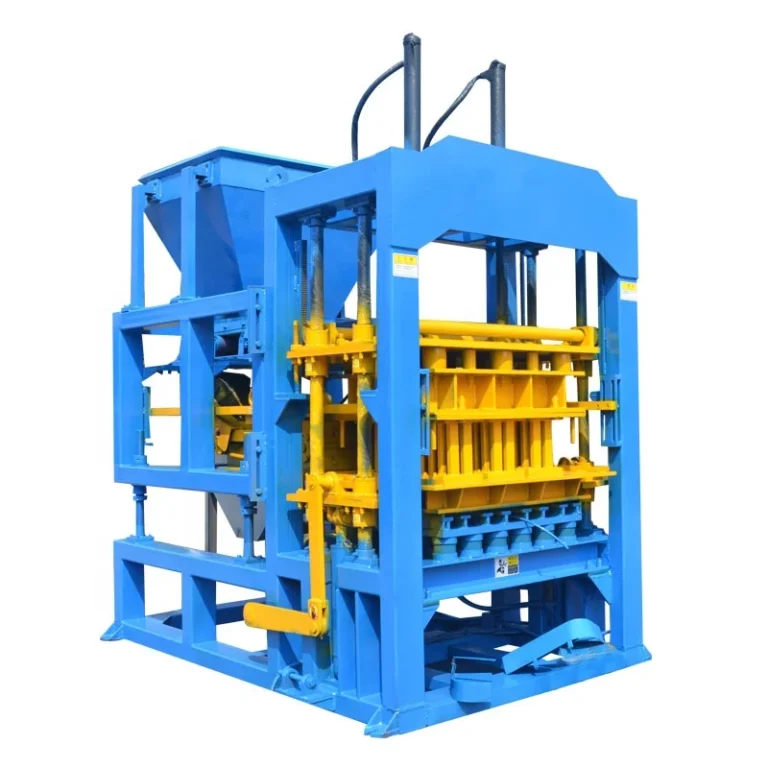
Vibration and pressure specified as one matched system — the QT4-15 pairs platform vibration at 4600 r/min with 16 MPa hydraulic pressure, calibrated against the buyer’s mix design rather than assembled from independent catalogue figures.
Technical Specifications
| Parameter |
Value |
| Model |
QT4-15 |
| Product Type |
Stationary Hydraulic Block Making Machine |
| Overall Dimensions |
7100 × 1600 × 2610 mm |
| Host Machine Dimensions |
2800 × 1800 × 2550 mm |
| Rated Pressure |
16 MPa |
| Main Vibration Form |
Platform Vibration |
| Vibration Frequency |
4600 r/min |
| Vibration Force |
40 kN |
| Pallet Size |
950 × 550 × 20/25 mm |
| Molding Cycle |
15–25 s |
| Overall Power |
27.5 kW |
| Host Machine Power |
19.2 kW |
| General Water Consumption |
4 T/day |
| Total Mass |
5 T |
| Control System |
PLC (Siemens hardware, independently developed program, customizable) |
| Motor Brand |
Siemens or ABB (buyer selectable) |
| Hydraulic System |
Double proportional hydraulic valve (Calyca or Youken brand) |
| Output Capacity — Hollow Brick |
720–960 pcs/h based on 390 × 190 × 190 mm, 4 pcs/mold, 15–20 s cycle |
| Output Capacity — Porous Brick |
2520–3360 pcs/h based on 240 × 115 × 90 mm, 14 pcs/mold, 15–20 s cycle |
| Output Capacity — Standard Brick |
5930–6720 pcs/h based on 240 × 115 × 53 mm, 28 pcs/mold, 15–17 s cycle |
| Mould Formats Supported |
Hollow brick, porous brick, standard brick, paving brick |
| Automation Level |
Automatic |
| Voltage & Frequency |
Configurable to buyer’s site (basis to be confirmed before production) |
| PLC Display Language |
Customizable (basis to be confirmed before commissioning) |
| Warranty |
1 year (excluding spare parts) |
Application Suitability
| Application |
Material or Output |
| Hollow block production for structural walls |
Crushed stone, cement, and sand mixes forming 390 × 190 × 190 mm blocks |
| Porous brick manufacturing for infill and insulation |
Lightweight aggregate blends producing 240 × 115 × 90 mm bricks |
| Standard solid brick for masonry |
Dense aggregate and cement mixes at 240 × 115 × 53 mm format |
| Paving brick for walkways and yards |
High-strength surface mixes in interlocking or rectangular formats |
| Contractor on-site block plants with fixed setup |
Local river sand, crushed granite, or recycled aggregate depending on regional supply |
What the Hourly Output Number Actually Depends On
A capacity figure means nothing without the block format and cycle time it assumes.
When a stationary block making machine manufacturer quotes a number like "960 pieces per hour," that figure rests on a specific mold, a specific block dimension, and a specific cycle time. Switch to a different format and the math changes entirely. The QT4-15 block machine for sale produces between 720 and 960 hollow blocks per hour only when running 390 × 190 × 190 mm units at four per mold with a 15–20 second cycle. Swap to standard bricks at 28 per mold and the hourly count climbs to 5930–6720 — but only because you are making smaller units in larger quantities per press stroke [NEED_CITE: capacity calculation standards for block making equipment]. Without this breakdown, a buyer planning a hollow block line can easily overestimate daily throughput by comparing a standard brick number against their hollow block target.

Placing the QT4-15 in the Full Machine Range
The QT4-15 occupies the mid-tier of our stationary block machine range. Below it sit semi-automatic models that require manual pallet handling and produce smaller volumes per shift. Above it, high-capacity automatic lines add fully integrated stacking, cubing, and curing rack systems that reduce labor further but demand a larger plant footprint and higher investment. This model bridges that gap: it delivers automatic PLC-controlled pressing with consistent cycle times while leaving room for buyers to add downstream automation as their market grows. For a buyer surveying the complete range, the QT4-15 represents a point where output is substantial enough to serve regional block demand without committing to the full infrastructure of a high-volume plant.
Matching the Stationary Block Making Machine Manufacturer Proposal to Your Site
Every stationary block making machine manufacturer ships a press, but the press alone does not make blocks — it makes blocks only when the pallet handling, raw material feed, and curing area are specified as one coordinated system. The QT4-15 runs on 950 × 550 mm pallets, and that dimension must align with the curing racks already in your yard or the ones being quoted alongside the press [NEED_CITE: pallet and curing rack compatibility in block production]. If your forklift is rated for a different pallet weight or your curing shelves are spaced for a shorter board, the press will sit idle while operators struggle with mismatched handling. A complete range proposal addresses these interfaces before the machine enters production.
Reading the Core Parameters Beyond the Spec Sheet
Platform vibration at 4600 r/min with 40 kN of force works together with the 16 MPa hydraulic pressure to compact the concrete mix inside the mold. The vibration liquefies the mix so it fills every cavity, while the hydraulic pressure squeezes out excess water and air to achieve block density. If the vibration force is high but the hydraulic pressure is low, blocks come out with a smooth surface but weak internal structure. The reverse produces dense but poorly formed edges. The QT4-15 balances both through a double proportional hydraulic valve system, allowing the PLC to modulate pressure in stages during the pressing cycle rather than applying a single fixed force.
The 15–25 second molding cycle range reflects the difference between a dry mix with fine aggregate and a wetter mix with larger stone. Local aggregate gradation directly controls where within that range your actual cycle lands. A mix with high clay content, common in some river sand sources, extends the cycle because the material does not release from the mold as cleanly [NEED_CITE: effect of aggregate composition on block molding cycle time]. The 27.5 kW overall power requirement means the electrical supply must include a dedicated circuit sized for this load plus the mixer and conveyor motors running simultaneously.
The Cost of Ordering Without a Format-Specific Capacity Plan
Quoting a single output number across all block formats leads to a plant that cannot meet its daily targets on the product the buyer actually sells. A buyer who purchased based on a standard brick capacity figure and then tried to run hollow blocks found daily output falling well below projections — not because the machine was defective, but because the capacity assumption was never matched to the hollow block format [NEED_CITE: block plant underperformance due to format mismatch in capacity planning]. Pallet size is another common mismatch: boards that do not fit existing curing racks force the buyer to rebuild the entire curing area after the machine arrives. Voltage and frequency left unconfirmed until shipment can delay commissioning by days or weeks while a transformer is sourced locally.
Why Source This Tier from a Single-Focus Block Machinery Builder
Block machinery is the only product category here, which means the QT4-15 press, its molds, pallets, and handling equipment are specified as one matched system rather than assembled from separate suppliers. The configuration is set against the buyer’s actual mix design, local aggregate, and target block format — not pulled from a catalogue default. Molds are designed for the formats the buyer’s market actually sells, including custom drawings when standard formats do not match local building codes. The automation level is selectable, so a buyer can start with the QT4-15’s automatic PLC control and add stacking or cubing equipment later as production scales. Installation and commissioning support includes operator training so the crew understands cycle adjustment and mold change procedures from day one.
Documentation & Verification
- Line layout with capacity calculation stating the block format assumed for each output figure
- Machine specification sheet with host and overall dimensions for site planning
- Mold drawing and format list covering all four supported brick types
- Hydraulic and electrical schematic showing Siemens or ABB motor connections and valve routing
- Factory test record run on the buyer’s specified block format before dispatch
- CE declaration where applicable to the destination market
Installation, Commissioning & Support
- Foundation pad must accommodate the 7100 × 1600 mm overall footprint with clearance for pallet feed and egress
- Electrical supply requires a dedicated circuit rated for 27.5 kW total load at the confirmed voltage and frequency
- Host machine arrives at 2800 × 1800 × 2550 mm and must be leveled and anchored before hydraulic line connection
- PLC display language and control program confirmed before production to avoid on-site reprogramming delays
- Mold change training covers the mechanical locking system so format swaps stay within the shift schedule
- Wear parts list identifies hydraulic seals and vibration components with replacement intervals
What to Include in Your Inquiry
Provide the specific block formats your market demands along with target daily output per format so the capacity calculation reflects your actual product mix. Share your local aggregate type and any available material test report — sand with high fines or clay content changes the cycle time and may affect mold design. Confirm your site’s voltage, frequency, and preferred PLC display language so the electrical system and control interface are built correctly before the QT4-15 leaves the factory.
Frequently Asked Questions
Q: Where does the QT4-15 sit within the full stationary block machine range?
A: It occupies the mid-tier, between entry-level semi-automatic presses that require manual pallet handling and high-capacity fully automatic lines with integrated stacking and cubing. Buyers choose this tier when their daily output target exceeds what a semi-automatic setup can deliver but does not yet justify the investment and plant footprint of a high-volume line. The upgrade path allows adding automation downstream.
Q: What block format does the quoted capacity assume?
A: The 720–960 pieces per hour figure applies specifically to 390 × 190 × 190 mm hollow blocks at four per mold with a 15–20 second cycle. Switching to porous bricks at 14 per mold or standard bricks at 28 per mold changes the hourly output significantly. Always request a capacity calculation that breaks down output by each format you plan to produce.
Q: Can I add more automation to the QT4-15 later?
A: Yes. The PLC control system and machine architecture allow future integration of automatic pallet feeding, stacking, and cubing equipment. Many buyers start with the QT4-15 at its current automation level and add downstream handling as their block demand grows, spreading the investment across phases rather than committing to a full line from day one.
Q: How much plant space does this model require?
A: The overall machine footprint is 7100 × 1600 mm, but the total plant area must also include raw material storage, mixer placement, pallet return path, and a curing zone sized for the 950 × 550 mm pallets. Plan for clearance around the host machine for maintenance access and mold changes. A line layout drawing confirms all station positions before installation begins.
Q: How does a stationary plant compare to mobile block machines in the range?
A: Stationary plants like the QT4-15 produce higher daily volumes with consistent block quality through PLC-controlled cycles, suited for fixed production serving a regional market. Mobile and egg-laying machines produce blocks directly on a concrete slab without pallets, suited for contractors making blocks at a single project site. The choice depends on whether you serve a continuous market or a specific construction deadline.

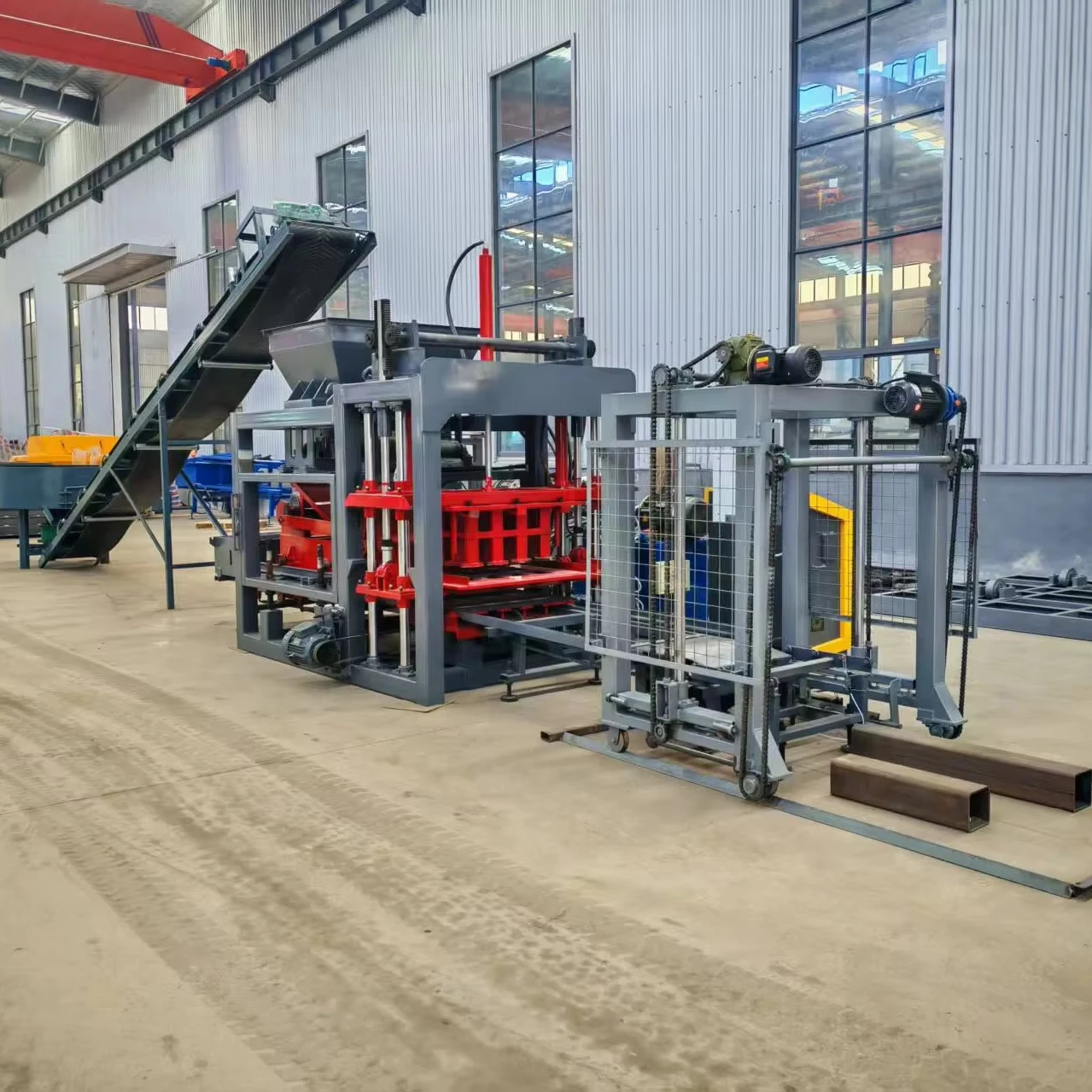
 Stationary block machine