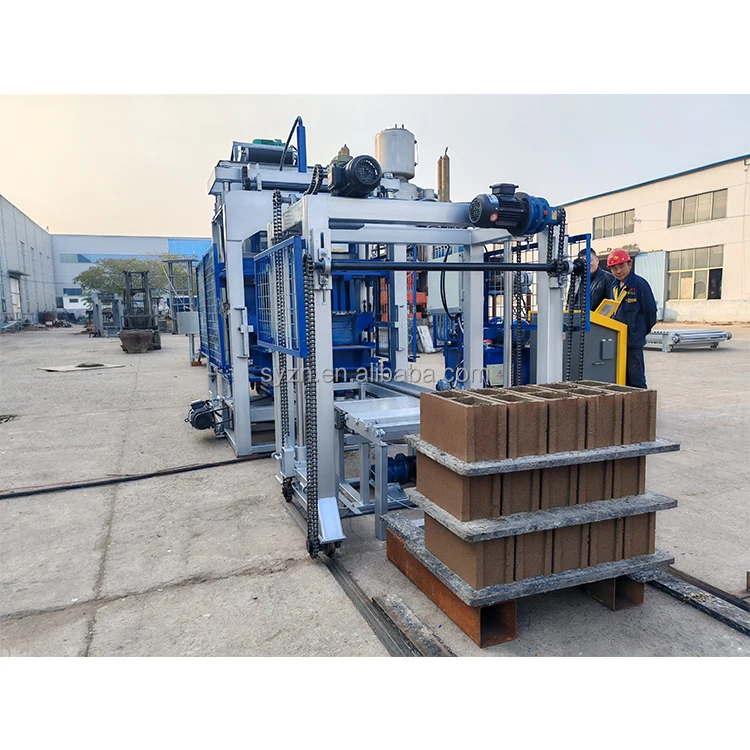
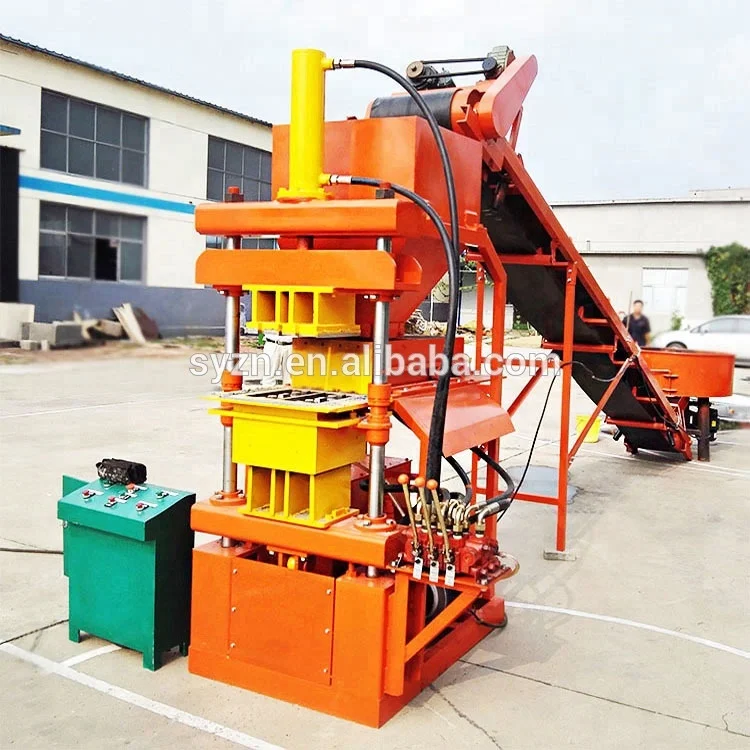
Fully Automatic Block Production — We configure the QT4-15A against your specific aggregate and mix design, ensuring the vibration force and hydraulic pressure deliver consistent density for your local raw materials, not a generic factory default.
Technical Specifications
| Parameter |
Value |
| Model |
QT4-15A |
| Product Type |
Automatic Concrete Block Making Machine |
| Overall Dimensions (L×W×H) |
4100×1600×2600mm |
| Rated Pressure |
16-21MPa |
| Main Vibration Form |
Platform Vibration |
| Vibration Frequency |
4200 r/min |
| Vibration Force |
55kN |
| Pallet Size |
880×550mm |
| Molding Cycle |
25-30s (basis not stated in source — varies by block format) |
| Overall Power |
18.45kW |
| Total Mass |
4T |
| Demolding Method |
Hydraulic |
| Automation Level |
Fully automatic |
Application Suitability
| Application |
Material or Output |
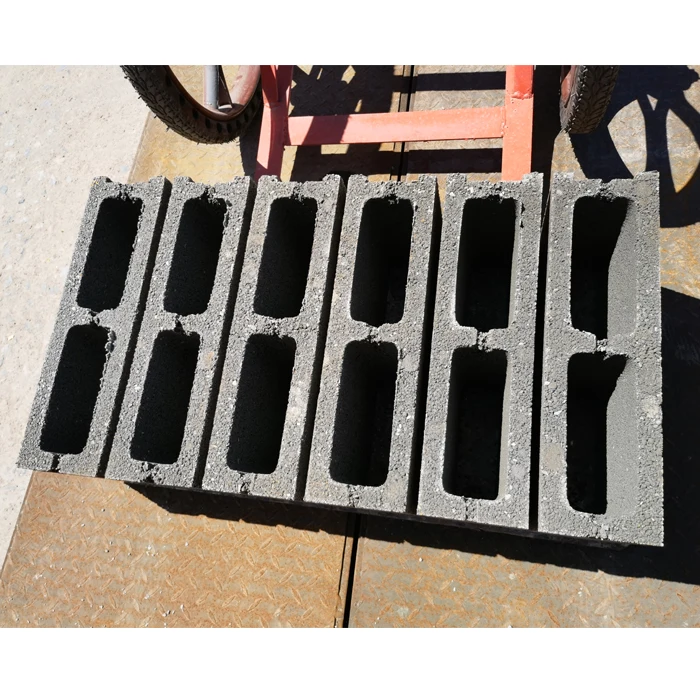
| Hollow Block Production |
Crushed stone, sand, cement, fly ash |
| Solid Block Production |
Gravel, dust, slag, cement |
| Paver and Interlocking Brick |
Colored aggregates, cement, fine sand |
| Kerbstone and Curbstone |
High-density concrete mixes |
What "Standard Capacity" Leaves Out for Automatic Block Making Machines
Real output depends on the specific block format, wall thickness, and curing time required for your local market.
Many suppliers quote an hourly cycle count based on a standard 400×200×200mm hollow block, but if your primary product is a thinner paving stone or a specialized interlocking brick, that "theoretical maximum" rarely translates to the factory floor. [NEED_CITE: standard block formats and cycle time variations in concrete machinery]. This gap between quoted cycles and actual daily output is a frequent point of friction for buyers setting up their first plant.

Positioning the QT4-15A in Your Production Line
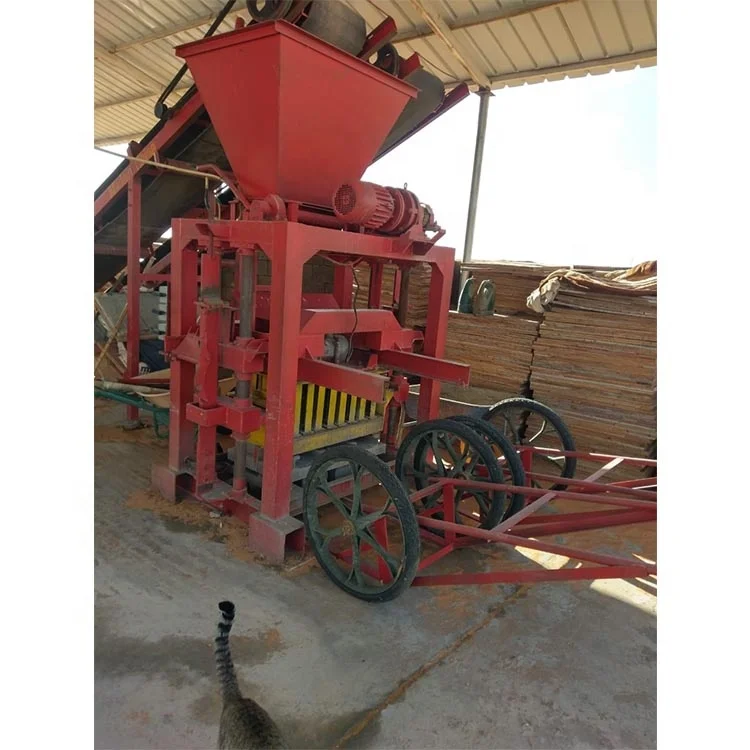
The QT4-15A is designed as a mid-tier automatic block making machine for sale, bridging the gap between manual labor and high-volume industrial plants. It provides a clear upgrade in consistency for contractors who have outgrown mobile or egg-laying machines but are not yet ready for the massive footprint of a high-capacity automated line.
Investment Tiers and Plant Footprint
For a buyer surveying the complete range, this model offers a balance of automation and spatial efficiency. The 300m² factory area requirement allows for a complete production setup—including mixer, conveyor, and stacking—in a relatively compact workshop. This makes it an ideal entry point for entrepreneurs or distributors looking to establish a formal production facility without committing to a multi-acre industrial complex. [NEED_CITE: typical land requirements for mid-tier concrete block plants].
Vibration and Pressure Synergy
The combination of 55kN vibration force and 16-21MPa hydraulic pressure is critical for block integrity. The platform vibration at 4200 r/min consolidates the concrete mix, while the hydraulic pressure ensures the final form is dense enough to withstand transport and curing. If the pressure is too low relative to the vibration, the blocks may crack during demolding; if the vibration is mismatched to your aggregate size, the surface finish will be inconsistent.
The Cost of Ignoring Pallet Compatibility
The 880×550mm pallet size is a fixed parameter for this machine. If a buyer selects a machine without verifying this against their existing curing racks or forklift tines, they face a complete overhaul of their handling equipment upon arrival. Mismatched pallets lead to bottlenecks in the curing zone, where blocks must remain undisturbed for hours, effectively turning an automatic machine into a stationary island in a manual workflow. [NEED_CITE: material handling bottlenecks in concrete block production].
Sourcing from a Single-Focus Manufacturer
We provide the QT4-15A as part of a matched system. Because block machinery is our single focus, the machine, moulds, and pallets are specified together to ensure the vibration frequency and pressure ratings are appropriate for your chosen product formats. We offer configuration based on your actual mix design rather than a catalogue default, ensuring the machine performs as expected with your local sand and stone.
Documentation & Verification
- Line layout showing the 300m² footprint with specific station placements for the QT4-15A.
- Capacity calculation stating the assumed block format for the 25-30s cycle time.
- Mould drawing and format list showing compatible hollow and solid block types.
- Factory test record using your specific raw material mix design where possible.
- Hydraulic and electrical schematic matching the confirmed voltage and frequency.
Installation, Commissioning & Support
- Foundation plan for the 4T mass and 4100×1600mm base to ensure level operation.
- Electrical setup for the 18.45kW load, including dedicated circuit requirements.
- On-site calibration of the 16-21MPa pressure to match local aggregate density.
- PLC language confirmation before dispatch to ensure operator comprehension.
- Training on the hydraulic demolding system to minimize wear on moulds.
- Wear parts list for the platform vibration system and hydraulic seals.
Planning Your Block Plant Inquiry
To properly position this machine within our range, we need to know your target block formats and the specific dimensions required by your local construction codes. Please provide details on your local raw materials, particularly the aggregate size and type, and your available workshop dimensions.
Frequently Asked Questions
Q: Where does the QT4-15A sit compared to semi-automatic and higher-tier models?
A: The QT4-15A sits in the mid-range, offering full automation (including pallet feeding and vibration) with a smaller footprint than high-capacity lines. It is a step up from semi-auto models where pallets are handled manually, but it does not include the massive stacking and cubing systems of our top-tier plants.
Q: How is output capacity calculated and which block format does it assume?
A: Output is based on the molding cycle of 25-30 seconds, but this varies by block height and complexity. We calculate capacity based on the specific format you intend to produce most frequently, such as 400×200×200mm hollow blocks, rather than a generic machine speed.
Q: What pallet size does this machine use and is it compatible with my setup?
A: This machine uses an 880×550mm pallet. It is vital to confirm if your existing curing racks and forklifts are compatible with this size before ordering, as changing pallet sizes later requires replacing hundreds of boards and modifying handling equipment.
Q: Can I start with semi-automatic and upgrade to full automatic later?
A: While the QT4-15A is designed as a fully automatic block making machine for sale, many of our lines allow for phased upgrades. However, upgrading the press itself from semi to full auto is often less cost-effective than choosing the correct automation tier at the initial investment stage.

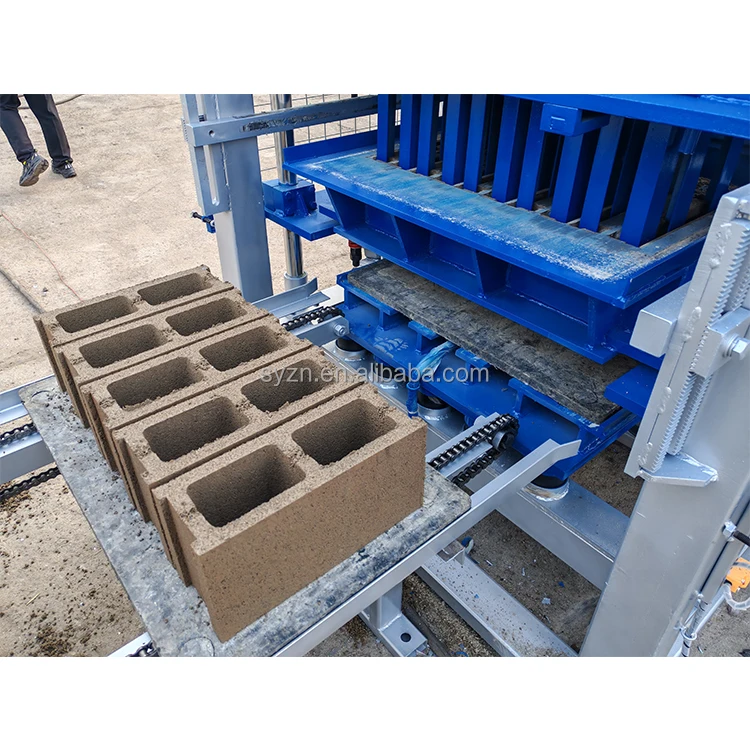
 High quality block machine