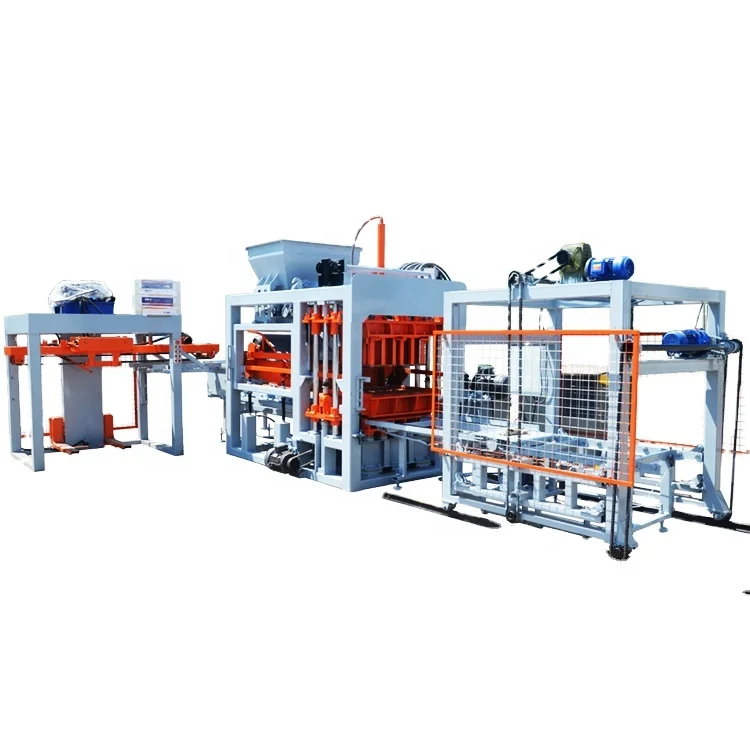
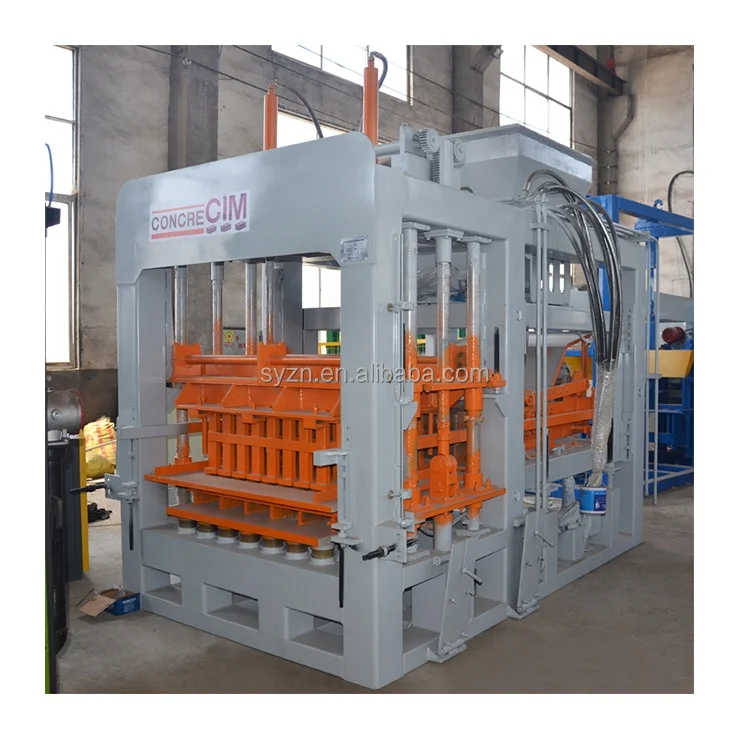
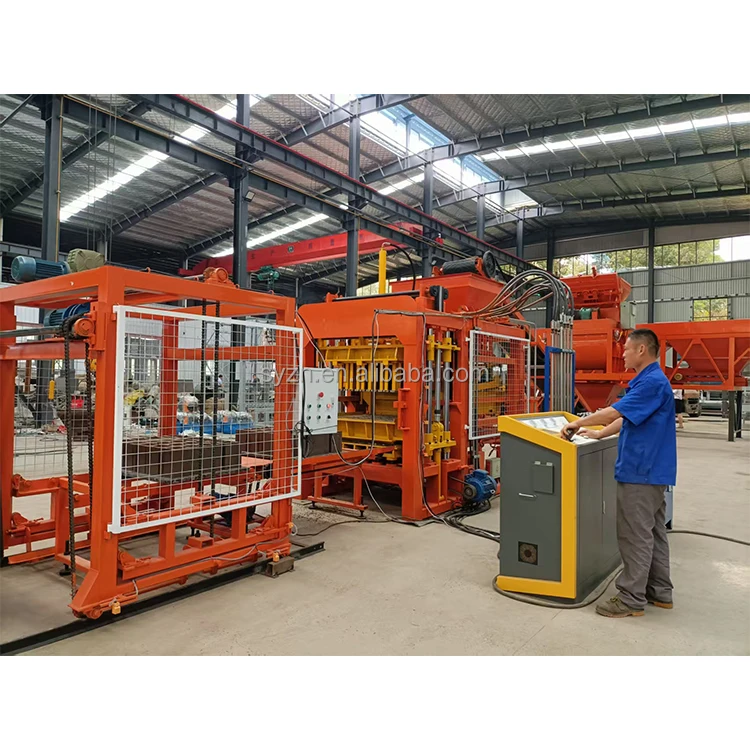
Configured to your output tier — the QT4-15 is positioned within a graduated machine range so buyers can match investment level and plant footprint to the daily block volume they actually need.
Technical Specifications
| Parameter |
Value |
| Model |
QT4-15 |
| Product Type |
Fully Automatic Hydraulic Block Making Machine |
| Overall Dimensions (L×W×H) |
7100×1600×2610 mm |
| Net Weight |
5800 kg |
| Rated Power |
27.5 kW |
| Voltage & Frequency |
380V or configurable to buyer market standard |
| Control System |
PLC (brand and display language to be confirmed) |
| Vibration Force |
60 kN |
| Pallet Size |
1020×850×40 mm |
| Standard Mould Formats |
400×200×200 mm hollow block / 400×150×200 mm block / 225×112.5×53 mm solid brick |
| Output Capacity (Hollow Block) |
960 pcs/h based on 400×200×200 mm, 4 pcs/mould (basis to be confirmed) |
| Output Capacity (Standard Block) |
1440 pcs/h based on 400×150×200 mm, 6 pcs/mould (basis to be confirmed) |
| Output Capacity (Solid Brick) |
3840 pcs/h based on 225×112.5×53 mm, 16 pcs/mould (basis to be confirmed) |
| Automation Level |
Fully automatic, handling and stacking configurable |
| Color Options |
According to buyer request |
| Warranty |
1 year |
| Certification |
ISO 9001:2008, CE |
Application Suitability
| Application |
Material or Output |
| Hollow block production for block plants |
Crushed stone, sand, cement, and local aggregate mixes |
| Solid brick manufacturing |
Fly ash, river sand, or volcanic ash-based mix designs |
| Interlocking block and paving block |
Fine aggregate blends with colour oxide additives |
| On-site contractor production |
Local aggregate sourced near housing project sites |
What "960 Pieces per Hour" Actually Means for Your Plant
A capacity figure only matters when tied to the block format you sell and the mix you can source locally.
Catalogue sheets often quote the QT4-15 block making machine manufacturer output at its most favourable format. A buyer expecting that headline number on a different block size, or with a local aggregate that slows the cycle, ends up running at a fraction of the projected daily volume. I have seen plants shut down for a week because the quoted capacity assumed a mould the buyer never intended to run. [NEED_CITE: cycle time variation by block format and mix design]

Placing the QT4-15 on the Full Machine Range
The QT4-15 occupies the mid-tier of the Shiyue automatic range. Below it, semi-automatic models serve smaller workshops with lower daily targets and reduced capital outlay. Above it, higher-tier machines handle larger pallet sizes and continuous multi-shift operation for high-volume plants. The QT4-15 suits a buyer whose output demand sits between those two extremes and who needs an automatic block machine for sale that can grow with the business.
Footprint, Investment, and Where You Stand
A 7100 mm machine length plus pallet circulation area defines the minimum building envelope. Buyers comparing the QT4-15 against the next tier up need to weigh the extra floor space and higher rated power against the additional daily volume they genuinely sell. Many first-time plant owners find the QT4-15 covers their market for the first two to three years before considering a second press or a tier upgrade. [NEED_CITE: typical plant layout requirements for mid-tier block presses]
Reading the Spec Sheet Against Your Local Conditions
The 60 kN vibration force must work in tandem with hydraulic pressure to compact the buyer’s specific aggregate into a block that meets local strength standards. A volcanic ash mix behaves differently under vibration than washed river sand, and the QT4-15 block making machine manufacturer configuration should reflect that difference. The 1020×850×40 mm pallet size also needs to match the curing racks and forklifts already on site — a mismatch here causes bottlenecks that no amount of press speed can fix. The PLC voltage and frequency must align with the local supply, and the display language must be one the operator reads fluently.
What Happens When the Tier Is Wrong
Choosing a machine below your actual daily requirement means running double shifts to keep up, wearing components faster and still falling behind orders. Overshooting the tier ties capital in unused capacity, higher power draw, and a larger building than necessary. Buyers who skip the tier comparison often discover the mismatch only after commissioning, when the real cost of change becomes prohibitive. [NEED_CITE: common causes of block machine replacement within first two years]
Why Source This Tier from Shiyue
Block machinery is the single product focus, so the QT4-15 press, its moulds, pallets, and handling stations are specified as one matched system rather than assembled from unrelated suppliers. The configuration is set against the buyer’s actual mix design and target block format instead of a catalogue default. Mould design covers the formats the buyer’s market sells, including custom drawings. Automation level starts at the buyer’s current need with a clear upgrade path. Installation support includes operator training on the specific PLC configuration shipped.
Documentation & Verification
- Line layout and capacity calculation naming the exact block format behind each output figure
- Machine specification sheet confirming voltage, frequency, and PLC display language before production
- Mould drawing and format list so the buyer verifies which block sizes the quotation covers
- Pallet specification matched to buyer’s existing curing area dimensions and forklift capacity
- Factory test record and packing photographs issued before the container is sealed
Installation, Commissioning & Support
- Foundation plan based on the QT4-15 5800 kg net weight and 60 kN vibration force transmission
- Dedicated electrical circuit sized for the 27.5 kW rated power draw at confirmed voltage
- Machine arrives dismantled for container loading; on-site reassembly supervised by technician
- First-run commissioning includes cycle time adjustment against the buyer’s local aggregate sample
- Operator training covers PLC functions, mould change procedure, and daily maintenance checkpoints
- Wear parts list and hydraulic seal kit identified before dispatch for first replacement cycle
Before You Request a Quote
Send the block format you sell most, your target daily output, and a sample or description of your local aggregate. Confirm your site voltage, frequency, and the language your operators need on the PLC display. If you already have curing racks or forklifts, share their dimensions so the pallet size can be matched from the start.
Frequently Asked Questions
Q: How do I know which output tier in the Shiyue range is right for my plant scale and investment?
A: Start with the block format you sell most and your realistic daily target, not the maximum catalogue figure. The QT4-15 block making machine manufacturer range sits between semi-automatic workshop models and high-capacity continuous lines. We map your volume and floor space against each tier so the investment matches what your market actually absorbs.
Q: The capacity table shows different outputs for different block formats — which figure applies to the block I actually sell?
A: Each output figure in the specification is tied to a named mould format and piece count per cycle. The figure that applies to you is the one matching your primary product. If you plan to run multiple formats, we calculate weighted daily capacity based on your product mix rather than quoting a single headline number.
Q: Can I start with the QT4-15 at a semi-automatic level and add automatic stacking and cubing later?
A: The automation level on the QT4-15 is configurable. A buyer can begin with manual pallet handling and basic PLC control, then add automatic pallet feeding, stacking, and cubing as output grows. The machine frame and hydraulic system remain the same, so the upgrade does not require replacing the press itself.
Q: What voltage and frequency options are available, and how is the PLC display language confirmed before shipment?
A: The QT4-15 is supplied at 380V as standard or configured to the buyer’s local supply standard. Voltage, frequency, and PLC display language are confirmed in writing before production begins so the machine arrives ready for connection. This eliminates the commissioning delays that occur when electrical specifications are assumed rather than verified.
Q: How does the QT4-15 footprint compare to higher-tier models when planning my plant layout?
A: The QT4-15 measures 7100×1600×2610 mm for the press alone, plus pallet circulation and curing area. Higher-tier models use larger pallets and longer handling conveyors, requiring a proportionally larger building envelope. We provide a line layout drawing showing the exact space requirement so you can confirm your building fits before committing.

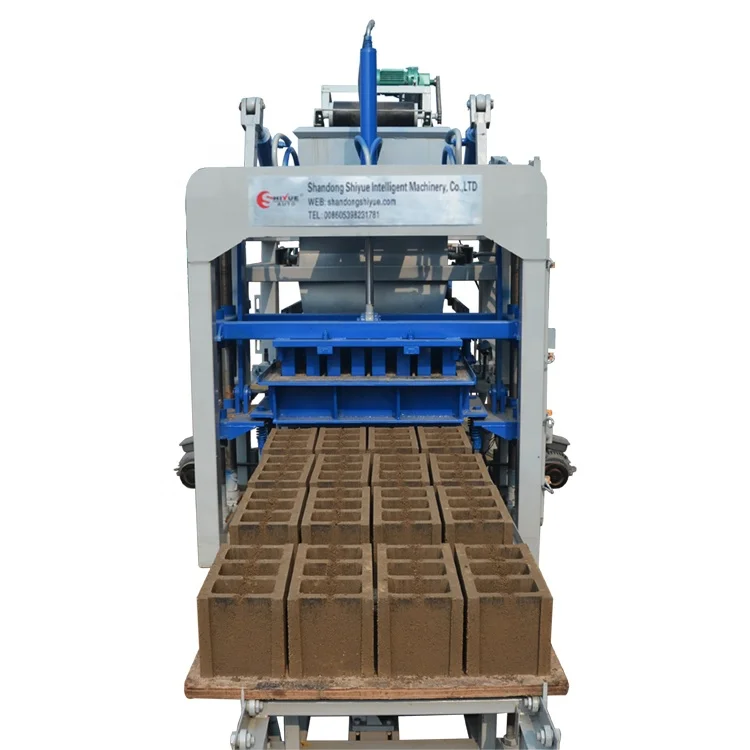
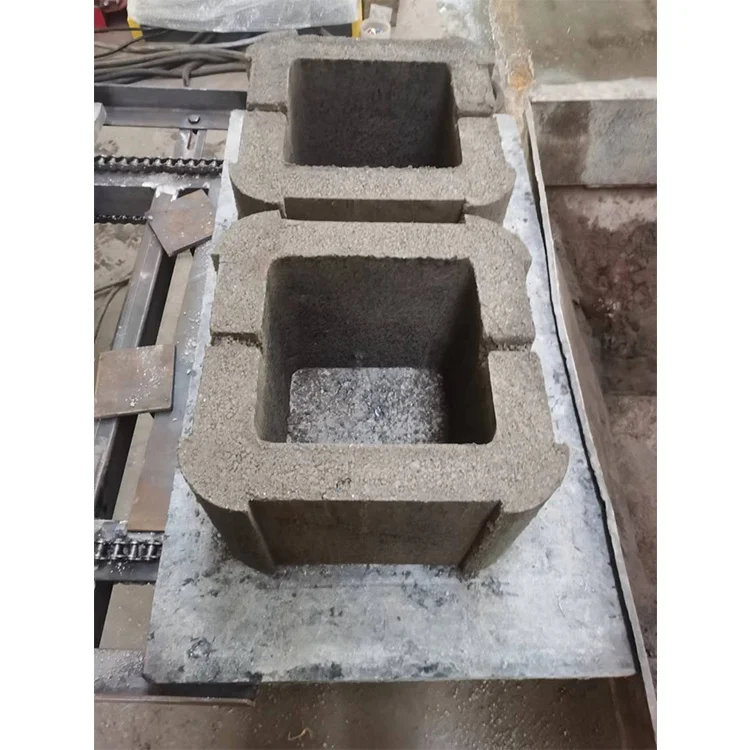 High quality block machine