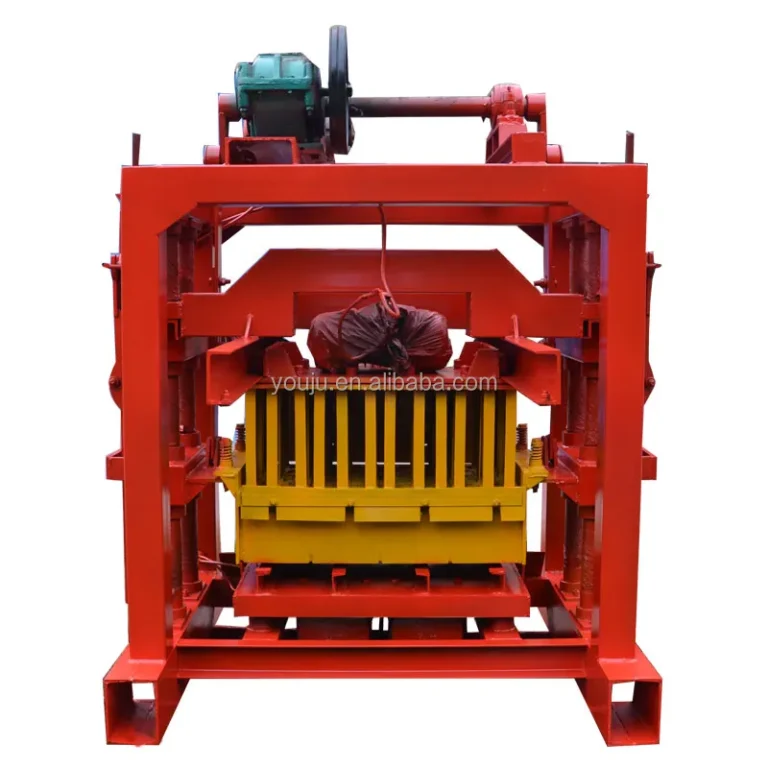
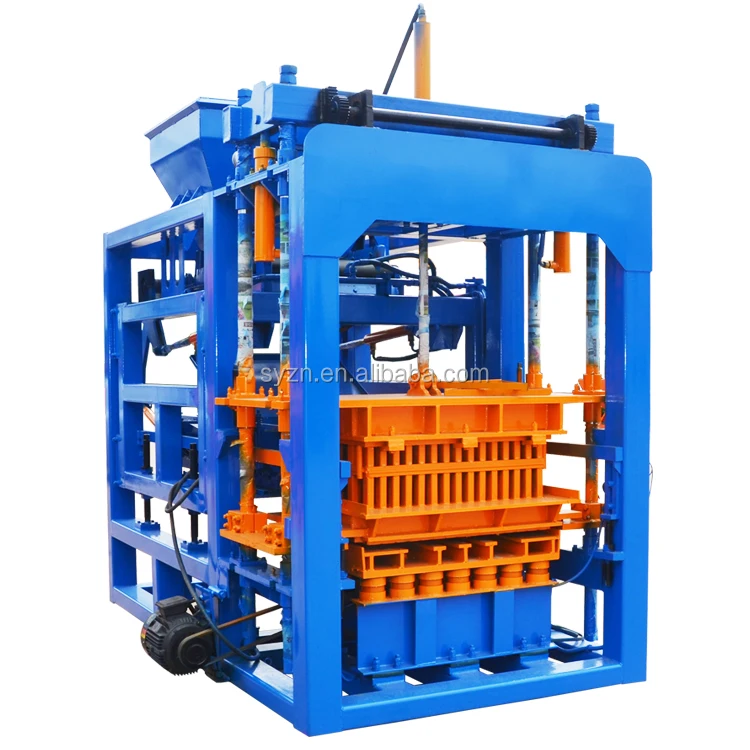
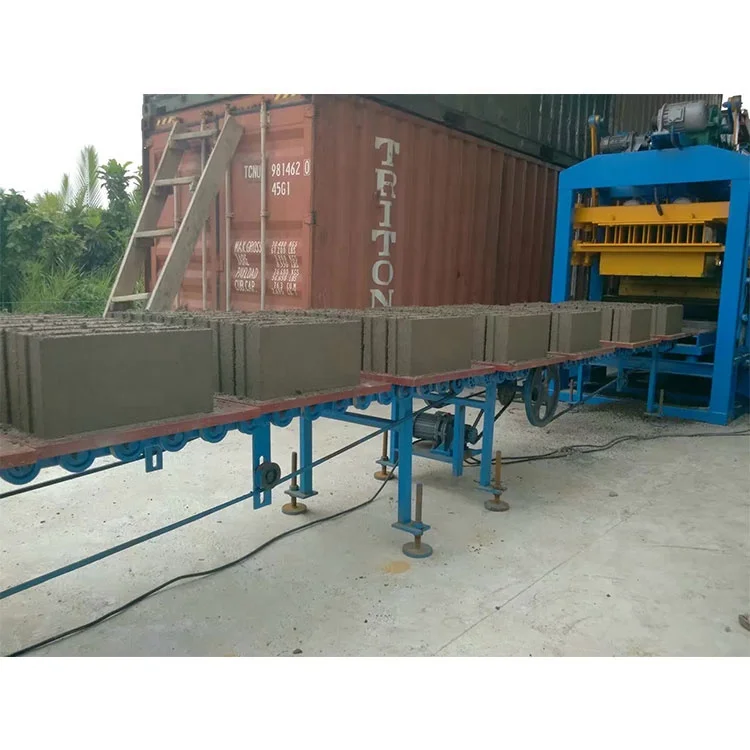
Matched system configuration — every capacity figure for the QT15-15 names the exact block format and mould cavity count it assumes, preventing the gap between quoted cycles and actual daily output.
Technical Specifications
| Parameter |
Value |
| Model |
QT15-15 |
| Product Type |
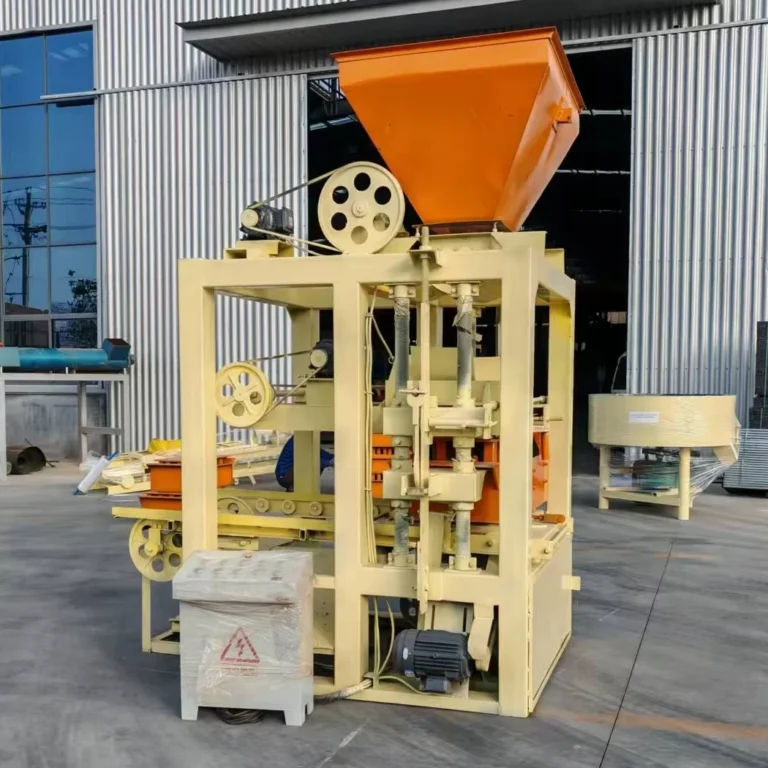
Stationary Hydraulic Concrete Block Making Machine |
| Overall Dimensions (L×W×H) |
9350×2520×2950 mm |
| Net Weight |
15 T |
| Rated Power |
45.7 kW |
| Voltage & Frequency |
380 V or according to buyer needs (frequency to be confirmed per target market) |
| Control System |
PLC with selectable display language |
| Hydraulic Pressure |
21 MPa |
| Vibration System |
Four external vibration motors |
| Upper Mould Synchronization |
Dual-side synchronous gear, four-point stability |
| Material Feeder |
Cylinder with turning arm |
| Vibration Damping |
Airbag system with adjustable air pressure |
| Pallet Size |
1350×850×40 mm |
| Standards |
ISO 9001:2008, CE |
Application Suitability
| Application |
Material or Output |
| High-capacity hollow block production |
Crushed stone, cement, sand, and fly ash aggregates producing 400×200×200 mm and 400×150×200 mm hollow blocks |
| Solid brick manufacturing |
Cement and fine aggregate blends producing 240×115×53 mm solid bricks for load-bearing and partition walls |
| Regional block supply for housing projects |
Multiple block formats from a single stationary press for construction contractors establishing local production |
| Building material plant expansion |
Adding paver and kerbstone formats to an existing product range using interchangeable moulds |
Why "Pieces per Hour" Means Nothing Without the Block Format
Capacity is only honest when the block size, mould cavity count, and cycle time are stated together.
Many stationary block machine quotations lead with a single hourly figure that assumes the smallest, fastest-cycling format in the catalogue. When the buyer’s market actually demands 400×200×200 mm hollow blocks — the most common structural unit across West Africa and South Asia — the real output can fall well below the headline number. This QT15-15 block machine manufacturer addresses that gap by publishing format-specific capacity data rather than a single aggregate claim [NEED_CITE: capacity transparency standards in concrete block machinery].
The QT15-15 produces 15 pieces of 400×200×200 mm hollow blocks per mould cycle, reaching 3,600 pieces per hour and approximately 28,800 pieces per eight-hour shift. Switch to the 400×150×200 mm format and the mould carries 16 cavities, yielding 4,320 pieces per hour. For 240×115×53 mm solid bricks, the mould holds 62 cavities at 14,000 pieces per hour, totaling 112,000 pieces per day. These figures let a buyer match the machine against actual market demand rather than a theoretical maximum.

Where the QT15-15 Sits in the Full Machine Range
The stationary block machine range spans from small workshop presses to high-capacity automatic lines, and the QT15-15 occupies the upper tier. Buyers setting up a first plant often start by comparing this tier against semi-automatic and mobile options. Semi-automatic machines demand lower capital but require manual pallet handling and stacking, which limits sustainable daily output and increases labour cost per block. Mobile egg-laying machines eliminate the need for pallets entirely but are restricted to a narrower format range and lower consistency on interlocking or paver products.
For a buyer surveying options, the QT15-15 represents the point where investment crosses into continuous automatic cycling with hydraulic pressure and vibration force matched for structural-grade hollow blocks. The plant footprint required — driven by the 9,350 mm machine length plus pallet return and stacking space — is substantially larger than a mobile unit but justified when daily volume must reach tens of thousands of blocks in a single format. Building material distributors evaluating which tier to recommend for different customer segments can use this positioning to separate buyers who need project-scale output from those serving a local retail market.
Automation Level and the Upgrade Path
The QT15-15 as a stationary concrete block making machine for sale is configured for automatic press cycling, but the degree of automation around the press — pallet feeding, stacking, curing rack handling, and cubing — is selectable. A buyer can commission the line with semi-automatic pallet handling at the start, relying on manual labour for stacking and curing transfer, then add automatic stacking and cubing modules as volume grows and labour availability tightens.
This staged approach matters because automation is not simply a line item on a quotation; it changes the operator’s role and the plant’s skill requirements [NEED_CITE: automation adoption stages in concrete product manufacturing]. The PLC control system manages press cycling, vibration timing, and feeder operation regardless of the automation tier chosen, so the control platform does not need replacement when the buyer adds downstream modules. This upgrade path protects the initial investment while allowing the plant to scale its labour model with actual production demands.
How Pressure, Vibration, and Feeder Design Shape Block Density
Three specifications on the QT15-15 directly determine whether the finished block meets the compressive strength required by local building codes. The 21 MPa hydraulic pressure provides the static compaction force, but pressure alone cannot achieve uniform density across a 1,350×850 mm pallet area. The four external vibration motors deliver dynamic consolidation, and because each motor starts under a reduced individual load, the system reaches full vibration amplitude faster at the start of each cycle. The dual-side synchronous gear on the upper mould distributes the pressing force across four points rather than relying on a single central ram, which prevents density variation between blocks at the centre and edges of the pallet.
The material feeder uses a cylinder-driven turning arm of European design to distribute the concrete mix evenly across the mould box before compaction begins. Uneven feed is one of the most common causes of weight variation between blocks in the same cycle, and this feeder geometry addresses it at the source. The airbag damping system allows the operator to adjust vibration amplitude and pressure by changing air pressure, matching the energy input to different block formats — a thin paver needs a different vibration profile than a 200 mm hollow block — without mechanical reconfiguration. This means format changes involve mould swaps and PLC parameter adjustments rather than physical modification of the vibration assembly.
The Cost of Skipping the Voltage and Language Check
Every export machine must match the destination country’s voltage and frequency before it leaves the factory, yet this confirmation is frequently left until the machine is already in production. I once spent a week on a site in Senegal waiting for a PLC language pack update because the interface shipped in English while the local operators only read French — the machine was mechanically ready but functionally idle [NEED_CITE: PLC interface language requirements for exported industrial machinery]. On the QT15-15, the PLC display language, voltage, and frequency are confirmation points that must be locked before production begins, not after.
Choosing the wrong pallet specification creates a different kind of downstream friction. The QT15-15 runs 1,350×850×40 mm pallets, and the curing area layout plus the forklift or pallet truck available on site must be compatible with this dimension. A buyer who sources pallets locally without checking the specification may end up with racks that do not fit the curing chamber or handling equipment that cannot lift a loaded pallet safely. These mismatches do not show up on a quotation comparison sheet, but they delay commissioning and add unplanned costs in the first weeks of operation.
Why Buyers Specify This Machine Through a Single Source
Block machinery is the sole product focus here, which means the QT15-15 is not sold as a standalone press assembled from separate suppliers’ components. The machine, mould, pallet, and handling equipment are specified as one matched system, so cycle times at each station align and the press is never left waiting for a pallet or a feeder cycle to complete.
Configuration is set against the buyer’s actual mix design and local aggregate rather than a catalogue default. A buyer sourcing crushed laterite in West Africa needs a different vibration profile and feeder timing than one using river sand in South Asia, and these parameters are established during the inquiry stage. Mould design and supply cover the specific formats the buyer’s market sells, including custom drawings for non-standard block profiles. The automation level is selectable from the outset, so a buyer can start semi-automatic and add stacking and cubing modules without replacing the PLC platform. Installation support includes operator training on site, and wear parts and mould replacements are documented and available from the same source that built the machine.
Documentation & Verification
- Line layout with capacity calculation stating the exact block format assumed for each output figure
- Machine specification sheet confirming voltage, frequency, and PLC display language before production starts
- Mould drawing and format list showing every cavity count per block type included in the quotation
- Factory test record demonstrating actual cycle times and block quality on your specified format before dispatch
- Pallet specification sheet matched to your curing area dimensions and existing forklift capacity
Installation, Commissioning & Support
- Foundation design must accommodate the 15 T net weight and 9,350 mm machine length with pallet return clearance
- Dedicated power circuit required for the 45.7 kW rated load, with voltage and frequency confirmed to local supply
- Machine ships in assembly state to be confirmed based on container loading constraints and site access
- PLC display language loaded and verified during factory test before crating
- Operator training covers mould change procedure, airbag pressure adjustment per block format, and daily maintenance
- Wear parts list provided with mould cavity identifiers for reorder accuracy
What to Include in Your Inquiry
To receive a configuration proposal that matches your actual production requirements, specify the block formats your market demands along with the daily output target for each format. Include your local raw material type — whether crushed stone, river sand, fly ash, or a blend — so the vibration and feeder settings can be calibrated before factory testing. Confirm your site voltage, frequency, and the PLC display language your operators need, as these lock the electrical build before production begins.
Frequently Asked Questions
Q: How is the QT15-15 capacity verified and which block format does each output figure assume?
A: Each capacity figure states the exact block dimensions and mould cavity count it is based on. For 400×200×200 mm hollow blocks, the 15-cavity mould produces 3,600 pieces per hour. For 240×115×53 mm solid bricks, the 62-cavity mould produces 14,000 pieces per hour. The capacity calculation document provided with the quotation details every format and its corresponding output.
Q: Where does the QT15-15 sit compared to semi-automatic and mobile machines?
A: The QT15-15 occupies the high-capacity tier of the stationary range, requiring a larger plant footprint and higher investment than semi-automatic or mobile alternatives. It is suited to buyers who need continuous automatic cycling and structural-grade block consistency at volumes that manual pallet handling cannot sustain. Semi-automatic and mobile units serve lower-output or project-specific applications.
Q: What voltage, frequency, and PLC language options are available?
A: The machine is built to the buyer’s confirmed voltage and frequency specification, and the PLC display language is loaded before factory testing. These parameters are locked during the quotation stage to prevent commissioning delays caused by mismatched electrical supply or an unreadable control interface on site.
Q: Can I start semi-automatic and upgrade the automation level later?
A: Yes. The PLC platform manages press cycling regardless of the automation tier, so downstream modules such as automatic stacking and cubing can be added without replacing the control system. This allows the plant to scale its labour model in line with actual production volume and market demand growth.
Q: What mould formats are included and how does the mould change process work?
A: Moulds are specified to match the block formats your market sells, and custom profiles are available from buyer drawings. The QT15-15 uses a mould change system with parameters stored in the PLC, allowing format switches with mechanical and control adjustments. The mould drawing and format list provided with the quotation detail every included cavity configuration.

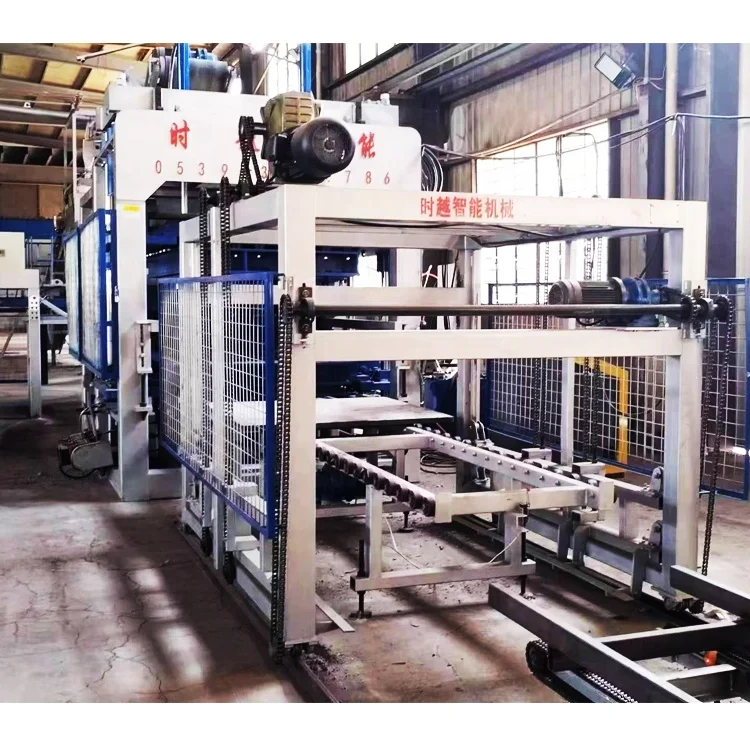
 Stationary block machine