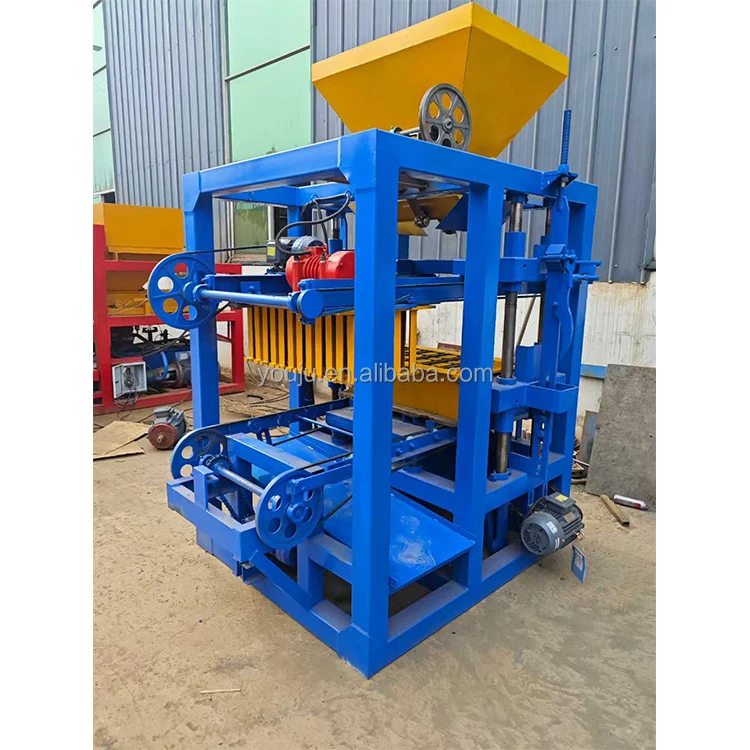
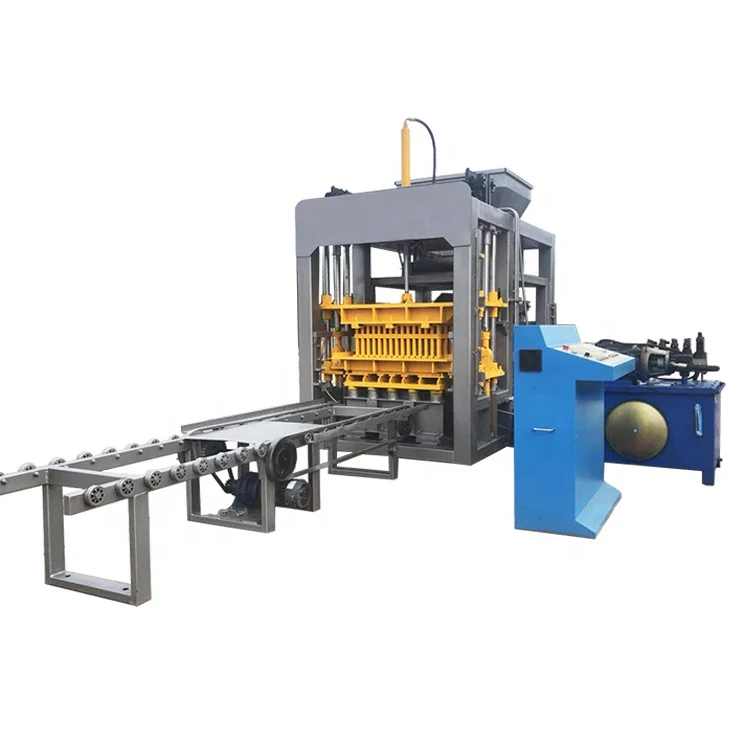
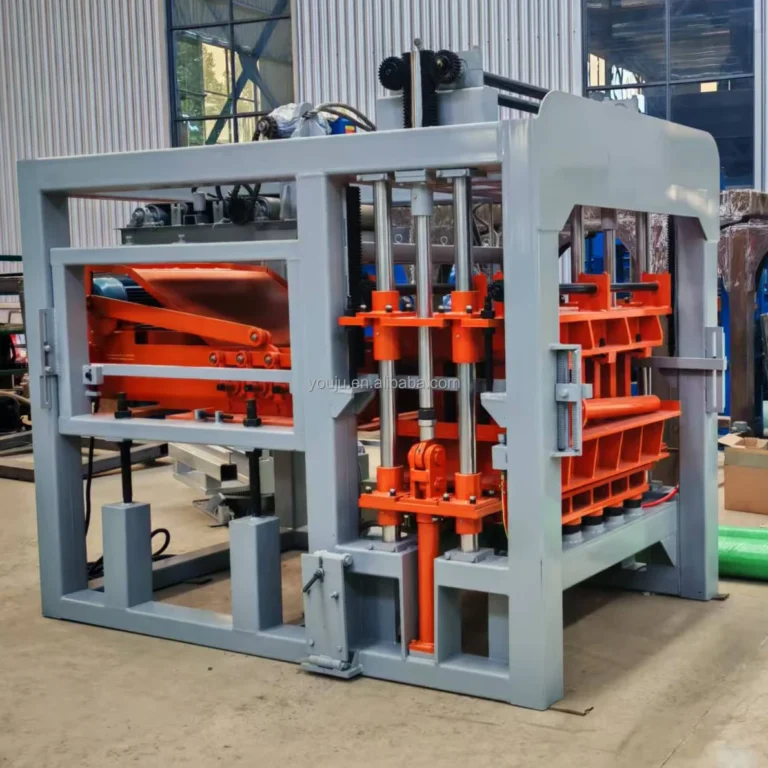
Matched System Engineering — the QT12-15 is configured as a complete press, mould, pallet and handling package against the buyer’s actual aggregate and target format, not pulled from a catalogue default.
Technical Specifications
| Parameter |
Value |
| Model |
QT12-15 |
| Product Type |
Automatic Concrete Block Making Machine |
| Overall Dimensions (L×W×H) |
7500×2500×3020 mm |
| Total Mass |
12 T |
| Pallet Size |
1220×900 mm |
| Main Vibration Form |
Platform Vibration |
| Vibration Frequency |
0-60 Hz |
| Vibration Force |
100 kN |
| Moulding Mode |
Automatic loading, vibration moulding |
| Molding Cycle |
15-20 s |
| Demolding Method |
Hydraulic |
| Overall Power |
53 kW (basis to be confirmed) |
| Control System |
PLC with human-machine interface dialogue system |
| Automation Level |
Fully automatic |
| General Water Consumption |
12 T/Day |
| Factory Area Required |
1200 m² |
| Applied Products |
Concrete blocks, hollow/solid blocks, pavers, interlocking blocks, curbstone, colored pavers |
| Raw Materials |
Crushed stone, sand, cement, fly ash, gravel, slag |
| Output Capacity |
1728-2160 pcs/h based on 400×200×200mm hollow bricks (12 pcs/mould, 20-25s cycle) |
| Output Capacity |
4860-6480 pcs/h based on 240×115×90mm porous bricks (27 pcs/mould, 15-20s cycle) |
| Output Capacity |
12700-14400 pcs/h based on 240×115×53mm standard bricks (62 pcs/mould, 15-17s cycle) |
Application Suitability
| Application |
Material or Output |
| High-volume hollow block production |
Crushed stone, sand, and cement mixes for 400×200×200mm structural blocks |
| Standard solid brick manufacturing |
Fly ash, gravel, and slag blends for 240×115×53mm building bricks |
| Paving and interlocking block runs |
Aggregates and cement for colored pavers and interlocking formats |
| Kerbstone and curb production |
Dense aggregate mixes for heavy-duty roadside elements |
| Porous brick manufacturing |
Lightweight aggregate blends for 240×115×90mm permeable bricks |
What the "Pieces per Hour" Figure Actually Means for Your Plant
Capacity is meaningless without the block format it assumes.
Sellers quote a single cycle rate as if every mould runs at the same speed, but a hollow block cycle is fundamentally different from a standard brick cycle. I have seen buyers sign contracts expecting tens of thousands of pieces daily, only to discover the headline number was based on small solid bricks while their market actually demands large hollow blocks. The concrete block making machine manufacturer should provide a capacity table that states the exact format, piece count per mould, and cycle time for every figure. [NEED_CITE: block format impact on realistic daily output in stationary block plants] When the format assumption is hidden, the entire financial model for the plant breaks down before the first pallet is cured.

Where the QT12-15 Sits in the Shiyue Stationary Range
The QT12-15 occupies the top tier of the Shiyue stationary block machine lineup, positioned above mid-range models for buyers who need high single-press throughput and have the floor space for a full automatic line. Its 1220×900 mm pallet is the largest in the range, which directly determines how many pieces form per cycle. This is the concrete block making machine manufacturer model chosen when daily volume requirements push past what a mid-tier press can deliver without running double shifts.
Matching the Press Tier to Your Real Daily Target
A buyer producing primarily large hollow blocks for a regional construction market will find the QT12-15 justified because the large pallet and 100 kN vibration force maintain density across heavy formats. Conversely, a plant focused on small pavers with moderate volume may be better served by a mid-range model, freeing capital for additional mould inventory and curing racks. The decision hinges on which block format drives revenue, not on the highest headline number in the brochure. [NEED_CITE: stationary block press sizing methodology by target block format]
Reading the Specs That Actually Shape Your Output
The platform vibration system operating at 0-60 Hz with 100 kN force works together with hydraulic demolding to compact the mix into a dense, consistent block. Vibration frequency and force must be matched to the buyer’s local aggregate — a volcanic rock mix absorbs energy differently than river gravel, and an unmatched setting leaves weak blocks that crack during curing. The 1220×900 mm pallet size dictates the curing area footprint and the forklift capacity required to move stacked pallets through the yard. A PLC-controlled human-machine interface dialogue system allows the operator to store mould-specific cycle parameters, so switching from hollow blocks to pavers does not require manual trial and error each time. The semi-closed screen reticular rotational feeding unit forces material evenly into deep mould cavities, preventing the lightweight corners that plague gravity-fed systems.
The Cost of Overlooking Configuration Details
When voltage and frequency are not confirmed before production, the machine arrives and sits idle while transformers are sourced or control panels are rewired. I have watched commissioning delays stretch into weeks because the PLC display language was set to a default the local operators could not read. Selecting a pallet size without checking the buyer’s existing curing racks and forklift means either the pallets do not fit the racks or the forklift cannot handle the loaded weight. These are not minor oversights — they freeze the entire production line while the buyer pays for idle labour and missed delivery deadlines. [NEED_CITE: common commissioning delays caused by unconfirmed electrical specifications in exported block machinery]
Why Buyers Source This Tier from Shiyue
Block machinery is our single focus, so the QT12-15 is never sold as a standalone press — the mould, pallet, feeding, stacking, and curing handling are specified as one matched system. Configuration is set against the buyer’s actual mix design and local aggregate sample, not a catalogue default that assumes standard sand. Mould design covers every format the buyer’s market demands, with custom drawings available for non-standard shapes. The automation level is selectable, allowing a buyer to begin with semi-automatic pallet handling and add full automatic stacking and cubing as volume grows. Factory testing runs the exact mould and cycle parameters that will be used on-site before the machine is crated for shipment.
Documentation & Verification
- Line layout and capacity calculation stating the block format assumed for each QT12-15 output figure
- Machine specification sheet confirming voltage, frequency, and PLC language matched to buyer site
- Mould drawing and format list with piece-per-cycle count for every available QT12-15 mould
- Factory test record demonstrating cycle time and block density before dispatch
- Hydraulic and electrical schematic for the QT12-15 control and power system
- Operation and maintenance manual with QT12-15 wear parts and mould replacement intervals
Installation, Commissioning & Support
- 1200 m² factory area required, including curing yard space for 1220×900 mm pallet circulation
- 53 kW overall power draw requires dedicated circuit sizing confirmed before foundation work
- Machine ships dismantled for container loading; reassembly and alignment performed on-site during commissioning
- PLC human-machine interface configured to buyer’s language and stored with mould-specific cycle parameters at first run
- Operator training covers platform vibration frequency adjustment for local aggregate variations
- Wear parts and mould list supplied so first replacement order can be placed before stock runs out
Before You Request a Quote
To size the QT12-15 correctly within your plant, we need your target block format with dimensions, the daily volume you must hit, and the local aggregate type you will use in the mix. Share your available factory floor area and ceiling height, along with the voltage and frequency standard at your site. Let us know whether you already have pallets, curing racks, and a mixer in place, or if the line needs to include those stations from the start.
Frequently Asked Questions
Q: How does the QT12-15 output change across different block formats?
A: The output depends entirely on the block format and its mould cavity count. For 400×200×200mm hollow bricks, the QT12-15 produces 1728-2160 pieces per hour at a 20-25 second cycle with 12 pieces per mould. For 240×115×53mm standard bricks, the rate rises to 12700-14400 pieces per hour because the mould holds 62 pieces and the cycle shortens to 15-17 seconds. Realistic daily output requires multiplying by your planned operating hours and accounting for pallet circulation time.
Q: Where does the QT12-15 fit compared to mid-range stationary models?
A: The QT12-15 is the top tier in the Shiyue stationary range, chosen when daily volume targets exceed what mid-range presses can sustain on a single shift. Its 1220×900 mm pallet and 100 kN vibration force handle large, dense formats that smaller pallets cannot accommodate. Buyers producing moderate volumes of pavers or interlocking bricks may find a mid-range model more cost-effective, reserving capital for additional moulds and curing infrastructure.
Q: What factory space and supporting equipment does the QT12-15 need?
A: The press itself sits within a 7500×2500×3020 mm footprint, but the complete line requires approximately 1200 m² including raw material storage, mixing, pallet circulation, curing racks, and stacking area. Supporting equipment typically includes a batch mixer sized to the cycle rate, a pallet feeding system, and a cubing station. The 1220×900 mm pallet size must match your curing rack dimensions and forklift capacity.
Q: Can automation be phased in stages?
A: Yes. A buyer can start the QT12-15 with semi-automatic pallet handling and manual stacking, then add automatic pallet feeding, stacking, and cubing as production volume grows. The PLC control system accommodates both configurations, so the upgrade does not require replacing the main control hardware. This lets buyers align investment with actual market demand rather than paying for full automation on day one.
Q: How are voltage and PLC language confirmed before production?
A: During the inquiry stage, the buyer provides the site voltage, frequency, and preferred PLC display language. These are written into the machine specification sheet and confirmed before the QT12-15 enters production. The factory test then runs with those exact electrical settings, so the machine arrives ready for connection without on-site rewiring or panel modification.

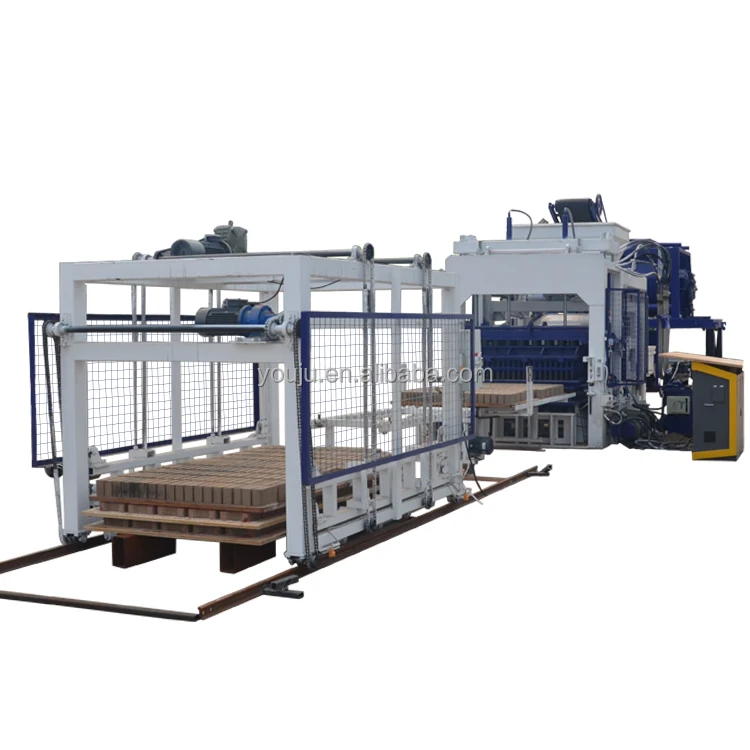
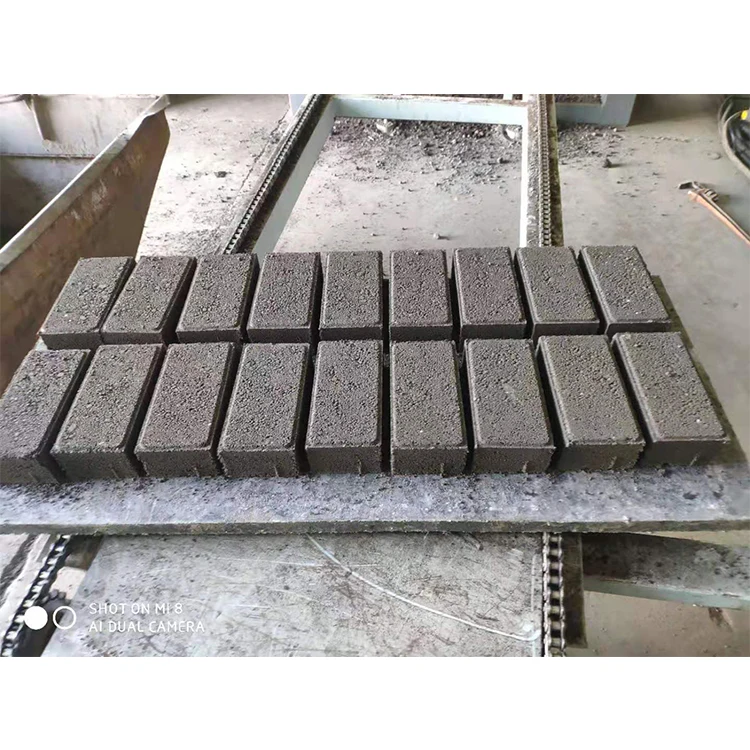 Stationary block machine