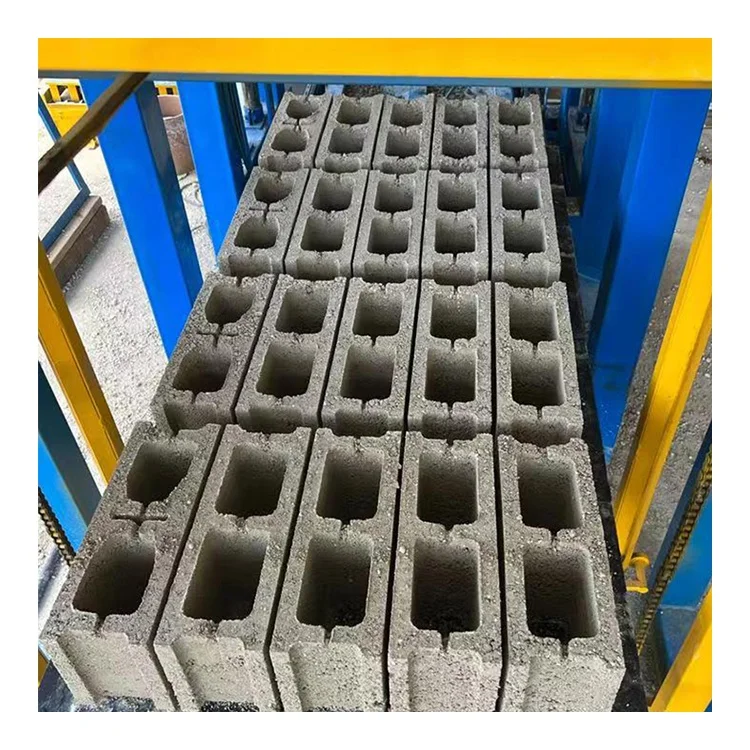
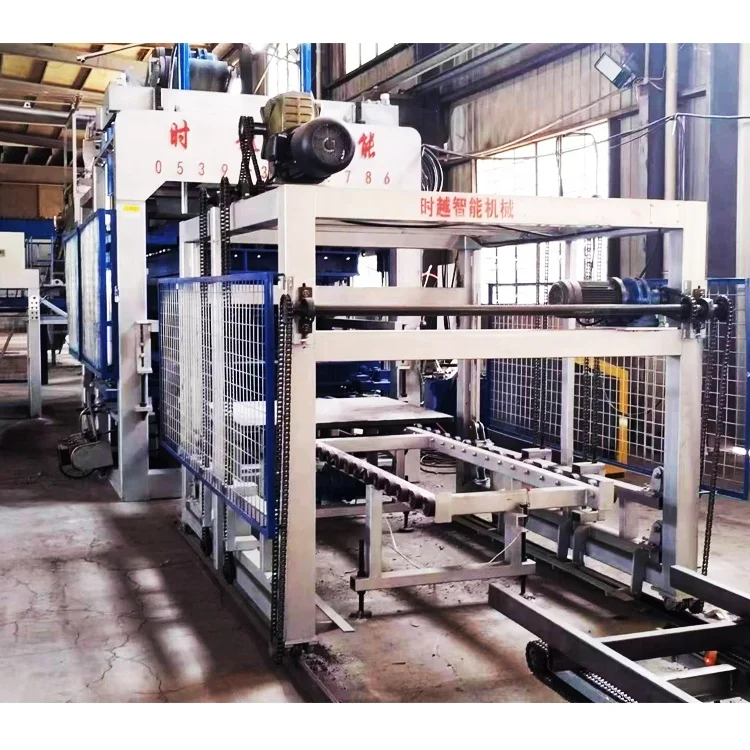
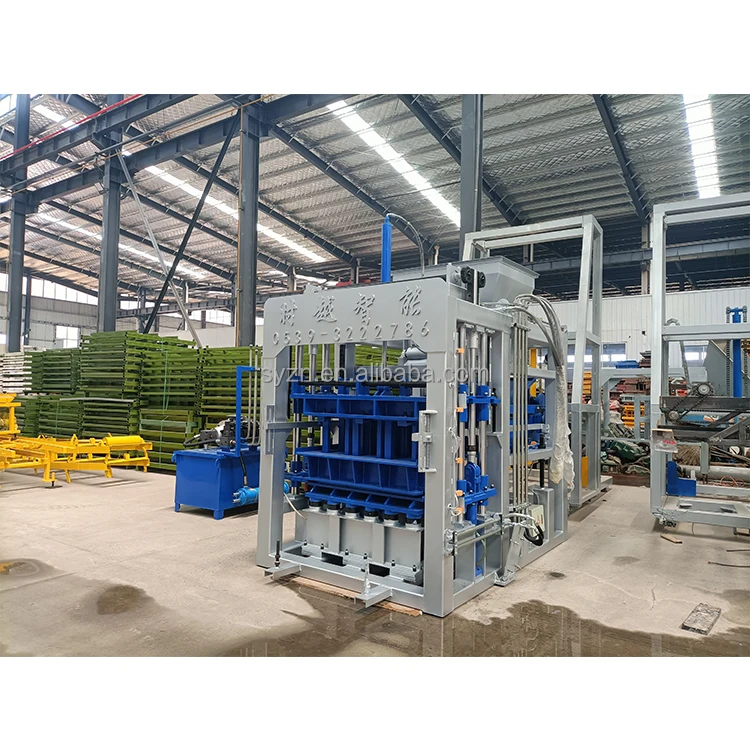
Complete Line Architecture — The QT12-15 is specified as a six-component matched system from pallet feeder through PLC cabinet, not assembled from separate suppliers, so every station cycles in time with the press.
Technical Specifications
| Parameter |
Value |
| Model |
QT12-15 |
| Product Type |
Automatic Concrete Block Making Machine |
| Overall Dimensions (L×W×H) |
9350 × 2520 × 2950 mm |
| Total Mass |
12000 kg |
| Overall Power |
52 kW |
| Pallet Size |
1300 × 900 mm |
| Molding Cycle |
15–25 s (basis to be confirmed by block format) |
| Vibration Form |
Platform Vibration |
| Control System |
PLC Cabinet |
| Composition |
Pallet feeder, molding machine, storage hopper, block conveyor, hydraulic station, electrical PLC cabinet |
| Simple Production Line Configuration |
PL1200 batching machine, JS500 or JS750 mixer, 8 m conveyor belt and stacker |
| Raw Materials |
Fly ash, slag, gangue, industrial wastes, river sand, gravel, cement |
| Standards |
CE declaration where applicable |
Application Suitability
| Application |
Material or Output |
| Hollow block production for commercial and residential walls |
Fly ash, river sand, gravel, cement blends |
| Paving block manufacturing for roads and walkways |
Crushed stone, slag, cement mixes |
| Curbstone and kerb production for municipal infrastructure |
High-strength aggregate and cement |
| Porous and grass block production for landscaping |
Lightweight aggregate, sand, cement |
| Slope-protecting and ring-tree block manufacturing |
Industrial waste, gangue, cement |
| On-site concrete product manufacturing |
Locally sourced natural or recycled aggregates |
What the 15–25 Second Cycle Actually Means for Your Output
Molding cycle is only meaningful when tied to the block format being produced and the raw material in the hopper.
Buyers often receive a quote stating a cycle time without the corresponding block dimension. A 15-second cycle on a small paver is very different from a 25-second cycle on a 400 mm hollow block, yet both numbers end up in the same brochure. The automatic concrete block making machine manufacturer must declare which format the cycle assumes so that daily output calculations hold up once the line is running. I have seen plants where the pallet size and vibration force were never matched to the buyer’s local river sand, and the resulting blocks cracked before reaching the curing area [NEED_CITE: aggregate testing standards for concrete block production].

Where the QT12-15 Sits on the Machine Range
This model occupies the automatic tier within the stationary block machine lineup. It includes a pallet feeder, block conveyor, and PLC cabinet as standard — separating it from semi-automatic machines that require manual pallet handling. Buyers evaluating their first high-output plant, or replacing an existing press that has become a bottleneck, use this tier to gauge whether the automation level fits their labour situation and daily volume target. The automatic concrete block making machine manufacturer positions the QT12-15 above workshop-scale machines and below fully automatic stacking and cubing lines, making it a common choice for plants planning to grow capacity in stages.
How the Six-Component Line Holds Together as a Matched System
The QT12-15 ships as a defined set: pallet feeder, molding machine, storage hopper, block conveyor, hydraulic station, and electrical PLC cabinet. Each station must hand off to the next without the press idling while pallets or raw material catch up. When the storage hopper feed rate is slower than the molding cycle demands, the press pauses and the quoted cycle time becomes theoretical. When the block conveyor cannot clear finished pallets fast enough, the same stall occurs at the exit side. Specifying these six components together — rather than sourcing them separately — removes the guesswork from line balancing [NEED_CITE: block production line synchronization principles].
Platform Vibration, Pallet Size, and What They Dictate on the Shop Floor
The 1300 × 900 mm pallet sets the maximum block footprint available per molding cycle. Every format — hollow block, paver, curbstone — must fit within this area, and the number of cavities per mould is limited by it. Platform vibration transmits force through the pallet into the material, and the effectiveness of this transfer depends on pallet rigidity and thickness. A pallet that flexes under vibration absorbs energy that should be compacting the concrete, producing a weaker block. The 52 kW overall power must cover the vibration motor, hydraulic station, and conveyor drives simultaneously; undersizing any one of these consumers causes cycle delays that compound across a full shift. Buyers should confirm the pallet material and thickness against the curing rack spacing and forklift capacity already in place at their facility.
What Happens When the Line Configuration Is Chosen Blindly
A buyer who selects the QT12-15 without confirming voltage, PLC display language, and pallet material against their existing site conditions faces delays that begin at commissioning and continue through daily operation. The PLC cabinet may arrive with a display in a language the operators cannot read. The pallet size may not match the curing racks already built, forcing a rack rebuild or a pallet reorder before a single block is sold. The hydraulic station may be rated for a frequency that the local grid does not supply, tripping breakers during startup [NEED_CITE: voltage and frequency standards by export market]. These are not engineering failures — they are specification gaps that a proper pre-order survey eliminates.
Why Buyers Source This Automatic Concrete Block Making Machine Manufacturer
The machine, mould, pallet, and handling equipment are specified as one matched system, so the pallet feeder, conveyor, and stacker are all sized to the QT12-15’s cycle rather than adapted after the fact. Configuration is set against the buyer’s actual mix design and local aggregate, not pulled from a catalogue default. Mould design covers the formats the buyer’s market actually sells, and custom drawings are accepted when standard formats do not match. Automation level is selectable, allowing a plant to begin with the QT12-15’s standard PLC control and add automatic stacking or cubing later. Installation includes operator training so the crew running the machine on day one understands the parameter adjustments that affect block density and cycle timing.
Documentation & Verification
- Line layout and capacity calculation stating which block format the 15–25 s cycle assumes
- Machine specification sheet confirming 1300 × 900 mm pallet size and 52 kW power rating
- Mould drawing and format list covering hollow block, paver, curbstone, and porous block
- Hydraulic and electrical schematic matching the PLC cabinet configuration
- Factory test record and packing photographs of all six line components before dispatch
Installation, Commissioning & Support
- Foundation pad sized to the 9350 × 2520 mm footprint with anchor bolt layout provided before pour
- Dedicated power circuit rated for the 52 kW total draw with voltage and frequency confirmed to local grid
- Six-component line arrives in dismantled state for container loading; reassembly sequence documented
- PLC cabinet parameters set during commissioning to match the buyer’s mix and target block format
- Operator training covers mould change procedure, vibration adjustment, and daily maintenance checkpoints
- Wear parts list supplied with hydraulic seal and mould liner reorder intervals specified
Preparing Your Inquiry
To receive a configuration proposal that reflects actual site conditions, share your target block formats, the daily output you need, and the raw materials available locally — especially sand source and aggregate grading. Include your site voltage, frequency, and preferred PLC display language. If you have existing curing racks or forklifts, provide their dimensions so the pallet size can be cross-checked before the quotation is finalized.
Frequently Asked Questions
Q: How is the QT12-15 daily output calculated and which block format does it assume?
A: Daily output depends on the block format, because a hollow block and a small paver use different moulds and cycle times within the 15–25 second range. The capacity calculation provided with each quotation states the exact format assumed, the number of cavities per mould, and the resulting pieces per shift.
Q: Where does the QT12-15 fit compared to semi-automatic and higher-tier automatic lines?
A: The QT12-15 sits in the automatic tier with a pallet feeder, block conveyor, and PLC control as standard. It removes manual pallet handling from the operator’s tasks. Higher tiers add automatic stacking and cubing; semi-automatic models below it require manual pallet transfer and stacking.
Q: What pallet size does the QT12-15 use and how does it affect my curing area?
A: The QT12-15 uses a 1300 × 900 mm pallet. Your curing racks, rack spacing, and forklift tines must accommodate this dimension. Confirming pallet size before order prevents a mismatch that would require rebuilding racks or sourcing different pallets after the machine arrives.
Q: Which mould formats are standard and which need custom design?
A: Standard moulds cover hollow blocks, porous blocks, curbstone, pavement blocks, grass blocks, and slope-protecting blocks. Formats outside this range or with non-standard dimensions can be produced from custom drawings. Mould change time varies by format and should be confirmed during the proposal stage.
Q: What plant footprint does the simple production line configuration require?
A: The simple line includes a PL1200 batching machine, a JS500 or JS750 mixer, and an 8-meter conveyor belt alongside the QT12-15 press itself. Total floor space depends on curing rack layout and raw material storage, which should be planned using the line layout drawing provided with each quotation.

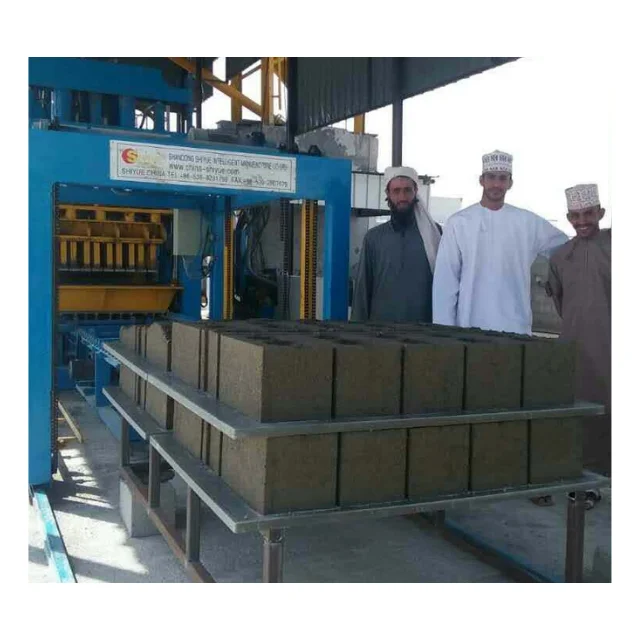
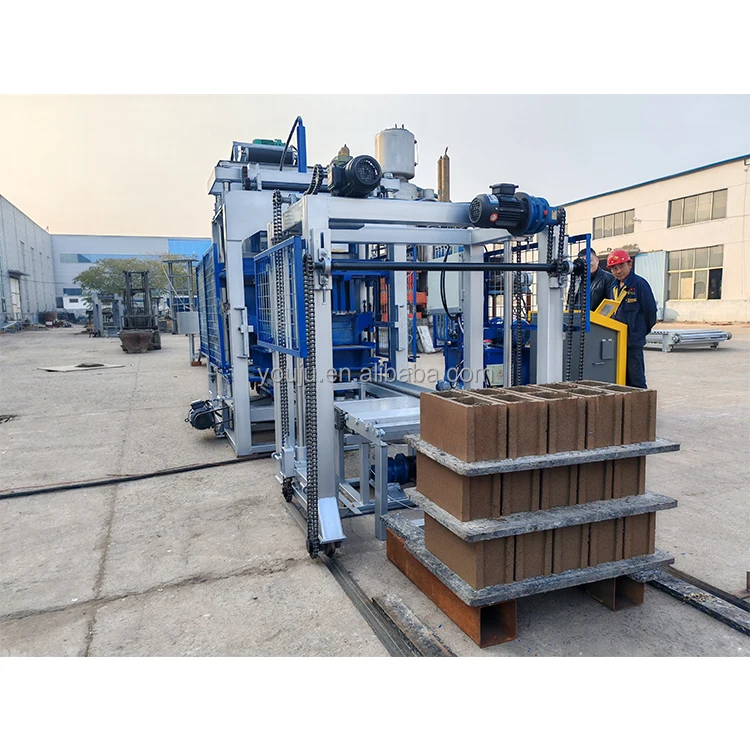 Stationary block machine