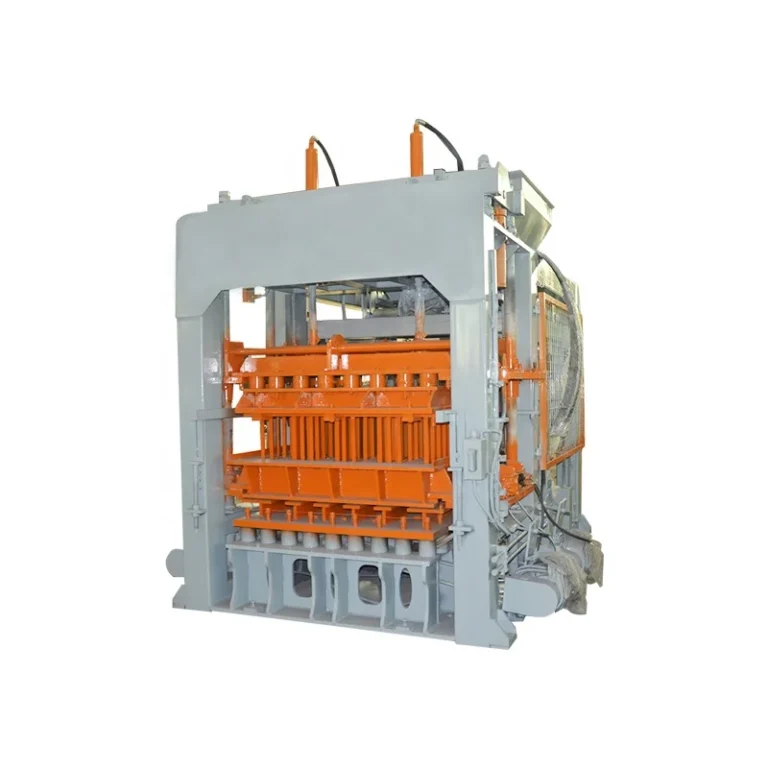
Matched System Sizing — The QT10-15 is configured against your actual block format, local aggregate, and target daily output rather than a catalogue default.
Technical Specifications
| Parameter |
Value |
| Model |
QT10-15 |
| Product Type |
Automatic Concrete Block Making Machine |
| Automation Level |
Automatic (PLC control cabinet, automatic pallet feed, hydraulic unit) |
| Cycle Time (400×200×200mm & 400×150×200mm blocks) |
15–20s |
| Cycle Time (240×115×53mm solid brick) |
15–20s |
| Cycle Time (200×100×60mm & 225×112.5×60mm pavers) |
20–25s |
| Output Capacity (400×200×200mm, 10 pcs/mould) |
1,800–2,400 pcs/h |
| Output Capacity (400×150×200mm, 12 pcs/mould) |
2,160–2,880 pcs/h |
| Output Capacity (240×115×53mm, 62 pcs/mould) |
8,928–11,160 pcs/h |
| Output Capacity (200×100×60mm paver, 27 pcs/mould) |
5,184–6,480 pcs/h |
| Output Capacity (225×112.5×60mm paver, 24 pcs/mould) |
4,032–5,040 pcs/h |
| Daily Output – 8 hr (400×200×200mm) |
14,400–19,200 pcs |
| Daily Output – 8 hr (400×150×200mm) |
17,280–23,040 pcs |
| Daily Output – 8 hr (240×115×53mm) |
71,424–89,280 pcs |
| Daily Output – 8 hr (200×100×60mm) |
41,472–51,840 pcs |
| Daily Output – 8 hr (225×112.5×60mm) |
32,256–40,320 pcs |
| Mould Format |
Hollow block, solid brick, paving brick, interlocking brick (via mould change) |
| Control System |
PLC control cabinet |
| Voltage & Frequency |
Configurable to site supply (basis to be confirmed before order) |
| Warranty |
1 year for whole machine (excluding spare parts) |
Application Suitability
| Application |
Material or Output |
| High-volume concrete block plant |
Hollow and solid blocks from crushed stone, sand, and cement |
| Paving and kerbstone production |
Interlocking and rectangular pavers using fine aggregate mixes |
| Construction contractor on-site supply |
Multi-format masonry units for housing or commercial projects |
| Building material distributor |
Diverse brick and block formats from a single production line |
Why the QT10-15 Automatic Block Machine Manufacturer Capacity Quote Needs a Format Breakdown
A cycle count means nothing until you know what is being pressed in each cycle.
I once reviewed a quotation where a machine was promised at 2,400 blocks per hour, but the buyer assumed solid bricks while the supplier calculated based on large hollow blocks. The reality on the floor was a fraction of the expected output, and the project schedule slipped before the first pallet was stacked. This is why every capacity figure for the QT10-15 automatic block machine manufacturer must be tied to a specific block format, mould count, and cycle time [NEED_CITE: capacity calculation methods in concrete block production]. When the format is clear, the daily production target is realistic rather than theoretical.

Positioning the QT10-15 Within the Full Machine Range
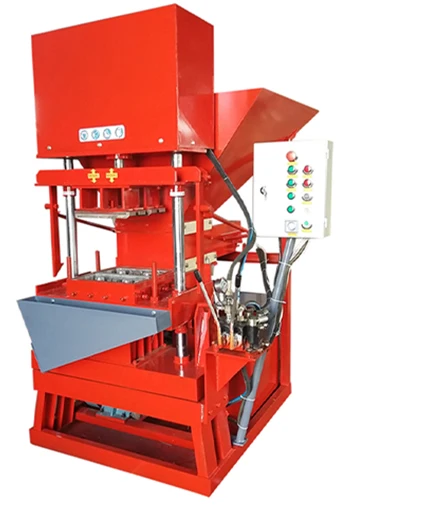
The QT10-15 sits in the high-capacity automatic tier, designed for plants that need consistent daily volumes across several block formats. It is positioned above semi-automatic and mobile egg-laying tiers, which serve smaller workshops or project-specific on-site production. Buyers surveying their options should consider the QT10-15 automatic block machine manufacturer offering when their target output requires a fixed plant with automatic pallet feeding and a dedicated hydraulic station. The investment and footprint are larger, but the format flexibility and cycle consistency justify the step up for medium-to-high volume operations.
Line Integration Beyond the Press
A block press does not run in isolation. The raw material feeding, mixing, pallet feeding, and stacking stations must be timed so the press is never left waiting for a pallet or a batch. In the full range, the QT10-15 is specified as part of a matched line where each station’s cycle is calculated against the press rhythm [NEED_CITE: block production line synchronization principles]. If the mixer cannot deliver a fresh batch within the press cycle, the entire line slows. This is why the line layout must be reviewed as a single system, not a collection of stand-alone machines.
How Pressure, Vibration, and Pallet Size Shape Block Quality
The hydraulic pressure and vibration force together determine the compaction density of every block leaving the press. If the vibration is too low for a stiff mix, the block will be under-compacted and fail strength tests. If the pressure is too high for a lightweight aggregate, the block may crack during demoulding. Pallet size must match both the mould footprint and the curing area racking already installed at the plant. A mismatch here forces the buyer to reconfigure the curing yard or purchase new forklifts, adding hidden cost to the project. Mould change time also affects how many formats can be run in a single shift, directly influencing format flexibility.
The Cost of Skipping Voltage and Language Confirmation
I was on a site in the Middle East where a QT10-15 Bloquera De Cemento Machine De Fabrication De Parpaing arrived, was wired up, and powered on — only for the local operator to stare at a PLC screen entirely in Chinese. Commissioning stalled for two days until a translator was flown in. That delay cost more than the flight. Voltage and frequency mismatches cause similar standoffs; a motor wound for 380V/50Hz will not start on a 440V/60Hz supply without rewinding or a transformer [NEED_CITE: voltage and frequency standards by export market]. Confirming these details in writing before production begins avoids the most expensive kind of rework.
Why Source the QT10-15 Automatic Block Machine Manufacturer Here
Block machinery is the single focus of this manufacturing operation, so the press, moulds, pallets, and handling equipment are specified as one matched system. Each configuration is set against the buyer’s actual mix design and local aggregate, not a catalogue default. Mould design covers the formats the buyer’s market actually sells, including custom drawings when standard formats do not fit. Automation level is selectable, allowing a buyer to start semi-automatic and upgrade later as demand grows. Installation, commissioning, and operator training are included so the line is running correctly from the first shift.
Documentation & Verification
- Line layout and capacity calculation stating block format, mould count, and cycle time assumed
- Machine specification sheet with hydraulic pressure, vibration force, and pallet dimensions
- Mould drawing and format list covering hollow, solid, paving, and interlocking options
- Voltage, frequency, and PLC display language confirmation signed before production
- Factory test record and packing photographs provided prior to container loading
- Operation and maintenance manual with wear parts list and mould replacement schedule
Installation, Commissioning & Support
- Foundation plan aligned with QT10-15 overall dimensions and dynamic load from vibration
- Dedicated electrical circuit sized to the confirmed rated power and voltage specification
- Machine dismantled for shipment and reassembled on-site with alignment verification
- PLC display language and control parameters set during commissioning to match operator needs
- Operator training covering mould change procedure, pallet feed adjustment, and daily maintenance
- Wear parts and mould inventory list supplied for first-year replacement planning
Preparing Your QT10-15 Inquiry
To configure the right line, share your target block formats, required daily output, and the local aggregate you plan to use. Include your site’s available floor space, ceiling height, and the curing area layout so pallet and stacking equipment can be matched. Confirm the local voltage, frequency, and the language your operators read on a control screen. If you already have mixers, conveyors, or forklifts in place, list their specifications so the new line integrates without redundant equipment.
Frequently Asked Questions
Q: How is the capacity figure for the QT10-15 calculated, and which block format is it based on?
A: Every capacity figure is tied to a specific block format, mould cavity count, and cycle time range. For example, 1,800–2,400 pieces per hour is based on a 400×200×200mm hollow block with 10 cavities per mould and a 15–20 second cycle. Switching to a different format changes both the cavity count and cycle, so the hourly output shifts accordingly.
Q: Where does the QT10-15 sit in the range compared to semi-automatic and mobile tiers?
A: The QT10-15 occupies the high-capacity automatic tier, requiring a fixed plant with dedicated foundation, power supply, and curing area. Semi-automatic and mobile tiers serve smaller workshops or on-site production with lower investment and footprint. The choice depends on your daily volume target and whether you need multi-format flexibility from a single line.
Q: Is pallet handling, stacking, and curing included in the quoted line?
A: Pallet feeding is part of the automatic configuration, but stacking and curing rack handling depend on the automation level selected. These stations must be confirmed during the line layout stage so the press is never bottlenecked. If omitted, output must be moved and stacked manually, which affects shift planning.
Q: Can the QT10-15 be configured to my local aggregate and mix design?
A: Yes. The vibration force, hydraulic pressure, and cycle parameters are adjusted to match your specific mix design and local raw materials. A machine configured for a default catalogue mix may produce inconsistent block strength when fed a different aggregate. This is why your material profile is collected before the configuration is finalized.
Q: What is the procedure for confirming voltage, frequency, and PLC language?
A: These details are confirmed in writing before production begins. The buyer provides the site’s electrical supply specifications and the preferred PLC display language. The control cabinet is then wired and programmed accordingly, and verified during the factory test. This step prevents commissioning delays caused by language barriers or motor incompatibility at the destination.

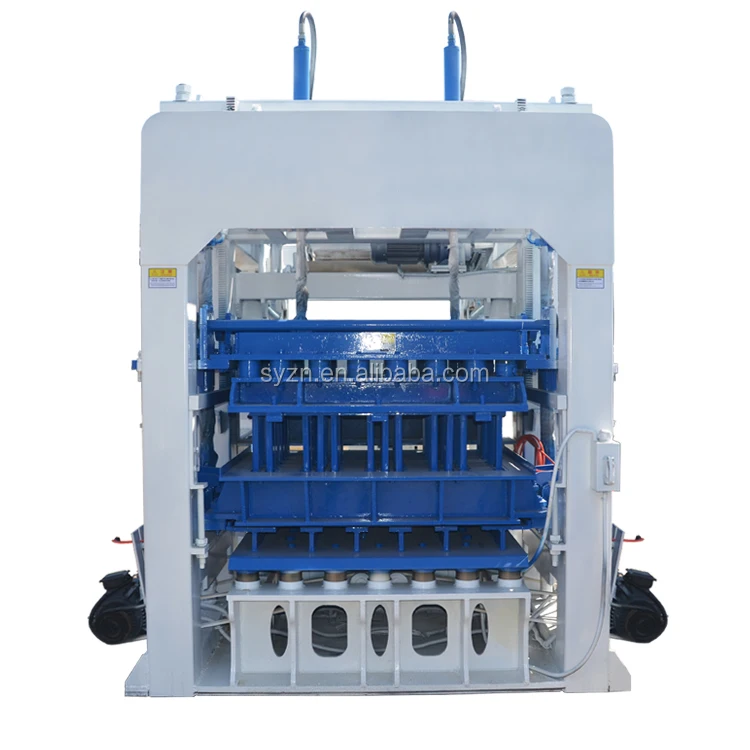
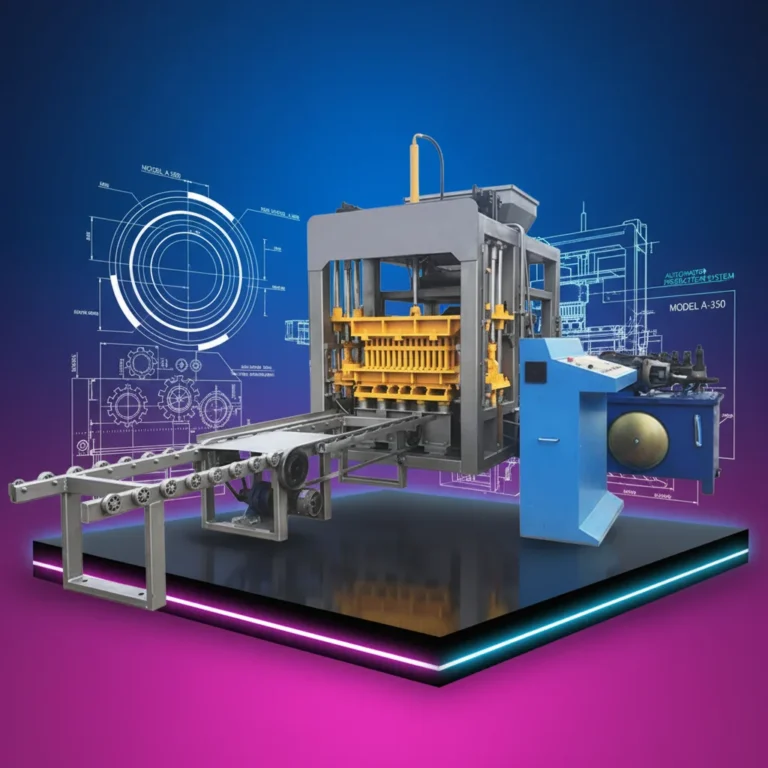 Automatic block machine