Matched System Design — Machine, mold, and vibration are specified together against the buyer’s actual aggregate, not sourced from separate catalog pages.
Technical Specifications
| Parameter |
Value |
| Model |
QMY6-25 |
| Product Type |
Mobile Egg-Laying Block Making Machine |
| Molding Capacity |
6 pcs/mold |
| Hydraulic Pressure |
16 MPa |
| Vibration Form |
Mold Vibration |
| Molding Cycle |
20s–25s (basis not stated in source) |
| Turning Method |
Hydraulic |
| Total Power |
9.6 kW |
| Total Mass |
2.5 Tons |
| Voltage & Frequency |
Customizable according to buyer requirement |
| Pallet Requirement |
Not applicable (egg-laying type) |
| Mould Format |
Interchangeable (hollow, solid, paving) |
| Automation Level |
Semi-automatic / mobile |
Application Suitability
| Application |
Material or Output Context |
| On-site project production |
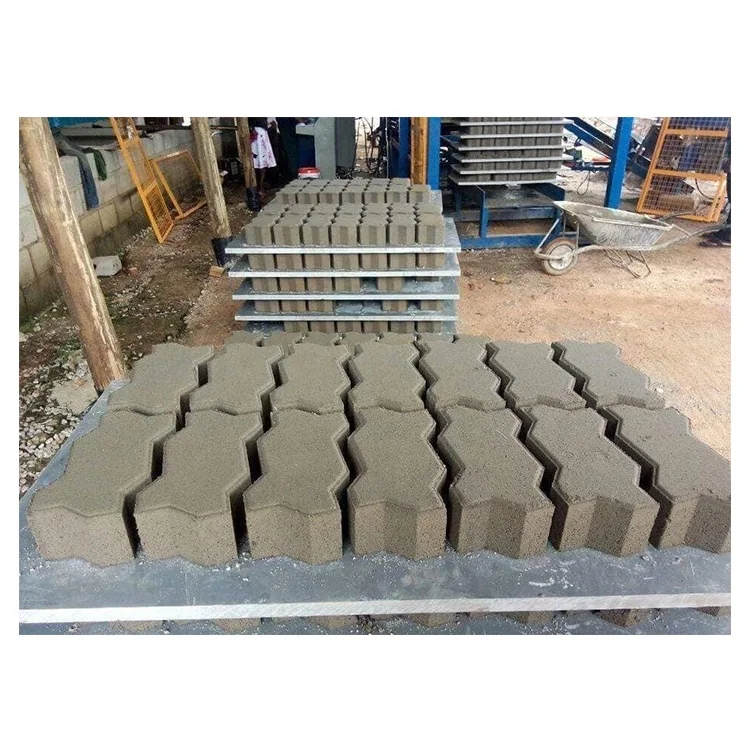
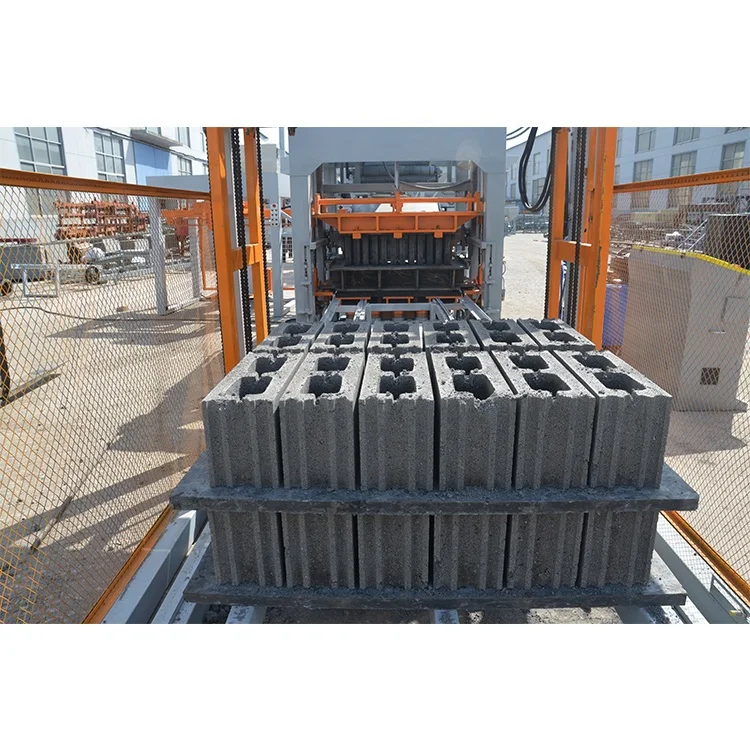
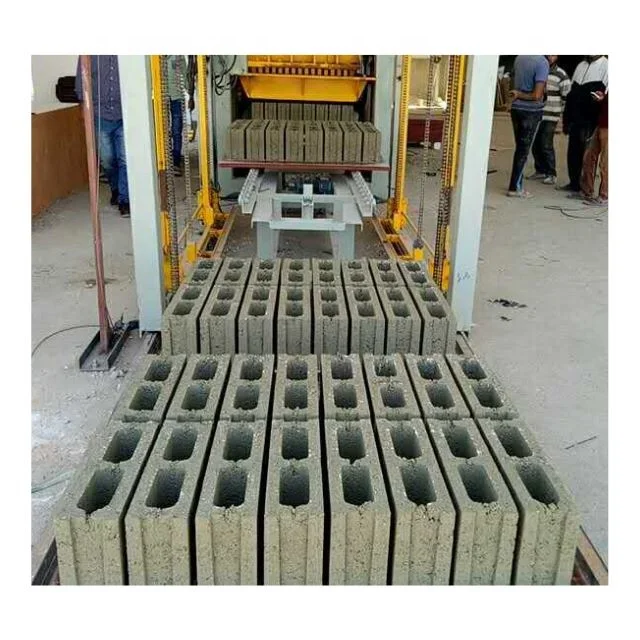
Concrete blocks laid directly on a prepared ground slab without fixed plant infrastructure |
| First-stage block plant setup |
Lower investment entry for entrepreneurs producing hollow and solid blocks for local sale |
| Remote or distributed sites |
Mobile operation where transporting finished blocks from a central factory is not viable |
| Paving and landscaping formats |
Interlocking and paving block runs using interchangeable moulds on the same machine |
Why "Cycles per Hour" Can Mislead Your Daily Output Plan
A cycle time only means something when the block format and material are stated alongside it.
When buyers receive a quotation that highlights a fast molding cycle but omits the specific block type used to measure it, the real daily output on their own product mix often falls well short of expectations. A 20-second cycle on a small solid paver does not translate to the same pace on a large hollow block with a different concrete consistency. I have seen project schedules slip because the capacity figure was treated as a universal constant rather than a format-dependent variable. Before confirming any mobile egg-laying block making machine manufacturer, ask for a capacity table that lists cycle times for each mould you intend to run [NEED_CITE: block format impact on cycle time and daily output].

Where the QMY6-25 Sits in the Full Machine Range
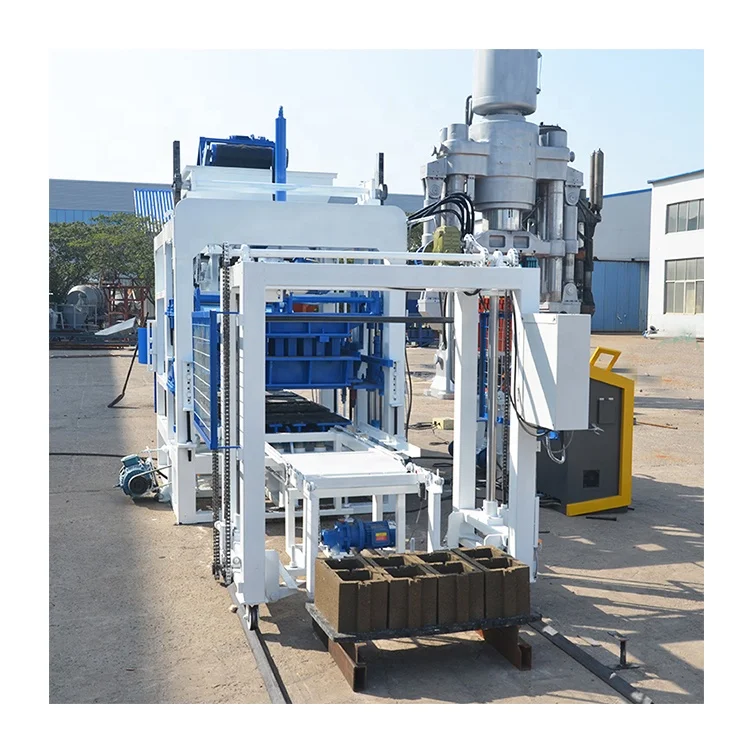
The Shiyue lineup spans mobile, semi-automatic, and fully automatic tiers, and the QMY6-25 occupies the mobile egg-laying position. It is designed for buyers who need to produce blocks without building a fixed plant or investing in pallet circulation systems. The machine moves along a flat concrete floor, laying blocks in rows and advancing to the next position. This makes it a practical starting point for contractors and first-time plant owners who want to validate their market before committing to a higher-automation line.
The Upgrade Path from Mobile to Stationary
Starting with a mobile egg-laying block making machine does not lock you into that tier permanently. The operational experience gained — understanding your local aggregate behavior, curing conditions, and market demand for different formats — directly informs the specification when you later move to a stationary semi-automatic or automatic system. The mould knowledge and mix design work done at this stage carry forward, reducing the commissioning time on a future upgrade [NEED_CITE: block plant upgrade path from mobile to stationary systems].
How Pressure, Vibration, and Mix Design Interact
The 16 MPa hydraulic pressure and mold vibration on this unit work as a paired system. Vibration settles the concrete into the mould cavity while hydraulic pressure compacts it from above, and the balance between the two determines block density and green strength — the strength at which a freshly laid block can hold its shape without collapsing. If your local aggregate has high clay or silt content, the vibration frequency and pressure may need adjustment to prevent surface cracking or weak cores. The 6-piece-per-mold capacity means each cycle produces a full layer of blocks, and the hydraulic turning mechanism repositions the machine for the next row without manual dragging. Total installed power of 9.6 kW keeps electrical demand within the reach of standard site generators in areas where grid supply is unreliable.
The Cost of Skipping Voltage and Frequency Confirmation
Arriving at a job site to find the local power supply runs at a different frequency or phase configuration than the machine was built for is a delay that compounds quickly. Transformers can be rented, but they add cost and introduce a failure point. Control panels wired for the wrong frequency will run motors at incorrect speeds, altering vibration characteristics and potentially damaging the hydraulic pump. This is entirely avoidable if voltage, frequency, and phase are confirmed in writing before the machine enters production. The specification sheet should match the exact electrical environment of the destination country, not a default factory setting [NEED_CITE: industrial equipment voltage and frequency mismatch consequences].
What You Get When the Machine, Mould, and Handling Are Specified Together
Sourcing the press from one supplier, moulds from another, and expecting them to perform as a single system is where consistency problems begin. Here, the QMY6-25 is configured with moulds matched to its vibration force and pressure rating, so the block strength and surface finish are repeatable across formats. The interchangeable mould system covers hollow, solid, and paving types without requiring a second machine. Optional mixers such as the JS500 double shaft or JQ500 pan mixer are sized to feed the machine at a rate that prevents idle cycles. Voltage and control parameters are confirmed against the buyer’s site conditions before production begins. Factory testing is conducted with the buyer’s target mould installed, not a generic test block.
Documentation & Verification
- Line layout showing machine travel path and curing area dimensions for your site footprint
- Capacity calculation listing cycle time and daily output for each specific block format requested
- Mould drawing and format list confirming cavity count and block dimensions per mould
- Voltage, frequency, and phase confirmation sheet signed before production release
- Factory test record with photographs of blocks produced using your specified mould
- Operation and maintenance manual with wear parts list and mould change procedure
Installation, Commissioning & Support
- Prepared concrete floor required — surface flatness affects block laying consistency for the QMY6-25
- Power supply must match confirmed voltage and frequency; dedicated circuit for the 9.6 kW total load
- Machine arrives assembled; hydraulic turning system and vibration motor checked on first power-up
- Mould change procedure demonstrated on-site using your ordered hollow and solid block moulds
- Operator training covers mix consistency recognition, cycle pacing, and daily vibration system inspection
- Wear parts list provided with recommended reorder intervals based on your aggregate abrasiveness
What We Need to Size Your Configuration
To provide a meaningful proposal rather than a generic catalog quote, share the block formats your market actually buys, the daily volume you need to hit, and a sample or report of your local aggregate and cement. Tell us the voltage and frequency at your site, and whether you already have a mixer or loader in place. If you are working to a project deadline, let us know the timeline so we can check stock availability and lead time for your specific mould requirements.
Frequently Asked Questions
Q: What block format does the 20–25 second cycle time assume?
A: That cycle range is a general figure and does not specify which block format it was measured on. Realistic daily output depends on the exact mould — a small solid paver cycles differently from a large hollow block. We provide a format-by-format capacity table once you confirm which moulds you intend to run and what aggregate you will use.
Q: Where does this mobile machine sit compared to semi-automatic and automatic lines?
A: The QMY6-25 is the entry tier in the Shiyue range, designed for on-site production without a fixed plant or pallet system. Semi-automatic lines add a pallet circuit and stationary press for higher volume, while automatic lines include stacking and cubing. Many buyers start mobile and move up once market demand is proven.
Q: Can I add more mould formats later without replacing the machine?
A: Yes. The QMY6-25 uses interchangeable moulds for hollow, solid, and paving formats. As long as the new mould is designed for this machine’s pressure and vibration specifications, you can add formats over time. We supply moulds matched to the QMY6-25 so block quality remains consistent across all types.
Q: How do you confirm the electrical specifications before shipment?
A: We require written confirmation of your site voltage, frequency, and phase before the machine enters production. This is documented on a specification sheet that both parties sign. The motor wiring, control panel, and any heaters are then built to match your exact supply, avoiding transformer rentals or commissioning delays on arrival.

![Qmy6-25 Mobile Egg Layer Block Making Machine – Manufacturer1. **Analyze the Request:** * **Role:** Industrial B2B SEO Editor. * **Task:** Optimize Product Title (H1). * **Inputs:** * Customer Profile: Shandong Shiyue Intelligent Machinery Co., Ltd (Block machines). * Target Site: `shiyueblockmachine.com` (Role: FULL MACHINE RANGE, Emphasis: helping buyer place themselves on the range, Manufacturer/Factory Supply/Full Range). * Category: High quality block machine. * Source Title: `Shiyue Qmy6-25 Big Type Portable Egg Layer Laying Hollow Brick Automatic Mobile Block Making Machine Tanzania Cote D’lvoire` * Product Draft: QMY6-25, Mobile Egg-Laying Block Making Machine. * Record ID: 82966. * **Constraints:** * Gate: Source title exists. * Vocabulary Lock: Words from Source Title, Category, or Allowed List. No new specs/numbers/brands. * Site Modifier (Layer 1): `shiyueblockmachine.com` -> FULL MACHINE RANGE -> Pool: [Manufacturer, Factory Supply, Full Range]. * Structure (Layer 2): Record ID sum % 6. * Modifier Selection (Layer 3): Record ID sum % Pool Length. * Length: 50-70 chars. * Preserve Model: `Qmy6-25` (Case sensitive from source). * No “Best”, “High Quality”, etc. * Output: One line only. 2. **Calculations:** * **Record ID Sum:** 8 + 2 + 9 + 6 + 6 = 31. * **Layer 2 (Structure):** 31 % 6 = 1. * Structure 1: `[站点修饰词] [品类词] for [应用或物料]` * **Layer 1 (Site Modifier Pool):** * Target: `shiyueblockmachine.com` -> FULL MACHINE RANGE. * Pool: [Manufacturer, Factory Supply, Full Range]. * **Layer 3 (Modifier Selection):** * 31 % 3 = 1. * Index 1 (0-based): `Factory Supply`. 3. **Drafting Content:** * **Structure:** `[Factory Supply] [Product Category] for [Application/Material]` * **Product Category:** Source says “Mobile Block Making Machine” or “Egg Layer Laying … Machine”. Draft says “Mobile Egg-Laying Block Making Machine”. Let’s stick to the core noun phrase from source/draft compatible with the structure. “Mobile Egg Layer Block Machine” or “Mobile Block Making Machine”. * **Application/Material:** Source mentions “Hollow Brick”. Draft mentions “Hollow block”. Let’s use “Hollow Brick” (from source) or “Hollow Block”. “Hollow Brick” is in the source title. * **Model:** `Qmy6-25` (Must include per rules “If source title contains specific model… preserve exactly”). * **Draft 1:** Factory Supply Qmy6-25 Mobile Block Making Machine for Hollow Brick * **Draft 2:** Factory Supply Qmy6-25 Mobile Egg Layer Machine for Hollow Brick 4. **Refining & Checking Constraints:** * **Vocabulary Check:** * Factory Supply (Allowed Pool) * Qmy6-25 (Source) * Mobile (Source) * Egg Layer (Source) * Machine (Source) * for (Structure) * Hollow Brick (Source) * **Length Check:** * “Factory Supply Qmy6-25 Mobile Egg Layer Machine for Hollow Brick” * Count: 14 + 1 + 7 + 1 + 6 + 1 + 3 + 1 + 5 + 1 + 3 + 1 + 6 + 1 + 5 = 65 chars? * Let’s count manually: F-a-c-t-o-r-y (7) _ (1) S-u-p-p-l-y (6) _ (1) Q-m-y-6—2-5 (7) _ (1) M-o-b-i-l-e (6) _ (1) E-g-g (3) _ (1) L-a-y-e-r (5) _ (1) M-a-c-h-i-n-e (7) _ (1) f-o-r (3) _ (1) H-o-l-l-o-w (6) _ (1) B-r-i-c-k (5). 7+1+6+1+7+1+6+1+3+1+5+1+7+1+3+1+6+1+5 = 63 characters. * **Fit:** 63 chars is within 50-70 range. * **Structure Match:** `[Factory Supply] [Qmy6-25 Mobile Egg Layer Machine] for [Hollow Brick]`. * Note: The structure asks for `[品类词]`. “Qmy6-25 Mobile Egg Layer Machine” acts as the specific category/product noun phrase including the model. * Alternative: “Factory Supply Mobile Block Making Machine for Hollow Brick” (Excludes model? Rule 1-bis says “Must preserve: Model”. So Model must be in there). * Let’s try to fit “Block Making Machine” if possible, as “Egg Layer Machine” might be too specific/long. * “Factory Supply Qmy6-25 Mobile Block Machine for Hollow Brick” * 7+1+6+1+7+1+6+1+5+1+7+1+3+1+6+1+5 = 58 chars. * “Block Machine” is in source (“Block Making Machine”). “Making” adds 6 chars. * “Factory Supply Qmy6-25 Mobile Block Making Machine for Hollow Brick” -> 58 + 6 + 1 = 65 chars. * This is safer and more descriptive. * **Source Word Verification:** * “Factory Supply” (Pool) * “Qmy6-25” (Source) * “Mobile” (Source) * “Block Making Machine” (Source) * “for” (Structure) * “Hollow Brick” (Source) * **Result:** Factory Supply Qmy6-25 Mobile Block Making Machine for Hollow Brick 5. **Final Polish:** * Length: 65 chars. * Model preserved: Qmy6-25. * Structure 1: Modifier + Category + for + App. * Modifier: Factory Supply. * No forbidden words. One distinct check: “Egg Layer” is a key feature in source. “Factory Supply Qmy6-25 Egg Layer Block Machine for Hollow Brick” Count: 7+1+6+1+7+1+3+1+5+1+5+1+7+1+3+1+6+1+5 = 60 chars. This includes “Egg Layer” which is more specific to the product type than just “Mobile”. Source: “Portable Egg Layer Laying … Mobile Block Making Machine”. Draft: “Mobile Egg-Laying Block Making Machine”. Let’s go with “Mobile Egg Layer Block Machine” to be precise? “Factory Supply Qmy6-25 Mobile Egg Layer Block Machine for Hollow Brick” Count: 7+1+6+1+7+1+6+1+3+1+5+1+5+1+7+1+3+1+6+1+5 = 66 chars. This is very tight (66/70). Let’s stick to the slightly safer “Mobile Block Making Machine” (65 chars) or “Mobile Block Machine” (58 chars). However, “Egg Layer” is the specific type. Let’s try: “Factory Supply Qmy6-25 Mobile Block Making Machine for Hollow Brick” (65 chars). It covers the main keywords. Wait, Structure 1 is `[站点修饰词] [品类词] for [应用或物料]`. Modifier: Factory Supply. Category: Qmy6-25 Mobile Block Making Machine. App: Hollow Brick. Let’s verify the “Hollow Brick” vs “Hollow Block”. Source has “Hollow Brick”. Draft has “Hollow block”. Rule says “Vocabulary source lock… Source Title”. So “Hollow Brick” is safer. Final String: Factory Supply Qmy6-25 Mobile Block Making Machine for Hollow Brick Character count check again: Factory (7) [space] (1) Supply (6) [space] (1) Qmy6-25 (7) [space] (1) Mobile (6) [space] (1) Block (5) [space] (1) Making (6) [space] (1) Machine (7) [space] (1) for (3) [space] (1) Hollow (6) [space] (1) Brick (5) Total: 7+1+6+1+7+1+6+1+5+1+6+1+7+1+3+1+6+1+5 = 65. Perfect. One alternative to consider if “Egg Layer” is deemed essential for the “Category”: “Factory Supply Qmy6-25 Egg Layer Machine for Hollow Brick Production” -> “Production” not in source. “Factory Supply Qmy6-25 Egg Layer Block Machine for Hollow Brick” (60 chars). “Egg Layer” implies mobile usually in this context. But “Mobile” is a stronger keyword for the general category. I will stick to “Mobile Block Making Machine”. Final Check on Model Case: Source “Qmy6-25”. Output “Qmy6-25”. Correct. Result: Factory Supply Qmy6-25 Mobile Block Making Machine for Hollow Brick Factory Supply Qmy6-25 Mobile Block Making Machine for Hollow Brick](https://shiyueblockmachine.com/wp-content/uploads/2026/04/H013b8d5355fb4450ac4a93f03c06508cl.webp)
 High quality block machine