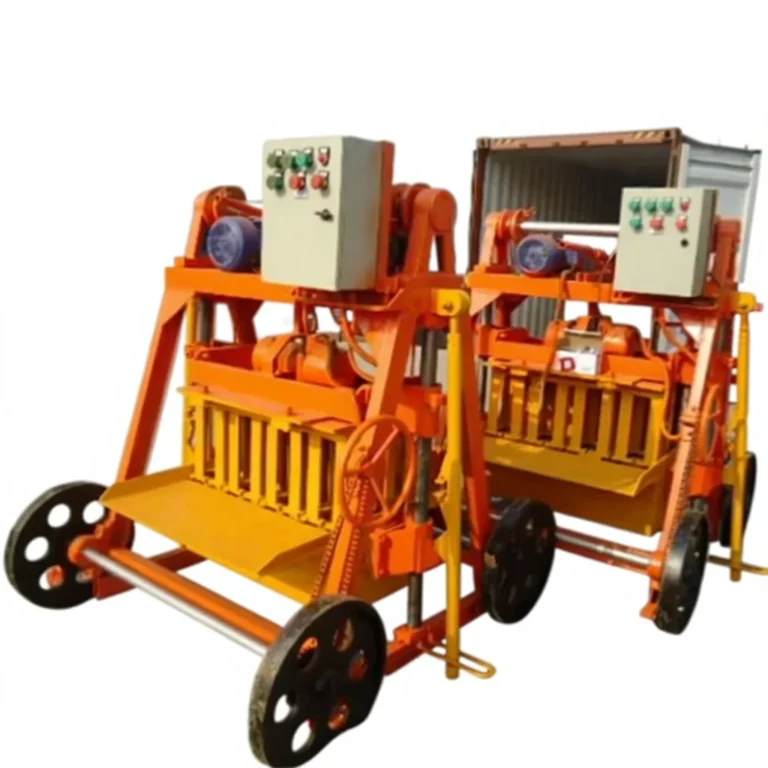
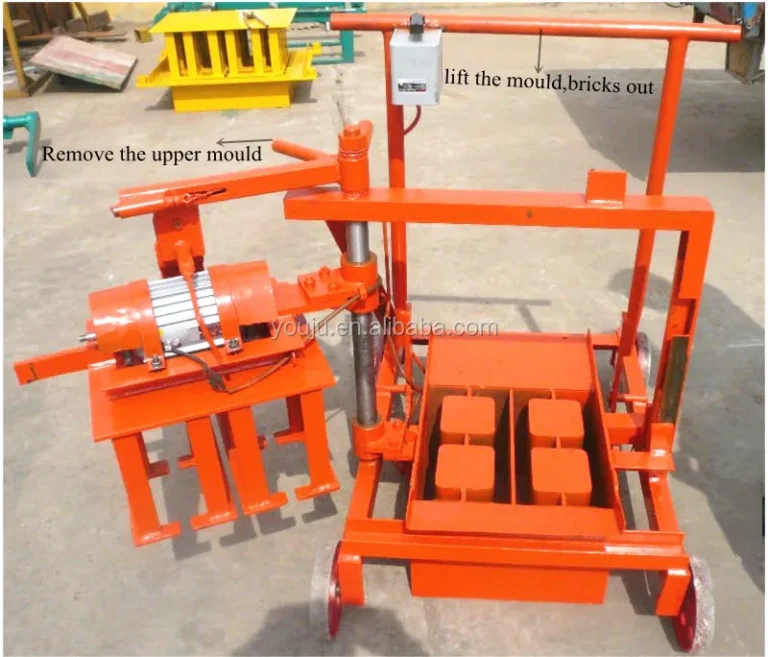
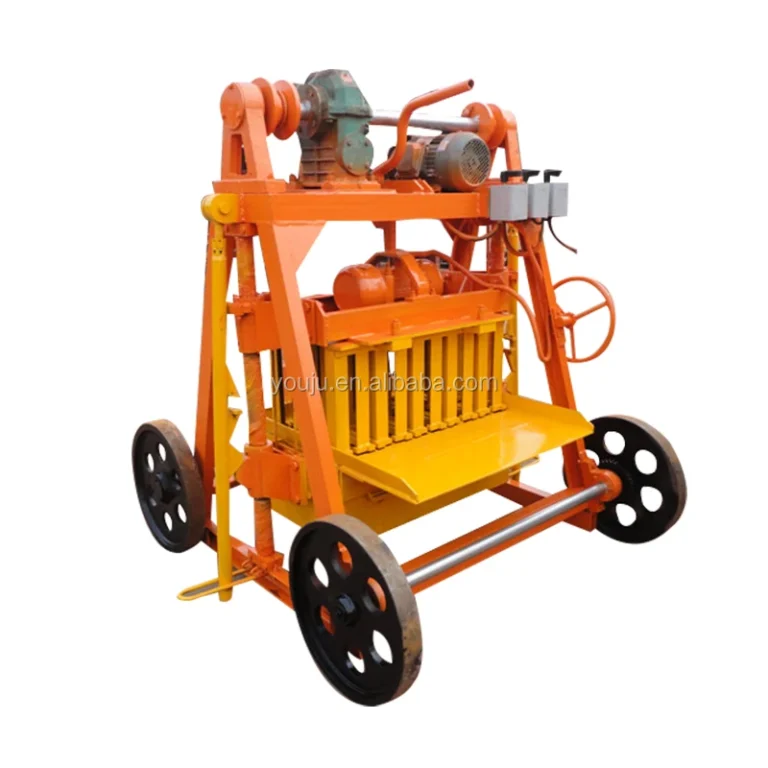
Complete System Match — every QMY4-30 mobile block making machine leaves our facility with moulds, pallets and handling specified as one matched unit, so capacity calculations reflect your actual block format rather than a generic cycle count.
Technical Specifications
| Parameter |
Value |
| Model |
QMY4-30 |
| Product Type |
Mobile Block Making Machine |
| Rated Power |
5 kW |
| Cycle Time |
30 seconds |
| Overall Dimensions (L×W×H) |
1200 × 1200 × 1100 mm |
| Net Weight |
950 kg |
| Raw Materials |
Cement, sand, crushed stones, slag |
| Mould Format |
Changeable for hollow block and solid brick |
| Output (400×200×200 mm hollow block, 4 pcs/mould) |
480 pcs/hour, 3840 pcs/8 hours |
| Output (400×150×200 mm hollow block, 5 pcs/mould) |
600 pcs/hour, 4800 pcs/8 hours |
| Output (400×100×200 mm hollow block, 7 pcs/mould) |
840 pcs/hour, 6720 pcs/8 hours |
| Automation Level |
Manual operation |
| Assembly State |
Mobile, no fixed plant required |
Application Suitability
| Application |
Material or Output |
| On-site hollow block production for housing projects |
Cement, sand, crushed stones producing 400×200×200 mm blocks |
| Small-scale solid brick manufacturing |
Cement and sand mix for standard wall bricks |
| Contractor-produced blocks at infrastructure sites |
Slag and crushed stone blends for non-load-bearing formats |
| Startup block plant with limited capital |
Two-operator production across hollow and solid formats |
What "Pieces per Hour" Actually Means for a Mobile Block Making Machine for Sale
Every output figure here is tied to a specific block dimension and mould cavity count — no single headline number.
Buyers regularly receive quotations that state a machine produces a certain volume per hour without disclosing which block format that number assumes. When the machine arrives and production begins on the format the local market actually buys, daily output falls noticeably short of what the buyer budgeted for. With the QMY4-30 mobile block making machine for sale, we publish three separate capacity lines so you can match your market’s primary format before committing. [NEED_CITE: common discrepancies between quoted and actual block machine output in export markets]

Where the QMY4-30 Sits in the Full Machine Range
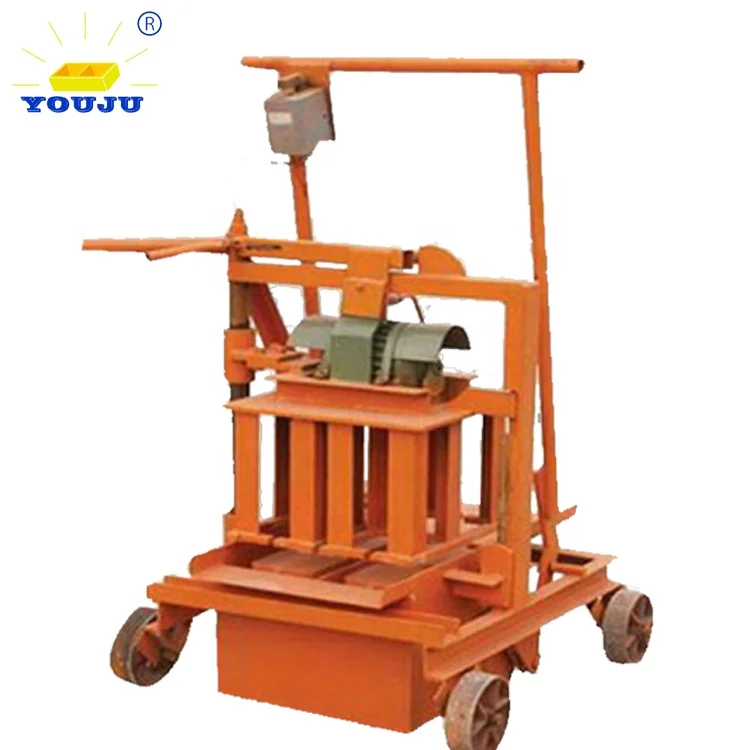
The QMY4-30 occupies the entry tier of our mobile block machine lineup. It is designed for buyers who need block production without building a fixed plant — contractors working on a housing development, entrepreneurs launching a first block business, or distributors testing a new format locally before investing in a higher-capacity line. The machine requires only a flat concrete surface and two operators, keeping the initial footprint and labour cost at a minimum.
Comparing Mobile, Semi-Automatic and Automatic Tiers
Moving up from the QMY4-30 into semi-automatic territory adds pallet feeding systems and basic stacking assistance, which reduces manual handling but requires a covered curing area and more floor space. Fully automatic lines introduce PLC-controlled batching, automatic cubing and curing rack handling — suitable when daily volumes justify the investment and a dedicated plant building is available. The mobile block making machine for sale here deliberately avoids those dependencies, making it the right choice when site conditions or capital allocation rule out fixed infrastructure. [NEED_CITE: typical investment comparison across mobile, semi-automatic and automatic block production tiers]
Reading the Specifications That Matter on Site
The 5 kW rated power reflects the vibration motor and hydraulic pump combined — a figure that determines your generator sizing when grid power is unreliable at remote project sites. The 30-second cycle time applies across all three listed hollow block formats, meaning output differences come entirely from mould cavity count (4, 5 or 7 pieces per cycle), not from the machine cycling faster or slower. The 1200 × 1200 × 1100 mm overall dimension lets the QMY4-30 fit through standard site gates and operate within a modest concrete pad, while the 950 kg net weight keeps it stable during vibration without requiring a bolted foundation. Mould changeover between hollow block and solid brick formats is manual, which is consistent with the machine’s low-investment positioning.
The Hidden Cost of Undersized Support Equipment
A mobile block machine that arrives without a clear pallet specification often forces the buyer to source pallets locally — and pallets that do not match the machine’s vibration table dimensions cause uneven compaction and inconsistent block strength. Similarly, when voltage and frequency are not confirmed before shipment, commissioning stalls while transformers or replacement motors are sourced locally, delaying the project timeline. [NEED_CITE: frequency of commissioning delays caused by incorrect voltage specification in block machine exports]
Why Buyers Source This Tier from Our Range
Block machinery is our single focus, which means the QMY4-30 is not assembled from a press, a mould and a pallet spec pulled from separate suppliers — every component is matched before it ships. We configure the machine against your local aggregate and target block format rather than defaulting to a catalogue setting, so the vibration force and mix design align with what you can actually source. Mould design covers the formats your market sells, including custom drawings when standard sizes do not match local building codes. Automation level is selectable across our range, so starting with the QMY4-30 now does not lock you out of upgrading to semi-automatic or automatic equipment later. Installation support includes operator training on mould changeover, cycle timing and daily maintenance routines specific to this model.
Documentation & Verification
- Line layout and capacity calculation stating the block format assumed for each output figure
- Mould drawing and format list confirming exact block dimensions for hollow and solid types
- Voltage and control language confirmation sheet completed before dispatch
- Factory test record demonstrating 30-second cycle time against your chosen format
- Packing photographs and customs documentation support for your destination port
Installation, Commissioning & Support
- Flat concrete pad required, sized to the 1200 × 1200 mm machine footprint plus block curing area
- Dedicated 5 kW electrical circuit with voltage and frequency confirmed to your local grid standard
- Machine ships assembled in plywood packing at approximately 3 CBM for straightforward container loading
- On-site commissioning covers first-run cycle timing, mould alignment and vibration table calibration
- Two-operator training on mould changeover between hollow block and solid brick formats
- Wear parts list and replacement mould availability confirmed at the time of order
Before You Request a Quote
To size the QMY4-30 correctly within our range, we need your target block format and the daily volume your market requires. Share the raw materials you can source locally — specifically cement grade, sand type and aggregate sizing — along with your site’s voltage and frequency. If you already own forklifts or pallet racking, let us know the dimensions so pallet specifications align with your existing handling setup.
Frequently Asked Questions
Q: How is daily output calculated for each block format on the QMY4-30?
A: Each output line is based on the 30-second cycle time multiplied by the number of mould cavities for that specific block size, then extrapolated over an eight-hour working shift. The three published figures — 3840, 4800 and 6720 pieces — correspond to 400×200×200 mm, 400×150×200 mm and 400×100×200 mm hollow blocks respectively. Actual output depends on operator rhythm and material feeding continuity.
Q: Where does this mobile machine sit compared to your semi-automatic and automatic tiers?
A: The QMY4-30 is the entry point of our mobile block making machine range, requiring no fixed plant and only two operators. Semi-automatic tiers add pallet feeding and stacking assistance, while automatic lines include PLC batching and cubing. The right tier depends on your daily volume target, available floor space and whether a dedicated plant building is planned.
Q: What voltage and frequency options are available for different export markets?
A: The QMY4-30 motor can be configured to match common industrial voltage and frequency standards across different regions. We confirm your local supply specification during the inquiry stage so the correct motor and wiring are installed before the machine leaves our factory, avoiding commissioning delays on arrival.
Q: Can I start with the QMY4-30 and move to a higher-tier machine later?
A: Yes. Our range is structured so buyers can begin with manual mobile production and transition to semi-automatic or automatic lines as volume grows. Mould formats and pallet sizing carry forward where compatible, and we keep your configuration records so future equipment is specified against the same block formats your market has established.
Q: What site preparation does the QMY4-30 require before operation?
A: You need a level concrete surface large enough for the 1200 × 1200 mm machine footprint plus adjacent space for freshly produced blocks to cure. A dedicated electrical circuit matching the 5 kW rated power is required. No bolted foundation is necessary — the 950 kg machine weight provides stability during the vibration cycle.

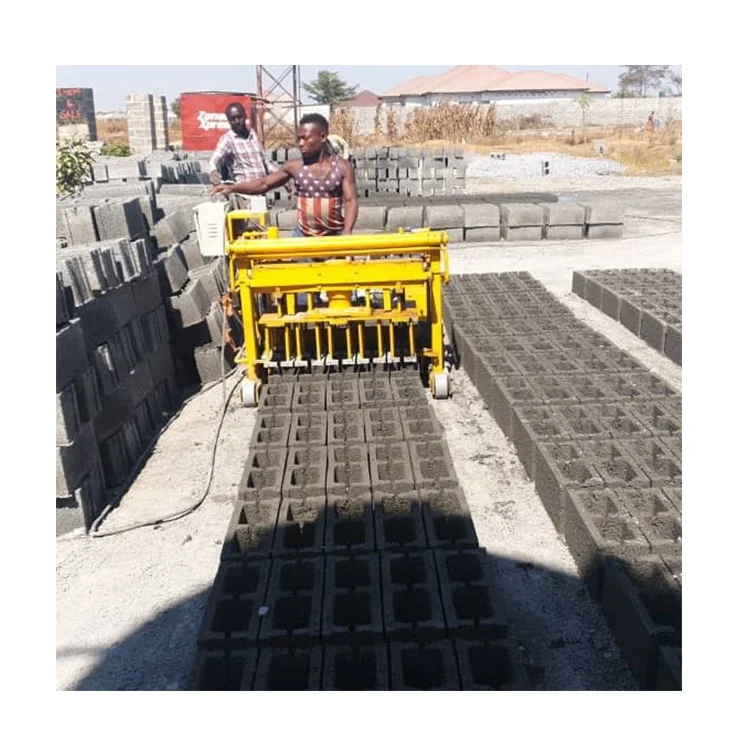
 Mobile block machine