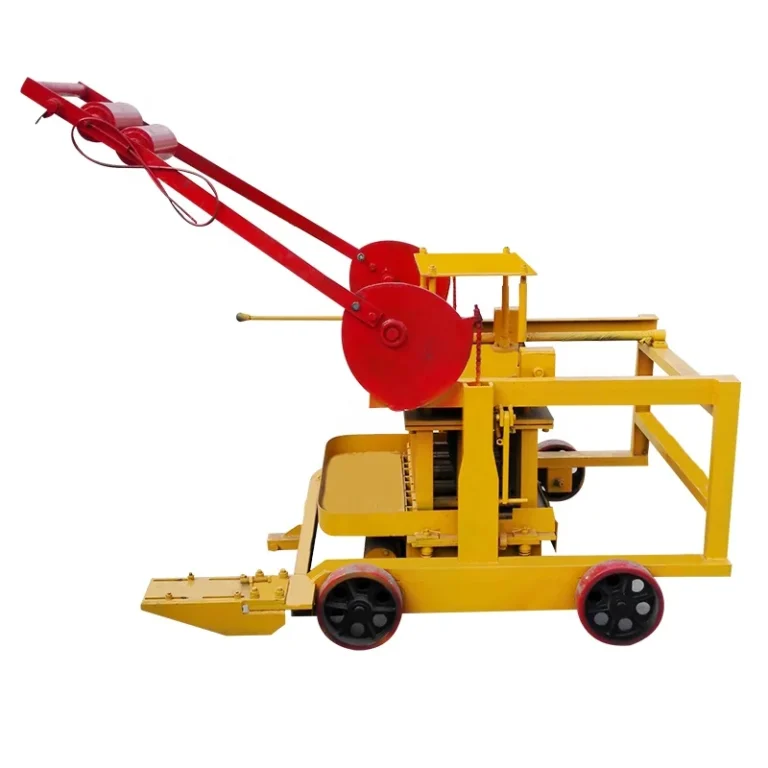
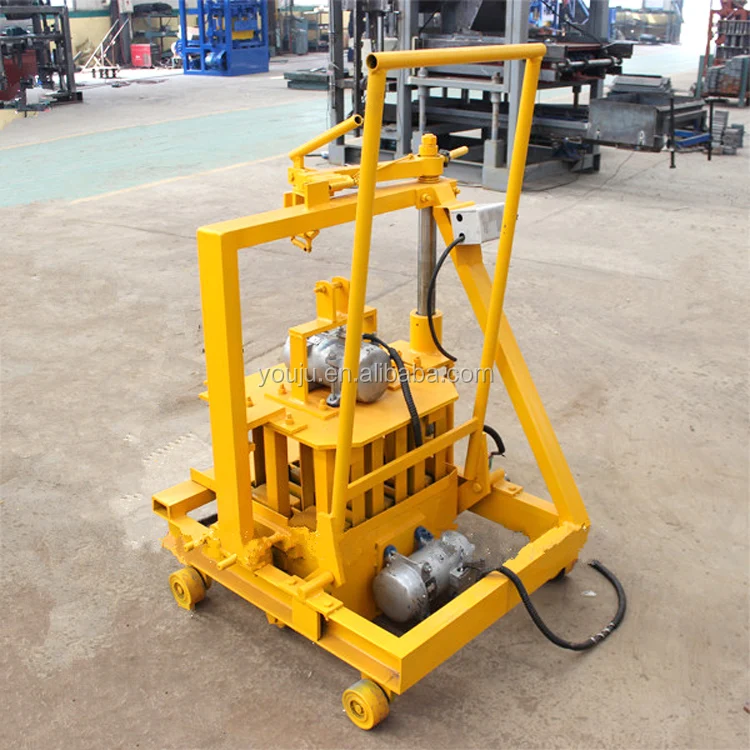
Mould-Changeable Mobile Design — The QMY4-30 is configured as a matched system where the machine body, interchangeable moulds and ground-laying method are specified together, avoiding the common mismatch of sourcing a press, pallets and handling from separate suppliers.
Technical Specifications
| Parameter |
Value |
| Model |
QMY4-30 |
| Product Type |
Mobile Hydraulic Block Making Machine |
| Machine Category |
Mobile block machine (egg-laying) |
| Rated Power |
5 kW |
| Overall Dimensions (L×W×H) |
1200 × 1200 × 1100 mm |
| Net Weight |
950 kg |
| Cycle Time |
30 seconds (basis to be confirmed per block format and mix) |
| Mould Cavity Count |
4 pcs (400×200×200mm), 5 pcs (400×150×200mm), 7 pcs (400×100×200mm) |
| Output Capacity |
480 pcs/h based on 400×200×200mm hollow block; 600 pcs/h based on 400×150×200mm; 840 pcs/h based on 400×100×200mm |
| Daily Output (8 h) |
3,840 pcs (400×200×200mm); 4,800 pcs (400×150×200mm); 6,720 pcs (400×100×200mm) |
| Mould Formats |
Hollow block and solid brick, standard sizes; moulds changeable |
| Pallet System |
N/A — blocks laid directly on ground |
| Automation Level |
Manual operation, mobile |
| Raw Materials |
Cement, sand, crushed stones, slag |
| Voltage & Frequency |
Configurable to buyer’s local grid (to be confirmed before production) |
Application Suitability
| Application |
Material or Output |
| Start-up block yard |
Hollow block 400×200×200mm from cement, sand and crushed stone |
| On-site contractor production |
Solid brick 400×100×200mm laid directly onto prepared ground |
| Housing project supply |
Hollow and solid formats switched on the same site as building progresses |
| Small-scale paver or brick yard |
Standard-size blocks using locally sourced slag and aggregate |
Why Voltage Confirmation Must Precede the Quotation
A mobile block machine for sale only delivers on its cycle promise when the electrical supply matches the motor nameplate.
Every year we see machines arrive at sites where the local grid runs at a voltage or frequency the press was never configured for. The result is not a minor delay — it is a multi-week standstill while a transformer is sourced, shipped and wired in. Workers stand idle, cement cures in the mixer and the project schedule slips. On a mobile unit that is meant to start producing the day it rolls off the truck, that gap is especially costly [NEED_CITE: voltage and frequency standards by export market]. The QMY4-30 draws only 5 kW, but the voltage must still match the buyer’s grid exactly before the motor leaves our assembly bench.

Where the QMY4-30 Sits in Our Mobile Range
The QMY4-30 anchors the entry tier of our mobile block machine range. Buyers who need production capability without investing in a fixed plant, pallet racking or a curing chamber start here. Its 1200 × 1200 × 1100 mm footprint means it can be unloaded from a flatbed and put to work on any level, compacted ground surface within hours of arrival.
Mould Flexibility Across Standard Formats
Interchangeable moulds let a single QMY4-30 cover hollow block and solid brick in the standard sizes most small yards sell. Mould change is manual, but the cavity count shifts from four to seven depending on format, so the same machine handles both load-bearing hollow units and smaller solid bricks without a second press investment [NEED_CITE: block format standards across export markets]. This flexibility keeps capital outlay low while a buyer tests which formats move in the local market.
Reading the Specification Sheet Against Your Site
The 5 kW rated power means the QMY4-30 can run from a small diesel generator on a remote construction site, but generator output must be verified for frequency stability before the motor is engaged. The 950 kg net weight keeps the machine within the towing or forklift capacity most contractors already have on site, eliminating the need for heavy-lift crane hire. Because the machine lays blocks directly on the ground, there is no pallet cost and no pallet-return logistics, but the ground surface must be flat and firm enough to support fresh blocks without settlement marks. Cycle time is quoted at 30 seconds, though actual throughput depends on the mix consistency, operator rhythm and the block format being run — a reality we document per format rather than hiding behind a single headline number.
The Cost of Skipping the Voltage Conversation
When voltage, frequency and control-panel language are treated as afterthoughts, the first week on site becomes a troubleshooting exercise instead of a production ramp. Panels arrive with labels the operator cannot read, motors overheat on the wrong frequency and starters trip under loads they were never rated for. On a mobile block machine for sale that is supposed to eliminate fixed-plant overhead, those hidden costs erase the very savings the buyer was counting on [NEED_CITE: CE machinery directive requirements for industrial equipment]. We confirm these three electrical details in writing before the QMY4-30 enters final assembly.
Why Buyers Source the QMY4-30 Through This Range
Block machinery is our single focus, so the QMY4-30 is specified as a matched set — machine, mould and ground-laying method — rather than a bare press paired with pallets from another supplier. Configuration is set against the buyer’s actual mix design and local aggregate, not a catalogue default. Moulds are designed for the formats the buyer’s market actually sells, and custom drawings are available when standard sizes do not fit. Buyers can start on the QMY4-30 and move up to a semi-automatic or automatic tier later, keeping the upgrade path open without scrapping the initial investment.
Documentation & Verification
- Capacity calculation document stating the exact block format assumed for each output figure
- Mould drawing and format list confirming every cavity size included in the order
- Voltage and frequency confirmation sheet signed off before final assembly
- Factory test record with photographs of the QMY4-30 running the buyer’s chosen mould
- Packing photographs showing crate condition and machine securing before dispatch
- Operation and maintenance manual covering daily greasing points and mould-change procedure
Installation, Commissioning & Support
- Flat, compacted ground surface required; no concrete foundation needed for the 1200 × 1200 mm base footprint
- Dedicated 5 kW circuit with correct voltage and frequency confirmed before motor connection
- Machine shipped in plywood crate; forklift unloading onto prepared site within hours of container arrival
- First-cycle test run with the buyer’s chosen mould format before operator handover
- Hands-on operator training covering mix consistency, mould-change sequence and daily maintenance
- Wear-parts list supplied with the machine so hydraulic seals and vibration components can be reordered locally
What to Include in Your Inquiry
Tell us the block formats you sell today and the ones you plan to add, along with the daily volume you need per format. Share your site voltage, frequency and the language your operators read so the QMY4-30 control panel and motor are built for your grid from day one.
Frequently Asked Questions
Q: How is the capacity figure calculated, and which block format does it assume?
A: Each capacity number is tied to a specific block size and cavity count. The QMY4-30 is rated at 480 pcs/h based on 400×200×200mm hollow block with four cavities, up to 840 pcs/h based on 400×100×200mm solid brick with seven cavities. We publish the format behind every figure so daily planning stays realistic.
Q: What mould formats are available, and can I order custom moulds later?
A: Standard hollow block and solid brick sizes are available off the shelf. Custom moulds can be designed from buyer drawings at any stage, including after the machine is running, because the mounting interface on the QMY4-30 accepts additional mould sets without press modification.
Q: What voltage and frequency will the machine be configured for?
A: The QMY4-30 motor and control panel are built to match the buyer’s confirmed local grid. Voltage, frequency and panel-label language are agreed in writing before final assembly so there is no transformer wait or misread display on arrival.
Q: When should I consider moving from the QMY4-30 to a higher automation tier?
A: When daily volume grows beyond what manual pallet-free operation can sustain, or when block strength consistency demands tighter vibration and pressure control, the next step is a semi-automatic line with pallet handling. The QMY4-30 remains useful on secondary sites even after the upgrade.
Q: What ground surface and power supply does this mobile block machine for sale require?
A: A flat, compacted area free of loose soil is enough for ground-laying. Power demand is 5 kW, so a correctly rated diesel generator or site supply at the confirmed voltage and frequency will run the QMY4-30 without additional electrical infrastructure.

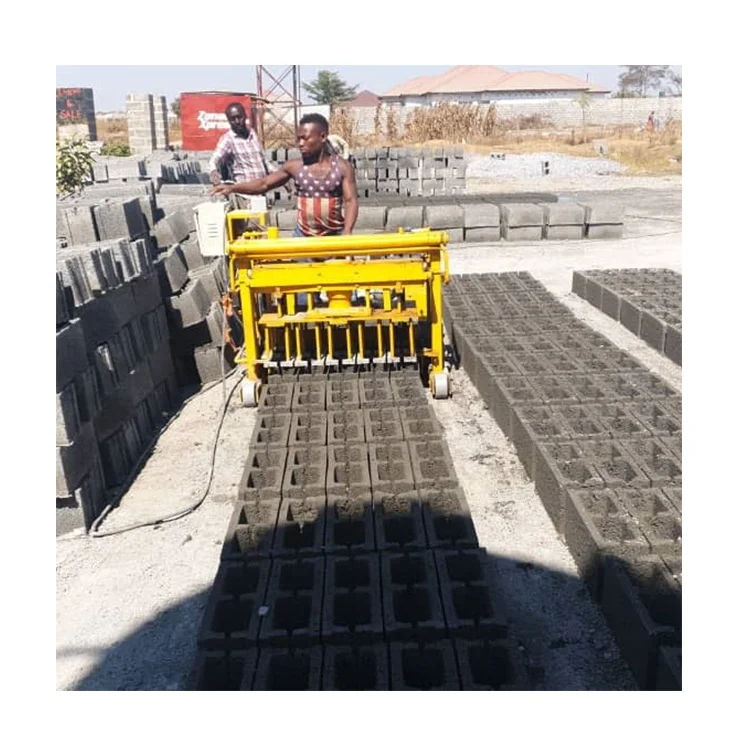
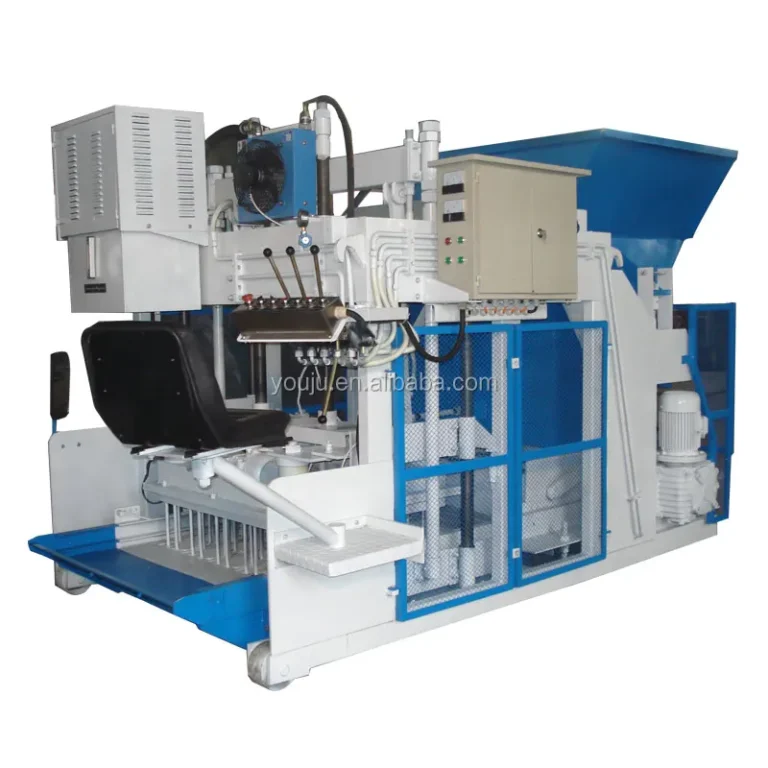 Mobile block machine